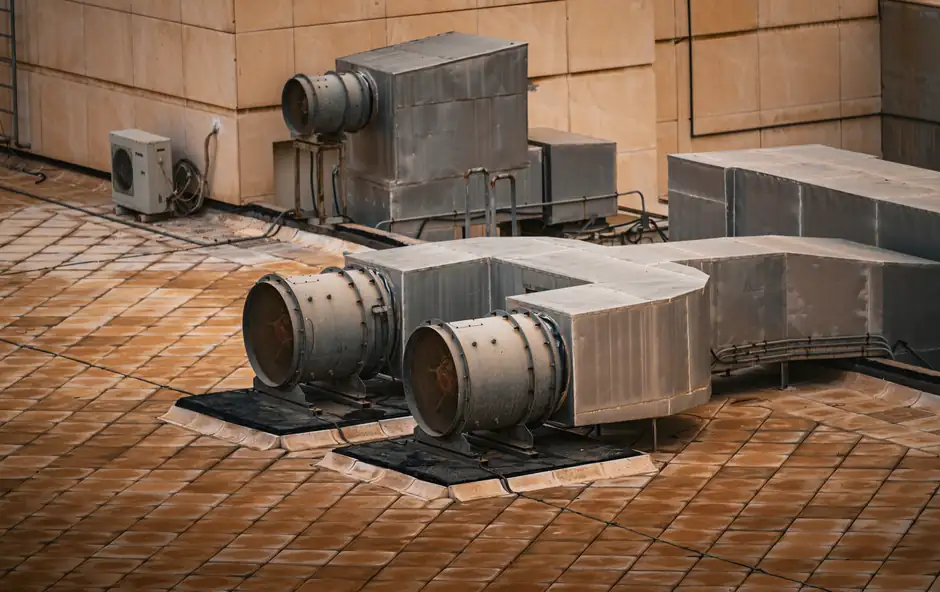
An AC/DC inverter TIG machine with at least 200 A output and high-frequency (HF) arc start is the practical floor for HVAC installers who weld both stainless condensate/evaporator lines and aluminum headers, since DC-only units cannot clean the aluminum oxide layer that forms on coil and manifold surfaces [S3].
Crews welding only mild-steel or stainless hangers, supports, and duct transitions can stay with DC-only machines, but that locks them out of any future aluminum scope.
What TIG Process Brings to an HVAC Job
GTAW (Gas Tungsten Arc Welding, the formal name for TIG) uses a non-consumable tungsten electrode, with 100% argon as the typical shielding gas and a filler rod dabbed into the puddle by hand, which gives the operator tighter control over heat input than MIG or stick on thin-wall tubing and stainless sheet [S2][S4]. For HVAC installers, that precision matters at three points: brazed-equivalent joints on stainless condensate and refrigerant lines, transitions between dissimilar metals in retrofit work, and small-diameter aluminum headers on commercial split systems.
The trade-off is throughput: TIG requires two-hand operation (torch in one hand, filler in the other) and a steady shielding-gas envelope, so it is 2-4x slower per joint than MIG on the same thickness, and the arc length is held to roughly 1-3 mm for stability [S2][S4]. On HVAC sites this is acceptable because the joints are short, accessible, and visible, and the post-weld cleanup is minimal compared with flux-bearing processes.
AC vs DC vs AC/DC: Why It Is the First Decision
The single most important selection criterion for a TIG machine is whether it outputs DC, AC, or both, because DC will not weld aluminum: a DC-only machine cannot break the oxide skin on aluminum and magnesium, so any job touching aluminum coil headers, condenser end caps, or brazed-aluminum evaporator blocks requires AC output [S3][S4]. DC handles steel, stainless steel, and chromoly cleanly, which covers the support steel, duct transitions, and stainless hydronic piping typical in HVAC work [S3].
AC/DC machines cost more than DC-only units, but for HVAC contractors who split time between stainless (DC) and aluminum (AC) work, buying AC/DC from the start is more cost-effective than renting or buying a second machine the first time aluminum shows up on a work order [S1]. The other reason to specify AC/DC: AC balance and AC frequency controls let the operator tune the cleaning action versus penetration ratio, which is the parameter that decides whether an aluminum weld comes out silvery-clean or full of black soot [S3].
Critical Specs Beyond Amperage
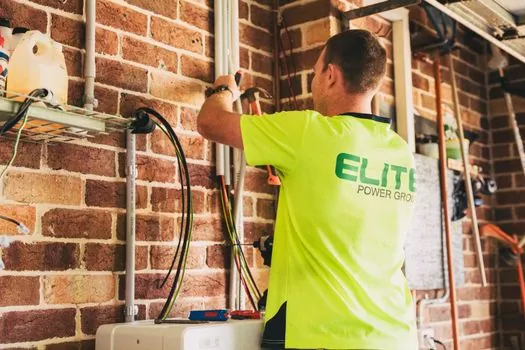
Amperage is the headline number, but on a real HVAC site the binding constraints are arc-start method, duty cycle, and current control. HF start lets the arc begin without touching the tungsten to the workpiece, which keeps the tungsten uncontaminated and is the only practical start method for clean aluminum welds; lift-arc works for DC steel and stainless but cannot be used on aluminum because of the oxide layer, and scratch start drags the tungsten across the work and is the worst option for tungsten life and weld cleanliness [S3].
Duty cycle at the rated amperage is the second constraint, since a 200 A machine rated at 40% duty cycle (the typical mid-range value) can sustain 200 A for 4 minutes out of every 10; push past that and thermal cutouts stop the weld mid-bead [S3]. Foot-pedal current control is the third must-have, because finger/trigger torches are awkward in tight chases, and amperage ramping (slope up/slope down) prevents crater cracking at the end of a bead, which is the most common defect on field TIG [S3][S5].
Matching Power to Material Thickness
Match the machine's amperage window to the thickest material the crew will realistically weld, not the thinnest, because a machine with a low-end floor under 10 A can handle 0.5-1.0 mm stainless without burn-through, while the high-end ceiling must cover the thickest carbon-steel support or stainless branch the site throws at it [S2][S5]. For typical HVAC scope (0.6-3.0 mm stainless tubing, 1-2 mm aluminum headers, 3-6 mm steel supports), a 200 A class machine covers everything, while 150 A units are marginal on the 6 mm steel side and 250 A+ units add cost and weight without buying much extra capability for HVAC-only work.
Pulse TIG, which cycles the current between high and low values to control puddle size, is an advanced feature worth specifying for thin-wall aluminum because it limits total heat input and reduces distortion on long runs of header tube.
Shielding Gas, Tungsten, and Other Field Details
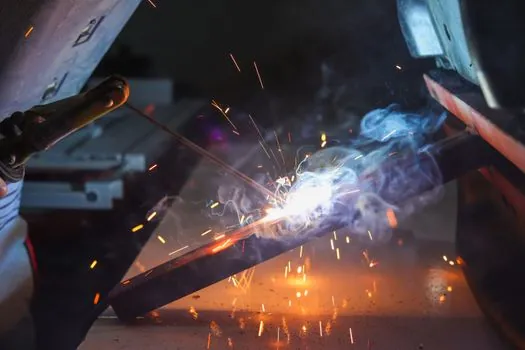
Cylinder size matters: a standard 125 cu ft argon cylinder flows at 15-20 CFH through a #7 or #8 gas lens, giving roughly 6-8 hours of arc time, which is enough for a full day of small-joint HVAC work.
Tungsten selection is the consumable that drives weld quality: 2% lanthanated (blue tip) is the most common all-purpose choice for both steel and aluminum, while pure tungsten (green) and 2% thoriated (red) are older choices still seen on legacy equipment [S4]. Tungsten diameter scales with amperage, so a 1.6 mm (1/16 in) electrode handles roughly 20-90 A on steel or 20-150 A on aluminum, while 2.4 mm (3/32 in) covers 80-180 A, and 3.2 mm (1/8 in) is reserved for 150 A+ work on thick steel. When comparing platform options in HVAC heavy-civil work, see how the same selection logic applies to other arc welding machine picks for steel construction sites, where duty cycle and amperage class drive the same trade-offs.
Where TIG Fits vs Where It Does Not
TIG is the right call for stainless hydronic piping, refrigerant line repairs on copper-to-stainless transitions, aluminum header fabrication, and any joint where post-weld appearance matters (visible rooftop copper or stainless). It is the wrong call for long structural welds on supports, where the stud welder selection for HVAC installation workflow or stick/MIG is faster, and for high-volume production shop welding where MIG dominates on throughput [S2].
Crews who only do steel support welding and no stainless or aluminum should save money and buy a DC-only stick/MIG/TIG multi-process unit, because the AC capability, HF start, and pulse controls of an AC/DC TIG machine are wasted if aluminum is never on the scope. Crews who plan to add aluminum in the next 2-3 years should buy AC/DC now, since the price premium is recovered on the first aluminum job that would otherwise require a rental.
Failure Modes and Field Maintenance Triggers
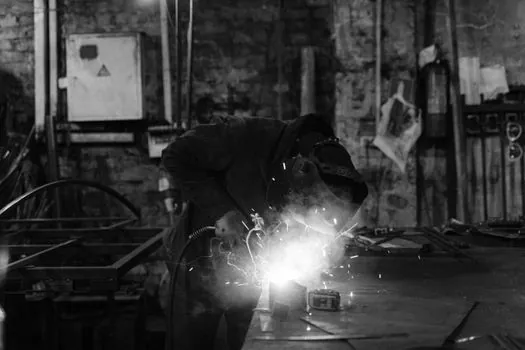
The most common field failures on HVAC TIG machines are HF start failure (arc will not start without touching the work), contamination of the tungsten (black or green tips that throw the arc), and duty-cycle tripping on long beads. HF start failure usually points to a failed HF oscillator board or a loose torch lead, and the corrective action is to swap the torch and check high-voltage lead continuity before replacing the board. Tungsten contamination is corrected by grinding the electrode on a dedicated tungsten grinder (longitudinal grinds, not radial) and re-sharpening to a 15-30 degree point for DC work or a balled tip for AC aluminum. [S3]
The replacement trigger is any unit where the HF board fails twice in 12 months or where thermal cutouts trigger below 70% of nameplate duty cycle, which indicates end-of-life for the inverter stack.
Sourcing, Standards, and Next Steps
AWS D1.1 governs structural welding, AWS D9.1 covers sheet metal, and ASME Section IX is the qualification standard for procedure and welder qualification on pressure piping, which applies to any HVAC hydronic or refrigerant work above the pressure-relief threshold. For HVAC field crews buying between 2026 Q3 and 2027 Q1, the trackable signals are: any new IEC 60974-1 update for arc-welding equipment safety that affects HF-start insulation requirements, and OEM price moves on 200 A AC/DC inverter platforms as inverter IGBT supply normalizes. For a side-by-side read on a related HVAC tooling decision, the air impact wrench sizing for plumbing installation piece runs the same amperage-class and duty-cycle logic for a different tool, and the rebar bender specs for HVAC installation guide covers the support steel that often gets welded to the structure the TIG machine is fabricating into. [S1]
Component reference pages worth checking: marine hvac, tig welder, and welding cutting tool.