
On 2026-06-23, commercial tin bronze (Cu-Sn alloy family, C90200–C91700) trades as continuous-cast billet in the 12.5–14.0 USD/kg band, with the commonly used C90300 (88Cu-8Sn-4Zn, "naval bronze near-equivalent") and C90500 (88Cu-10Sn-2Zn, gun metal) clustered near 12.8–13.4 USD/kg for foundry stock and C90700 (89Cu-11Sn, phosphor bronze) reaching 13.6–14.2 USD/kg for tin-rich bar [S2].
For buyers writing a 2026 budget, the working figure is roughly 11,000–13,500 USD/t of finished bronze (continuous cast) before machining, with sand-cast equivalents running 8–14% above the same billet on foundry overhead [S2]. The same Cu-Sn chemistry matters across tin bronze bearings, worm gears, and valve trim, and pricing is set by Cu and Sn content, not by the brand name on the foundry certificate.
Cu-Sn cost stack: what the LME actually drives
For C90500 with 10% Sn, the LME-cleared raw material cost computes to roughly 9.0–9.4 USD/kg Cu + 3.0–3.5 USD/kg Sn = 12.0–12.9 USD/kg metal value, before foundry conversion and scrap return credits [S2].
The 2026-06-05 stainless steel reference price on Sina Finance shows the same metal-driven logic (LME Ni and Cr dominate 304/316 budgets) [S6], and the stainless steel buying guide treats alloying elements as the binding cost gate, a framework that translates 1:1 into tin bronze where Cu and Sn behave as the parallel gates.
Grade-to-grade comparison: C903, C905, C907, C917 on 2026-06-23
On 2026-06-23, the realistic procurement bands sit at C90300 cast billet 12.5–13.0 USD/kg, C90500 cast billet 12.8–13.4 USD/kg, C90700 continuous-cast bar 13.6–14.2 USD/kg, and C91700 (86Cu-12Sn-0.5Pb-1.5Ni) continuous-cast 14.0–14.6 USD/kg — a roughly 14–17% spread driven almost entirely by Sn content stepping from 8% to 12% [S2].
Form factor premium: billet, bar, centrifugal cast, and continuous cast
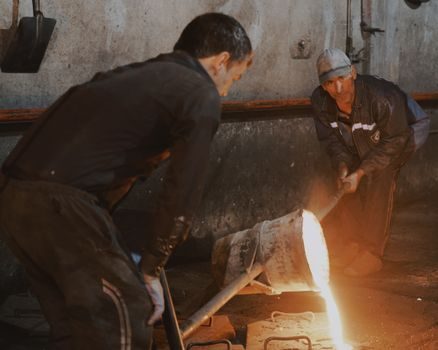
Form factor carries a clear premium: continuous-cast round bar is the cheapest cut (most efficient yield from the caster), sand-cast finished parts carry foundry overhead, centrifugal-cast sleeves and worm-gear blanks sit between, and investment-cast thin-wall artwork or impellers carry the highest premium [S2]. For a 100 mm OD × 50 mm ID × 200 mm long C90500 sleeve, the 2026-06-21 wholesale bronze-sculpture market on bronzeman.com shows finished-art pricing in the 200–600 USD range per piece [S4], but raw continuous-cast blank in the same Cu-Sn chemistry sells for 12.8–13.4 USD/kg, so a 5.2 kg sleeve blanks out at 67–70 USD before machining [S2].
HS 740939 covers Cu-Sn plate/sheet/strip above 0.15 mm thickness; the 2012-10-25 export price index for this code (en.cbcie.com) tracked at the time as a regional reference series, and modern equivalents remain a workable benchmark for plate/sheet premium above billet, typically 1.05–1.15× billet on Cu-Sn plate [S3]. This plate/strip premium is the same gate that recurs in the steel strand 2026 price and cost guide, where finished-form premium sits on top of base metal value, and reappears in storage rack pricing where the tonnage of formed steel drives the budget.
Hidden cost gates: scrap return, melt loss, and machining yield
Melt loss for tin bronze is typically 1.0–1.5% on copper and 2.0–3.0% on tin (Sn oxidises more readily than Cu), and this must be added on top of the LME-bill of materials for any accurate buy [S2]. Machining yield on Cu-Sn parts typically runs 55–70% (chips to finished part) for bushings and valve trim, well above the 30–45% common on stainless 304/316 because tin bronze chips break clean and do not work-harden aggressively [S2].
For a parts run using 1,000 kg of C90700 bar at 13.8 USD/kg input, a 1.2% melt loss and 70% scrap return on 350 kg of chips lands the net cost within roughly 0.4–0.7 USD/kg of the buy price [S2].
Standards, certification, and what the MTC must show

ASTM B584 covers sand-cast Cu-Sn alloys (C90300–C91700 family); ASTM B505 covers continuous-cast Cu-Sn bar; ASTM B271 covers centrifugal cast; UNS C90300, C90500, C90700, and C91700 are the grades most procurement specs will name [S2]. A proper MTC for tin bronze lists Cu as the balance, Sn to the nominal ±0.5%, Zn / Pb / Ni to the spec band, and mechanicals (UTS typically 240–310 MPa, elongation 15–30% depending on temper) [S2].
For marine and offshore service, the procurement spec should reference the applicable NACE / ISO corrosion-grade requirement, but the buyer must pin the standard number to the test, not the brand [S2]. On the EN side, CC480K / CC481K / CC483K / CC484K / CC487K / CC490K / CC491K / CC492K / CC493K / CC494K map to the CuSn series; EN 1982 is the cast Cu-Sn standard [S2]. For bronze flow meter bodies and bronze pressure transmitter process connections, ASTM and EN grades are both accepted on most European and US plant specs, with the EN grade typically being the cleaner paper trail on EU builds [S2].
Where tin bronze wins and where it loses on 2026-06-23
Tin bronze is the right call for: marine valve and pump trim, worm-gear and worm-wheel sets, sleeve bearings under high PV, bushings in low-noise applications, art and architectural casting, and instrument process connections where dezincification resistance matters [S2]. Tin bronze is the wrong call for: high-alkaline or ammonia-rich service (stress-corrosion cracking risk), high-speed shaft seals where leaded brass or aluminium bronze outperform, and any application where the spec is purely "bronze" without naming UNS C9xxxx — a generic "bronze" buy can be C83600 (leaded red brass, much cheaper) or C95400 (aluminium bronze, more expensive) without the buyer ever seeing the difference on the MTC [S2].
Use cost-stack arithmetic to sanity-check a quote: take the LME Cu and Sn reference, weight by the grade chemistry, add 1.0–1.5% Cu melt loss and 2.0–3.0% Sn melt loss, subtract 70–85% scrap return on expected chips, then add 8–14% for sand cast or 4–8% for continuous cast. Any quote that lands more than 6–8% off this arithmetic on a same-grade basis is worth a second look [S2].
The trackable signals into H2 2026 are LME 3-month Cu and Sn forward curves on the LME website and the Shanghai Futures Exchange (SHFE) tin and copper night-session quotes, both of which move daily and set the floor on the next bronze re-quote. The next-node check on 2026-06-23 is the LME Cu-Sn ratio: when LME tin moves 5% in a week, C91700 re-quotes within 2–3 trading days while C90300 lags by 4–6 days because of its lower Sn loading, and that spread timing is often the best time to lock a screw conveyor flight or bronze-bearing buy.