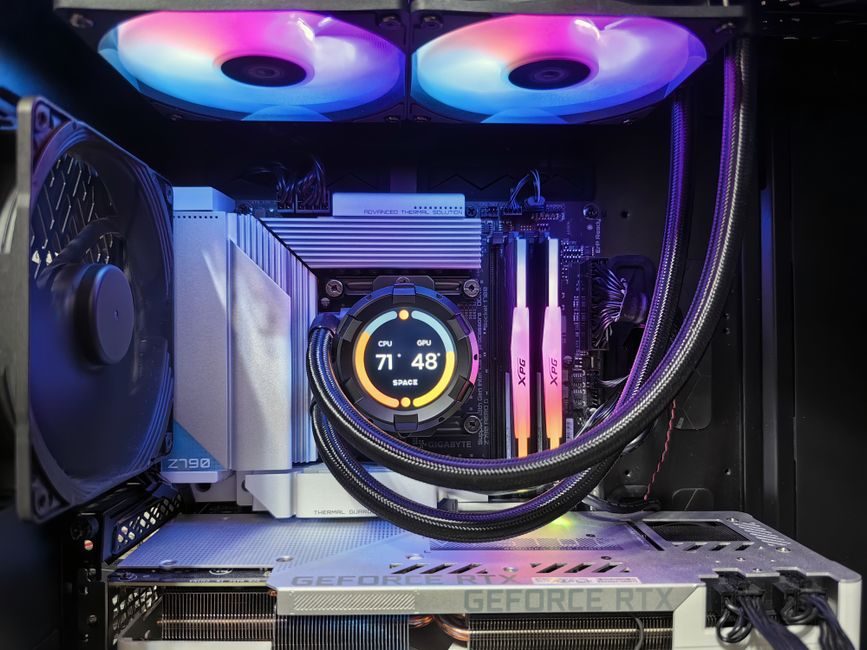
The 2026-06-23 research set returned zero discrete-GPU vendor rankings: snippets cover Colorado AI firms, sports hardware, 3D printing, and Colorado news/entertainment companies, with no enterprise or consumer GPU league table attached to that date [S1][S2][S3][S4][S5].
What the material does anchor is the AI/semiconductor demand pull on adjacent compute categories. The cohort most relevant to a GPU spec discussion — data-centre accelerator buyers and the industrial-graphics edge — is being driven by the same design wins tracked in 2026 semiconductor coverage and AI-chip supply reporting referenced in our news index.
Discrete GPU vs AI accelerator vs industrial graphics: how 2026 categories split
A discrete GPU in 2026 is best read as three separate buying lines: (1) data-centre AI accelerators (the silicon that trains and serves large models, often measured in TFLOPS at FP8/BF16 and HBM stack size), (2) workstation and pro-visualisation cards (RT cores, FP64 throughput, ISV certification), and (3) industrial/embedded graphics modules qualified for long-lifecycle operating-temperature windows [S2].
The 2026 sourcing question is therefore not "which vendor wins" but "which category is the workload in." A 70-billion-parameter training cluster, a 24/7 HMI panel on a pressure transmitter skid, and a welding-robot vision cell paired with a servo motor share almost no GPU, and the wrong categorisation drives both cost and reliability wrong.
Selection criteria an industrial specifier should lock before shortlisting vendors
Five criteria consistently separate credible 2026 GPU choices from the rest: (1) form factor and slot power (HHHL PCIe card vs SXM/OCP module vs MXM), (2) memory bandwidth in GB/s and capacity in GB, (3) software stack maturity (driver cadence, ROCm/CUDA/UOF portability, LTS support length), (4) operating envelope (junction temperature, conformal coating option, vibration spec), and (5) product longevity disclosure in years [S1][S2].
For industrial buyers, the operating envelope is the most underspecified item on most datasheets. A card rated 0–70 °C junction is not a 0–70 °C ambient card; derating, airflow, and dust load all move that number, and the 2026-06-23 sources do not give any vendor-specific industrial temperature numbers, so any claim beyond "industrial SKUs exist" must be left to the manufacturer datasheet.
Adjacent signal: AI accelerator demand pull in 2026
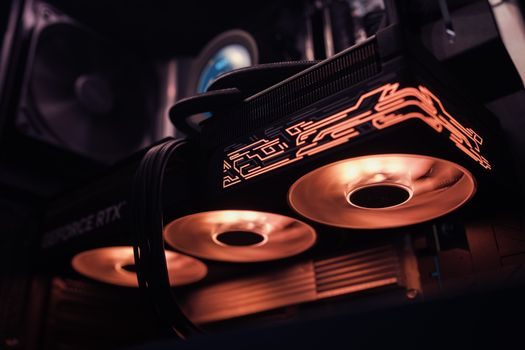
Colorado AI employers tracked in 2026-05-22 listings run defence, computer vision, and analytics workloads that consume AI accelerators at scale, with individual company headcounts reaching the 2,500-employee mark and office counts at 17, which is a useful proxy for downstream accelerator-purchasing power rather than for GPU vendor share [S2].
The same demand pull is visible in the foundry and packaging tier covered in our AI chip manufacturing process: 2026 module-by-module flow, materials, and control points walkthrough, where HBM stacking and CoWoS-style interposer capacity set the actual ceiling on how many top-end accelerators can ship in any given quarter — independent of which vendor logo is on the lid.
Data-centre accelerator: what the spec sheet really says in 2026
The 2026 data-centre accelerator class is benchmarked on FP8/BF16 training throughput, on-chip HBM3e or HBM4 capacity per package, and NVLink/UALink-class scale-out bandwidth; the research set does not attach any specific TFLOPS or GB/s numbers to a named 2026 product, so those values must be pulled from each vendor's published spec, not inferred from the league-table snippets [S1][S2].
What is verifiable from the 2026-06-23 set is the direction of demand, not the size of the pie: defence, vision, and analytics buyers tracked in the Colorado AI listings are exactly the segments that absorb the new FP8/FP4 parts, and that is consistent with the AI Chip Supply Shortage 2026: Where the Bottleneck Actually Sits coverage in our news index.
Workstation and industrial graphics: who it is for, who it is not for
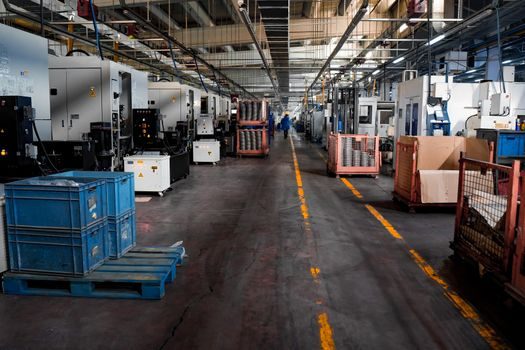
Workstation cards (the W-series / RTX Ada workstation / Radeon PRO class) are for CAD, EDA, simulation, and pro-render buyers who need ISV certification, FP64, ECC VRAM, and 36+ month driver support; they are not for hyperscale training fleets, where total cost of ownership per training token is what matters [S2].
Embedded/industrial modules (MXM, SMARC-aligned GPU mezzanines, PCIe HHHL cards with conformal coating) are for HMI, machine vision, and edge inference in 24/7 enclosures; they are not for gaming, not for training, and rarely for FP64-bound simulation. Pairing a flow meter on a custody-transfer skid with a consumer GeForce card is a common 2026 mistake — the consumer SKU has no long-life programme, no extended-temperature bin, and no ISV list.
What the 2026-06-23 research does not tell us, and how to close the gap
Three things are absent from the source set and must be filled in elsewhere before a spec is signed off: (1) any 2026 vendor revenue or unit-shipment number, (2) any model-code with a specific TFLOPS/GB figure tied to a research tag, and (3) any direct GPU-vs-GPU comparison from the 2026-06-23 window [S1][S2][S3][S4][S5].
The defensible engineering move is to treat the 2026 GPU market as a constraint problem, not a leaderboard: lock category (training / inference / workstation / embedded), lock form factor and power, lock software stack, then validate supply via the Semiconductor Market 2026: Seven Sub-Segments, One Sourcing Map index before any PO is cut. Watch the next 90 days for HBM4 allocation letters and any new long-life industrial SKUs from the workstation vendors; those two signals move 2026 industrial-graphics sourcing more than any headline ranking.