As of 2026-06-25, the largest stainless steel and carbon steel producers continue to dominate line-pipe, structural beam and electrical-grade shipments to the automotive, construction and power-grid markets, while regional re-rollers compete on ASTM A36, A572 and A992 plate lead times [S3].
For purchasing and process engineers, the practical question is not a marketing-style "top 10" ranking, but which mills and stockists can consistently deliver to the ASTM and EN grade families stamped on the drawing, with mill test certificates (MTC EN 10204 3.1) traceable to heat number. Regional specialists such as [S3] ship rebar to ASTM A615 Grade 40 / Grade 60 chemistry bands, illustrating how grade-level compliance — not brand ranking — drives B2B acceptance in the Islamabad and wider South Asian rebar market [S3].
Integrated Mills vs Mini-Mills vs Re-Rollers: A Capacity and Cost Split
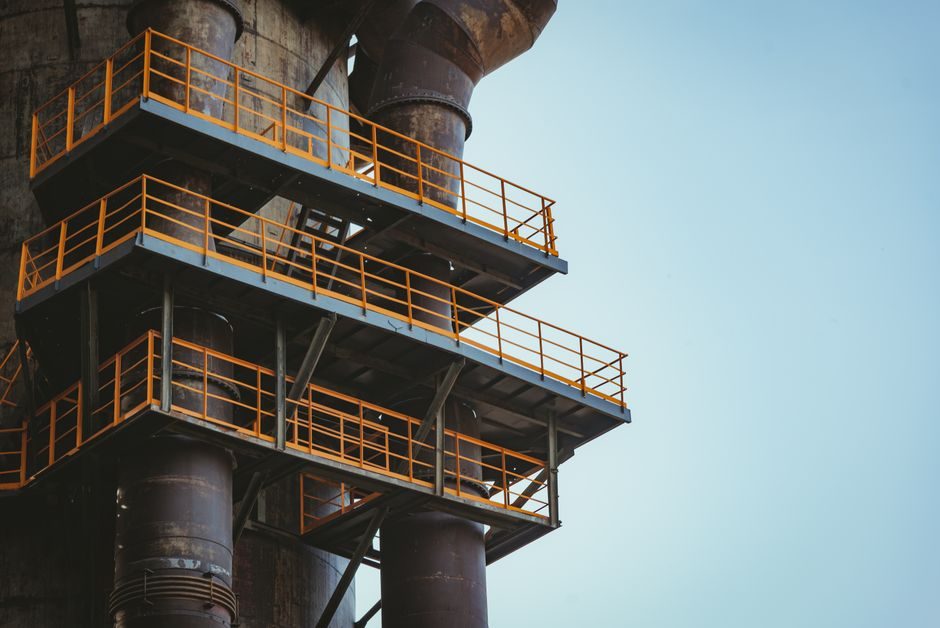
Integrated mills operating blast furnace (BF) + basic oxygen furnace (BOF) routes remain the primary source of flat-rolled carbon steel for automotive exposed panels (ASTM A1008 / EN 10130) and line pipe (API 5L X42–X80), with continuous casting slabs typically 200–250 mm thick rolled down to 0.6–25 mm hot-rolled coil [S3].
Mini-mills using electric arc furnace (EAF) feed — primarily scrap — now supply the majority of long products (rebar, merchant bar, structural sections) in North America and are the dominant route for new alloy steel billet, with EAF tap sizes commonly 60–150 tonnes and transformer ratings of 60–120 MVA per modern U.S. unit. Re-rollers like [S1] operate cold-formed section lines downstream, taking hot-rolled coil or plate and forming C/Z purlins, light-gauge framing and modular steel-frame building kits — a model the Australian supplier advertises with 2,000+ completed steel-frame projects as a delivery-volume proxy rather than a tonnage claim [S1].
Grade Families Buyers Actually Specify in 2026
Most RFQs in the June 2026 cycle concentrate on a handful of designations: ASTM A36 / A572 / A992 for hot-rolled structural shapes; ASTM A615 Grade 40 (yield 40 ksi / 276 MPa) and Grade 60 (yield 60 ksi / 414 MPa) for rebar, the two grades explicitly published by [S3] on its product page; API 5L PSL1/PSL2 for line pipe; ASTM A240 / A240M for stainless steel plate; and ASTM AISI 400-series for magnetic, low-Ni stainless applications.
Electrical steels — non-oriented (NO) and grain-oriented (GO) — remain a separate, higher-value category, with typical CGO grades M2–M6 in the 0.23–0.35 mm thickness band; these are covered in detail on the silicon steel reference page. Engineers sourcing for transformers, motors and EV traction assemblies should treat silicon-steel sourcing as a category apart from structural carbon steel procurement because of the tight thickness tolerance (often ±0.020 mm) and the domain-refining step that drives core loss down to roughly 0.8–1.2 W/kg at 1.5 T / 50 Hz for top-grade CGO laminations.
Decision Criteria: How Spec-Heavy Buyers Compare Steel Suppliers
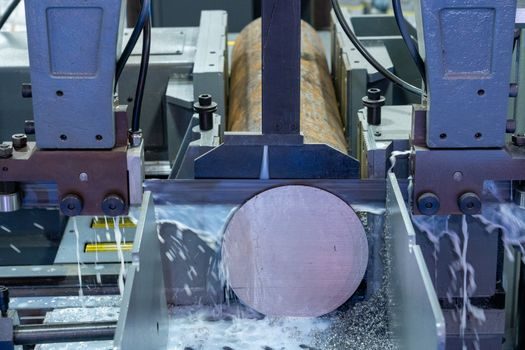
Comparing a multi-national integrated mill, a regional EAF mini-mill and a re-roller/stockist is rarely about headline list price — it is about four engineering gates that buyers apply before release. The first gate is mill qualification: is the mill audited to the buyer's specification (e.g. automaker's "source control" list), and is the latest MTC format compliant with EN 10204 3.1 or 3.2? The second is dimensional and tolerance capability — for plate, ASTM A6 sets the permissible variations for thickness, width, length and camber; for rebar, ASTM A615 sets the size, weight and bend-test requirements that [S3] explicitly cites.
The third gate is metallurgical consistency, often expressed as a CEV (carbon equivalent value) limit for weldability — typical RFQs cap CEV at 0.45 for hot-rolled structural grades, while line-pipe specs push lower for sour-service NACE MR0175 environments. The fourth is capacity, lead time and project-scale fit: an integrated mill on a quarterly allocation cycle will not entertain a 200-tonne spot order, whereas a stockist or re-roller [S1] can move that tonnage inside a single project cycle. Engineers evaluating plate procurement can extend this logic with the plate-selection criteria laid out in Steel Plate Selection: 5 Gates Buyers Run Before RFQ.
Adjacent Markets That Pull the Same Steel Supply Chain
Two adjacent demand blocks are reshaping 2026 steel flow: battery storage and grid hardware, and nickel / cobalt-bearing stainless and alloy products for chemical-process and battery precursors. The battery energy storage system (BESS) build cycle is now a measurable consumer of steel mesh enclosures, structural rack steel and grounding copper-clad flat bar, with cell-to-pack and pack-to-rack volumes profiled in the BESS manufacturing process map for 2026. [S1]
On the alloy side, stainless and nickel-bearing grades are tied to upstream NPI (nickel pig iron) and Class I nickel supply, with the 2026 nickel balance and battery-vs-superalloy split detailed in the nickel industry 2026 outlook and the cobalt industry 2026 sourcing map. For buyers specifying 304/316 stainless for chemical service, those upstream flows directly affect surcharge pricing and the minimum order quantity that mills will accept.
Document Trail: What a 2026 Steel Order Should Look Like on Paper

Every release of structural, pressure-vessel or line-pipe steel in 2026 should travel with a mill test certificate carrying the heat number, the cast or coil number, the chemical composition (C, Mn, S, P, Si and alloy residuals per the spec), the mechanical test results (yield, tensile, elongation, charpy impact where required) and a statement of compliance with the standard cited on the PO (ASTM A36, A572, A615, A240, API 5L, etc.) [S3].
For sour-service line pipe, a separate NACE MR0175 / ISO 15156 certificate is required; for European shipments, a CE marking and, where applicable, an EN 10204 3.2 certificate issued by an independent inspection agency (e.g. TÜV, DNV, BV, LR) should accompany the shipment. Buyers should not accept an MTC that omits the heat number or that cites only the trade name of the steel without naming the standard and grade — that is the single most common cause of rejection at incoming inspection on June 2026 fabrication sites.
Trackable Signals for the Second Half of 2026
Two signals are worth watching in the next 90 days: first, any published quarterly capacity update from the top integrated mills covering BF #4–6 restart cadence and slab availability for Q3 2026 automotive contracts; second, the rebar and re-roller order book at regional players like [S3], which is a leading indicator of Middle East and South Asian construction activity feeding into 2026 Q4 structural-steel pricing. A sustained drop in [S3]-style regional delivery volumes usually precedes the next leg down in regional long-product prices; the opposite holds when project backlogs extend.