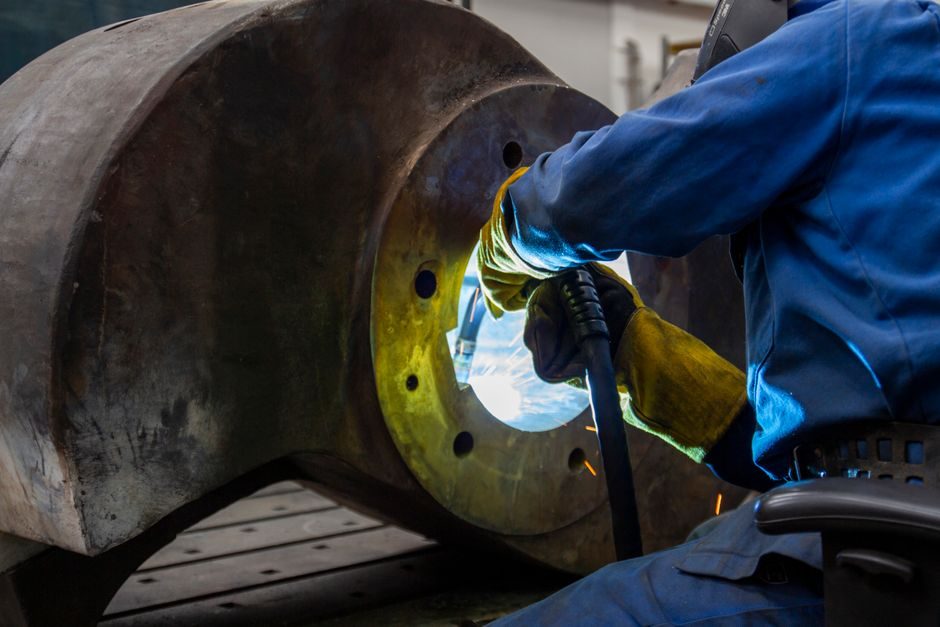
OEM (Original Equipment Manufacturer) production runs a power transformer to the buyer's drawings, kVA rating, vector group, impedance, and enclosure spec, with the buyer retaining all design IP and the factory providing only assembly, winding, and test capacity [S1][S3].
ODM (Original Design Manufacturer) production ships a factory-designed standard product that the buyer rebrands and may modify cosmetically (color, label, terminal layout) without altering core electrical parameters [S2][S5]. Contracts — not labels — decide who owns tooling, who can re-sell the design, and who absorbs warranty exposure [S2].
How the Two Models Map onto Transformer Sourcing
OEM requires the buyer to deliver a complete engineering package: rated power (kVA/MVA), primary and secondary voltage, vector group (Dyn11, Yyn0, etc.), impedance percentage, tap range, temperature class, ingress rating, and applicable standard (IEC 60076 for power transformer liquid-immersed units, IEC 61558 for small control transformers) [S3]. The factory quotes against this package, sources core steel, copper or aluminum conductors, and tank/enclosure materials, then runs type and routine tests per the buyer's referenced standard.
ODM starts the other way around: the factory owns a base platform (typical ratings 10 kVA–2.5 MVA dry-type transformer and oil-immersed versions in 50 Hz/60 Hz), the buyer selects a near-match from a catalog, and customization is limited to non-structural changes such as paint, nameplate, cable gland entry, and logo [S2][S4]. The ODM keeps the right to sell the same design to other buyers unless an exclusive clause is contracted separately [S2].
IP, Tooling, and Contract Scope
Under OEM agreements, the buyer's design and any client-paid tooling (winding fixtures, tank tooling, test jigs) remain buyer property, and the contract must explicitly state whether the factory can manufacture the same design for a competitor after the program ends [S2][S3].
Under ODM agreements, the factory retains design IP, including winding calculations, core lamination drawings, and proprietary encapsulation processes for cast-resin dry-type transformer units; the buyer receives a non-exclusive right to brand and resell, and the contract governs whether minor modifications (different paint, additional markings) are allowed without triggering a new design review [S2][S6]. Standard sourcing guidance recommends that tooling ownership, IP assignment, and post-termination supply rights be written into the contract regardless of which label is used [S2].
Cost Structure: NRE, Unit Price, and Break-Even

OEM carries higher non-recurring engineering (NRE) because the buyer funds the design effort — prototyping custom windings, custom tank fabrication, and one-off type tests can absorb meaningful upfront spend before the first production unit ships [S3][S4]. ODM shifts that cost into the factory's existing platform, so NRE drops close to zero on standard ratings and the buyer pays a per-unit premium that recoups the factory's amortized design spend [S2][S5].
OEM unit price is typically lower at volume because the buyer controls material selection (CRGO vs amorphous core, copper vs aluminum conductors, mineral oil vs ester fluid) and can value-engineer each bill of material line [S3]. ODM unit price is fixed by the factory's catalog and is competitive mainly on standard ratings where multiple factories share the same base design; the buyer loses negotiating leverage on cost-down once the program locks in [S2][S4].
Decision Matrix: When Each Model Fits
Choose OEM when the project requires non-standard kVA, custom impedance, special vector group, marine or offshore certification, or integration with a flow meter skid or industrial valve package that demands matched electrical interfaces; OEM also fits when the buyer must hold IEC 60076 type-test reports under its own name for grid-utility acceptance [S3][S1].
Choose ODM when the requirement is a standard distribution power transformer in a common rating (e.g., 1000 kVA, 11/0.4 kV, Dyn11, 6% impedance) with short lead time, when the buyer's brand is the differentiator rather than the electrical design, and when NRE budget does not justify a custom winding program [S2][S5][S6].
Engineering Risks and Failure Modes
OEM risk concentrates on the buyer side: incomplete specifications cause rework on winding turns ratio, tap range, or impedance; late material substitutions (e.g., aluminum-to-copper conductor swap) can invalidate heat-run test results and force re-test under IEC 60076 [S3][S4].
ODM risk concentrates on the supply side: the factory may discontinue the base design, change sub-suppliers of core steel or cast-resin, or sell the same platform to a competitor in the same territory unless geographic exclusivity is contracted [S2][S6]. Buyers specifying ODM for critical process loads (data-center UPS feed, hospital isolation) should require the factory to disclose bill-of-material sources and change-control procedures in writing.
Quality, Standards, and Audit Signals
Both models can deliver IEC 60076-compliant power transformer units if the contract binds the factory to the right standard and to witnessed routine tests; OEM programs typically include the buyer's own engineering presence during type test, while ODM programs rely on factory-issued test reports and may accept third-party witness only on request [S1][S3]. Buyers should also confirm that the dry-type transformer cast-resin process (for ODM platforms in the 10 kVA–2.5 MVA range) carries valid F-class or H-class insulation certification and that the factory holds ISO 9001 with scope covering transformer manufacture.
Cross-check the factory's recent delivery record, request two references for the same rating class, and ask for a sample of the routine test report format before signing; these three signals separate catalogue resellers from actual winding capacity regardless of OEM or ODM label [S2][S5].
Two trackable signals to watch through 2026: utility-side spec changes that force impedance and noise-level revisions under IEC 60076-10, and rising demand for ester-fluid-filled power transformer retrofits in fire-risk sites — both shift the cost/lead-time balance toward OEM because ODM catalogs still favor conventional mineral-oil designs.
Background reading: Multistage Centrifugal Pump Selection: Spec Map for High-Head Duty.