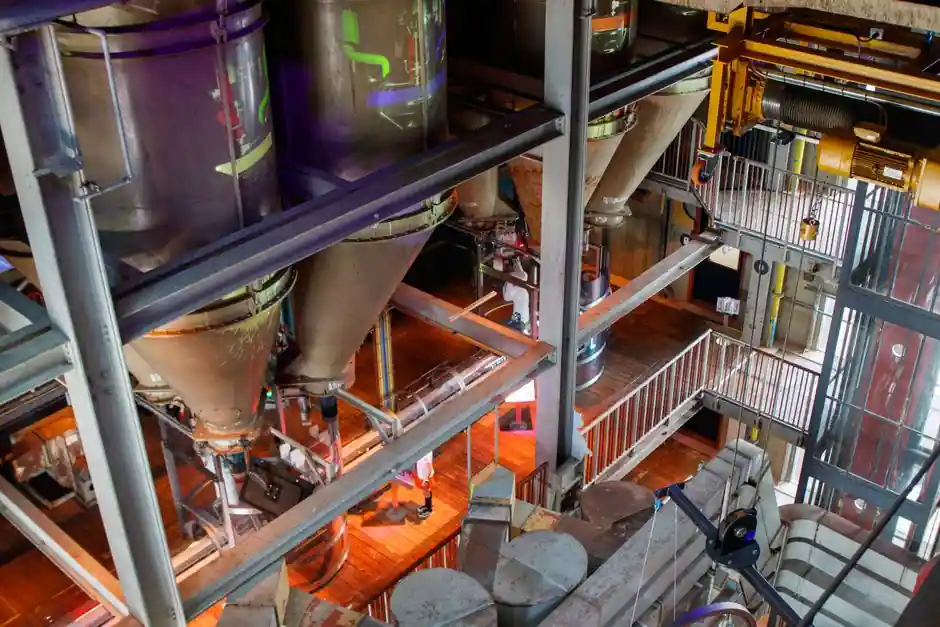
Global SCADA spending is projected to grow from USD 13.87 billion in 2026 to USD 26.59 billion by 2034, an 8.5% CAGR, with cloud architectures, edge processing, and machine-learning analytics cited as the three largest demand drivers [S1].
The same trajectory covers both process and discrete industries, with water, electric power, oil and gas, and discrete manufacturing accounting for the bulk of the installed base expansion tracked by ARC Advisory Group [S3]. Buyers are now evaluating SCADA platforms less on RTU count and more on OT/IT convergence, cybersecurity posture, and the ability to run SCADA software in hybrid cloud topologies.
Market sizing, regional split, and where the 8.5% CAGR is concentrated
Fortune Business Insights puts the 2026 SCADA market at USD 13.87 billion, doubling to USD 26.59 billion by 2034 at an 8.5% CAGR [S1]. The same forecast segments the market by component (hardware, software, services), deployment (on-premises, cloud, hybrid), and end-use (oil and gas, power, water and wastewater, manufacturing, chemicals, pharmaceuticals).
ARC's SCADA market data service covers oil and gas as one of the largest vertical slices and includes water/wastewater, electric power and smart grid, and chemicals as priority research buckets [S3]. On a regional level, the fastest adopter cohort is concentrated in markets with new utility build-out: India, China, and parts of Southeast Asia, where greenfield water and power assets can be instrumented with cloud-native stacks instead of retrofitted [S2].
Architecture evolution: from hard-wired to cloud SCADA
First-generation hard-wired SCADA tied sensors directly to a central terminal, which limited geographic reach to a single facility, according to the SCADA history overview published by High Tide Technologies [S2]. Networked SCADA extended coverage through wireless links, while the current generation, cloud SCADA, links assets across broad distribution areas and is the architecture most commonly specified in new water and electric utility tenders [S2].
This shift changes what an HMI SCADA workstation actually does: less time-series display, more orchestration of edge gateways, cloud historians, and analytics microservices. For process engineers the practical effect is that polling latency, historian retention, and alarm-routing logic now live partially outside the plant LAN, so cybersecurity controls and time-sync (NTP/PTP) become spec-line items rather than IT afterthoughts.
Edge computing: pushing decisions back to the plant floor
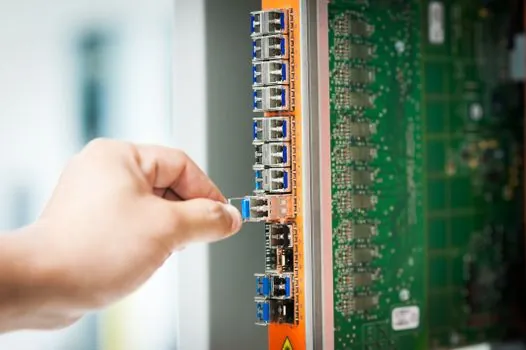
Edge computing inside SCADA means processing selected data streams on-site before forwarding to the cloud, reducing bandwidth use and shrinking control-loop latency for time-critical interlocks [S2]. In practice this maps to ruggedized industrial PCs, PLCs with embedded Linux containers, or vendor-specific edge nodes running the same SCADA runtime as the central server.
Spec-relevant implications: a 2026 SCADA platform is rarely a single product, it is typically a tiered stack of (a) field RTUs/PLCs, (b) on-site edge historian, (c) plant-level HMI SCADA servers, and (d) a regional or corporate cloud historian. Each tier needs its own cybersecurity scope, backup, and time-sync plan; the IEC 62443 zones-and-conduits model is the most commonly cited framework for partitioning these tiers, though end users should map their specific zonal requirements against the current published edition rather than relying on a version number that has not been published in the research [S3].
AI and machine learning inside the control loop
AI and machine-learning modules inside SCADA are positioned to deliver anomaly detection, predictive alarming, and closed-loop optimization on top of existing tag databases [S2]. ARC's market taxonomy lists "Industrial AI" and "Asset Performance Management" as adjacent technology buckets whose boundaries with traditional SCADA are blurring, particularly in oil and gas and process manufacturing [S3].
The data-density argument: a modern SCADA historian ingests 100,000+ tags at 1-second resolution, which is enough raw material to train anomaly models per asset class (pumps, motors, heat exchangers, compressors). The engineer-level trade-off is between black-box vendor models and physics-informed models that respect process constraints; both are now commercially offered, but the spec sheet should still require that any ML-driven control action can be reverted to a deterministic rule-based fallback in one operator click.
Cyber-physical security as a procurement line item

ARC maintains Industrial Cybersecurity as a dedicated research practice, treating it as a parallel track to SCADA platform selection rather than a bolt-on [S3]. The trend for 2026 is that SCADA RFPs are increasingly carrying explicit cyber requirements: account hardening, network segmentation evidence, signed firmware updates, and log forwarding to a SIEM.
Two practical buyer checkpoints: (1) confirm the vendor publishes a product security incident response team (PSIRT) cadence and a CVE disclosure policy covering the SCADA runtime, not just the underlying OS; (2) require a documented secure-development lifecycle aligned to IEC 62443-4-1, with component certification to IEC 62443-4-2 at the Security Level appropriate for the zone. The standards above govern OT product development; end users should always verify the exact edition and applicability against their own risk assessment before writing it into a purchase contract.
Adjacent systems where SCADA now overlaps
Warehouse and logistics automation is one of the fastest-growing adjacent buyers of SCADA-class software. ASRS system and shuttle-system suppliers now expose OPC UA and REST endpoints that feed directly into plant-level SCADA historians, letting the same alarm and KPI dashboards that monitor a process line also monitor a pallet shuttle fleet, see the shuttle system reference for the field-device side of that interface. [S2]
For parcel and distribution operators, the sorting system is similarly being instrumented with SCADA-style tag structures, where divert rates, induction throughput, and reject reasons become standard HMI screens. Even facility safety systems like the sprinkler system are now showing up in unified operator dashboards as supervised assets, driven by insurance carrier requirements for centralized evidence of inspection and test cycles.
Selection criteria and a side-by-side comparison
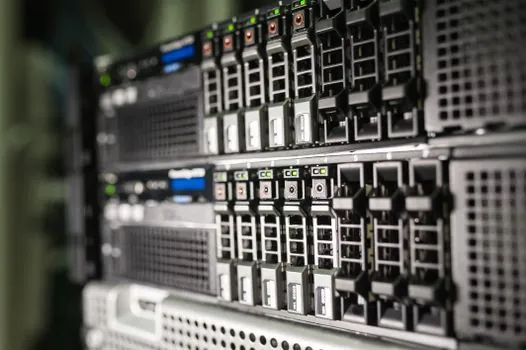
Three architecture choices dominate 2026 SCADA procurement: on-premises (traditional, air-gapped), hybrid (on-prem historian plus cloud analytics), and cloud-native (vendor-hosted runtime, browser HMI). The decision criteria below are the ones process engineers and control managers should weight equally rather than chasing a single headline feature. [S2]
On criteria (1) latency, on-premises still wins for hard real-time loops under 100 ms. On (2) cybersecurity and segregation, on-premises or air-gapped hybrid remains the conservative choice for safety-instrumented functions. On (3) scalability and remote asset coverage, cloud-native pulls ahead for utilities and multi-site fleets. On (4) AI/ML capability, cloud-native vendors lead on out-of-the-box model libraries, but the model must still be auditable against process physics. A useful due-diligence step is to require a live reference visit at an existing customer running the same architecture tier, plus a documented migration path off the platform if the vendor is acquired or de-supported.
Limits, failure modes, and what to watch next
Cloud SCADA's growth does not erase its constraints: control loops that need deterministic millisecond response, sites with poor WAN reliability, and regulated safety functions still belong on the local controller, not the cloud [S2]. Edge computing is the architectural answer to bandwidth and latency, but it shifts the failure-mode profile toward edge-node firmware management and physical security at unmanned sites.
Two indicators worth monitoring through 2026 and into 2027: (a) the publication cadence of IEC 62443-4-2 component certificates among the major SCADA vendors, since this is the most concrete proxy for OT-security maturity, and (b) the share of new utility tenders in India and China that require cloud-native SCADA by name, which is the leading indicator of whether the regional CAGR outpaces the global 8.5% [S1][S2][S3]. For utilities and process plants evaluating refresh in 2026, the data center cooling spec reference shows the same cloud-plus-edge pattern playing out in adjacent critical-infrastructure segments, and the Tier 1 power-grid supplier ranking is a useful read on who is actually winning those hybrid-cloud utility tenders.