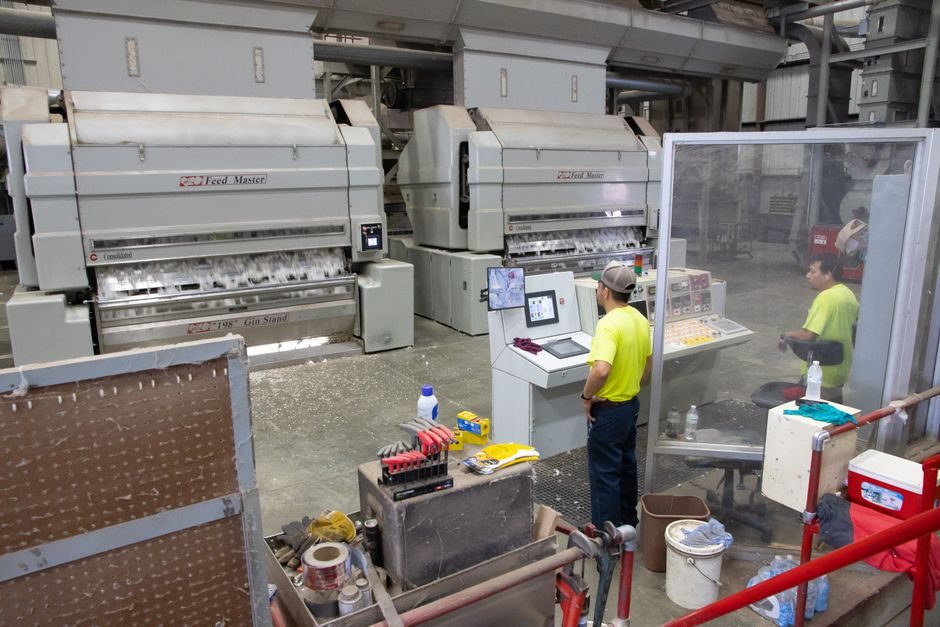
The V-Process (vacuum process cast molding) line is a binder-free, dry-sand casting method where heated EVA (ethylene-vinyl acetate) film is draped over a pattern, the flask is filled with unbonded dry sand, and a vacuum pump evacuates the sealed cavity so atmospheric pressure difference alone holds the mold rigid for pouring [S3].
The line is electrically automated, releases little dust, and reports a sand material recovery rate of 95%, making it a common choice where sand-handling cost, hygiene, and dimensional repeatability dominate the capex decision [S3].
Operating Principle and Core Equipment Stack
V-Process casting is purely a physical molding process — no chemical binder, no water addition, and no thermal curing step are required, with the sand mass held rigid only by the negative gauge pressure developed between the film and the mold wall [S3].
The main equipment list clusters into four sub-systems: a vacuum stabilization group (vacuum pump, vacuum meter, surge tank, dust removal tank, steam separator); a molding group (die shoe, automatic roast laminator, sand molding box, vibrating table, manipulator, die lifter); a sand reclamation group (sand screen, elevator, conveyor, sand bin); and PLC/electrical control for sequencing [S3]. A typical process sequence is heat EVA film → laminate onto a wood or aluminum pattern → apply release coating → set empty box → sand fill and vibrate to compact → cover the back film → evacuate the sand box → lift and assemble the mold → evacuate the whole mold → pour → release vacuum and shake out loose sand [S3].
Quantified Advantages Reported by the Process
The V-Process line is repeatedly credited with sand recovery at 95%, low casting cost, good dimensional accuracy, labor savings, a clean shop floor, eco-friendly operation, material savings, and reduced labor intensity [S3]. Because the sand is not bonded chemically, the entire flask content drops out as free-flowing media on shake-out, which is what drives the 95% reclamation figure and eliminates binder-related fume handling [S3].
Vacuum's contribution to dimensional accuracy is mechanical: the atmospheric pressure differential acting on the film packs the sand against the pattern uniformly, so pattern geometry is reproduced with very little draft-induced distortion [S3]. The dry, binder-free media also means no moisture-related gas defects at pour, which is one of the reasons the process is positioned for foundries that need repeatable, near-machining tolerance on small-to-medium castings [S3].
Comparison: V-Process vs Resin-Sand and Green-Sand Molding
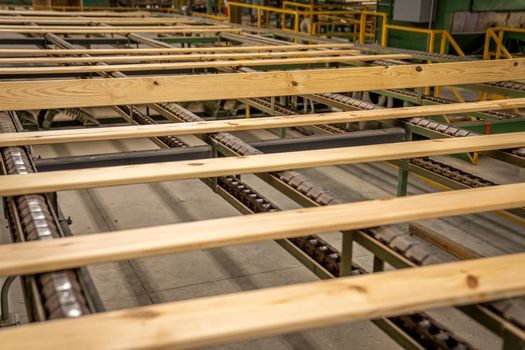
Against resin-sand lines, V-Process eliminates the resin mixer, the catalyst dosing system, and the fume-extraction load tied to phenol-formaldehyde binders, but it adds a vacuum pump, a film laminator, and a sealed-flask discipline that green-sand and resin-sand lines do not require [S3]. In a side-by-side view on four decision criteria: (1) binder chemistry — V-Process uses none, resin-sand uses furan/phenolic binder, green-sand uses bentonite + water; (2) sand recovery — V-Process quotes 95%, resin-sand requires mechanical reclamation of bonded lumps, green-sand needs water and bentonite make-up; (3) dust and fume load — V-Process is described as low-dust and eco-friendly [S3], whereas resin-sand generates VOC during pour and shake-out; (4) pattern media — V-Process accepts wood or aluminum patterns via film lamination, while resin-sand and green-sand can use the same metal patterns directly without a film stage [S3].
The decisive trade-off is energy and consumable economics: V-Process spends on EVA film and continuous vacuum pump run-time rather than on binder chemistry and sand make-up, so the optimum shifts with regional binder price, electricity tariff, and sand-disposal cost [S3].
Limitations, Failure Modes, and Who Should NOT Specify It
The process is dependent on vacuum integrity: any leak in the film, the flask seal, or the connecting hose collapses the differential pressure and the mold loses rigidity, so pneumatic sealing, EVA film quality, and pump redundancy become single-point failure items that do not exist in chemically bonded lines [S3].
The EVA film is a consumable, and any operation running on very long flask cycles or very high pour temperatures will see film cost rise linearly with throughput, narrowing the cost advantage against chemically bonded systems. V-Process is also not the right pick for castings that demand exceptionally high metallurgical superheat or extended cooling under vacuum, because the rigid dry-sand pack has lower collapsibility than green-sand and can impose hot-tearing risk on constrained solidification paths; for those conditions a molding line with chemically bonded collapsibility is normally retained instead.
For foundries that lack a stable compressed-air and three-phase power supply, or for very small job-shop batches where the film-lamination and vacuum-evacuation setup time dominates, the economics break down — chemically bonded automatic molding line cells are the more practical fit because they trade sealing discipline for self-curing strength.
Selection Criteria and Sourcing Checklist
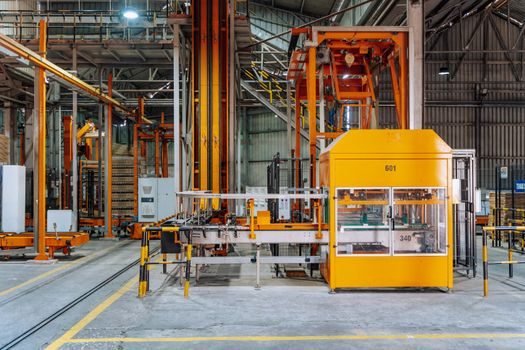
A spec map for sourcing should confirm four measurable items: the vacuum pump's ultimate pressure and leak-up rate, the EVA film thickness and heat-seal temperature window, the vibrating table's compaction frequency and amplitude, and the rated capacity of the sand reclamation screen and conveyor returning to the sand bin. Each of these maps back to a verifiable acceptance value rather than a marketing phrase [S3].
Foundries evaluating a V-Process cell alongside competing binder systems should request cycle-time data per flask, kWh per ton of casting poured, EVA film consumption per flask, and the achieved sand-reclamation percentage measured over a defined period, because the 95% reclamation figure is a process capability, not a guaranteed outcome on every installation [S3]. Pattern media decision is similar: wood patterns are acceptable for V-Process because the film conforms to them under vacuum, which is a real advantage over shell molding machine flows that demand thermally stable metal patterns [S3].
Where V-Process Fits vs Where It Does Not
V-Process fits medium-volume ferrous and non-ferrous foundries that need tight dimensional repeatability, low dust, and a binder-free shop, especially where sand disposal is regulated and reclamation is rewarded; it does not fit ultra-high-mix job shops, very large castings requiring flask sizes beyond the laminator's working envelope, or alloys that demand extended vacuum-assisted cooling not available in a standard V-Process pour cycle [S3].
For plants already standardising on PLC-driven, low-fume operations, the V-Process line is a credible drop-in alongside a chemically bonded v-belt-driven molding cell, and it can share a multifunction process calibrator workbench for instrumenting the vacuum and sand-handling subsystems without duplicating tooling.
Track three signals before signing the PO: the OEM's measured reclamation percentage over six months of production, a documented leak-up rate on a representative flask, and the EVA film consumption per flask at the planned throughput, because those three numbers together decide whether the line is a binder-free win or a film-cost burden in your specific shop.
See also our earlier report, Lithium Battery Process Control and Instrumentation: Spec Map for Cell and Pack Lines.