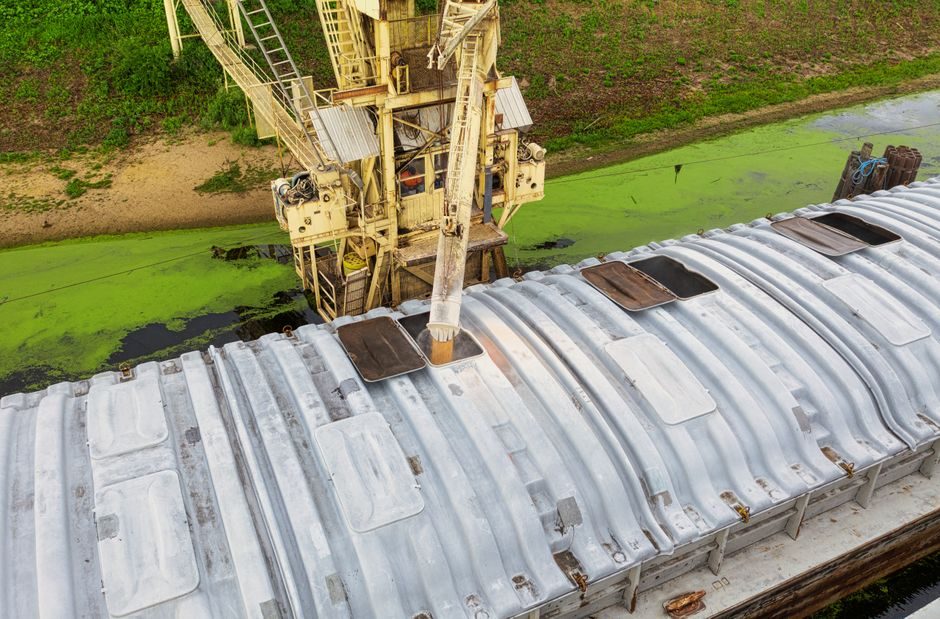
Pneumatic vacuum pumps that pull drilling cuttings, mineral concentrates, and chemical slurries through transfer piping were first documented as a dedicated product class in 2018 by GN Solids Control [S9], and the duty profile has since driven a clear split between wet-tolerant and dry-sealed vacuum architectures [S1][S4].
Selecting a pump for a slurry line differs from clean-service vacuum duty in three measurable ways: the process gas carries entrained solids, the liquid phase can include corrosive or abrasive species, and the suction line is sized for bulk conveyance rather than molecular flow [S5][S10].
Duty profile: vacuum level, solids loading, and moisture fraction
Slurry transfer vacuum duty operates in a coarse-vacuum regime well above the molecular-flow range where turbo and cryopumps are economic, and published vacuum-pump taxonomy places this work inside the gas-transmission class rather than the gas-capture class [S10].
Vendor catalogs published in 2026-06 list six primary pump families relevant to process vacuum — liquid ring, rotary vane, Roots, piston, oil diffusion, and dry type — with the first four appearing in slurry transfer quotations [S1][S4]. The two process variables that decide which architecture is even admissible are solids loading in the suction stream and the moisture fraction of the slurry; oil-sealed diffusion pumps and most dry semiconductor pumps are built for clean, dry inlet gas and exclude themselves from any duty where particulate ingestion is expected [S4][S8].
Pump technology comparison on four slurry decision criteria
Liquid-ring pumps compress against a process-liquid seal and tolerate carryover on abrasive slurry duty, while rotary vane pumps reach a deeper published ultimate vacuum at the cost of accelerated vane wear on solids ingestion [S1][S5].
Lining the candidates up against four criteria — solids tolerance, moisture tolerance, ultimate vacuum, and maintenance interval — exposes where each architecture wins and where it stalls. Liquid-ring pumps use the process liquid or a sealed water ring as the compression fluid, which makes them inherently tolerant of liquid carryover and moderate solids loading [S1].
Rotary vane pumps reach a deeper ultimate vacuum, typically published in two-stage configurations, but depend on oil lubrication of the vanes, so abrasive slurry ingestion accelerates vane wear and contaminates the sealing oil [S1][S5]. Dry claw and Roots pumps keep the swept volume free of process fluid, which suits dry powder transfer, but the geared rotors are not designed to absorb liquid slugs [S1][S4]. For abrasive mining and drilling slurries, published OEM casework steers buyers toward liquid-ring or heavy-duty rotary vane with an external flush circuit, and an aromatics extraction retrofit published in 2026-06 shows steam-jet ejectors being replaced by oil-free pump systems specifically because of the energy penalty of generating high-pressure motive steam [S5][S9].
Instrumentation: pressure, flow, and valve interfaces on the suction side
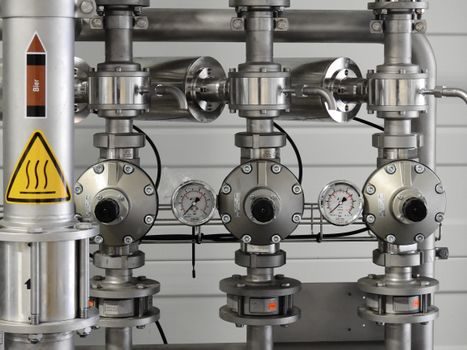
Vacuum pump product packages listed in 2026-06 catalogs include dedicated vacuum gauges and controllers as standard items alongside the pump [S4].
Vacuum control on a slurry line is governed by suction-side pressure transmitter feedback, not discharge pressure, because line restriction from settled solids is the dominant upset mode. A flow meter on the slurry discharge provides the cross-check that the vacuum is moving mass, not just pulling gas past a blocked line.
Vacuum-rated industrial valve selection matters as much as the pump itself: butterfly valves with elastomeric seats fail at deep vacuum because the seat unloads, whereas full-bore ball valves in metal-seated trim hold vacuum with bi-directional sealing. The control loop — transmitter, PID block, and vacuum setpoint — is normally executed in a PLC, with a pressure sensor at the pump inlet providing the fast signal for anti-cavitation interlocks [S1][S4].
Operating limits, failure modes, and what disqualifies a candidate
Liquid-ring pumps cannot run dry for more than a few minutes without seal-water damage, rotary vane pumps cannot tolerate coarse particle ingestion without vane scoring, and Roots blowers used as vacuum boosters cannot accept liquid slugs because the timing gears are not liquid-immersed [S1][S8].
Molecular pumps, which span oil-lubricated, grease-lubricated, and magnetic-levitation variants as documented in 2026-06 [S8], are designed for clean, dry, molecular-flow service and have no place on a slurry suction line — they should be excluded at the specification stage. Steam-jet ejectors, while still listed by some industrial vacuum vendors [S7], are being displaced in extraction service by oil-free pump systems because of the energy penalty of generating high-pressure motive steam [S5].
Standards, documentation, and supplier screening

Vacuum pump technical catalogs published in 2026-06 by EVP, Welch, Ideal Vacuum, and other industrial vacuum vendors follow the same baseline data sheet: ultimate pressure, pumping speed curve vs inlet pressure, motive fluid or seal-fluid consumption, noise level, and motor power [S1][S4][S6].
Buyers specifying for slurry should require curve data at multiple inlet pressures, not just ultimate pressure, because pump speed drops sharply through the coarse-vacuum range on positive-displacement designs [S1]. The 2018 GN Solids Control release of a pneumatic slurry transfer pump remains the most cited industry milestone for the dedicated slurry-vacuum product class [S9], and vendor product literature from 2026-06 continues to reference it. Buyers comparing short-listed vendors should weight the published suction curve, the seal-fluid or flush circuit design, and the local service footprint more heavily than headline ultimate vacuum [S1][S6].
Trackable signal: any 2026-Q3 release of a magnetic-bearing dry claw pump with an abrasion-resistant rotor coating would shift the slurry-vacuum shortlist, because published dry-claw offerings in 2026-06 catalogs do not list a slurry-rated variant [S1][S4].