
China's 2026 vanadium production is forecast at 150,000 to 160,000 tonnes V2O5-equivalent, with global ferro-vanadium output sitting between 150,000 and 160,000 tonnes and the non-Chinese contribution stable near 70,000 to 77,000 tonnes [S1][S2]. New Chinese supply additions are constrained by environmental, energy, and permitting rules in the Panzhihua-Xichang belt, and Western juniors are unlikely to fill the gap before 2027 at the earliest [S2][S3].
On the demand side, long-duration energy storage is the swing factor. China's cumulative vanadium flow battery (VFB) installed capacity is projected to clear 8 GWh in 2026, absorbing an estimated 35,000 to 40,000 tonnes of vanadium (V2O5-equivalent) and lifting the storage share of Chinese vanadium consumption from roughly 20 percent in 2025 to more than 30 percent in 2026 [S2]. The Chinese steel sector will still take around 100,000 tonnes of vanadium in 2026, broadly flat year on year but biased toward higher-grade ferrovanadium and vanadium-nitrogen alloys under the GB1499.2-2024 rebar standard [S2].
Supply baseline: 110,000 t of contained V globally, China still 75 percent of it
USGS data tracked by the trade press put global mined vanadium output at 110,000 metric tons of contained vanadium in 2025, down from 118,000 t in 2024, with China contributing 82,000 t in 2025 versus 84,000 t in 2024 and 70,000 t in 2023 [S3]. The contraction is concentrated in Sichuan's Panzhihua-Xichang vanadium-titanium belt, where a small group of integrated producers dominate and where energy controls have throttled incremental tonnes [S3]. The same article also records that low ferrovanadium prices in 2023 to 2025 caused both Western and Chinese producers to shelve expansion projects, leaving almost no shovel-ready new tonnes for 2026 [S3].
Vanitec's March 2026 update, drawn from ASIACHEM, frames the ceiling rather than the floor: Chinese vanadium production is "expected to remain in the range of 150,000 to 160,000 tonnes (V2O5-equivalent) in 2026" with new capacity "limited" [S2]. The ZHENXIN supplier brief aligns, projecting 2026 global ferro-vanadium at 150,000 to 160,000 tonnes and non-Chinese ferro-vanadium at 70,000 to 77,000 tonnes [S1]. The Investing News Network H1 2026 review notes that "much of this impact occurred in Sichuan's Panzhihua-Xichang vanadium-titanium belt" and attributes the year-over-year production drop to "environmental regulations, energy controls and long project timelines" [S3].
Price trajectory: V2O5 off the 2025 trough, but still below historical norms
V2O5 fell more than 47 percent from a February 2022 peak of US$9.20 per pound to a September 2025 cyclical trough of US$4.86 per pound, well below long-run averages [S3]. In China, the average 98 percent V2O5 price reached about RMB 79,000 per tonne in early March 2026, with 50 percent ferrovanadium at roughly RMB 95,000 per tonne, both stabilising after the Lunar New Year [S2]. US ferrovanadium jumped roughly 19 percent quarter-over-quarter in Q1 2026 to about US$46,800 per metric ton, and the Chinese ferrovanadium index rose about 24 percent to an average near US$13,131 per metric ton over the same window [S3].
CRU's published view is that vanadium market prices "are likely to rise from late 2026, supported by tightening supply and growing demand" once the price environment makes deferred projects bankable again [S3][S4]. INN's H1 2026 review reinforces that the recovery is "tentative" and is largely steel-led, not yet storage-led outside China [S3]. That split is the key risk for 2026 procurement: prices have stopped falling, but the supply response has not yet started, and any VFB demand surprise on top of the steel baseline will amplify the squeeze.
Demand split 2026: steel still the floor, VFB the swing variable
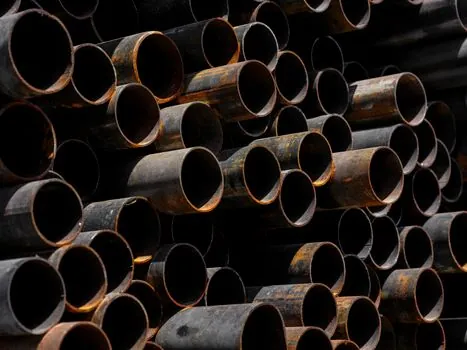
Chinese steel is expected to consume around 100,000 tonnes of vanadium in 2026, broadly flat versus 2025, with the mix shifting toward higher-grade ferrovanadium and vanadium-nitrogen alloys [S2]. The driver is GB1499.2-2024, the mandatory national standard for hot-rolled ribbed rebar, which raises the per-tonne vanadium intensity of compliant Chinese steel [S2]. Globally, the World Steel Association's latest outlook cited by INN points to 0.3 to 1.3 percent growth in 2026 steel demand, with India at roughly 7.4 percent and the US and EU supported by private and defence spending respectively [S3].
The VFB layer is the new variable. Vanitec's projection of 8 GWh cumulative Chinese VFB capacity in 2026, drawing 35,000 to 40,000 tonnes of V2O5-equivalent, would lift the storage share of Chinese vanadium demand from about 20 percent in 2025 to more than 30 percent in 2026 [S2]. A live example is the 200 MW / 1 GWh VFB storage facility under deployment in Xinjiang, with system and electrolyte manufacturing capacity expanding alongside it [S2]. For comparison, the same article notes continuous VFB efficiency gains from higher electrolyte concentrations, improved electrode materials, and system-level optimisation, all of which lower the V2O5 dollars-per-kWh ratio but not the absolute tonnes per installed MWh [S2].
Outside China the VFB case is weaker. Amy Bennett, principal consultant at Fastmarkets, told the Fastmarkets Global Battery and Critical Materials Conference in Las Vegas that VFBs "are actually starting to lose out" to LFP, which dominates Chinese battery manufacturing and now sets the cost benchmark for stationary storage [S3]. Her read: VRFBs are "not hearing peo[ple talk about them]" in US/EU stationary storage procurement as LFP undercuts them on dollar-per-kWh, leaving China as the single credible 2026 VFB demand sink [S3].
Selection criteria for buyers and specifiers: where to lock tonnes first
For procurement teams running 2026 contracts, the decision is not whether vanadium is tight but where in the chain to lock first. A criteria-based read of the 2026 market against four axes: price floor, supply concentration, demand-driver mix, and substitution risk. [S3]
Price floor: V2O5 at US$4.86 per pound in September 2025 is below the cost curve of most Western producers, which is why CRU and INN both expect late-2026 recovery rather than a flat line [S3][S4]. The ferrovanadium spread between the US (~US$46,800/t) and China (~US$13,131/t) in Q1 2026 reflects logistics, anti-dumping structure, and grade mix more than intrinsic supply [S3]. Supply concentration: USGS tracks China at 82,000 t out of 110,000 t contained V in 2025, roughly 75 percent of global mined output, with the Panzhihua-Xichang belt the single biggest chokepoint [S3]. Demand-driver mix: steel at 100,000 t in China is the stable floor; VFB at 35,000 to 40,000 t is the growth layer and the part most exposed to a 2026 upside surprise [S2]. Substitution risk: LFP, not another vanadium chemistry, is the binding threat outside China for stationary storage, per Fastmarkets' conference read [S3].
For tool-steel and high-strength rebar buyers covered under the GB1499.2-2024 framework, ferrovanadium and vanadium-nitrogen alloy intake intensity is rising, and the tool and die steel grade map for oil and gas service is the relevant cross-reference for the metallurgy side of that spec. Procurement teams running industrial UPS sizing for VFB sites should treat electrolyte cost as a separate line item from power-conversion hardware, since VFB capex is dominated by V2O5 electrolyte dollars per kWh rather than inverter dollars per kW.
Use cases and failure modes for 2026 VFB deployment
VFBs are specified where long-duration storage, deep cycling, and intrinsic safety outweigh LFP's cost advantage. The Xinjiang 200 MW / 1 GWh VFB is the headline 2026 reference deployment, and the 8 GWh cumulative Chinese target for 2026 implies multiple gigawatt-hour-scale projects in the pipeline [S2]. VFB lifetime advantages cited by Vanitec include long operational lifetimes, intrinsic safety (non-flammable aqueous electrolyte), and flexible system design for grid, microgrid, and behind-the-meter use [S2].
Failure modes for 2026 deployments: first, electrolyte cost overruns if V2O5 prices break above the CRU late-2026 recovery path, since electrolyte is the single largest capex line; second, manufacturing bottlenecks in stacks and membranes, which Vanitec notes is being addressed by expanded Chinese system and electrolyte production but is not yet oversupplied [S2]. Third, technology risk: outside China, Fastmarkets' read is that LFP has decisively taken the stationary storage conversation, so non-Chinese VFB projects face a tougher financing case and slower offtake [S3]. Fourth, mining permit risk in Western jurisdictions, where VanadiumCorp-style juniors are positioning around the policy gap but have no 2026 production tonnes [S6].
Limitations, standards, and sourcing discipline
Numbers above carry research citations [S1][S2][S3][S4][S5][S6]; the GB1499.2-2024 rebar standard is the binding Chinese demand shifter for vanadium intensity in steel [S2]. World Steel Association 2026 global growth of 0.3 to 1.3 percent and India's 7.4 percent are quoted from INN's H1 2026 review citing the latest Worldsteel outlook [S3]. The 47 percent V2O5 peak-to-trough move is sourced to the same INN piece and is not independently re-checked against a separate price index in this brief [S3].
Two watch items for the back half of 2026: CRU's call for a price recovery from late 2026, contingent on supply discipline holding, is the single most trackable signal for whether the current floor breaks [S4]. The 8 GWh Chinese VFB installed-capacity target, and the implied 35,000 to 40,000 tonnes V2O5-equivalent draw, is the second; a miss on either would reset the storage-share of vanadium demand back toward the 20 percent 2025 baseline [S2]. Until those two signals print, the 2026 vanadium market is best described as tight on paper, recovering in price, and one VFB project away from a real squeeze.
The underlying component specifications are covered under dc power supply, and switching power supply.