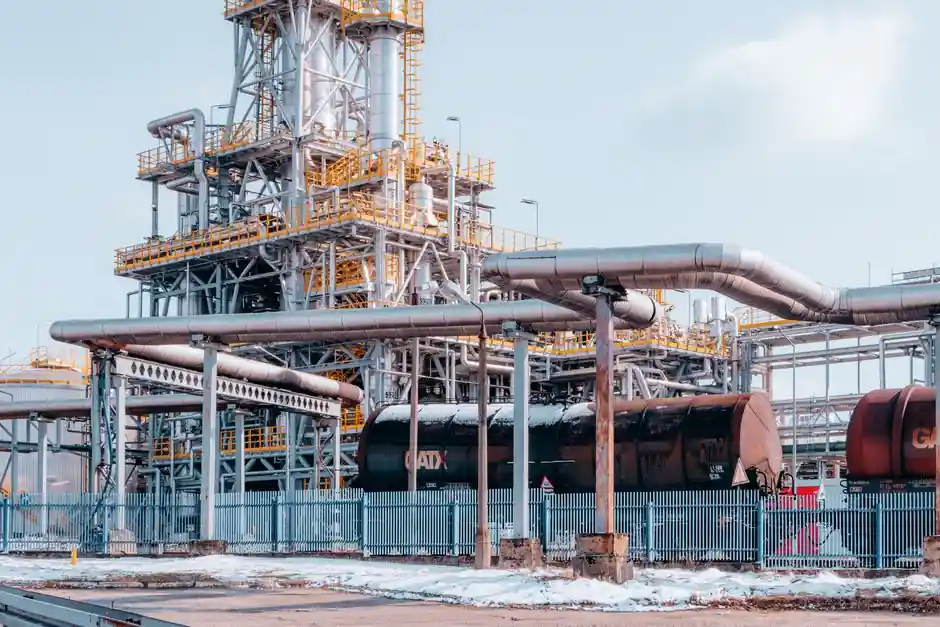
Vanadium value chain 2026 hinges on a single supply concentration: vanadiferous titanomagnetite (VTM) ore bodies deliver 75% of global mined vanadium, with the Bushveld Complex in South Africa and the Panzhihua district in China as the two anchor production regions [S2].
Shale-hosted (stone-coal and Karoo Basin) vanadium contributes a further 10-15% of global output, sandstone-hosted uranium-vanadium ores (Uravan Mineral Belt, Colorado) cover under 5%, and vanadate/base-metal deposits in Namibia, Botswana, and Zambia remain negligible today [S2]. The vanadium pentoxide intermediate is therefore the commercial hinge between upstream ore and every downstream application, which is why global V2O5 market value is tracked at USD 1.38 Billion in 2025 with a 5.8% CAGR to USD 2.05 Billion by 2032 [S1].
Upstream ore supply: VTM, secondary slag, and end-of-life recycling
Vanadiferous titanomagnetite remains the primary feedstock because it is co-mined with iron and titanium, allowing integrated steel and pigment producers to absorb vanadium as a byproduct credit rather than a primary revenue line [S2]. Stone-coal vanadium in China and Karoo Basin shale-hosted deposits in South Africa and Namibia add a second ore pathway, particularly suited to lower-grade or smaller-scale operations [S2].
Secondary supply is structurally significant: end-of-life recycling rate (EoL-RR) sits at roughly 5% and end-of-life recycling input rate (EoL-RIR) at about 10% globally, while all secondary sources (steel slag, petroleum residues, fly ash, end-of-life scrap) together supply an estimated 15-20% of the global market in any given year [S2]. In China specifically, slag processing has become a major recovery stream, and USGS notes U.S. secondary production already converts waste into ferrovanadium, vanadium-bearing chemicals, and V2O5 [S1].
Midstream conversion: V2O5, ferrovanadium, and high-purity battery grade
The midstream step refines V2O5 flake or powder into either metallurgical ferrovanadium (FeV) for steelmakers or high-purity V2O5 for electrolyte and catalyst users [S1]. Technology leadership is now expressed through purity grades: Largo's VPURE+ vanadium pentoxide powder is positioned for both catalyst and VRFB electrolyte use, reflecting a broader shift toward battery-oriented product specifications [S1].
Asia Pacific leads the V2O5 market because the region combines mining (China's VTM districts), mature catalyst and metallurgy customers, and active VRFB deployment plus upstream electrolyte development, with Australia pushing an integrated mining-to-electrolyte-to-storage chain [S1]. The conversion economics, however, are energy-intensive: thermal reduction cost spikes whenever energy or freight surcharges rise, which is why midstream players are deploying AI-driven refining models and circular vanadium recovery to hedge input shocks [S1].
Downstream steel demand: HSLA, tool steel, and rebar anchor 90% of consumption
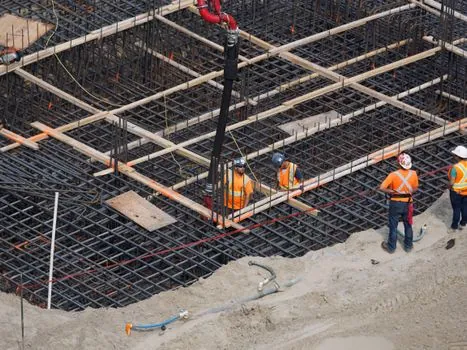
More than 90% of reported vanadium consumption remains tied to metallurgical use, primarily as an alloying agent in iron and steel, because vanadium improves strength, wear resistance, toughness, and fatigue performance in high-strength low-alloy (HSLA), tool, and stainless steels [S1]. In 2024 the steel sector still absorbed an estimated 90% of global vanadium, a share unchanged since 2022, spanning construction rebar, pipelines, shipbuilding, automotive, nuclear reactors, and heavy machinery [S2].
Process engineers specify FeV additions to tie up carbon as vanadium carbides and nitrides, which refines grain size and lifts yield strength, the same property set that made HSLA rebar the global default for seismic and high-rise construction [S1]. This base-load steel demand is what kept the vanadium economy commercially relevant through prior battery-market volatility and is the reason upstream VTM producers can plan multi-decade offtake [S1].
Downstream VRFB and energy storage: from 2% to 10% by 2030
Energy storage accounts for just 2% of vanadium demand today but is projected to rise to 10% by 2030, driven by vanadium redox flow battery (VRFB) deployment for renewable integration and grid stabilization [S2]. VRFBs use a liquid electrolyte containing vanadium in different oxidation states (typically V2+/V3+ on the negative side and VO2+/VO2+ on the positive side), which is why high-purity V2O5 is becoming a strategic input rather than a commodity chemical [S1].
The World Bank CES Report 2022 (Table 2.4) quantified the opportunity as roughly 18,000 metric tons per year of upstream vanadium ore (pentoxide basis) and a projected 2030 production revenue of R 4.47 billion at 2021 prices, with midstream electrolyte manufacturing sitting as the value-adding step in between [S4]. A comparison of options shows why this matters: pentoxide purity, electrolyte formulation, and grid-scale project financing are now gating downstream offtake as much as the underlying mining permit. The same logic, aligning permitting, industrial, fiscal, and trade policies to attract refinery feedstock while incentivizing downstream industries, is the policy pathway the African Development Bank's Critical Mineral Insights 12 paper recommends for emerging producers [S2].
Selection criteria and comparison: which downstream gets the marginal vanadium?
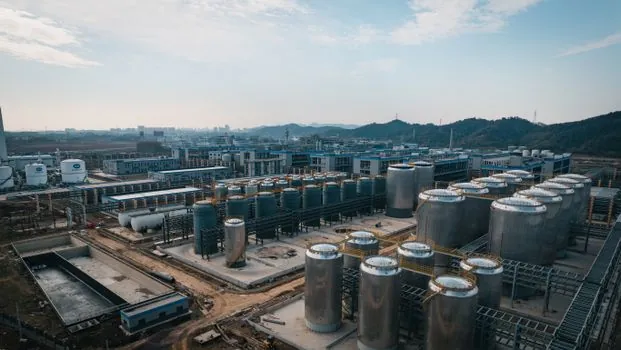
Process engineers choosing where to send a marginal ton of V2O5 effectively pick between four downstream routes, and the decision criteria are stable across vendors. Steel microalloying is the highest-volume, lowest-purity route, with FeV typically traded in the 75-80% V grade range and accepted on standard metallurgical specs. Catalyst applications (sulfuric acid, maleic anhydride) need higher purity V2O5 and tighter trace-metal control, while titanium alloy production for aerospace and defense requires the tightest specification window of all metallurgical buyers [S1].
VRFB electrolyte sits at the top of the purity pyramid, where Largo's VPURE+ specification explicitly targets both catalyst and flow-battery use, the same product a steelmaker would reject for trace-element reasons [S1]. Australia is the most visible case of an integrated play, linking mining, electrolyte manufacturing, and energy storage in one national supply chain, while South Africa is pursuing the same model around the Bushveld Complex and local VRFB localization [S1][S4]. For a peer comparison, the upstream-mining to midstream-processing to downstream-application pattern in tungsten follows a structurally similar three-stage logic, with the same trade-off between steel-alloy demand and emerging-energy demand shaping the next decade of capex.
Constraints, failure modes, and what to track next
The chain's biggest single-point failure is the VTM concentration in two districts: a logistics or permitting disruption in Bushveld or Panzhihua alone can move global FeV pricing, because secondary supply (15-20% of the market) cannot backfill primary ore shortfalls on short notice [S1][S2]. The Vanadium Pentoxide Market is also currently being reshaped by the 2026 Middle East trade disruption, with crude stabilized at USD 120/bbl, 400% maritime freight surcharges, and thermal reduction costs reported up 30%, which is why secondary producers and circular recovery are being prioritized as hedges [S1].
Trackable signals for the next 12 months include: VRFB project commissioning milestones in China, Australia, and South Africa that will move the 2%-to-10% energy-storage demand forecast; slag-recovery capacity additions in China that could push the secondary-supply share above 20%; and any US or EU critical-mineral designation that formalizes vanadium in steel and battery industrial policy, mirroring the African Development Bank recommendation to embed vanadium in steel sector strategies alongside iron and manganese [S2]. For reference, the tungsten supply shortage in 2026 shows the same pattern of critical-mineral designation translating directly into price and lead-time volatility, a useful precedent for vanadium procurement planning.
Spec-level background on the components involved: pressure transmitter, and industrial valve.