
China's tungsten mine output reached 67,000 t in 2025, equal to 78.82% of the 85,000 t global total, while its domestic reserves of about 2.5 Mt make up roughly 53.19% of the world total of about 4.7 Mt [S1]. APT 88.5% WO3 min, cif Rotterdam and Baltimore duty-free, moved from $900–940 per mtu WO3 in January 2026 to $1,650–1,900 per mtu WO3 by mid-February 2026, a roughly 75–110% jump in weeks, with Chinese tungsten concentrate prices tracking the same curve [S3].
On the demand side, China shifted from net exporter to net importer of tungsten in early 2026, with January–February tungsten concentrate imports of about 5,195.7 t, up 153.7% year-on-year, driven by defence, semiconductor WF₆, EV battery anode, and energy-storage consumption [S1]. Procurement planners reading the same data should treat tungsten the way they treat cobalt and rare earths, i.e. as a geopolitically rationed input, not a commodity. For a parallel pattern in a sister base metal, see the Zinc Ingot Supply Shortage 2026 sourcing brief.
What the 2026 tungsten market looks like
The current tungsten shortage is structural, not cyclical: Chinese export-licence controls, announced by MOFCOM on 4 February 2025, restricted ammonium paratungstate and several downstream forms, and the international response is still playing out 12–18 months later [S3]. APT supply "all but ground to a halt" in the weeks after the announcement, and seaborne prices kept climbing through the 2026 Lunar New Year, normally a slow window [S3].
The numbers on the demand side back the squeeze: China's January–February 2026 tungsten concentrate imports were 5,195.7 t, up 153.7% year-on-year, while the country's own mine output of 67,000 t in 2025 represents 78.82% of the global 85,000 t, leaving non-Chinese producers only about 18,000 t to share [S1]. That ratio is the single most important fact in the entire tungsten spec stack, because every downstream decision (carbide tooling, industrial valve hard-facing, flow meter trim, pressure transmitter sensor weights) ultimately prices back to that 78.82% bottleneck.
Drivers: geopolitics, export licensing, and end-use demand
Three forces are stacking on top of each other. First, the policy lever: MOFCOM's 4 February 2025 export-control notice requires operators to apply for licences under the Export Control Law of the People's Republic of China and the Regulations on Export Control of Dual-Use Items, with APT and several other tungsten forms explicitly listed [S3]. Second, the demand pull: defence uses (armour-piercing rounds, helicopter and jet components), semiconductor WF₆ for 3D NAND contact and interconnect deposition, and EV battery anode and drive-motor parts, all of which are growing, not maturing [S1]. Third, financial behaviour: US "Project Vault" (a $12 billion critical-mineral and rare-earth stockpiling initiative), plus price-floor proposals and a preferential critical-minerals trade bloc, are pulling units into strategic reserves rather than into merchant circulation [S3].
For wear parts in mining and bulk handling, the shock is felt in two specific places: indexable carbide inserts, and weld-overlay consumables. Both depend on the same APT chain, so a single pinch point hits both [S2]. The same stress shows up in engineered pump internals; in the article on multistage centrifugal pump selection for 2026, the metallurgy of the wear ring and impeller is one of the first specs to be de-scoped under price pressure, which is a sensible place to flag it. Inside fabrication shops, the bottleneck migrates one step further down: tungsten carbide burrs and rotary cutters are seeing 2026 price surge headlines, with some vendors explicitly advertising "100% virgin material" to differentiate from recycled-content supply [S5].
Selection criteria: where tungsten can and cannot be cut
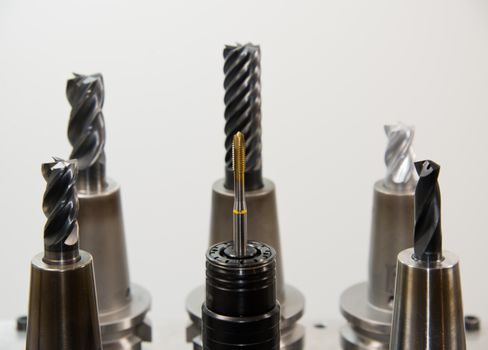
Substitution "remains nearly impossible for most industrial uses", and recycling "cannot scale sufficiently in the short term" [S3]. That is the engineering reality behind the panic-buying behaviour visible in European spot markets in early 2026, where market prices for key tungsten products surged to multi-year highs [S6]. The honest engineering map is: keep tungsten where the application genuinely needs its density, hardness, or melting point; redesign around it where it does not.
A simple cut/no-cut matrix helps a spec writer decide:
• Keep tungsten: cutting tools (WC-Co inserts, drilling grades K10–K40), mining-grade wear parts, defence kinetic-energy penetrators, semiconductor WF₆, X-ray and CT collimators, high-temperature furnace elements and crucibles, balance weights on industrial UPS rotor shafts, and radiation shielding. These rely on hardness above 1,500 HV, density near 19.3 g/cm³, or melting point above 3,400 °C, properties that have no drop-in replacement [S1][S3]. • Redesign out: non-critical wear plates, decorative hard-facing, general-purpose die components where tool steel (D2, H13, H21) can meet the duty cycle, and consumer-grade rotary burrs where coated high-speed steel will survive the job [S2]. • Bridge with recycled material: closed-loop chip recycling from in-house machining, where the chemistry (grain size, Co binder content) can be re-qualified, is the only near-term lever that scales. Open-loop "recycled carbide" from unverified scrap is a quality risk that several vendors are now explicitly rejecting [S5].
Lead times, price band, and contract structure
Fastmarkets' APT 88.5% WO3 min cif Rotterdam and Baltimore duty-free assessment moved from $900–940 per mtu WO3 in January 2026 to $1,650–1,900 per mtu WO3 by mid-February 2026, with continued upside through the Lunar New Year window [S3]. Tungsten powder, the next step down the chain, was reported as more than 640% above its early-2025 level by the start of 2026, with a further 110% rise in the first months of 2026 alone [S1]. Sourcing teams should assume APT can move another 20–30% in either direction within a single quarter, and budget on that band rather than a point estimate.
For delivery terms, the realistic 2026 reality is: spot APT lots from non-Chinese producers, where they exist, run 12–20 weeks; long-term contract allocations from Chinese APT smelters are licence-gated and only confirmed after MOFCOM review [S3]. WC-Co ready-to-press powder has stretched from a typical 6–8 weeks in 2024 to 16–24 weeks in mid-2026, with some European buyers reporting spot lot allocations rather than contract fulfilment [S2]. Tool-room consumables (burrs, rotary files) have followed: vendors are quoting 8–14 weeks on standard geometry, versus 2–4 weeks in 2024 [S5]. Contract clauses that lock in volume but float price against an APT index now outperform fixed-price contracts, because the floor risk on fixed-price deals has migrated entirely to the supplier.
Risk map: who is exposed and who is not

Buyers most exposed: cutting-tool job shops, mining consumables (drill bits, roadheader picks, crusher wear parts), wear-resistant coating applicators, defence kinetic-energy penetrator fabricators, semiconductor process-tool builders (WF₆ is a single-source chemistry in 3D NAND deposition), and any maintenance organisation with WC-Co valve trim or flow meter liners on long qualification cycles [S1][S2][S3]. These are the accounts now scrambling for multi-quarter safety stock.
For these accounts, the 2026 shock is mainly a paper loss on long-term contracts, not a production stop. Battery anode material and EV drive-motor producers sit in between: technically exposed to APT pricing, but with enough volume leverage to negotiate index-based contracts.
The panic-buying signal in Europe in early 2026 is a textbook example of inventory depletion meeting export-licence uncertainty, where spot market prices for key tungsten products surged to multi-year highs, and downstream buyers accelerated orders ahead of expected licence frictions [S6]. The cleanest leading indicator for the rest of 2026 is MOFCOM's monthly export-licence grant rate for APT and ferrotungsten; if that rate stays depressed while US and EU strategic stockpiles draw down, expect a second APT leg above $1,900/mtu WO3.
Sourcing tactics that actually work in 2026
First, qualify at least one non-Chinese APT or ferrotungsten source now, before the queue forms. Korean, Vietnamese, Bolivian, Portuguese, and Australian producers are ramping, but typical qualification lead time is 6–9 months for carbide-grade powder [S3]. Second, move commercial terms from fixed price to index-plus-fixed-margin, with the index tied to a transparent benchmark like Fastmarkets' APT cif Rotterdam, so the contract survives a second APT leg in either direction. Third, hold tungsten-bearing safety stock at 9–12 months of consumption, not the lean 3-month level that worked in 2024 [S4]. Fourth, stand up an in-house chip-recycling loop for WC-Co inserts; the chemistry (Co 6–12% by mass, grain size 0.6–2.5 µm) is re-qualifiable, and closed-loop recovery can offset 20–30% of virgin powder demand [S5]. Fifth, do a top-down design review and remove tungsten wherever the duty cycle allows; this is the only step that has no capex and no supplier dependency.
For process-side decision makers, a useful framing is: treat 2026 tungsten the way you treated NdFeB magnets in 2011 and 2017, i.e. as a strategic input that will not normalise inside your planning horizon. New mine developments in Europe, the US, and Asia "remain years away from entering supply chains", and substitution "remains nearly impossible for most industrial uses" [S3]. The switching power supply and dc power supply side of the bill of materials does not use much tungsten, which is one of the few clean spots in the 2026 commodity map.
Standards and compliance framing
Two compliance threads matter in 2026. The first is the Chinese export-licence regime: shipments of APT, blue tungsten oxide, yellow tungsten oxide, ferrotungsten, tungsten powder, and several downstream forms now require a licence under the Export Control Law of the People's Republic of China and the Regulations on Export Control of Dual-Use Items, with operators required to apply to the State Council's commerce department [S3]. The second is the buyer's own import side: the US has shifted several tungsten HTS codes onto stricter import-control and stockpile-priority lists, and the EU is moving critical-raw-material tungsten into its strategic-procurement framework; neither should surprise a spec writer, but both need to be reflected in the import-compliance section of the bill of materials [S3]. Material-grade specs (WC-Co per ISO 513 for cutting tools, ferrotungsten per ISO 5450 for steelmaking additions, tungsten powder per ASTM B777 for heavy-metal applications) are unchanged; the shock is on price and licence, not on the chemistry.
The honest 2026 forecast is structural tightness through at least mid-2027, with APT price action tracking MOFCOM licence flow, US/EU stockpiling drawdown, and any further Chinese tightening on downstream forms like WC-Co ready-to-press powder. Two trackable signals: (a) the monthly MOFCOM export-licence grant count for APT and ferrotungsten, and (b) the spread between Fastmarkets' APT cif Rotterdam and the China domestic APT ex-works price, which has widened as licence friction rose through Q1 2026 [S3]. Watch those two, and the rest of the tungsten curve is largely derivative.