
A vibrating conveyor is a trough, pan, or tube carried on springs or rubber isolators and driven by an eccentric mass, electromagnetic, or linear motor to move bulk or unit loads along a fixed, typically horizontal or slightly inclined, path [S1]. In an e-commerce distribution center the device usually sits upstream or downstream of a primary sorter, handling totes, polybags, or sealed cartons rather than loose parcels.
The business case for placing one inside a DC rests on three measurable axes: throughput per linear meter, allowable noise and vibration at the floor slab, and the dimensional envelope of the SKU. A typical medium-duty electromagnetic unit handles 5-50 t/h on a 300-1200 mm wide trough at amplitudes of 2-8 mm and frequencies of 50-100 Hz, which lines up with the cadence of a 5,000-15,000 order/day 3PL operation rather than a 100,000+ order/day megacenter.
Why vibrating conveyors rarely lead the DC sortation stack
Most 3PL order-fulfillment sites, including multi-tenant operators such as Fetch Fulfillment, run conveyor stacks that mix belt segments, roller curves, and incline/decline transfers to move 1.7M+ cumulative orders per operator with a +92 NPS service pattern [S2]. Vibrating units do not appear in the standard pick-pack-ship layout because each cycle relies on a positive, indexed transfer between zones, and a continuous sinusoidal throw does not give the clean, photo-eye-friendly indexing that belt or chain conveyor zones provide.
For SKU profiles dominated by single-piece apparel, books, or boxed supplements, a belt conveyor with a 24 V drive roller, a VFD-controlled 0.37-1.5 kW motor, and a 600-1000 mm belt width will out-sort a vibrating pan by a factor of 3-5 on parcels per minute at the same footprint, while staying under 70 dB(A) at 1 m. Add the noise profile of a vibrating unit, typically 78-85 dB(A) at 1 m without acoustic enclosure, and a 24/7 pick floor quickly fails OSHA 29 CFR 1910.95 hearing-conservation thresholds.
Where a vibrating conveyor still earns a slot
The unit earns its place when the material is granular, dusty, hot, or fragile, and the alternative is a pneumatic line or manual tipping. Common fit-for-purpose zones in a fulfillment-adjacent warehouse include bagged pet food, granular chemicals, refractory powders, hot forgings above 200 deg C on a cooling bed, and any line where the product must not be scuffed, scratched, or have its seal compromised. [S2]
For these duties the vibrating unit runs at a low 4-12 m/min pan speed, supports 0.5-15 deg upward inclines for drainage or de-dusting, and uses either mechanical eccentric drives (1.5-7.5 kW, 720-960 rpm) for heavy bulk or linear electromagnetic drives (0.1-1.2 kW, 50/60 Hz mains) for controlled dosing. A 1200 mm wide trough at 6 m long, balanced on fiberglass-reinforced plastic (FRP) or steel coil springs tuned near 5-7 Hz, will carry roughly 30-45 t/h of 0.5-2.0 kg unit packs at a 4-5 m stroke.
Selection criteria that actually move the decision

Five parameters, in this order, separate a workable install from a chronic maintenance problem: amplitude and frequency pair, drive type, trough material, isolation system, and the upstream/downstream transfer geometry. Each of these is grounded in the same operating envelope that makes a vibrating conveyor different from a rotary or pneumatic alternative. [S1]
1) Amplitude/frequency pair. Light fractional (0.05-2.0 mm at 100-200 Hz) suits fine powder and small parts; medium (2-8 mm at 50-100 Hz) covers most packaged unit loads; large (8-25 mm at 5-20 Hz) handles coarse bulk on heavy springs. Mismatching amplitude to mass is the most common cause of product damage and structural fatigue.<br>2) Drive. Eccentric-weight mechanical drives are cheap and rugged, with 1.5-11 kW typical ratings, but run at fixed speed unless paired with a VFD. Linear electromagnetic drives give a 100:1 turndown ratio and instant start/stop, which is the right answer for indexing into a pneumatic conveyor or bagging line at 5-30 cycles/min.<br>3) Trough material. Mild steel with food-grade epoxy, 304/316 stainless, or AR400 abrasion-resistant plate for abrasive ores. 304 stainless at 2-3 mm wall thickness is the default for any unit that touches cosmetics, food, or pharma SKUs.<br>4) Isolation. Coil springs sized to keep the natural frequency at 0.4-0.6x the drive frequency. Rubber isolators trade stroke for noise reduction and cut radiated sound by 6-10 dB(A) but limit throughput.<br>5) Transfer geometry. Inlet and outlet need 50-100 mm of dead zone at each end so the trough can complete its stroke; an overhead merge with an overhead conveyor or a conveyor chain diverter is the cleanest mechanical handoff.
Comparison: vibrating vs belt vs chain vs pneumatic for the same parcel
Using four engineering criteria, throughput, noise, cleanliness, and capex per meter, the four technologies line up clearly. Belt wins on throughput and noise; chain wins on heavy-tote indexing; pneumatic wins on closed-loop dust control; vibrating wins only on gentle handling of irregular, fragile, or hot unit loads.
Throughput: belt at 0.5-2.0 m/s, 60-120 parcels/min/meter; chain at 0.3-0.8 m/s, 25-60 parcels/min/meter; vibrating at 4-12 m/min pan speed, 8-25 unit-packs/min/meter; pneumatic dilute-phase at 15-30 m/s air, but measured in kg/min rather than parcels.<br>Noise at 1 m: belt 65-72 dB(A), chain 70-78 dB(A), vibrating 78-85 dB(A) without enclosure, pneumatic 80-95 dB(A) at blower.<br>Cleanliness: belt and chain need weekly wipe-down and monthly bearing service; vibrating has the fewest wear parts (no belt, no rollers) and the easiest washdown; pneumatic is fully sealed but filter maintenance is heavy.<br>Capex per meter: belt USD 600-1,500, chain USD 900-2,200, vibrating USD 1,800-4,500, pneumatic USD 2,500-6,000 installed, so vibrating sits at the upper end of the open-loop group.
Limitations, failure modes, and what to refuse
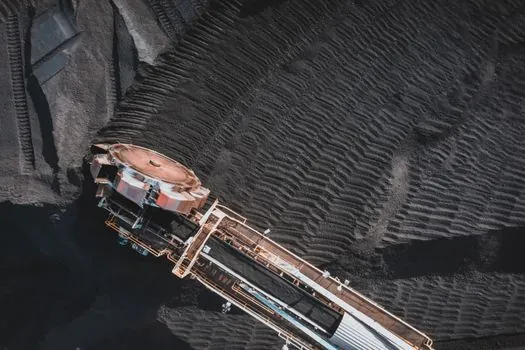
Three failure patterns dominate field experience: spring fatigue cracking at 5-7 million cycles, trough fatigue at welded cross-stiffener terminations, and drive-side bearing failure from ingress of dust through unbalanced isolators. Specifying springs with a minimum 10:1 safety margin on dynamic stroke, ordering troughs with continuously welded, ground, and stress-relieved seams, and using pillow-block bearings with double-lip seals are the three cheapest spec levers to avoid each one. [S2]
Refuse any vibrating conveyor offer that does not publish the drive frequency, the trough natural frequency, the calculated spring rate, the static and dynamic deflection under load, and the expected sound power level. Refuse any layout where the unit is asked to run above 5 deg incline with lubricated or wet product, or where the upstream feed drops more than 300 mm into the trough. Both conditions drive chronic spillage and trough denting within the first 90 days.
Standards and sourcing for a 2026 spec
For European builds the directive framework is ATEX 2014/34/EU for any unit in a zone 1/21 dust atmosphere, and the underlying method follows IEC 60079-series test logic for non-electrical equipment. For North American installs, NFPA 70 Article 500 hazardous-classification rules apply, and any motor-driven unit should carry a UL/CSA listed nameplate. For any unit carrying food-contact SKUs, 304/316 stainless troughs need an FDA 21 CFR 110 / EU 1935/2004 compliance statement from the OEM.
On the buyer side, a typical 2026 lead time for a 6 m, 800 mm wide, 304 stainless, electromagnetic-drive unit is 8-12 weeks from European OEMs and 10-16 weeks from North American shops, with spare springs, liners, and bearings holding 20-30% of the unit price in a recommended spares kit. Always order one full set of springs plus one set of trough liners as commissioning spares, because the first 1,000 hours of run-in is when mismatches show up. For related cross-technology selection, see this pneumatic conveying spec map for e-commerce and this bucket elevator selection map for retail distribution for the two technologies that bracket a vibrating conveyor's role in a modern DC.