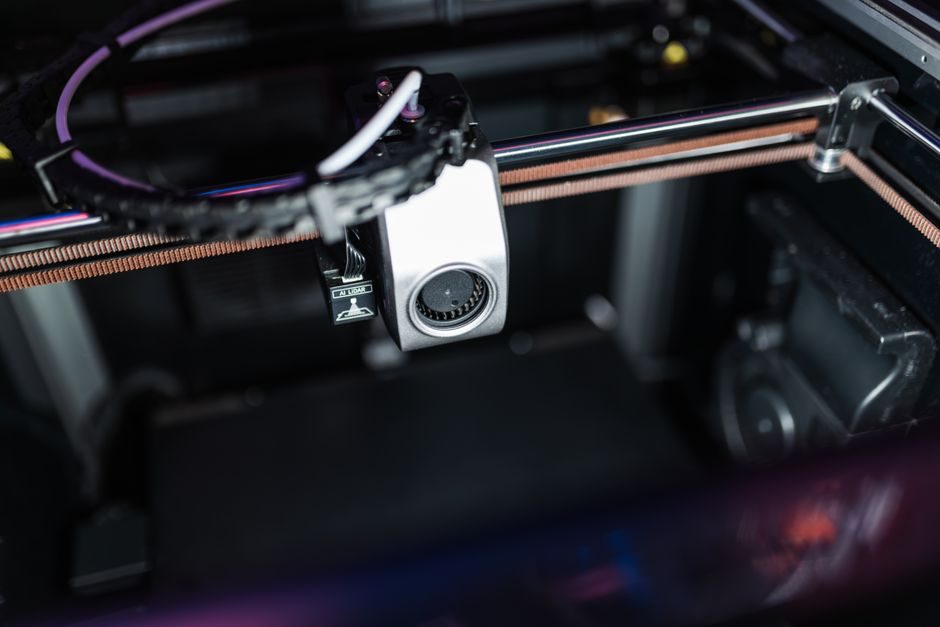
An industrial barcode scanner is purpose-built for factory, warehouse, and shop-floor duty where consumer POS readers fail — the DirectIndustry industrial-manufacturer index lists 41 vendors offering 184 scanner products as of 2026-06-26, with Sanvie alone cataloguing seven industrial-grade models spanning 1D high-speed to ultra-wide-angle 2D imaging [S1][S3].
Selection is not a brand question; it is a four-axis question. Buyers must match (1) symbology set, (2) read distance and resolution, (3) environmental rating (IP sealing, drop spec, operating temperature), and (4) host interface (USB HID, UART, RS-232, Bluetooth) — a process mirrored by Superlead's published selection methodology that links "actual application scenarios" to hardware deployment and ledger integration [S1][S5].
Symbology Coverage: 1D Industrial 2 of 5, Code 128/39, and 2D Migration
Industrial 2 of 5 is a low-density 1D symbology developed in 1968, where exactly two of every five bars are wide and three are narrow, with all data encoded in bar width — it is still common in legacy warehouse and shipping-label systems but is being progressively displaced by Code 128 and 2D codes on new lines [S4].
Open-source reference decoders (apsmcc/JOB and The-Actual-Damien/barcode-reader on GitHub) both target the same core set — Code128, Code93, Code39, Standard/Industrial 2 of 5, Interleaved 2 of 5, Codabar, and EAN-13 — confirming that this is the practical minimum symbology list any new industrial reader should be qualified against before procurement sign-off [S7][S8]. A modern 2D imager such as the PRT HY-SC460 adds EAN, UPC, ITF25, Codebar, Code93, and Code128 on top of a generic "1D and 2D barcode" claim, while the HE-1218WA embedded module markets an "oversized read window" for variable label sizes [S1]. The Sanvie VS600 is positioned as an "ultra wide Angle industrial grade visual scanner" — a different optical class from a narrow-beam 1D laser, and the choice between them depends entirely on conveyor geometry and label pitch [S3].
Read Engine, Range, and Resolution: 5 mil, 70 mA, and the Imaging Trade-off
Resolution floor matters more than marketing-range claims: the Grow GM60-S specifies 5 mil resolution and 70 mA operating current at 3.3 V UART, putting it in the embedded/handheld OEM class rather than fixed-installation class [S1].
Laser 1D engines still dominate long-range fixed-mount reading — HDWR publishes a CR40 model rated to 30 m measuring distance, which no 2D imager at comparable price tier can match for retro-reflective warehouse aisle scanning [S1]. A 1D laser handheld is the right answer when labels are pre-printed, surfaces are flat, and reading distance exceeds roughly 1 m. A 2D imager is mandatory when the application includes direct part marks (DPM), damaged labels, smartphone screen codes, or Data Matrix / QR payloads. The Eppendorf RackScan, reading 96 barcoded vials per storage rack from the bottom, sits at the other extreme — a fixed-mount 2D reader where the engineering question is geometry, not range [S1]. Buyers specifying scanners for the shop floor should treat "5 mil @ 70 mA" and "30 m @ laser" as different problem classes, not as variants of the same product.
Form Factor: Handheld, Fixed-Mount, Mobile, and Embedded
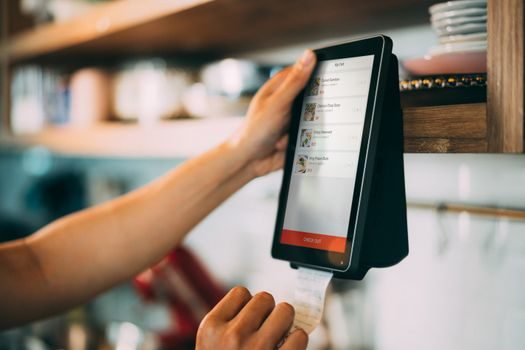
Sanvie's industrial catalogue splits cleanly across four mechanical classes — industrial-grade (VS110, VS200), light-industrial (VS100, VS90), high-speed 1D (VS800, VS810), and ultra-wide-angle 2D (VS600) — each tied to a different duty cycle and mounting pattern [S3].
Handheld wired (HENEX HC-4208D, H900) is the workhorse for receiving, picking, and PAT-testing workflows, where cable tether and HID-keyboard emulation are assets rather than constraints [S2][S1]. Bluetooth handhelds (Seaward Elite in 1D laser and 2D variants) target PAT testers and field-service crews who need to roam away from the host terminal [S1]. Stationary readers split again into X/Y-axis scanning conveyors (YBS series, with single- or double-sided scanner positioning) and small-footprint embedded modules (PRT HE-1218WA) for kiosk, ATM, and turnstile integration [S1]. A related decision tree is laid out in Fixed Code Reader vs Vision Controller: Spec-Driven Selection for 2026 Lines, which separates code readers from full machine-vision controllers along throughput and inspection-complexity axes. For marking-side pairing, Laser Marker Selection Criteria: Source, Substrate, Area, and Compliance covers the upstream code-generation step.
Environmental Rating, Drop, and Industrial Duty
"Industrial grade" is a marketing label unless the datasheet ties it to IP sealing, drop height, and operating temperature — METTLER TOLEDO's bench-scale scanner integration is one of the few published duty profiles that ties scanner selection to a specific industrial weighing environment with material-type, pricing, and product-code retrieval at the point of weigh [S6].
Concretely, an industrial handheld should be specified to IP65 sealing and 1.5–2.0 m drop onto concrete as a floor, not a target. Operating temperature windows of −10 °C to +50 °C cover most ambient warehouse and light-manufacturing cells; cold-store and foundry duty requires extended ranges that must be quoted per SKU, not assumed. For sites where the scanner is bolted to a fixed machine — conveyor, label applicator, rotary sealer (hawo hm 780 BR-plus / BR-USB / BR-Pro family) — the question is vibration and EMC immunity rather than drop survival, and a stationary industrial imaging module out-specs a handheld in this position [S1]. Material-handling lines with shrink-wrap or palletising downstream will also need to confirm scanner-trigger synchronisation with the wrapper; Wrapping Machine Advantages, Disadvantages, and Selection Map maps that downstream interface.
Integration: Interface, SDK, and Host-System Hookup
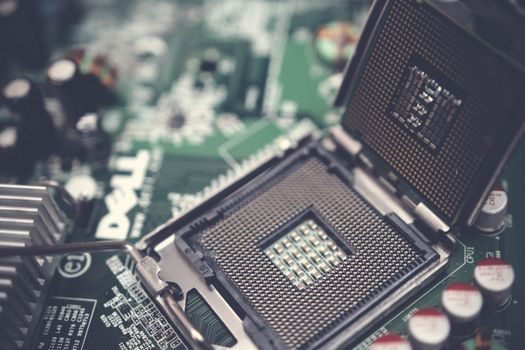
USB HID keyboard remains the dominant plug-and-play interface for handhelds, while UART (3.3 V on the GM60-S) is the embedded default, and Bluetooth covers the mobile workforce — Superlead's deployment methodology explicitly includes an engineering step to "complete the connection between the code reader and various systems, and realize the automatic synchronization of scan data with inventory ledger" [S1][S5].
The Dynamsoft Barcode Reader SDK is the de facto reference for software-side symbology coverage, including the Industrial 2 of 5 specification, and is the right starting point for any plant evaluating in-line vision upgrades beyond fixed-function readers [S4]. For plants running ERP/WMS integration, scan events must be normalised to a single timestamped record format before they hit the inventory ledger, which is why Superlead's stated workflow — scan → automatic synchronisation → ledger — is the integration pattern to demand, not just a USB-HID cable [S5]. Plants modernising across multiple lines should evaluate the wider Industrial Automation Software Stack: 2026 Build-Out and Spec Map before locking scanner brands, because the SDK choice constrains the PLC/MES handshake layer.
When a Consumer-Grade Reader Is the Wrong Answer
A retail POS scanner is the wrong tool the moment any of the following apply: read distance exceeds 1 m, labels arrive damaged or printed on reflective shrink-wrap, codes are direct-part-marked rather than label-printed, the environment is wet or dusty (IP5x or higher), or the scanner must survive a 1.5 m drop onto concrete more than once a year — in any of those cases, an industrial-grade handheld or fixed-mount reader is the only defensible spec. [S1]
Equally, an industrial handheld is overkill for a fixed retail check-stand with short read range and clean labels, where a 1D laser or 2D imager at half the unit cost will read the same codes for years. The decision rule is mechanical and environmental first, symbology second, brand third.
Selection Criteria — Handheld Laser vs Handheld 2D vs Fixed 2D vs Embedded Module
Across the four main industrial classes seen in the 2026 vendor index, a side-by-side comparison makes the trade-offs visible. (1) Handheld 1D laser (HDWR CR40, Seaward Elite 1D): best read range — up to 30 m on the CR40 — lowest unit cost, narrowest symbology set, weakest on damaged/DPM codes. (2) Handheld 2D imager (Seaward Elite 2D, HENEX HC-4208D/H900, PRT handheld line): reads 1D + 2D + screen codes, mid-range read distance, higher unit cost, USB HID or Bluetooth. (3) Fixed-mount 2D (Eppendorf RackScan, PRT HY-SC460, Sanvie VS110/VS200/VS600): highest throughput, geometry-driven integration, requires mounting design and trigger I/O. (4) Embedded module (Sanvie VS90, PRT HE-1218WA, Grow GM60-S at 5 mil / 70 mA / 3.3 V UART): OEM-into-kiosk or turnstile, smallest footprint, exposes raw UART/USB to the host. The class that fits a given plant maps directly onto its dominant label, distance, and duty-cycle profile — a purchasing matrix, not a brand preference. [S1]
Shortlist logic for a 2026 procurement: start from symbology list and read distance, narrow to one of the four form factors above, then verify IP rating, drop spec, operating temperature, and SDK/integration path against the candidate vendor's datasheet — not its brochure. Re-validate at least one sample label per symbology on the actual production line before releasing the PO, and require the vendor to demonstrate Industrial 2 of 5, Code 128, and Data Matrix reads on the same trigger event as the acceptance test.
Spec-level background on the components involved: industrial barcode scanner, industrial adhesive, and industrial borescope.