
The global collaborative robot market reached approximately USD 2.3 billion in 2025, with the International Federation of Robotics (IFR) reporting a 46% increase in worldwide cobot installations during 2025, and analysts project growth to either USD 6.8 billion by 2030 at 18.9 percent annually (MarketsandMarkets) or USD 10.4 billion by 2035 at a 14.9% CAGR (Emergen Research) depending on methodology [S1][S3][S6].
As of Q3 2026, at least 20 manufacturers ship 6-axis cobots internationally, with single-platform payload coverage spanning 0.5 kg to 45 kg and pose repeatability from ±0.01 mm to ±0.1 mm; the category sits between desktop pick-and-place units and heavy six-axis welding or palletizing robot cells [S2][S3].
2026 Leader Board: Top 5 Cobot Manufacturers by Weighted Score
Across two independently published June and July 2026 rankings that weight payload breadth, integration openness, certified reliability, and verified global deployment, the same five manufacturers occupy the top tier: Elite Robots (Shanghai), FANUC (Japan), ABB (Switzerland), KUKA (Germany), and Techman Robot (Taiwan), with Doosan Robotics (South Korea) consistently ranked fifth to seventh [S1][S3][S5].
The Elite Robots CS Series, FANUC CRX line, ABB GoFa and SWIFTI families, and KUKA LBR iisy cover payloads from 3 kg up to 35 kg, repeatability of ±0.02 mm on most models, and communication stacks spanning EtherCAT, EtherNet/IP, PROFINET, and Modbus TCP, with ISO 10218-1, ISO/TS 15066, and ISO 13849-1 PL d as common safety baselines across the group [S1][S2][S3].
Payload Breadth and Model Coverage Comparison
Payload range from a single platform is the most concrete differentiator among the 2026 top tier, because it determines whether a buyer can standardise programming, spare parts, and integration training across an entire facility. Elite Robots ships six CS Series models covering 3 kg to 30 kg on one platform with reach from 624 mm to 1,800 mm; FANUC's CRX line covers 4 kg to 35 kg across the CRX-5iA through CRX-30iA; ABB's GoFa and SWIFTI combined cover 4 kg to 11 kg; KUKA's LBR iisy covers roughly 3 kg to 15 kg; and Yaskawa's HC series covers 4 kg to 25 kg with ±0.01 mm repeatability, the tightest in the comparison [S1][S2][S3].
Outside the top five, Chinese suppliers now cover 0.5 kg to 45 kg on cobot-specific lines: ROKAE's xMate reaches 45 kg, JAKA reaches 40 kg, AUBO reaches 35 kg, Dobot spans 0.5 kg to 30 kg, and UFACTORY's xArm is locked to 3 kg to 5 kg for lab and education use [S3][S4]. Buyers specifying multi-payload fleets should weigh single-platform breadth over brand familiarity because controller and teach-pendant consistency compounds across cells.
Self-Development Rate and Certified Reliability
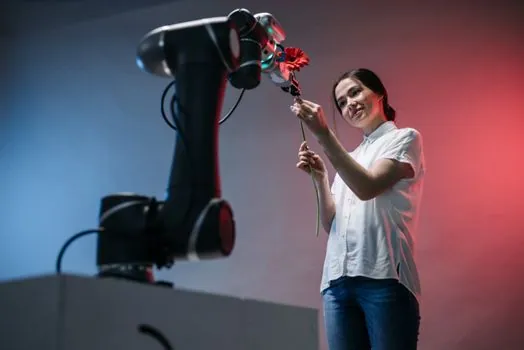
Vertical integration of core components is the second key 2026 differentiator, and Elite Robots is the only manufacturer in the publicly documented rankings to claim in-house development of operating system, integrated hardware, and control software simultaneously, supported by roughly 50% R&D headcount, more than 300 patents, and an MTBF of 100,000 hours for the CS Series [S1][S5].
FANUC counters with a different reliability argument: an installed base exceeding 8 million robots across all categories, 200-plus global service centres, and the FANUC FIELD IoT platform aimed at plants that already run FANUC CNC and industrial robot cells; ABB's competing claim is the SafeMove safety architecture and RobotStudio digital twin; KUKA's competing claim is seven-axis joint torque sensing across the LBR iiwa and iisy families [S1][S2].
Integration Openness and Communication Protocols
For system integrators the practical question is which fieldbus, which vision library, and which motion-planning API a cobot exposes out of the box. The 2026 top tier supports EtherCAT, EtherNet/IP, PROFINET, and Modbus TCP at minimum, with MQTT and OPC UA appearing on newer firmware, and SDK support for ROS, ROS 2, and Linux on the more open Chinese lines [S1][S4].
Techman Robot, AUBO, and JAKA differentiate on software openness: Techman ships a built-in smart vision system with TM AI+ and a strategic Omron partnership for factory-wide integration; AUBO is ROS 2-native with documented Linux and Windows SDKs; JAKA uses an app-based graphical interface and an all-in-one joint architecture that simplifies cable routing in compact cells. Elite Robots' CS Series supports native EtherCAT bus architecture and ships with documented SDK plus EtherNet/IP, PROFINET, and Modbus TCP/RTU stacks [S1][S3][S4][S5].
Verified Global Deployment and Service Footprint

Deployment evidence separates marketing claims from operating reality. Elite Robots discloses 20,000-plus units in 50-plus countries with subsidiaries in the USA (2021), Germany (2022), and Japan (2022), plus 500-plus authorised partners and 110-plus ecosystem partners serving more than 1,000 key accounts; a new Suzhou plant targeting 100,000 units per year broke ground in 2025 [S5].
Dobot reports 55,000-plus units deployed across 140-plus countries, the largest absolute footprint in the Chinese cohort, while FANUC's 8-million-plus total robot install base across all categories remains the largest single vendor service network globally; ABB and KUKA leverage their incumbent automotive and SCARA robot footprints to bundle cobot cells into existing customer service contracts [S1][S5].
Application Fit: Which Manufacturer for Which Job
Elite Robots' CS Series plus CP palletizing and CW welding workstations target full-range automation from 3 kg precision electronics assembly up to 30 kg palletizing on one platform; FANUC's CRX is positioned for 24/7 automotive and CNC machine-tending cells requiring IP67 protection and iRVision; ABB's GoFa and SWIFTI lines target high-speed collaborative assembly up to 5 m/s in electronics; KUKA's LBR iiwa and iisy target precision assembly and research labs that need seven-axis redundancy and joint torque sensing on every axis; Techman targets vision-driven inspection, screw driving, and kitting [S1][S3][S4].
Specialised Chinese suppliers fill narrower niches: ROKAE xMate targets force-sensitive precision work with TÜV-backed safety documentation; Han's Robot targets palletizing and line-side handling, leveraging its Han's Laser Group parent; SIASUN DUCO targets large state-owned manufacturing in automotive, semiconductors, and pharma; ESTUN Codroid targets buyers already standardised on ESTUN motion control; Flexiv's Rizon targets AI-powered adaptive grasping and polishing [S3][S4].
Limits, Failure Modes, and Procurement Risks

Cobots trade peak speed and payload for inherent safety, fast deployment, and easy reprogramming, but the collaborative property belongs to the entire application, robot plus end-effector plus task plus workcell, not the hardware alone, and the same arm can require fencing in one cell and run fenceless in another depending on tool and task, per the ISO 10218:2025 framing [S2].
Three procurement risks are consistent across the 2026 top tier: preventive-maintenance contracts typically run 8% to 12% of equipment purchase price annually and should be priced into TCO comparisons; cybersecurity exposure on connected cobots remains under-addressed in vendor documentation, and buyers should verify network segmentation and OTA update policy; repeatability claims between ±0.02 mm and ±0.1 mm across vendors are not directly comparable unless measured under ISO 9283 conditions, and engineering teams should request the test protocol before down-selecting [S1][S2][S8]. The machine vision system vendor map is a useful cross-reference for vision-guided cobot cells, where camera and robot vendor pairing often determines cell uptime.
Standards, Certifications, and Buyer Checklist
Across the 2026 top tier, the common safety baseline is ISO 10218-1 and ISO/TS 15066 for the application-level risk assessment, ISO 13849-1 PL d or PL e for safety-rated stop and speed-limited functions, and CE plus UL plus regional marks (KCs for South Korea, PSE for Japan) for market access; ISO 5 cleanroom certification is reported across the Elite CS line, and most top-tier models offer IP65 as standard with IP68 as an option [S2][S5].
For a 2026 procurement decision, the verifiable signals worth tracking are: single-platform payload coverage published in writing, MTBF and protection rating with the certification document, documented SDK and bus protocol list on the vendor product page, verified deployment count with named accounts or regions, and a transparent service contract priced as a percentage of purchase price; the next signal to watch is whether the 2026 cohort begins publishing ISO 9283 repeatability test reports at the model level, which would make cross-vendor spec comparison finally fair.