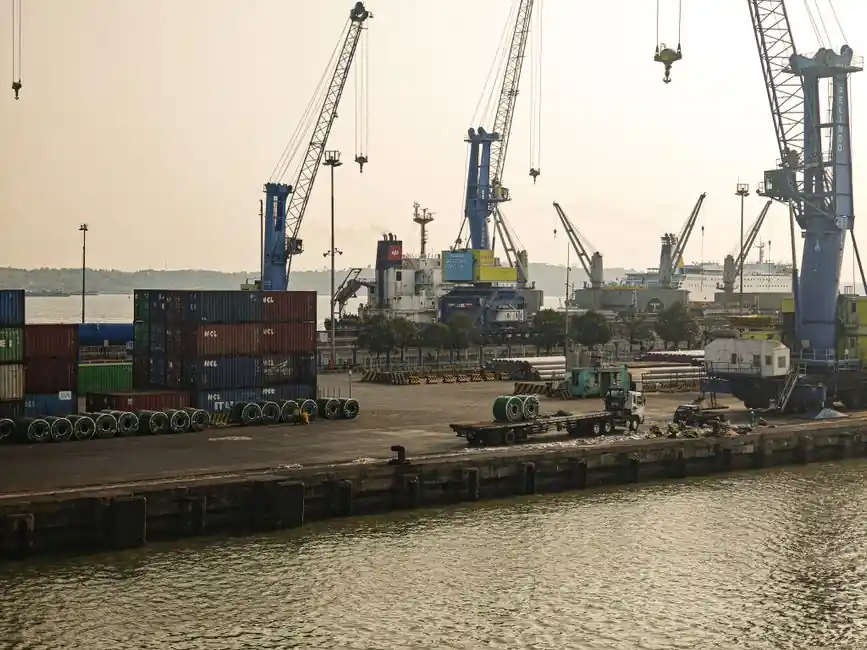
Ship-to-Shore (STS) container cranes typically lift 30 to 75 tons per cycle, reach 60 to 72 m of outreach, and clear more than 50 m of lift height, suiting ultra-large container vessels above 24,000 TEU [S1][S4].
Port Houston alone operates 27 neo-Panamax STS units and 116 rubber-tired gantry (RTG) cranes across its container terminals, with the STS machines standing 158 ft tall, illustrating the typical STS/RTG ratio at a major gateway [S2]. Cycle rates of 25 to 40 moves per crane hour are realistic for modern STS units under optimal conditions, per a 2026 OEM reference [S4].
STS Ship-to-Shore Crane Spec Envelope
STS cranes are rail-mounted quay gantries purpose-built for loading and unloading containerships. The working envelope must cover the full vessel beam plus the landside container row: outreach of 60 to 72 m handles ULCV beam widths, while lift height above 50 m clears 10-high deck stacks [S1][S4]. Lifting capacity per hoist falls in the 30 to 75 ton range, and dual-trolley or twin-lift spreader configurations can move two 20-ft or 40-ft boxes per cycle, lifting throughput above 40 moves per hour on the most automated pairs [S1]. Power comes from shore-fed electrical supply through cable reels or festoon systems, with variable frequency drives on hoist and trolley, a configuration that keeps diesel emissions off the apron [S1]. For a broader view of how lifting equipment integrates with logistics fleets, the truck-mounted crane reference page covers the road-going side of the same load envelope.
RTG and RMG Yard Stacking Specs
RTG cranes stack containers in the yard on rubber tires, with lifting capacity up to 70 tons per hoist and full gantry mobility without embedded track [S1]. RMG units replace tires with ground rails, allowing taller stacks (commonly 3 to 4 containers high) and wider spans (6 rows across) plus higher automation potential because the rail path is repeatable for OCR-based positioning [S3]. For terminals handling over 500,000 TEU annually, yard density and RTG-vs-RMG choice directly affect berth productivity, a relationship flagged by industry guidance in a 2026 procurement reference [S4]. Power delivery to the hoist typically runs through cable carriers or festoon systems, and diesel-electric RTG conversions to full electric are now routine in Tier 1 ports [S3].
Mobile Harbor Cranes and Bulk Handling
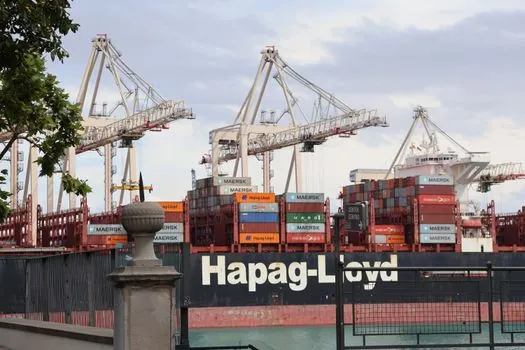
Mobile harbor cranes (MHC) are the flexible alternative for multi-cargo berths, swinging between containers, breakbulk, and grab work without dedicated quay infrastructure. MHC outreach is shorter than STS (commonly 30 to 50 m depending on model), but the machines can be repositioned along the quay and shared between berths, which suits smaller ports or general-cargo terminals [S3][S4]. Grab cranes and continuous unloaders serve coal, grain, and ore flows where the cargo is not containerized, and the MHC often doubles as a grab unit with quick-change spreader-to-grab conversion. For procurement teams comparing road-mobile versus rail-mobile options, the related coverage on wheel loader specifications shows how spec-first mapping applies across mobile plant.
Selection Criteria: Cargo, Size, Automation
The first filter is cargo mix: containers route to STS plus RTG/RMG, bulk to grab cranes or continuous unloaders, and project or heavy-lift to dedicated high-capacity units, per a 2023 port-crane buyer guide [S3]. The second filter is terminal size and quay geometry: quay length, water depth, and vessel beam drive STS outreach and MHC count, while yard footprint drives the RTG-vs-RMG decision [S3][S4]. The third filter is automation: fully automated STS and automated stacking cranes (ASC) reduce labor exposure and lift moves-per-hour consistency, while diesel RTG remains the budget default for lower-density yards [S3]. For procurement teams also weighing road-mobile handling kit alongside fixed plant, the linear module selection for material handling article maps how stroke, load, and drive logic translate into specification choices.
Options Compared on 4 Decision Criteria
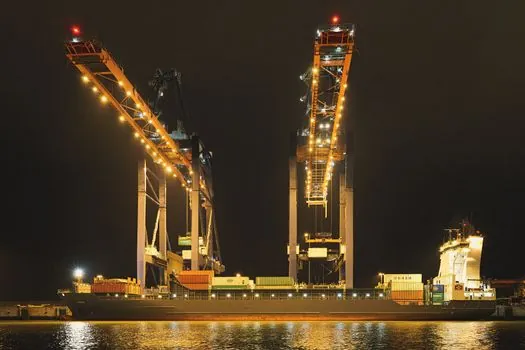
Four port-crane options lined up against typical decision criteria: STS delivers the highest cycle rate (25 to 40 moves/hr) and the largest outreach (60 to 72 m) but is fixed in location and capital-intensive; RTG offers yard flexibility with up to 70 t lift and no embedded track, at the cost of diesel fuel unless electrified; RMG trades RTG mobility for higher stacking density (3 to 4 high, 6 rows wide) and stronger automation support; MHC sacrifices pure cycle speed for berth flexibility, serving containers, breakbulk, and grab work on one chassis [S1][S3][S4]. The decision weight per criterion depends on the terminal: mega-ship quays prioritize STS outreach and cycle rate, inland depots prioritize RMG density, and multi-cargo berths prioritize MHC swing radius and quick re-tasking.
Real-World Fleets and Operating Signals
Port Houston's published fleet inventory of 27 neo-Panamax STS cranes alongside 116 RTG cranes is a useful benchmark for STS-to-RTG ratios at a high-volume gateway, with the STS machines standing 158 ft tall [S2]. Industry guidance indicates that terminals handling over 500,000 TEU annually should treat crane-type mismatch as a top-three driver of operational inefficiency, favoring integrated STS-plus-RMG (or ASC) designs over mixed legacy fleets [S4]. Watch for two trackable signals through the rest of 2026: continued RTG diesel-to-electric retrofits in emission-controlled port zones, and the spread of twin-lift and dual-trolley spreaders on STS newbuilds, both of which compress moves-per-hour and emissions-per-move simultaneously [S1][S3].
For the relevant spec sheets and selection criteria, see truck mounted concrete pump, and terminal block.