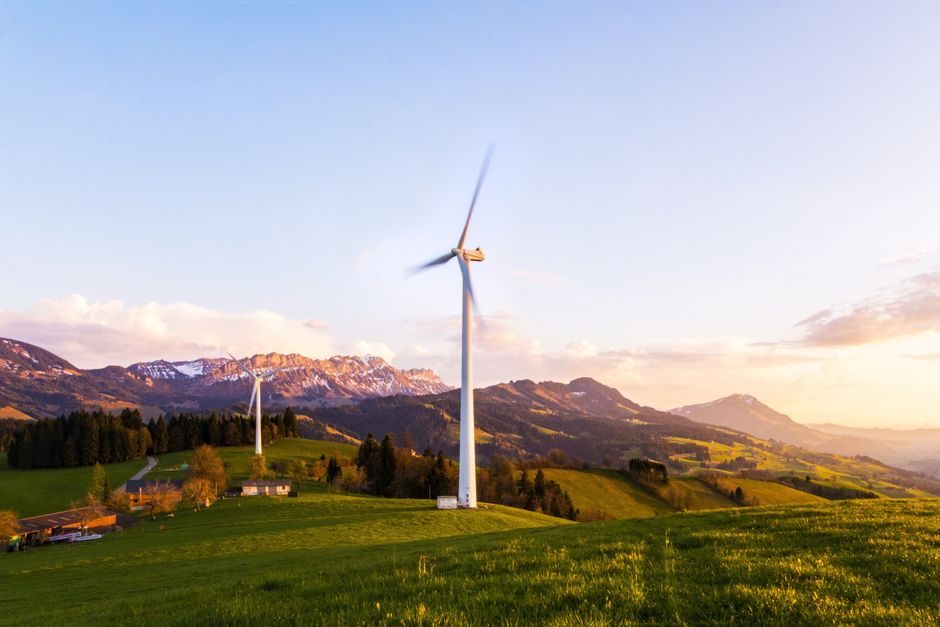
A modern utility-scale wind turbine is a horizontal-axis, three-blade upwind machine rated 2-15 MW, with the 2026 offshore class led by direct-drive units such as the Siemens Gamesa SG 8.0-167 DD at 8,000 kW and a 236 m rotor diameter [S2].
Production scope covers four parallel streams: rotor blade moulding, nacelle assembly (nacelle + hub + drivetrain + generator), tower fabrication, and electrical package (converter, transformer, switchgear, SCADA). Each stream uses its own tooling, jigs and cycle-time targets, and a 2-3 MW onshore machine typically needs 4-6 days of nacelle takt time on a moving line [S1][S3].
Rotor Blade Manufacturing: Mould, Layup, Cure and Finishing
Utility blades are 40-115 m long for the 3-8 MW class, built in female steel/epoxy moulds using vacuum-assisted resin transfer moulding (VARTM) for shells, with internal spars in pultruded carbon-fibre or glass-fibre laminates for stiffness [S1].
Shell-to-spar joining is done with structural adhesive plus through-bolts or pinned shear webs; root-end inserts (typically 80-120 stainless or GFRP studs) are drilled and pulled to rated loads. Each blade then goes through static-tip-deflection and dynamic-balancing checks before a two-component polyurethane topcoat is applied, with leading-edge erosion tape bonded on the outer 30-40% of the airfoil [S1][S4].
Reject rates in mature plants run 3-6% for 50-80 m blades, dominated by dry-spot porosity, delamination and root-stud bond failures, all detected by ultrasonic and thermographic NDT gates [S5].
Nacelle Assembly and Drivetrain Options: Geared vs Direct-Drive
The nacelle is the assembly that holds the drivetrain, and it has two dominant architectures: geared (often a 3-stage planetary + helical gearbox with a doubly-fed induction generator or medium-speed permanent-magnet unit) and direct-drive (a low-speed multi-pole permanent-magnet generator coupled straight to the rotor hub) [S2][S4].
Direct-drive removes the gearbox, cutting one of the highest-failure sub-assemblies and easing lubrication, but it forces a much larger, heavier generator and full-converter power electronics; geared designs keep the generator small but add a gearbox whose planetary stage typically needs relubrication at 3,000-5,000 hour intervals and a major overhaul inside 20,000 hours [S5].
A nacelle line is built around a moving carriage or rotary table, with sub-assemblies (hub, bedplate, drivetrain, generator, yaw system, nacelle cover) joined in a fixed sequence; the SG 8.0-167 DD is a direct-drive offshore unit rated 8,000 kW with 236 m rotor diameter, and its nacelle mass exceeds 400 t, which is why most offshore units are loaded by specialised port cranes rather than truck-based logistics [S2].
Gearbox Production and Quality Control
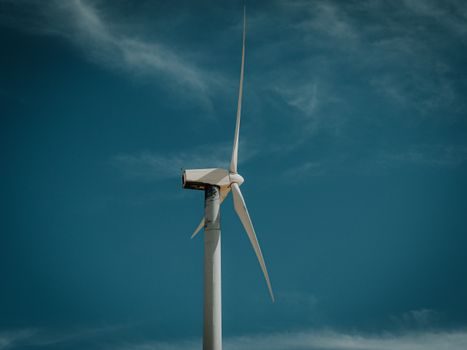
For geared turbines, the gearbox is the single highest-cost drivetrain component and the dominant failure source, so production follows a tightly gated route: rough machining of planet carrier and ring gear, case hardening to 58-62 HRC, finish grinding to ISO 1328-1 grade 5-6, then assembly in a Class 7 cleanroom with laser-aligned planetary stages [S5].
Quality gates include magnetic-particle or dye-penetrant inspection on loaded teeth, end-of-line no-load spin tests at rated speed with vibration, temperature and acoustic-emission logging, and full-load back-to-back test stands for OEM qualification. Modern wind-turbine gearboxes are designed to ISO 81400-4 and AGMA 6006 design codes and use case-carburised 16MnCr5, 17CrNiMo6 or 20CrMnTi steels, with bearing arrangements rated for 20-year design life under stochastic load spectra [S5].
Planetary-stage bearing spalling and high-speed-stage micropitting remain the most common field failures, and they are addressed in production by tighter gear geometry, better filtration to NAS 6 cleanliness, and synthetic PAO or PG gear oils with on-line particle counters [S5].
Tower, Foundation and Electrical Package
Steel tubular towers are produced by rolling plate steel (typically S355 / S460 grades) into 20-30 m can sections, then submerged-arc welding the longitudinal and circumferential seams; a 100-120 m tower consists of 4-5 can sections plus an embedded ring flange bolted at site [S1].
For onshore units above 5 MW and for most offshore machines, factories are moving to concrete-steel hybrid towers where the lower 60-100 m is pre-cast concrete and the upper section is steel, lifting hub height to 140-160 m where wind shear gives a 5-10% AEP uplift. Offshore gravity-base and monopile foundations are poured or driven in separate yards and are not on the turbine takt line [S1][S3].
The electrical package covers the converter (IGBT-based, LV or MV, with LVRT/HVRT ride-through per grid code), the MV step-up transformer (often 33/66 kV), the ring-main unit and the SCADA cabinet. Converter suppliers, transformer suppliers and switchgear suppliers are tier-2 inputs, and the same Tier-2 bottleneck risks flagged for grid EPC projects apply here: lead time on 66 kV cast-resin transformers and on IGBT stacks is currently 40-52 weeks, which sets the gating item on most nacelle lines [power-grid-supply-chain-2026-materials-tier-2-bottlenecks-and-sourcing-gates].
Selection Criteria: Geared vs Direct-Drive vs Hybrid
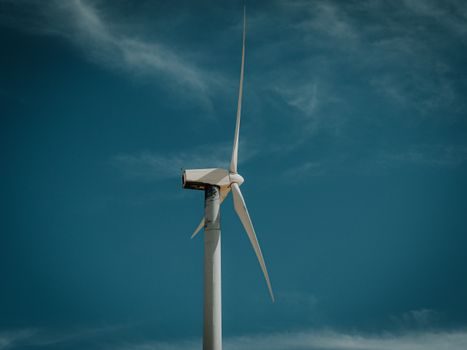
Choosing a drivetrain architecture in 2026 is set by four criteria: LCOE-weighted availability, weight and logistics, grid-code compliance, and OPEX per MWh. [S1]
Geared DFIG / medium-speed PM units win on nacelle mass (typical 200-300 t for 3-6 MW) and converter cost, which is why most onshore 3-6 MW platforms still use them; direct-drive wins on part count, oil-free operation and recurring OPEX, which is why the offshore 8-15 MW class is migrating to it [S2].
Who It Is For and Who It Is Not
This production technology is for OEM nacelle factories, tier-1 drivetrain integrators, blade plants and EPC yards building 2 MW+ utility-scale turbines, both onshore and offshore, where the same control philosophy and grid-code ride-through rules apply. [S2]
It is not for distributed small-wind (under 50 kW) or building-integrated turbines, where the rotor is typically a 2- or 3-blade permanent-magnet unit with passive yaw and no pitch system, and the production route is a short assembly of off-the-shelf alternators and standard hubs rather than the moving nacelle line described above [S4].
Limitations, Failure Modes and Trackable Signals
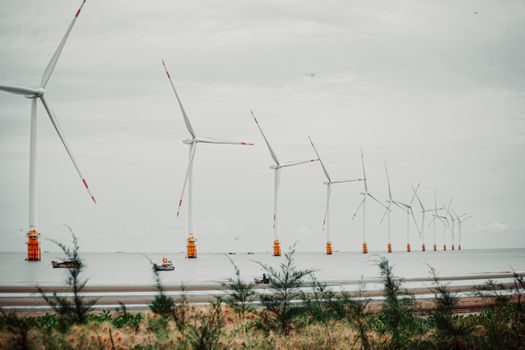
The dominant failure modes in operating fleets, in order, are: gearbox bearings and gear teeth, generator winding insulation, blade leading-edge erosion, main-shaft bearing, and converter IGBT modules. Each has a production-side mitigation: cleaner steels and tighter grinding for gears, vacuum-pressure-impregnated Class H insulation for generators, erosion tape and serrated trailing edges for blades, induction-hardened shaft journals, and oversized IGBT thermal stacks with derated junction temps [S5].
Two trackable signals to watch through 2026: (1) China and India nacelle capacity continues to expand, with Nordex and Vestas both running multi-line plants in Chennai at 2 MW+ for the local low-wind market; (2) offshore direct-drive platform counts are rising, with the SG 8.0-167 DD (8,000 kW, 236 m rotor) as a reference point for what the 2026 offshore class looks like at scale [S2][S3].
For component-level specifications, see turbine flowmeter, pressure transmitter, and flow meter.
For related coverage, see Power Grid Supply Chain 2026: Materials, Tier-2 Bottlenecks and Sourcing Gates.