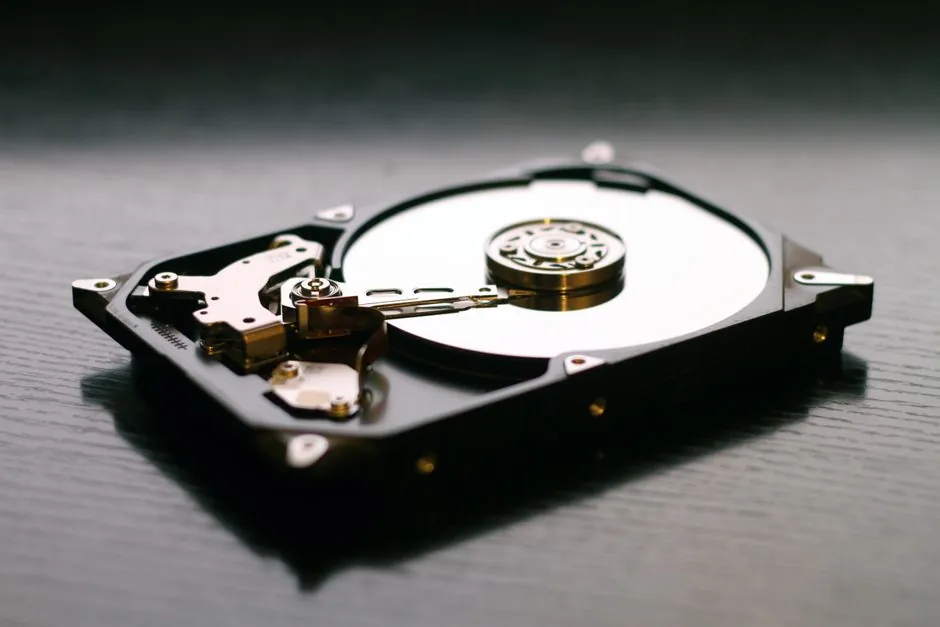
Electronics packagers choosing a wrapping machine in 2026 should shortlist on four numbers: ESD film surface resistivity (typically 10^9-10^11 ohm/sq for static-dissipative PE), cycle time per pack (8-25 s for flow wrappers, 30-90 s for semi-auto pallet wrappers), maximum pack dimensions, and integration with upstream material handling conveyors [S1][S3].
Electronics loads are sensitive to three things that commodity food-and-beverage wrappers do not address: tribocharging from stretch film, dust attraction on bare PCB edges, and point-load pressure on component leads. A wrong choice on film type or tension control shows up as field failure, not line stoppage, so selection has to start from the ESD and cleanliness spec, not from throughput [S1].
Why electronics is a separate selection case
Electronics packaging lines diverge from general consumer-goods lines on static control: ANSI/ESD S541 calls for packaging materials that limit voltage to under 100 V on a charged-device-model test, which is the working ceiling most contract electronics manufacturers write into their supplier specs. The wrapping machine itself must not generate charge through film friction, which rules out most generic LLDPE stretch films run at high carriage speeds and pushes buyers toward ESD-treated or static-dissipative grades [S1].
Cleanliness is the second divider. A flow wrapper or shrink wrapper for printed circuit boards, hard drives, or display modules typically runs inside an ISO 14644-1 Class 7 or Class 8 cleanroom-adjacent cell, with HEPA-filtered airflow over the sealer. The machine frame must avoid exposed lubrication, and the sealer heater should be a constant-temperature band type rather than an impulse wire, since impulse wires shed particles as they cycle [S3].
Three machine families, three fit profiles
The realistic shortlist for an electronics plant in 2026 has three families: semi-automatic rotary-table stretch wrappers for palletized finished goods, horizontal flow wrappers (HFFS) for individual PCB and accessory packs, and shrink-wrap tunnels for bundle packs and retail boxes. Each is judged on the same four criteria: ESD compatibility, footprint, changeover time, and throughput per operator hour [S1][S2].
Semi-automatic rotary-table models with a 1500-2000 kg table capacity and inverter-controlled rotation (typical 6-12 rpm) fit warehouses shipping 50-300 pallets/day of boxed electronics where full automation is not justified; the operator still attaches the film tail but no longer walks the load, and motorized pre-stretch units can cut film use by 20-35 percent against hand wrapping [S2]. A standalone semi-auto is the right answer when daily volume is variable, the SKU mix is wide, and the conveyor upstream of the wrapper is not pallet-specific.
Horizontal flow wrappers fit inner-pack work: ESD barrier bags, anti-static PE pillows, and printed header cards at 30-120 packs/min. The decision point against a flow wrapper is the bag style: a fin-seal pillow needs a different forming set than a gusseted quad-seal, and electronics buyers usually pick fin-seal for through-hole components and quad-seal for irregular shapes like connector reels. Heat-seal jaw temperature control within plus or minus 2 degrees C is the spec to pin in the RFQ, since LDPE and metallized ESD film seal at different temperatures and a wide tolerance will burn one and cold-seal the other [S3].
Shrink-wrapping tunnels are specified for retail multi-packs, software boxes, and bundle trays where a tight, glossy film improves shelf presentation. The machine choice here is between a manual L-bar sealer with a separate tunnel (lowest capex, 4-6 packs/min) and a continuous-motion side-seal unit with integrated tunnel (20-40 packs/min); for electronics retail packaging, the L-bar is usually enough since order sizes are small and changeover between SKUs dominates runtime [S1].
ESD film selection: surface resistivity, not film colour
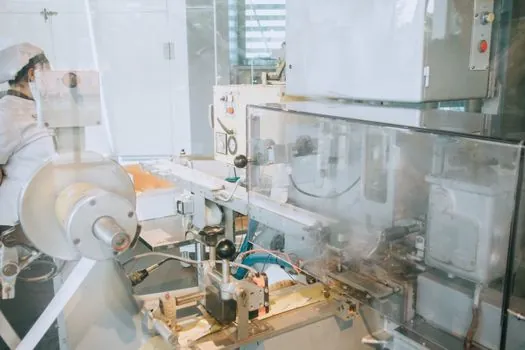
Static-dissipative polyethylene for electronics wrapping is specified by surface resistivity in the 10^9-10^11 ohm/sq range, with pink or blue colour being a visual cue rather than a guarantee. Metallized ESD shielding film is specified separately for moisture-sensitive devices (MSL 2 and higher per IPC/JEDEC J-STD-033) where bag permeability has to stay below 0.01 g/m squared per day at 40 degrees C, 90 percent RH. A wrapping machine that is set up for pink anti-static PE cannot be assumed to handle metallized film, because metallized film has different coefficient-of-friction values and the feed rolls, tension dancer, and seal bar pressure all need re-tuning [S1].
Stretch film for pallet wrapping of finished electronics should be specified as a 12-23 micron pre-stretched grade with cling limited to the inner face only, so the outer face does not trap dust. A 250 percent pre-stretch ratio at the carriage is a reasonable target and matches what most 2026-vintage semi-automatic machines deliver, against 150-200 percent on older mechanical-brake units [S2].
Throughput sizing without oversizing
For a 100-pallet-per-day electronics warehouse, a single semi-automatic rotary-table wrapper staffed by one operator gives a working capacity of 120-150 pallets per shift including film changes, which is the right sizing rule: buy for 1.2x peak day, not for theoretical nameplate. For a 500-pallet-per-day operation, the right step is a fully automatic turntable or rotary-ring wrapper with conveyor in-feed, not two semi-automatics, because film-tail handling and pallet placement dominate cycle time once you cross roughly 350-400 pallets per shift per operator [S2].
For inner-pack flow wrapping, the working benchmark is 60-80 percent of nameplate. A flow wrapper nameplated at 80 packs/min realistically delivers 50-65 packs/min on electronics because of the longer dwell needed for ESD film sealing and the higher reject rate on fin-seal alignment with stiff antistatic film. Build this derate into the line-balancing spreadsheet before sizing the upstream coding machine and labeler, or the wrapper will become the bottleneck within a month of running production [S3].
Integration points that get missed
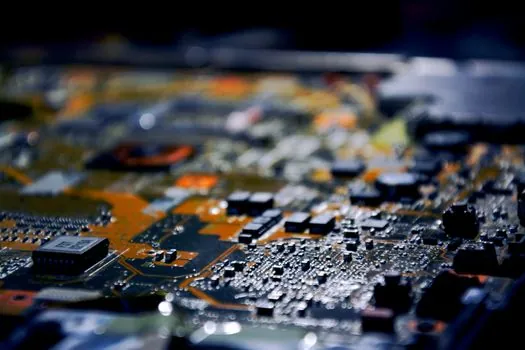
Three integration points are routinely missed in RFQs and cause field retrofits: the conveyor height tolerance between the wrapper and the upstream accumulator, the dust-extraction interface on shrink tunnels, and the network interface for OEE data. A plus or minus 25 mm height window between conveyors is the practical spec; anything tighter forces shimming on install, anything looser causes film-tail snags. Shrink tunnels need 200-300 m cubed per hour of filtered exhaust, with a 150 mm collar, otherwise the heat soaks back into the sealer zone. For OEE, an OPC-UA or Ethernet/IP port on the wrapper PLC is now standard on 2026 models, and any vendor that cannot supply the EDS or IODD file at quotation stage should be downgraded [S1][S3].
Changeover time is the second hidden cost. A flow wrapper with servo-driven setpoints changes over in 5-10 minutes between common SKUs, while a mechanically-adjusted machine takes 25-40 minutes; over a 200-SKU mix, that is the difference between one and two operator shifts per week of lost capacity. Ask vendors for measured mean-time-to-changeover on a defined SKU pair, not the brochure figure [S3].
Limitations and failure modes
Wrapping machines are not a substitute for moisture barrier bags (MBBs) on MSL-classified components, regardless of film grade. The wrapper provides mechanical and dust protection plus ESD control at the pack level, but it does not control humidity inside the pack, so any line shipping MSD parts must still route through a dry-pack station using MBBs and desiccant before the wrap step. Skipping this is a common field failure mode after a wrapping machine is added to an electronics line [S1].
Static-dissipative film has a shelf life. Most grades are rated for 12-24 months from manufacture because the topical anti-stat blooms out; a wrapper running film that is 18 months old can pass a DC resistivity spot check but fail a charged-device-model test in production. Track film lot age on receipt and rotate by FIFO; the wrapping machine cannot compensate for exhausted anti-stat [S1].
Decision rule and what to verify in 2026
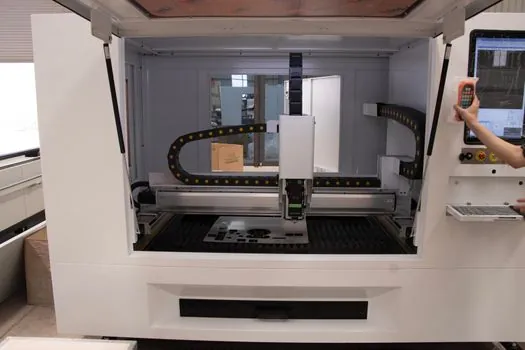
The selection rule that holds across the three families: pick the wrapper that hits the ESD and cleanliness spec first, throughput second, footprint third, and OEE integration last; never reverse the order. If the line cannot pass a 100 V CDM test on a finished pack, no amount of throughput will save the field failure rate. Verify on the vendor FAT that the machine runs the actual production film at production speed for at least 30 minutes, and that surface resistivity is measured on the wrapped pack, not on a virgin film sample [S1][S3].
For a peer reference on selecting equipment for adjacent packaging-line mechanical drives, see this gear selection map for packaging lines; for a sister spec map on wrapping machines in food-and-beverage duty, which is a useful contrast for ESD-driven electronics, see the food and beverage wrapping machine selection spec map. Two signals to track through the rest of 2026: IEC 61340-5-1 updates on packaging-material test methods (currently the controlling standard for ESD-packaging qualification), and the migration of mid-tier flow wrappers from impulse sealers to constant-temperature sealers, which removes the last particulate source from inner-pack cells [S1].