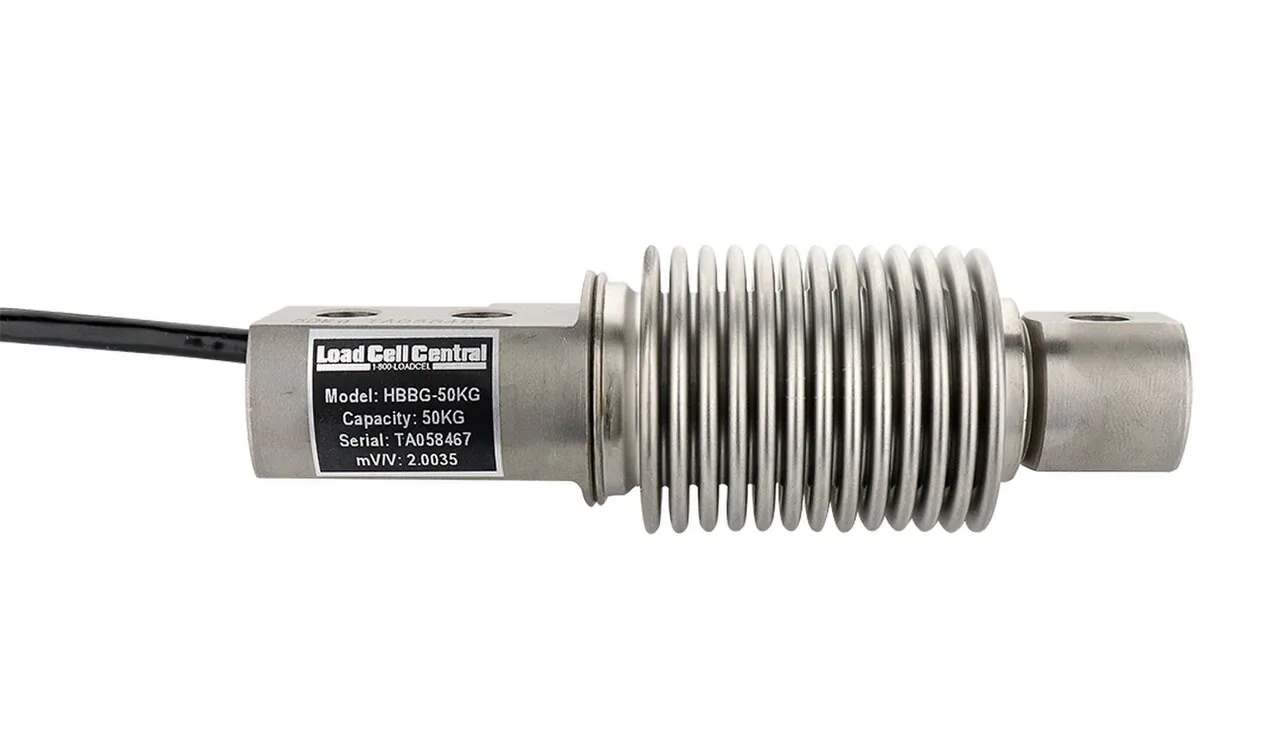
A belt scale measures the mass flow of bulk material already moving on a process or plant conveyor. One or more conveyor idlers sit on a weighed platform supported by load cells, a speed sensor reads the belt velocity, and an integrator multiplies the two continuously, reporting instantaneous flow rate and accumulated total. It weighs without touching the process, adds no pressure drop and no vessel, and asks only that the conveyor behave; it is the default instrument for production totals, train and ship loading accounting, and process balancing on belt conveyed materials.
This page treats the belt scale as a purchasing object: how weigh span length and idler count set accuracy, what load cell and speed sensing quality buy, how accuracy classes and calibration methods define what the number means contractually, how belt tension, alignment, and conveyor condition move the error, and which specification lines decide the offer. It is written for plant and instrumentation engineers specifying conveyor weighing.
The decision concentrates in six places: the conveyor itself and its suitability, the accuracy class the application actually needs, the weigh span idler count, the calibration method and its frequency, the integrator functions and communications, and the environment, indoors, outdoors, explosive, that the hardware must survive.
Chapter 1 / 06
What a Belt Scale Is and What Is Being Decided
The measurement is simple arithmetic on hard conditions. Weight per unit length of loaded belt, from the load cells under the weigh idlers, times belt speed, from the speed sensor, equals mass flow; integrated over time, the total. The difficulty is that the conveyor is a hostile instrument frame: belt tension adds a parasitic force through the idler, misalignment shifts load between idlers, material stiffness and lump size change how the load distributes, and the belt itself wanders across the idlers as it runs. Every design and installation decision exists to keep those disturbances small against the measured signal, and the accuracy class a plant actually achieves is set more by its conveyor than by its scale.
What is being decided first is what the number is for. A production total for daily accounting tolerates half a percent with modest calibration discipline; a process trend for blending control tolerates one percent installed casually; a custody transfer number for commercial settlement demands a quarter percent or better with multi idler scales on engineered conveyors and formal calibration procedure. The accuracy class decision prices everything downstream, scale hardware, conveyor preparation, calibration frequency, and it is routinely the most expensive line underestimated in the specification.
The family boundary is instrumentation, and one neighbor matters most: a weigh feeder is a short conveyor whose speed is controlled to enforce a feed rate, a closed loop machine that meters material; a belt scale only measures material the conveyor was already carrying, an open loop instrument that reports. The weigh-feeder page covers the metering machine; this page covers the measurement system applied to an existing conveyor. Around both sit the shared instrument components, the load cell, the weighing indicator or integrator, and the calibration references, and the larger scales of the trade, the truck scale for vehicles and the checkweigher and hopper scale for packages and batches, complete the weighing family in the related links.
Applications divide into process and accounting. Process duty: feed rate to a crusher or dryer for control, blending ratios, mill and kiln feed totals, truck and barge loading control. Accounting duty: production totals for shift and month, royalty and tolling settlement, sales loading to rail and ship. The two demand the same physics with different error budgets and different audit discipline, and stating which one the scale serves, with the consequence of error, is the most useful sentence in the RFQ.
The scale sits inside a bulk handling ecosystem, and the neighboring equipment explains half its error budget. Material arrives by truck or rail and leaves by the same, gets moved between processes on a belt conveyor, a bucket elevator, or a screw conveyor, and the weighing that matters to the plant often happens at several of those stations; the belt scale on the long conveyor, the hopper scale under the batch outlet, the truck scale at the gate, and the checkweigher on the packaged line each own one slice of the material balance. Plants that reconcile those slices monthly find scale drift in weeks; plants that run each instrument as an island argue about where tonnes went in December.
The conveyor suitability conversation comes before any scale selection. Good scale conveyors are long enough for a straight horizontal or constant slope span, have consistent troughing idlers on even spacing, run at moderate speed with stable tension, and load well before the weigh span. Hostile conveyors are short, steeply inclined, high speed, heavily crowned or troughed, variably tensioned by take ups, or loaded right at the point the scale would sit. An honest vendor walks the conveyor before quoting an accuracy class, and a vendor who quotes a quarter percent sight unseen is quoting the laboratory, not the plant.
Chapter 2 / 06
How the Weigh Span, Load Cells, and Speed Sensor Do the Work
The weigh span is the measured length of conveyor, and its idler count is the accuracy lever. A single idler scale weighs the belt load at one idler, economical and adequate for one percent process duty on friendly conveyors; a two idler scale averages two idler positions and cancels much of the belt and idler variation; four idler and longer spans average further, and the multi idler full suspension designs reach the quarter and tenth percent classes on prepared conveyors. The span must sit in a straight, uniformly troughed section with several idlers of identical spacing on each side, because the weigh idlers and their neighbors form one measurement frame in practice.
The load cells under the weigh idlers are strain gage force transducers, matched and temperature compensated, with capacity sized to the belt load plus belt weight plus overload margin; undersizing risks overload damage from lumps and belt jams, oversizing buries the material signal in a coarse full scale. Modern scales use one to four cells per span with summing, and the cell quality shows in temperature drift and creep, which appear directly as zero shift between calibrations. The cells live in the dirtiest mechanical environment in the plant, and sealing class, IP ratings with boot or bellows protection, is a specification line, not a footnote.
The speed sensor completes the multiplication and is the half everyone forgets. Belt speed measurement by contact wheel on the belt, return roller coupling, or proximity sensor on an idler end, must track the belt's true velocity including slip; a speed sensor on a slipping drive reads fiction. The errors from speed are direct, one percent speed error is one percent flow error, and the calibration of the speed path belongs in the same procedure as the weight path. Dual speed sensing or encoder based systems serve high accuracy classes.
Weigh span configuration
Typical installed accuracy
Duty it serves
Single idler
0.5-1%
Process trends, simple totals
Two idler
0.25-0.5%
Production totals, blending
Four idler or multi idler suspension
0.1-0.25%
Custody and settlement duty
High speed or short conveyor variants
Site specific
Consult vendor with conveyor data
Speed sensing technology has quietly modernized. The classical contact wheel on the return belt works but wears and slips on dirty belts; proximity sensing on an idler end or coupling to a driven roller gives a positive count immune to belt surface condition, and an inductive sensor on the tail pulley is the robust default most vendors now fit. What matters contractually is that the speed path be verified, not assumed: compare the sensor's implied belt travel against a physical belt revolution mark at commissioning and after any drive work, because the speed multiplier fails silently and one percent there is one percent everywhere.
The integrator is the brain and the user interface. It multiplies, totals, displays rate and total, compensates belt weight through the zero tare routine, runs the calibration procedures, and communicates the results, analog rate signals, digital buses, pulse totals to the plant system; the weighing indicator class of displays serves the same role across the weighing family. Integrator features worth specifying: automatic zero tracking with a locked and logged zero value, alarm on rate or total deviation, and a calibration log that records who calibrated what when, because audit duty lives on that log. A scale with a dumb integrator saves nothing and reports everything badly.
Chapter 3 / 06
Accuracy Classes, Calibration, and Duty Boundaries
Accuracy classes are contractual language, not datasheet poetry. Weighing instrument standards define accuracy classes for belt scales, and the industry shorthand speaks of 0.5, 0.25, 0.1, and 0.05 percent classes; the number the plant achieves is the compound of scale class, conveyor condition, and calibration discipline, verified by a defined test. The specification should state the required class and the verification method together, because a class without a test method is an aspiration, and the vendor's obligation attaches to the test, the material test or the chain test described next.
Calibration has three levels of truth. Rolling test weights or electronic simulation check the electronics only, quick and weak. A chain test drags a calibrated roller chain along the belt over the weigh span, adding a known weight per unit length, exercising the mechanical path, and holding calibration between material tests; it is the working standard of the trade. The material test weighs a timed or totaled quantity of actual material on a static scale, a truck scale or a calibrated weighing system, and compares, and it is the only test that validates the whole system, the standard for custody duty and the reference for disputes. Specify which tests the vendor must support, the frequency you intend, and the fixtures, chain and hangers, that must arrive with the scale.
Between calibrations, small rules keep the number honest. Rezero after any idler replacement or belt work near the span, after tensioning changes, and after heavy carryback events, and log every zero; never adjust the calibration factor outside a proper chain or material test, because the factor is the standard's memory and casual nudges destroy the audit trail. When the platform scale or other reference in the plant gets its own verification, run a cross check of a day's totals between the two, a five minute reconciliation that catches slow divergence months before either instrument's own alarms would.
Duty boundaries keep the selection honest against neighbors. Against the weigh feeder, remember the loop: the scale reports, the feeder meters, and a plant that needs to enforce a rate buys the feeder or buys a scale plus a variable speed drive control loop around the conveyor. Against weightometers of legacy designs, same product, older word. Against nuclear cross belt analyzers and weigh belt alternatives, those measure different things, composition and short belt segments respectively, and the belt scale remains the mass flow authority. For batch and vehicle weighing, the hopper scale and truck scale pages own those duties.
The audit trail is a feature, not paperwork. A scale serving accounting or settlement earns its keep when its calibration history, zero logs, and total records are complete, timestamped, and attributable; the integrator's calibration log and its access security provide that spine, and a hmi panel in the control room displaying live rate and shift totals keeps the number in front of the people whose material it measures. Regulators and counterparties ask the same three questions, when was it last verified, by what method, and by whom, and the system should answer all three from its own records without a search.
Environmental duty classes finish the selection. Outdoor scales need stainless or heavily coated structures, heater or desiccator provisions in enclosures, and wind sheltering on long spans, because wind loading on a belt moves the zero; explosive atmosphere duty, coal and grain handling, needs certified electronics and the appropriate protection concept; and food duty needs cleanable designs. State the environment in the RFQ with the same seriousness as the accuracy class, because the hardware that survives is the hardware that keeps its calibration.
Chapter 4 / 06
Key Specification Parameters
The lines below decide the scale. Conveyor data, belt width, speed, idler spacing and trough angle, inclination, and material loading, sizes the weigh bridge and cells; the accuracy class with its verification method defines the contract; the weigh span idler count is the hardware lever; calibration fixtures and integrator functions close the operating reality.
Rate and total, batch totals, calibration log, bus comms
Environment rating
Survival of calibration
Outdoor IP66, -25 to 50 C, ATEX zone 21 option
Outputs
Plant integration
4-20 mA rate, Modbus totals, pulse output
The zero routine deserves its own line. Belt scales tare the empty belt by running it over the span and averaging, and the quality of that zero, and the discipline of rezeroing when conditions change, sets the error floor for everything after; automatic zero tracking helps but must be lockable and logged so it cannot silently absorb a real shift. Specify the zero procedure, its expected frequency, and the alarm when zero drifts beyond the class allowance, because the zero is where conveyors hide their seasonal misbehavior, tension changes, idler wear, and material buildup on the belt.
Control integration lines close the parameter list. Where the scale feeds blending or loading control, its rate signal enters the plant controller, a plc in most plants, and the total pulses feed the accounting system, with the vfd and ac motor on the conveyor responding when the loop closes around feed rate; where the scale only reports, the same signals land in the historian for the record. Specify the signal list with the accuracy class of each output, because a 0.25 percent scale reporting through an 8 bit analog channel reports its own error generously.
Communications and data lines finish the offer. Rate to the control system for blending and loading control, totals to the accounting system with the audit log, and the calibration records exportable, these interfaces turn the scale from a display into a plant system. Where the scale serves commercial settlement, the integrator's security provisions, access levels, and tamper evidence, follow the weights and measures requirements of the jurisdiction, and stating that regulatory context in the RFQ brings the right product variant to the table.
Chapter 5 / 06
Selection Decision Factors and RFQ Language
Selection starts with the conveyor audit. Walk the belt: straight run of at least three idler spacings before and after the candidate span, uniform idler condition and spacing, stable take up, loading at least several meters upstream, moderate speed and incline. Photograph and measure; the vendor needs belt width and speed, idler spacing and angle, incline, loading point, take up type, and duty cycle. The conveyor that cannot host a good span is discovered now, and the choice becomes fix the conveyor, accept a lower class, or move the duty to a different machine, all cheaper decisions made before purchase.
Then match the class to the consequence. Estimate the money or the process consequence of a half percent error at annual tonnage, and the calibration effort each class demands, and the right class usually announces itself; scales are one of the few instruments where overspending on accuracy is common and usually wasted, because the conveyor, not the scale, sets the floor. When settlement money rides on the number, buy the class, the conveyor preparation, and the material test procedure together, because any one of the three missing fails the contract.
Then plan the calibration life of the asset. Who will perform the chain tests, at what interval, with what fixtures; when will material tests occur, against which reference scale, with what tolerance; and what the integrator logs of both. Vendors offer calibration services and the good ones audit their own installations annually; pricing that service with the scale is cheaper than discovering its absence at the first dispute, and the calibration story is a legitimate differentiator between otherwise equal offers.
Provide the conveyor data sheet: belt width, speed, trough angle, idler spacing and condition, incline profile, take up type, loading point distance, and duty cycle including starts per hour.
State the material: bulk density, lump size, moisture variability, and peak and average flow rates in tonnes per hour.
State the accuracy class required with its verification method, material test for custody classes, chain for process classes, and the consequence of error behind it.
State the weigh span expectation, idler count and placement constraints, or require the vendor's recommendation with the conveyor audit attached.
State calibration scope: fixtures supplied, chain specification, first material test witnessed, and the training that transfers the procedure.
State integrator requirements: displays, totals and batch functions, calibration log with security, communications to plant and accounting systems.
State environment: indoor or outdoor, temperature range, washdown, dust explosion zoning, and corrosive conditions.
Require the acceptance test: material test against a stated reference and tolerance before handover, with the class verified at operating conditions.
Lifecycle economics favor buying the class once and keeping it. A belt scale's purchase price is a fraction of its ten year cost of ownership, which is dominated by the calibration labor and the disputes or stock losses an unkept scale generates; the vendor who trains the crew, supplies the fixtures, and offers an annual verification visit is pricing accuracy, while the vendor who ships a box is pricing steel. Ask both for the same ten year story, calibration visits included, and let the comparison run on total cost and on reference plants that still hold their class in year five.
The comparison with the weigh feeder belongs in the record without becoming the page title. If the plant must enforce a rate, buy the closed loop machine or a scale plus conveyor speed control; if the plant must only know a rate, the belt scale on the existing conveyor does it for a fraction. Many plants run both, scales on long transfer conveyors for accounting, weigh feeders at the process points that matter, and the two products coexist precisely because the duties are different.
Chapter 6 / 06
Installation, Standards, Failure Modes, and Maintenance
Installation quality is half the accuracy. The weigh idlers are aligned to their neighbors within a millimeter class tolerance, matched in trough angle and condition, often replaced as a set with the scale; the span structure mounts rigidly to the conveyor stringers, isolated from walkway and piping vibration; the speed sensor couples positively to the belt path; and the cabling runs protected, one cable per cell to the junction box with its own sealing. Commissioning performs the zero over many belt revolutions, the first chain test, and on serious duty the first material test, and the acceptance record from that day is the reference for the scale's whole life.
Standards context depends on duty. Process scales follow the manufacturer's verification and the plant's instrument discipline; commercial duty engages the weights and measures framework of the jurisdiction, with pattern approval, verification, and sealing requirements on the instrument. Standards for continuously totalizing automatic weighing instruments define the class language the industry quotes, and the RFQ that names the applicable standard and class gets offers in the same language, comparable line by line.
Failure modes are mechanical and environmental. Zero drift from belt condition, tension change, material carryback stuck to the belt, or idler wear, is the daily discipline; the defense is scheduled zero runs and drift alarms. Idler seizure or misalignment after maintenance shifts the load distribution; the defense is post maintenance rezero and alignment checks after any idler work near the span. Load cell damage from overload, water ingress, or cable crushing appears as jumps or dead channels; the defense is mechanical protection and IP class honestly applied. Speed sensor slip, a dragging wheel on a dirty belt, corrupts the multiplier silently; the defense is the sensor type matched to the belt condition and periodic cross checks against drive data.
Symptom
Likely cause
First response
Zero drifting weekly
Belt tension, carryback, idler wear
Clean belt, check take up and idlers, rezero
Total disagrees with stock check
Calibration shift or span error
Chain test, then material test to verify
Rate noisy or jumpy
Idler misalignment or lump loading
Align span idlers, review material sizing
Dead or frozen reading
Load cell or cable damage
Check cells and junction box, megger cabling
Totals plausible but slow drift
Speed sensor slip
Inspect wheel or coupling, verify speed path
Condition monitoring around the span extends accuracy life. The conveyor's health is the scale's health: a vibration sensor trend on the span bearings catches the failing idler weeks before it moves the zero, and routine observation of belt tracking and carryback, five minutes a shift, prevents most of the drift the integrator would otherwise absorb. Plants with strong instrument discipline add the scale's zero value and calibration factor to the same monthly review as their other critical instruments, and the scale repays them by holding its class instead of slowly telling the tonnage a story.
Outdoor spans add weather to the error budget. Wind loading lifts and pushes the belt, thermal expansion changes tension across a day, and rain adds moisture weight to the belt itself; the defenses are wind sheltering on exposed gantries, zero runs after significant weather events, and patience in the commissioning schedule until the scale has seen a full seasonal cycle. None of this appears in the datasheet accuracy, all of it appears in the reconciliation, and the plants that budget for it in the specification are the ones whose outdoor totals match their indoor references in February as well as in June.
Maintenance is the calibration rhythm plus the mechanical care around it. Weekly: zero run and drift log. Monthly: inspection of span idlers, cleaning of the weigh area, carryback check. Quarterly or by duty: chain test with logged results, trend of the calibration factor, which is the scale's health chart. Annually on accounting duty: material test against the reference, witnessed, documented. Keep spare load cells and a spare speed sensor matched to the scale, and keep the calibration chain hung where it cannot be damaged, because the fixtures are the standard, and a bent chain is a retired standard. The scales that hold their class for decades are the ones whose calibration records read like a metronome.
The scale's mechanical neighbors on the conveyor complete the weighing context. The mesh belt conveyor and roller conveyor families carry the material the scale measures, and on pneumatic transfer legs a rotary airlock meters the discharge between pressure zones. Each of those pages connects to this one through the same material balance the scale anchors, and buyers who read them together commission handling systems whose numbers reconcile from intake to silo.
FAQ
What accuracy can a belt scale actually achieve on my conveyor?
Single idler scales deliver around 0.5 to 1 percent installed, two idler around 0.25 to 0.5, and multi idler suspension scales reach 0.1 to 0.25 percent on well prepared conveyors, verified by material test. Your conveyor's condition, tension stability, idler uniformity, loading point, sets the floor more than the scale's brochure class does.
What is the difference between a belt scale and a weigh feeder?
A belt scale only measures the material a conveyor is already carrying and reports it. A weigh feeder is a short conveyor whose speed is actively controlled to hit a set feed rate, a closed loop metering machine. Buy the scale to know a rate, the feeder to enforce one; many plants run both.
How is a belt scale calibrated?
Three levels: electronic simulation checks electronics only, the roller chain test drags a known weight per meter over the span and is the working standard, and the material test weighs actual conveyed material on a reference static scale and is the only full system validation. Custody duty requires periodic material tests; process duty runs chain tests between them.
Where should the weigh span be located on the conveyor?
In a straight, uniform section several idler spacings from the loading point and from any curve, head, tail, or transition, with several identical idlers on each side and stable belt tension. Avoid high inclines and high speeds where possible. The span placement decision moves the achievable accuracy class more than any hardware choice after it.
Why does my scale's zero drift and what do I do about it?
Belt tension changes, material carryback stuck to the belt, idler wear, and seasonal tracking changes all move the zero. Rezero on a schedule, log the value, alarm on drift beyond the class allowance, and fix the conveyor causes, tensioning and cleaning, rather than letting automatic zero tracking absorb them silently.
Do I need a material test to trust the total?
For process totals, chain testing with periodic material verification is usually adequate. For commercial settlement, royalty, sales loading, a material test against a calibrated reference is the standard and usually the contractual requirement, repeated annually or per agreement. The material test is the only test that validates the whole system including the belt's behavior.
Can a belt scale be used for custody transfer?
Yes, in the higher accuracy classes on suitable conveyors, under the weights and measures regime of the jurisdiction, with pattern approved instruments, verified installation, formal calibration procedure, and sealed security on the integrator. The regulatory conversation belongs at specification time, because it dictates the product variant and the documentation from day one.