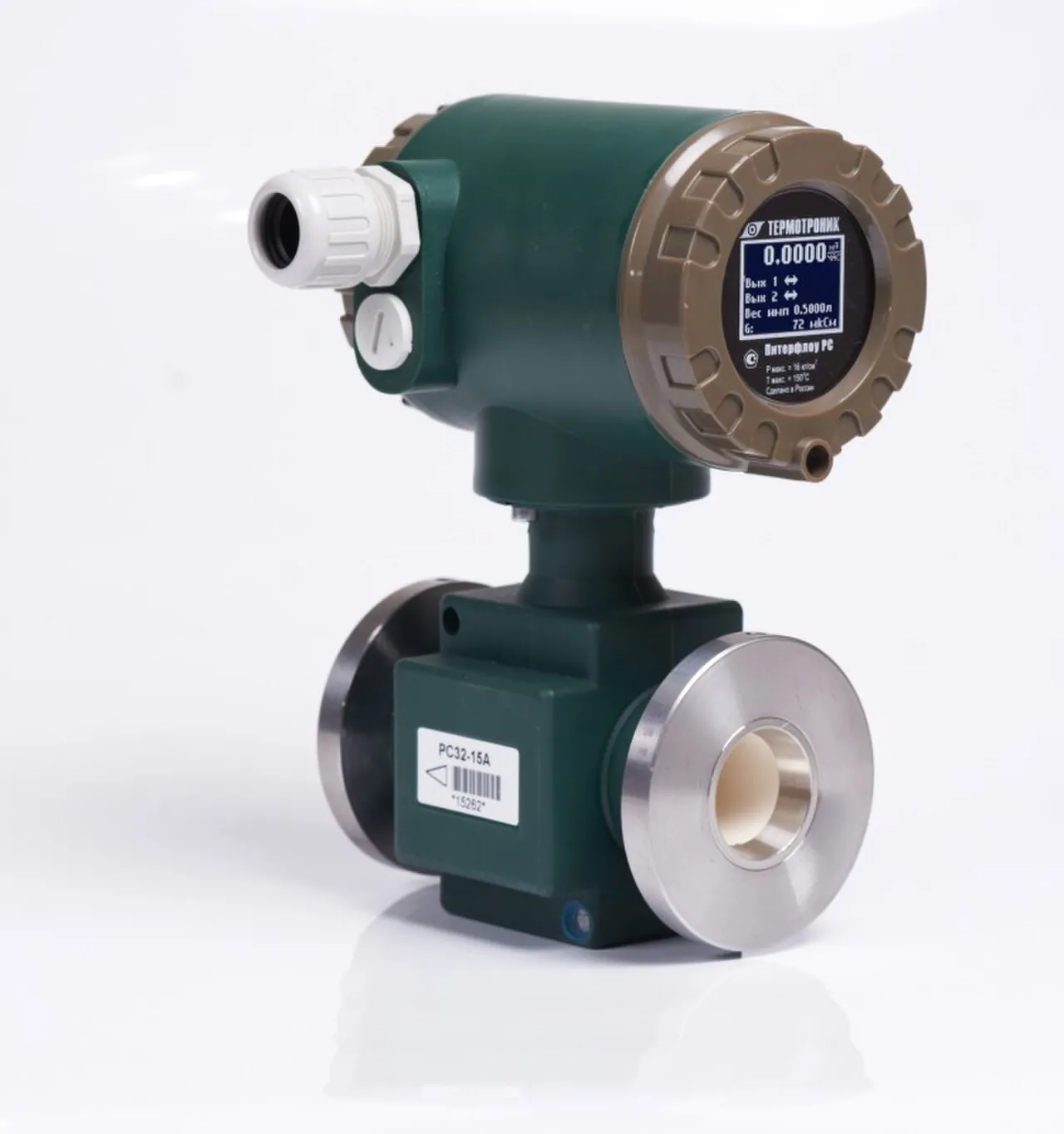
Coriolis vs Electromagnetic Flow Meter Selection by Fluid and Duty
Choosing between a Coriolis mass flow meter and an electromagnetic flow meter (magmeter) is one of the most frequent instrumentation RFQ forks in liquid service. Both are mainstream catalog products under the broader Flow Meter family, yet they answer different process questions: Coriolis reports mass (and often density and temperature) directly; a magmeter reports volumetric flow of a conductive liquid with almost no pressure drop. Buying the wrong one either wastes capital on mass capability the process never uses, or fails outright when conductivity, non-conductive fluid, or custody-transfer mass accounting enters the picture.
This page separates the selection problem from the brochure claims. It starts with the duty families that actually decide the technology, then works through operating physics with numbers, construction and duty boundaries, a Key Specification Parameters decode table, a six-step decision sequence with cost lines and an RFQ checklist, and field practice covering zeroing, two-phase flow, lining wear, grounding rings, and integration with a PLC or PID Controller. Related products such as a Pressure Sensor, Temperature Transmitter, Absolute Pressure Transmitter, Differential Pressure Transmitter, Centrifugal Pump, Gate Valve, Ball Valve, Globe Valve, and Check Valve appear where they affect the meter decision.
Use this page as the decision record attached to the RFQ: once the duty family, conductivity, mass-versus-volume basis, and pressure-drop budget are written down, the technology choice is usually obvious and the remaining work is datasheet decoding and vendor comparison.
This guide is aimed at industrial purchasing and design engineers. It covers 6 chapters from the selection problem, operating physics, and duty boundaries to a decision sequence, with 7 selection FAQs. Numbers reference typical catalog accuracy classes and conductivity cutoffs used in Emerson and KROHNE selection practice.
Chapter 1 / 06
The Selection Problem
A flow meter RFQ that simply says "measure water" or "measure chemical" hides the real decision. The specifier must decide whether the process needs mass, volume, or both; whether the fluid is conductive enough for Faraday induction; whether pressure drop is free or expensive; and whether the accuracy class is process, inventory, or custody transfer. Coriolis and electromagnetic meters overlap on clean conductive liquids at moderate accuracy, and diverge sharply everywhere else.
The electromagnetic route wins when the liquid conducts at least about 5 to 20 uS/cm (vendor cutoff varies), volumetric flow is the controlled variable, and the line cannot afford the pressure drop or capital of a Coriolis tube. Water treatment, pulp stock, slurry lines with conductive carrier, and large-bore chemical transfer at DN 100 and above are classic magmeter duty. The Coriolis route wins when mass is the accounting unit, density or concentration is needed alongside flow, the fluid is non-conductive (oils, hydrocarbons, solvents), or the accuracy and zero stability of a vibrating tube justify the premium.
Six duty families, and where each one pushes. Transfer of conductive water or brine into a tank is magmeter territory: volume in, volume out, lining matched to chemistry. Custody transfer of liquid hydrocarbons or chemicals by mass is Coriolis territory under typical API and OIML practice. Batch dosing of acids, caustics, or polymers into a reactor often prefers Coriolis for mass-based recipes, unless the recipe is volumetric and the fluid is conductive enough for a compact magmeter. Slurry and pulp with conductive continuous phase lean magmeter with abrasion-resistant liners and hardened electrodes; Coriolis can measure some slurries but tube wear and zero shift become the limiting factors. Two-phase or flashing service is hostile to both, yet Coriolis with advanced diagnostics is more often specified when the vapor fraction is low and intermittent. Hygienic food and beverage duty uses both families in sanitary designs: magmeters for conductive product volume, Coriolis for density and mass of concentrates and syrups.
Duty family
Measured quantity
Device it pushes toward
Deciding constraint
Conductive water transfer
Volume
Electromagnetic
Low pressure drop, large bore cost
Custody transfer by mass
Mass
Coriolis
Mass accuracy and density output
Reactor batch dosing
Mass or volume by recipe
Coriolis (mass) or magmeter (volume)
Recipe basis and conductivity
Conductive slurry or pulp
Volume
Electromagnetic with hard liner
Abrasion and electrode design
Non-conductive oils and solvents
Mass or volume
Coriolis (or other non-mag technologies)
Magmeter cannot work below conductivity cutoff
Hygienic concentrate and syrup
Mass plus density
Coriolis
Concentration and CIP/SIP design
Two cautions before the physics. First, a magmeter is not a universal liquid meter: below the conductivity cutoff it reads nothing useful, and gas or hydrocarbon service is outside its domain. Second, a Coriolis meter is not automatically "more accurate" for every duty: on large-bore conductive water where volume is the controlled variable, a well-selected magmeter delivers the needed accuracy at a fraction of Coriolis capital and with lower permanent pressure loss. The rest of this page proves which sentence applies to a given line.
How the RFQ question usually arrives. Procurement often receives two quotations that look interchangeable: both claim 0.2 percent class accuracy, both offer HART, both fit the same flange rating. The hidden difference is whether the process sheet asked for mass or volume, and whether conductivity was measured at process temperature rather than assumed from a room-temperature lab note. Specifiers who force both bidders to answer the six decision questions in chapter 5 stop comparing brochure accuracy rows and start comparing fit to duty.
Adjacent instruments shape the same decision. A Flow Meter that feeds a PID Controller on a blending skid needs a PV that matches the recipe units. A line that already carries a Differential Pressure Transmitter across a filter does not need the flow meter to invent differential pressure; it needs stable flow. When a Temperature Transmitter already tracks jacket temperature, Coriolis tube temperature is still useful for density compensation but does not retire the process TT.
Decision ownership and data sheet freeze. Assign a single process owner for the duty inputs before commercial comparison starts. When sales, design, and maintenance each silently assume different duty cycles, every architecture can be made to look like a winner. Freeze the data sheet revision in the RFQ and require bidders to echo that revision number on their proposal cover.
Define what success looks like in the first ninety days: availability target, energy or media budget, scrap or rework limit, and maintenance hours. Those metrics become the SAT and early-operation acceptance lens, not only a factory nameplate check.
Map related equipment that can invalidate a selection even when the core device is correct: upstream drivers, downstream mechanisms, piping or fixtures, and control system scan times. Write interfaces as shall statements.
Capture the cost of delay. If lead time differences between architectures affect a shutdown window, lead time becomes a scored technical factor, not only a commercial footnote.
Chapter 2 / 06
How Each Meter Measures Flow
An electromagnetic flow meter applies Faraday's law of induction. A magnetic field is driven across a non-conductive lined tube; conductive liquid moving through the field induces a voltage between electrodes that is proportional to average velocity. Multiplying velocity by the known cross-section yields volumetric flow. There is no obstruction in the bore, so permanent pressure drop is essentially that of a straight pipe of the same length. The lining (PTFE, PFA, hard rubber, polyurethane, ceramic) isolates the metal tube from the process; electrodes (stainless steel, Hastelloy, platinum, tantalum) contact the fluid.
A Coriolis meter vibrates one or more flow tubes at their resonant frequency. Fluid mass flowing through the oscillating tubes produces a Coriolis force that twists the tubes; the phase shift between inlet and outlet sensors is proportional to mass flow. Resonance frequency shifts with density, so modern transmitters report density and, with an RTD or similar sensor on the tube, temperature as well. Volume can be computed from mass and density, but the primary measurement is mass. The vibrating tubes create a permanent pressure drop that grows with mass flow rate and viscosity; datasheets publish delta-P curves that must be checked against available pump head from the Centrifugal Pump or other driver.
What the physics implies for control. A magmeter feeds a volumetric PV into a PID Controller or PLC that typically holds level, ratio, or volumetric setpoint. A Coriolis feeds a mass PV and often a density PV, which lets the same controller hold mass fraction, concentration, or custody mass total. If the recipe or commercial contract is written in kilograms, converting a magmeter volume through an assumed density adds uncertainty every time density drifts with temperature or composition. That single contractual fact often overrides a lower magmeter quote.
Neither technology replaces a Pressure Sensor or Differential Pressure Transmitter on the line when the control narrative needs head or filter differential; flow and pressure remain separate measurements. Temperature Transmitter loops still sit on jackets and heat exchangers even when Coriolis reports tube temperature, because the process temperature point of interest may not be the meter tube.
Turndown and low-flow behavior. Magmeters remain usable down to low velocities if the transmitter excitation and electrode noise floor allow it, but accuracy stated as percent of rate usually degrades as velocity falls; some vendors also publish percent-of-span figures that look better on paper than at the bottom of the range. Coriolis turndown is excellent on mass when the tube drive can maintain amplitude, yet zero stability becomes the practical floor: a 2 kg/h zero uncertainty on a meter sized for 20000 kg/h is tiny at the top of range and fatal at the bottom. Size for the minimum reliable flow, not only for Qmax.
Density as a second PV. Only Coriolis among this pair reports live density with useful accuracy. Blending, concentration control, and interface detection use that PV directly. Magmeters cannot substitute; a separate densitometer would be required, which often erases the capital advantage that made the magmeter look cheaper.
Operating envelope table. Build a three-column envelope for minimum, normal, and maximum conditions covering load, speed, temperature, and media properties. Evaluate both options at all three columns. Architectures that only win at the brochure nominal point and fail at the maximum column are not qualified.
Separate continuous ratings from intermittent ratings in the comparison. Marketing sheets often blend them. Your duty cycle decides which column is binding.
Quantify uncertainty. If efficiency, accuracy, or torque is stated without a tolerance, ask for it. Design margins evaporate when the adverse tolerance stack is ignored.
Include transient events explicitly: starts, stops, reversals, emergency stops, clean-in-place, and warm-up. Transients drive fatigue and thermal peaks that steady-state tables miss.
Chapter 3 / 06
Construction, Fluids, and Duty Boundaries
Construction choices decide where each meter stops being suitable long before the accuracy row on the datasheet does. For magmeters the critical stack is liner material, electrode material, grounding strategy, and transmitter excitation. For Coriolis it is tube material, tube geometry (single bent, dual bent, straight), pressure and temperature rating, and secondary containment.
Magmeter liners and electrodes. PTFE and PFA cover most aggressive chemicals at moderate abrasion; hard rubber and polyurethane suit water and abrasive slurries; ceramic liners appear on severe slurry and mining duty. Electrodes must match chemistry: 316L for clean water, Hastelloy C for many chlorides, tantalum or platinum for hot acids. Full-pipe requirement is absolute: a partially filled magmeter under-reads or fails; some designs add empty-pipe detection. Grounding rings or grounding electrodes bond the fluid potential to the meter so the induced voltage is measured against a defined reference; insulating liners and plastic pipe make this mandatory.
Coriolis tubes and ratings. Stainless 316L tubes cover general liquid duty; Alloy C-22, titanium, and tantalum appear on corrosive chemicals; duplex and specialty alloys on chloride and seawater blends. Dual curved tubes dominate process sizes; straight dual tubes reduce pressure drop and drain better for hygienic service; single-tube designs appear in small sizes and some hygienic lines. Secondary containment around the tubes matters on toxic or flammable service: a tube rupture should be detected and contained, not sprayed into the pipe rack. Process temperature and pressure must sit inside the published derating curves; heating jackets and steam tracing change the tube temperature and therefore zero and density calibration.
Where each option stops. Magmeters stop at non-conductive fluids, gas service, and many hydrocarbon streams. They also struggle when conductivity sits near the cutoff and varies with temperature. Coriolis stops or derates hard on high gas void fraction, severe slug flow, and some extreme abrasion duties where tube wall loss shifts zero faster than maintenance can correct. Very large water transmission lines (DN 600 to DN 2000) are almost always magmeter on cost and pressure-drop grounds; very small chemical dosing lines (DN 2 to DN 15) often favor Coriolis or specialized positive-displacement meters depending on fluid.
Isolation valves around the meter run (Ball Valve or Gate Valve for on/off, Globe Valve for throttling on bypass) and a Check Valve on pump discharge belong in the same isometric. They do not change the meter physics, but they decide whether the meter can be zeroed, removed, or bypassed without shutting the plant.
Hazardous area and hygienic variants. Both families offer intrinsically safe or explosion-proof transmitters and barriers for Zone or Division classification. Hygienic Coriolis and magmeters add tri-clamp or aseptic flanges, drainable geometries, and surface finishes suitable for CIP and SIP. The selection logic does not change, but the RFQ must state 3-A or EHEDG expectations explicitly or bidders will quote industrial finishes.
Materials of construction versus cleaning chemicals. A liner or tube that survives the process fluid can still fail under cleaning. Hot caustic, nitric acid CIP, and steam sterilization move the temperature and chemistry outside the continuous process envelope. Demand a materials compatibility statement that covers both process and cleaning, and list the cleaning recipe in the datasheet attachment.
Site and packaging constraints. Envelope drawings must include service access for seals, brushes, probes, lubricators, and terminal boxes. A technically perfect device that cannot be maintained in the installed position becomes a reliability problem within a year.
State cleaning chemistry, blast levels, and hose-down pressures when washdown applies. Seals and nameplates that survive the process can still fail under sanitation.
Hazardous-area and functional-safety requirements belong in chapter-level boundaries, not in a late commercial email. Certificates must match the area classification drawing and the safety performance level required by the risk assessment.
Prefer designs with replaceable wear modules when the plant stores limited spares. Monolithic assemblies with long exotic lead times need an explicit spare on the shelf or a dual-source plan.
Chapter 4 / 06
Key Specification Parameters
Read both datasheets against the same process data sheet. The rows below are the ones that change technology choice or price; vague wording on any of them is how quotes become incomparable.
Parameter
Electromagnetic
Coriolis
Sizing basis
Velocity typically 0.5 to 5 m/s; bore from max and min flow
Mass flow range and pressure-drop curve at viscosity
Factory mass calibration; master-meter or gravimetric prove
What the added rows decide. Sizing on a magmeter is a velocity problem: too slow and noise and coating dominate; too fast and abrasion and liner life suffer. Sizing on Coriolis is a mass-flow and delta-P problem: undersizing raises pressure drop and tube stress; oversizing hurts turndown and zero stability at low flow. Density accuracy matters only when concentration or mass fraction is controlled; if the loop is pure volume, paying for Coriolis density is optional. Diagnostics belong in the RFQ because empty-pipe detection on magmeters and two-phase indicators on Coriolis prevent weeks of chasing a false process problem.
Transmitter and integration on the same sheet. Remote transmitters keep electronics out of hot or flooded areas; integral transmitters cut cable and cost on clean skids. Protocol choice should match the plant PLC standard rather than forcing a protocol converter. Pulse outputs still matter for batch totalizers even when the analog loop runs 4-20 mA. An Absolute Pressure Transmitter or gauge Pressure Sensor on the same line remains a separate instrument; do not assume the flow transmitter replaces it.
K-factor, pulse scaling, and totalizer discipline. Batch systems that count pulses into a PLC need the pulse weight stated in engineering units and locked against unauthorized change. Magmeter electrode polarity and Coriolis flow direction configuration must match the arrow on the body. After any transmitter replacement, re-enter the K-factor or calibration constants from the metal tag, not from memory.
Ambient and electronics limits. Integral transmitters see pipe heat and sun load; remote transmitters move the electronics to a cooler panel at the cost of cable. Above roughly 60 C ambient at the housing, most integral options need sunshades, remote mounts, or high-temperature electronics grades. Write ambient max, sun exposure, and preferred mount into the RFQ so the quote includes the right transmitter package.
Parameter crosswalk worksheet. Create a one-page crosswalk that lists each critical datasheet parameter, the process need, the quoted value, and the acceptance test method. Attach that crosswalk to the purchase order. It prevents shipping a catalog cousin that almost matches.
Normalize units and test standards before ranking price. A torque rating under one standard can be incomparable to another without conversion and duty definitions.
Require curve data where a single point is misleading: pump curves, gearbox thermal curves, meter accuracy versus flow, actuator torque versus angle, enclosure derating versus temperature.
Electronics and firmware options (protocols, diagnostics, password locks) should be frozen as configured model codes, not as vague “HART capable” language.
Chapter 5 / 06
Selection Decision Factors
Conductivity and fluid identity first. If the fluid is non-conductive or sits near the magmeter cutoff, Coriolis (or another technology) is mandatory. If the fluid is clean conductive water and the controlled variable is volume, the magmeter is the default until custody mass or density enters the requirement.
Mass versus volume in the contract or recipe. Custody tickets, mass-balance reconciliations, and mass-based batch recipes push Coriolis. Volumetric filling, open-channel adjacent water accounting, and large-bore distribution push magmeter.
Pressure drop and pump margin. Pull the Coriolis delta-P at maximum mass flow and viscosity; if the Centrifugal Pump has less than about 20 to 30% head margin after fittings and elevation, either enlarge the Coriolis, accept a higher pump rating, or stay with a magmeter.
Bore and capital. Above roughly DN 100 to DN 150 on conductive service, magmeter capital advantage grows quickly. Below DN 25 on valuable chemicals, Coriolis often wins on accuracy per dollar.
Is the fluid conductive above the magmeter cutoff at process temperature? No: Coriolis (or non-mag alternative). Yes: continue.
Is mass, density, or concentration a controlled or commercial quantity? Yes: Coriolis. No: continue.
Does available pump head tolerate Coriolis pressure drop at Qmax? No: prefer magmeter or enlarge Coriolis bore. Yes: either remains open.
What accuracy class and turndown does the duty need? Custody or tight mass balance: Coriolis. Typical process volume: magmeter usually sufficient.
What is the line size and abrasion profile? Large conductive water: magmeter. Abrasive conductive slurry: magmeter with hard liner. Small clean chemical: Coriolis often preferred.
What diagnostics and proving regime apply? Empty-pipe and coating diagnostics favor a modern magmeter transmitter; tube-integrity and two-phase flags favor Coriolis; write the proving method into the RFQ.
Cost line
Electromagnetic route
Coriolis route
Meter body and transmitter
Baseline on conductive volume duty
Typically 2 to 5 x magmeter at same DN
Pressure-drop energy
Negligible added pump power
May need larger pump or higher speed; continuous kWh cost
Flow range (min, normal, max), accuracy class, and turndown.
Line size, flange rating, face finish, and maximum allowable pressure drop.
Process temperature and pressure, including cleaning (CIP/SIP) extremes.
Materials: liner/electrode or tube alloy; secondary containment if required.
Outputs and PLC protocol; hazardous-area certification.
Proving or verification method, spare philosophy, and whether a bypass with Gate Valve or Ball Valve isolation is required.
Summary rule: conductive volumetric service with low pressure-drop budget takes an electromagnetic Flow Meter; mass, density, non-conductive, or custody-mass service takes Coriolis.
Worked capital sketch on a DN 80 conductive chemical line. Suppose normal flow is 40 m3/h of conductive brine, control is volumetric into a tank, and pump head margin is tight. A magmeter quote might sit near the low thousands of dollars with near-zero added head. A Coriolis quote at the same bore might run several times higher and add 0.3 to 0.8 bar of permanent loss, forcing a pump impeller or motor change. Unless mass accounting appears in the contract, the magmeter wins. Invert the sketch for a DN 15 solvent line sold by mass: Coriolis is often the only workable meter in this comparison pair, and the capital premium is unavoidable.
Lifecycle, not only purchase order. Factor electrode and liner spares for magmeters on abrasive duty, tube-assembly lead time for Coriolis on exotic alloys, and the labor to prove custody meters. A cheap meter that cannot be proved or that forces a pump upgrade is not cheap.
Spare-parts and obsolescence note. Transmitter electronics obsolescence often arrives before the wet parts wear out. Prefer platforms with a stated migration path for the next transmitter generation that reuses the existing sensor, and stock one compatible transmitter per critical meter population rather than one per tag. For magmeters, electrode and liner kits are the wear spares; for Coriolis, the tube assembly is the long-lead spare and should be identified by alloy and pressure rating in the storeroom catalog.
Scoring model. Use a weighted score: technical fit, risk, lead time, energy or media cost, maintainability, and price. Publish weights in the RFQ. Vendors then optimize the right function, and internal stakeholders cannot silently reweight after seeing the numbers.
Keep a written reject log for the architectures not chosen, citing the duty fact that eliminated them. That log is the fastest way to answer the next audit or the next project reuse question.
Negotiate spares and training as part of award, not after installation when leverage is gone. Critical wear parts and a commissioning engineer-day package are cheaper in the bid than in an emergency PO.
Confirm that installation contractors receive the same data sheet revision and wiring diagrams used for award. Field improvisation is a top source of early failures blamed on the product.
Chapter 6 / 06
Field Practice: Zeroing, Two-Phase, and Integration
Zeroing and empty-pipe discipline. Magmeters need a full pipe; empty-pipe detection should trip or freeze the totalizer rather than integrate noise. Coriolis zero must be taken with the meter full, blocked, and at process temperature; a zero taken on a partially empty or thermally unsettled tube becomes a persistent mass offset. Write zeroing steps into the commissioning procedure and into the PLC interlock narrative so operators cannot zero during flow.
Two-phase and entrained gas. Bubbles and flashing destroy magmeter velocity averaging and drive Coriolis drive-gain and phase errors. Prefer meters upstream of control valves that drop pressure into the two-phase region, and downstream of adequate backpressure. Coriolis diagnostics that flag two-phase conditions should alarm to the PLC, not sit unread in a local display.
Liner wear, coating, and electrode care. Abrasive slurry shortens polyurethane and rubber liner life; schedule thickness or verification checks. Electrode coating from grease or film raises noise; some transmitters detect coating and request cleaning. Never sandpaper a precious-metal electrode; follow vendor cleaning chemistry.
Grounding and nearby electrical noise. Plastic pipe, lined pipe, and cathodic protection systems create potential differences that swamp the microvolt electrode signal. Install grounding rings per the vendor drawing, bond to the plant ground grid, and keep VFD motor cables and high-current bus away from electrode wiring. A Soft Starter or VFD on an adjacent Centrifugal Pump can inject noise if cable segregation is ignored.
Orientation, drainability, and supports. Coriolis meters are heavy; support the process pipe so nozzle loads stay inside the published limits. Self-draining orientation matters for hygienic and freeze-prone lines. Magmeters are lighter but still need gasket and flange alignment so the liner is not pinched.
Integration with valves and transmitters. Isolation with a Ball Valve or Gate Valve on both sides, a Globe Valve on a metered bypass if used, and a Check Valve on pump discharge are piping standards, not meter options. A Temperature Transmitter on the process line still belongs where control needs bulk temperature. Absolute Pressure Transmitter or Differential Pressure Transmitter points remain where the P&ID places them; the flow meter does not replace them.
Failure modes to specify against. Magmeter: empty pipe, coated electrodes, failed coils, liner breach into the tube. Coriolis: tube crack or fatigue, severe zero shift after temperature shock, drive-gain saturation on two-phase, secondary-containment leak alarm. Demand the diagnostic bits that detect each mode and map them to PLC alarms before the meter is accepted.
Commissioning sequence that prevents false starts. Fill and vent the line, confirm full pipe, apply power, verify grounding continuity on magmeters, then perform Coriolis zero at blocked-in process temperature. Only then open process flow and compare the meter against a reference tank drop, weigh scale, or master meter for a short acceptance run. Log drive gain, signal quality, and electrode resistance baselines so later drift has a reference.
Common misuse patterns. Installing a magmeter on low-conductivity condensate. Oversizing Coriolis so low-flow batches sit inside the zero noise. Ignoring gasket intrusion into the magmeter bore. Supporting Coriolis from the sensor housing instead of the process pipe. Each misuse produces a complaint that looks like a factory defect and is actually an installation defect.
Maintenance intervals. Magmeters on clean water may run years between verification checks; slurry service needs liner inspection on a planned outage cadence. Coriolis on clean service is similarly low touch; corrosive or erosive service needs periodic review of drive gain trends and secondary-containment status. Tie verification to the plant's Pressure Sensor and Temperature Transmitter calibration calendar so instrumentation work is batched.
Standards and documentation pack. Ask for a calibration certificate traceable to a recognized mass or volume standard, materials certificates for wetted parts, hazardous-area certificates matching the area classification drawing, and a wiring diagram that shows shield grounding at one end only. For custody service, demand the proving procedure and the uncertainty budget in writing before purchase order, not after the meter arrives. Magmeter verification tools and Coriolis in-situ verification features reduce shutdown time when they are specified up front and licensed in the transmitter firmware.
When the line also includes a Globe Valve for throttling or a Check Valve on pump discharge, place the flow meter where the velocity profile remains acceptable: typically upstream of the throttling valve and downstream of adequate straight run or flow conditioner if the vendor requires it. Document that placement on the P&ID so construction does not swap the order under field pressure.
Baseline and trend monitoring. Record as-commissioned diagnostics, temperatures, currents, accuracies, or cycle times. Trend against those baselines on a defined cadence. Absolute alarm limits without baselines either nuisance-trip or miss slow degradation.
Write the troubleshooting tree into the maintenance system: first checks, probable causes, and spare identities. Relying on tribal knowledge fails on night shifts.
After any process change (new fluid, new speed, new recipe), re-qualify the device against the original selection assumptions. Many “mysterious” failures are duty changes that nobody re-ran through the decision sequence.
Close the loop with suppliers on chronic defects using evidence packs (trends, photos, nameplates, oil samples). SpecForge-style specification discipline works only if field evidence returns into the next RFQ.
Plan end-of-life. Controllers, transmitters, and firmware age out before housings wear out. Demand a support horizon statement and a migration path that reuses wet or mechanical parts where possible.
FAQ
Can an electromagnetic flow meter measure oil or diesel?
No, not usefully. Magmeters need a minimum fluid conductivity, typically about 5 to 20 uS/cm depending on vendor and bore. Hydrocarbon oils and diesel sit far below that cutoff. Use Coriolis (or another non-magnetic technology) for those fluids.
When is Coriolis worth the higher price on water service?
When mass, density, or concentration is controlled or sold, or when accuracy near 0.1% of mass rate is required for balance or custody. Pure volumetric water transfer on large bores usually stays with a magmeter on capital and pressure-drop grounds.
How much pressure drop should I budget for Coriolis?
Read the vendor curve at your maximum mass flow and viscosity. Many process sizes sit between about 0.1 and 1.5 bar at Qmax; viscous fluids climb higher. Confirm the Centrifugal Pump still has adequate head margin after fittings and elevation.
Do magmeters need straight pipe runs?
Often yes. Vendors commonly ask for a few diameters upstream and downstream, though some designs reduce that. Coriolis usually needs little straight run but has orientation and support rules. Follow the specific installation drawing, not a generic rule of thumb.
Can either meter handle slurry?
Conductive slurries are common magmeter duty with hard liners and suitable electrodes. Coriolis can measure some slurries but tube wear and zero stability become maintenance limits. Non-conductive slurries need other technologies.
What outputs should I specify for PLC integration?
At minimum 4-20 mA for the primary flow PV and a pulse or frequency for totalizing. Add HART, PROFIBUS, PROFINET, or EtherNet/IP to match the plant PLC standard. On Coriolis, map density and temperature as separate PVs when the PID Controller or recipe needs them.
How often must Coriolis be proved for custody transfer?
Follow the applicable custody code and contract, commonly periodic proving against a master meter or gravimetric reference. Interval depends on service criticality and observed drift. Process-only meters may rely on factory calibration plus in-situ verification tools.