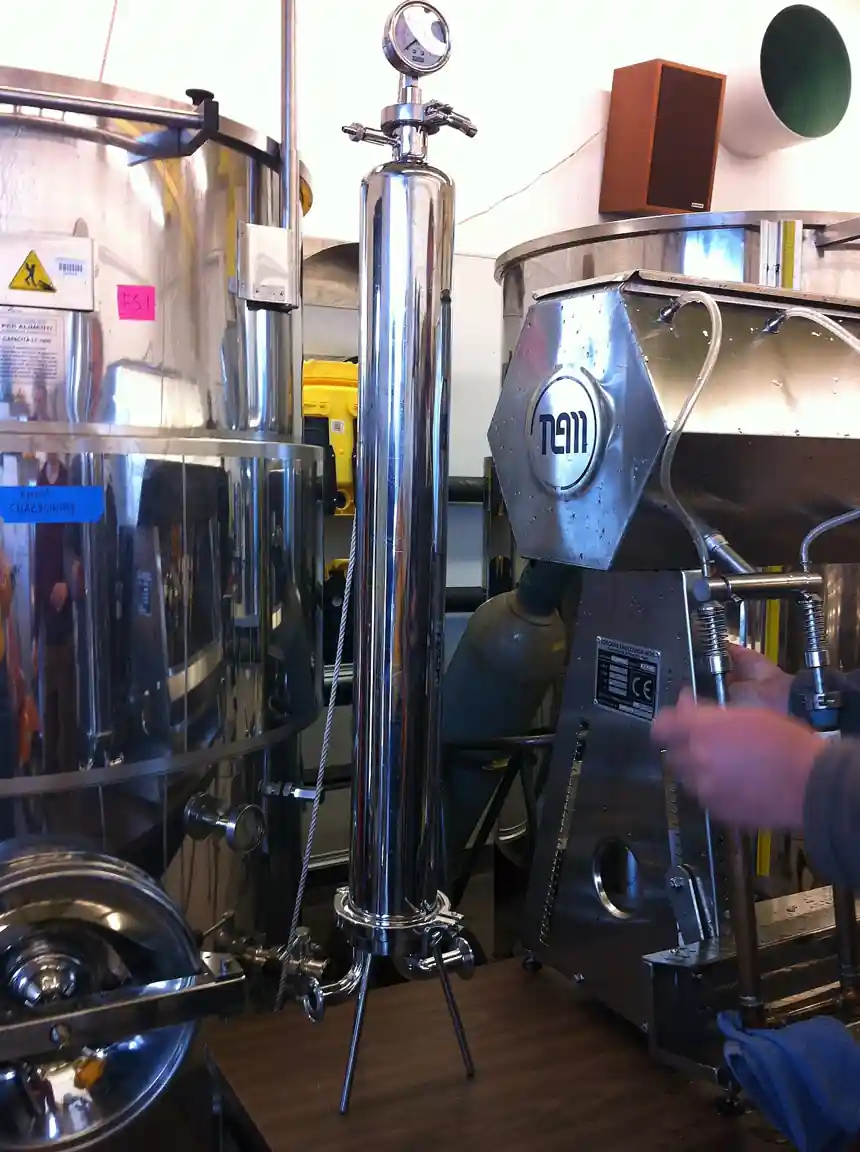
A dissolved air flotation unit, DAF, clarifies water and wastewater by making air dissolve into a water stream under pressure and releasing it at the tank as a cloud of microscopic bubbles, 20 to 100 micrometers, that attach to suspended solids, fats oils and greases, and chemical floc, floating them to the surface for a skimmer to collect as a concentrated float sludge. A recycle or full stream is pressurized typically to 4 to 6 bar in a saturation vessel, dissolved air measured by Henry's law behavior, and released through nozzles or valves at the tank inlet where the pressure drop precipitates the white water the industry names itself by. Typical industrial results remove 80 to 95 percent of suspendable solids and FOG from properly flocculated feeds, with float solids concentrations from 2 to 8 percent by feed and chemistry, several times thicker than gravity sludge, and hydraulic loading rates from 2 to 15 meters per hour by machine type.
Procurement engineers meet these units on food and dairy wastewater, meat and rendering, oil refinery and tanker discharge, chemical and plastics plants, pulp and paper whitewater, municipal thickening and primary treatment, and biological solids concentration. The decision this page settles is which pressurization architecture and tank geometry match the stream: recycle against full flow pressurization, open tank against lamella plate pack, the flocculation and chemical program scope the removal depends on, and the float handling the concentrated sludge deserves. The answer lands as an RFQ line set, flows and loads, saturation basis, chemistry, skimming and materials, and every chapter below feeds that line set so the DAF floats what the process sends it rather than clarifying a brochure.
This page treats the dissolved air flotation unit as a purchasing object: how saturation and the air to solids ratio size the white water system, how recycle against full flow pressurization divides the duties, what flocculation and chemistry the removal percentages actually assume, how tank geometry trades footprint against simplicity, and how the whole decision folds into a defensible RFQ with jar test basis included. It is written for engineers who issue specifications on water and wastewater separation equipment, not for readers who want a brochure summary.
Chapter 1 / 06
What a DAF Is and What Is Being Decided
The defining act of the machine is flotation by dissolved air, and the distinction matters because air flotation comes in several physics and this page owns the dissolved one. In a DAF, air dissolves into water under pressure in a saturation vessel, the pressurized flow is released into the process at the tank, and the dissolved air comes out of solution as a dense fog of microbubbles far smaller than any sparged bubble. Those bubbles attach to floc and grease particles, the aggregate density falls below water, and the solids travel up instead of down. Gravity settling, the clarifier physics, works the other direction and works poorly exactly where flotation excels, on light, greasy, and flocculated material, which is why the two technologies split the clarification market the way they do.
What is being decided in this purchase is four commitments at once. First a pressurization architecture: recycle pressurization, the industrial standard, dissolving air into a sidestream of clarified effluent and injecting the white water into the feed, or full flow pressurization, dissolving the entire feed, chosen on stream tolerance to pressurization and saturation efficiency. Second a tank geometry: open rectangular tank, circular machine, or lamella plate pack machine, trading footprint and loading rate against mechanical simplicity and chemical sensitivity. Third a chemistry basis: coagulant and polymer program, flocculation time and energy, and the jar test data that underwrites every removal percentage the vendor quotes, because a DAF without chemistry is a tank with a pump. Fourth the hardware scope: saturation vessel and air compressor or eductor arrangement, release nozzles, skimmer and bottom scraper or screw, float hopper and desludging, and materials against corrosion and the winter the site runs. A buyer who lets any of the four default gets a machine that clarifies someone else's wastewater.
Against its neighbors the DAF occupies precise ground in the water treatment train. An oil water separator, gravity API and CPI plate types, removes free oil by density difference alone and its page is the authority for that duty; the DAF takes the emulsified and flocculated fractions the gravity separator cannot, after coagulation chemistry breaks them loose, and the two are often bought as a train. A cyclone separator or industrial filter handles other streams of the physical separation house. Downstream, a filter press dewateres the float sludge this machine concentrates, the two a classic train with float solids multiplied several fold before pressing. Biological and polishing steps, dissolved air flotation sitting as pretreatment ahead of them, belong to the process train the plant designs. A mining flotation cell shares the word flotation and not the machine: it aerates ore slurry with coarse sparged bubbles for mineral recovery, a different physics and a different purchase. Naming the neighbors keeps vendors quoting the same machine.
Standards frame the datasheet modestly, because DAF performance is stream specific and the industry proves it on the buyer's water, not on a standard fluid. Vessel code applies to the saturation vessel as pressure equipment; machine safety applies to the skimmer drives and walkways; and the water treatment performance tradition runs on jar testing, bench flotation, and pilot units, with the conscientious vendor refusing to guarantee removals without the buyer's water data. Discharge obligations come from the permit the unit serves, and the process guarantees are written against the sample and analysis methods the permit uses. A datasheet that quotes removal percentages with no water data basis is a price tag, not a specification.
The station around the DAF deserves naming in the RFQ too. Feed arrives from equalization through a pump suited to floc, low shear, progressive cavity or slow centrifugal, and dosing points for coagulant and polymer feed by metering pump come with mix, pipe, or static mixer stages sized for the reaction times. The saturation system draws its recycle from clarified effluent, air arrives from a small compressor or is educed into the saturation vessel by the flow itself, and the white water injects through release valves or nozzles at the tank. Float leaves by skimmer chain or screw to a hopper and pump, the sludge pump usually progressing to the thickened stream's next stop, and bottom solids leave by scraper or drain. Instrumentation reads the machine, level and interface, flowmeter on feed and recycle, pressure transmitter on the saturation vessel, and turbidity on effluent where the permit wants it live, with the online water analyzer family available when the discharge argument justifies it.
Chapter 2 / 06
How Saturation and Bubbles Do the Work
The white water arithmetic starts with Henry's law: the mass of air that dissolves in water rises linearly with pressure, roughly 20 to 25 milligrams of air per liter dissolved per bar of saturation above atmospheric at ambient temperature classes, falling with temperature. A recycle stream pressurized to 5 bar absolute carries on the order of 100 milligrams per liter of dissolved air, and when the release valve drops that stream to atmospheric, all but the roughly 25 that stay dissolved at 1 bar precipitate as microbubbles. The sizing quantity is the air to solids ratio, grams of released air per kilogram of feed solids, with common design values between 0.02 and 0.06 by stream, enough bubbles to blanket the solids with attachment surface and not so many that the tank churns. The RFQ states the A/S basis with the recycle ratio and saturation pressure behind it, because that triangle is the machine's capacity statement.
Bubble quality is a hardware property the buyer inherits from the release design. Dissolved air comes out of solution when pressure drops, and the drop location, a valve, a nozzle pack, or a proprietary release unit, sets the bubble spectrum: the industry wants 20 to 100 micrometer bubbles, small enough to attach to floc and slow enough not to shear it, produced by an abrupt but controlled drop. Oversized release hardware makes coarse bubbles that rise without attaching, starved hardware makes too few, and worn nozzles drift both ways silently. Saturation vessel design matters equally, packed or unpacked vessels with level control and air control that actually saturate rather than pass bubbles through, and the white water cloud at the tank inlet, milky and even, is the commissioning evidence the operator learns to read at a glance.
Flotation itself is an aggregation story and the chemistry writes it. Coagulant, an inorganic salt or organic coagulant by stream, destabilizes colloids and emulsions, the polymer flocculant then builds floc particles large enough to trap bubbles, and the DAF's removal percentages attach to that conditioned material, not to whatever the sewer sends. Flocculation time and energy, typically 10 to 20 minutes of gentle mixing by design, protect the floc that shear destroys, and the feed pump and piping respect the same discipline. Grease and oil, emulsion broken by chemistry or already free, float enthusiastically, which is why food, refinery, and rendering streams are DAF country, and dense inorganic solids float badly, which sends those streams to gravity equipment. The jar test and bench flotation that found the chemistry doses are the only honest basis for the guarantees, and the RFQ demands them by name.
Tank hydraulics turn attachment into removal. The mixed stream enters a contact or white water zone where bubbles meet floc, flows through baffle arrangements into the separation zone at design overflow rate, and clarified water leaves over a weir or through a plate pack with the float accumulating at the surface and heavy solids settling to the bottom scrape. Surface loading, the flow per plan area, runs roughly 2 to 6 meters per hour on open tanks and 5 to 15 on lamella machines whose inclined plates multiply effective area, with recycle flow counted in the hydraulic load. Short circuiting is the silent thief, feed energy carried across the tank instead of dissipated, and the inlet baffles and velocity design that prevent it are vendor engineering the purchase inherits, seen at commissioning as a tank that clarifies at design flow and clouds at peak.
Float handling finishes the physics. The float blanket at the surface, thickened by the bubbles' continuing work and the skimmer's patience, reaches 2 to 8 percent solids by feed and chemistry, and the skimmer, a chain and flight system or a rotating scraper on circular machines, pushes it up a beach into a hopper. Beach angle, scraper speed, and hopper residence manage the dewatering that happens on the way over, and a float that runs thin wastes the thickening the machine already did. Bottom solids, the settleable fraction, leave by scraper or screw to the same sludge handling, and the combined stream, several times the feed solids concentration, flows to thickening or dewatering, the filter press being the classic next machine and its page the reference for that purchase.
Chapter 3 / 06
Pressurization Architectures, Tanks, and Duty Boundaries
Recycle pressurization is the industrial standard: 10 to 50 percent of the clarified effluent, pressurized and saturated, returns as white water into the feed or the tank inlet. Its virtues are the pressurization of clean water only, no floc damage and no saturation loss to solids, the isolation of the saturation system from the wastewater, and the control handle the recycle rate gives the operator against load swings. Its costs are the recycle pumping energy and the slightly higher hydraulic load through the tank. Full flow pressurization saturates the entire feed stream, efficient in saturation terms and simple in flow sheet, used where the feed tolerates pressurization without floc damage and where saturation of the whole stream earns its energy, on clean whitewater and some municipal thickening duty, and partial flow pressurization splits the difference, pressurizing part of the feed directly, the niche between the two.
Tank geometry divides into the open rectangular, the circular, and the lamella machines. Open rectangular tanks, chain and flight skimmers and simple construction, are the general industrial workhorse, tolerant of chemistry drift and easy to walk into for maintenance, at the largest footprint. Circular machines, scraper bridge and scum beach, share the clarifier tradition's compactness and clean look, suiting municipal and larger duty. Lamella DAFs pack inclined plates into the separation zone, multiplying settling and flotation area per plan area and cutting footprint by half and more, at the price of plates that need cleaning discipline, chemical sensitivity to the loading rates they run, and a machine that hides its hydraulics behind its efficiency. Package DAFs, factory skidded with saturation, skimmer, and controls, own the small and medium industrial market from a few cubic meters per hour upward, and concrete basin conversions add DAF hardware to existing tanks where the civil work already exists.
Boundaries are worth stating bluntly. The DAF is the flocculated and emulsified solids machine, not the free oil authority: a gravity oil water separator takes free oil and its page owns that duty, and the DAF takes what chemistry releases after it. It is not a settling clarifier, whose gravity physics suits dense solids the bubbles cannot lift, and it is not a mining flotation cell, which sparges coarse bubbles into ore slurry for mineral recovery and shares only the word. It is not a filter, whose media polish a DAF's effluent downstream where discharge limits demand, and it is not the thickener whose gravity duty it replaces or complements by loading class. The map below compresses the boundaries into one table a specifier scans before the RFQ.
Architecture
Best duty
Watch out for
Recycle pressurization, open rectangular
General industrial wastewater, FOG and floc duty
Recycle pump energy, skimmer maintenance
Recycle pressurization, circular
Municipal primary and WAS thickening
Bridge drive scope, cold climate float handling
Lamella plate pack machine
Footprint constrained industrial sites
Plate cleaning discipline, chemistry sensitivity at load
Full flow pressurization
Floc tolerant feeds, whitewater service
Floc shear by stream, saturation efficiency claims
Packaged skid DAF
Small and medium industrial duty
Vendor chemistry support, turndown at low flow
Concrete basin conversion
Existing tank assets reused
Hydraulic retrofit basis, baffle and skimmer fit
Chapter 4 / 06
Key Specification Parameters
The table below decodes the datasheet lines that decide whether a quoted DAF floats what the plant sends it. Each row is a purchase defining parameter; the paragraphs after the table explain what to demand and what a weak answer looks like.
Attribute
Typical range or options
What it decides
Hydraulic loading
2 to 6 m/h open; 5 to 15 m/h lamella
Tank plan area and the footprint bill
Feed solids and FOG load
TSS, FOG, COD by stream with peaks
Chemistry program, air demand, and skimmer duty
Air to solids ratio
0.02 to 0.06 g air per kg solids
The white water capacity basis behind removal claims
Saturation pressure and recycle
4 to 6 bar; recycle 10 to 50 percent
Pumping energy and control range against load
Chemistry program
Coagulant and polymer doses with jar test basis
The removal percentages and float quality actually bought
Flocculation design
10 to 20 min gentle mix by stream
Floc survival to the tank and chemistry tolerance
Removal guarantees
TSS, FOG, COD percent by stream
The acceptance basis, tied to water data and methods
Float solids concentration
2 to 8 percent by feed and chemistry
Downstream sludge volume and handling economics
Materials and corrosion
SS 304 or 316, coated steel by stream
Life in chloride, saline FOG, and chemical service
Skimmer and bottom handling
Chain or screw skimmer, scraper or drain
Mechanical reliability and the float the tank keeps
The air to solids and saturation rows carry the capacity claim. Demand the A/S basis with the recycle ratio and saturation pressure behind it, at design and peak load, because removal percentages quoted without the white water arithmetic are borrowed from someone else's stream. On the chemistry row, demand the jar test and bench flotation data the doses come from, your water or a defensible analog, and write the removal guarantees against the sample methods the permit uses. The quotation that guarantees ninety percent removal on unspecified water is not lying exactly, but it is selling the conditions where that happened.
The loading and float rows set the civil and sludge bills. State the peak hydraulic hour, because a DAF sized on average clouds on the peak that washes the float, and count recycle flow in the load. Float solids expectations belong to the downstream design, a filter press or decanter sized for the DAF's actual thickening, and the winter float behavior, colder water saturates more air and floats differently, belongs to the cold site's basis. The second table compresses the stream decision the way a specification meeting argues it.
Stream and target
Configuration to specify
Check before order
Food, dairy, or meat wastewater, FOG heavy
Recycle DAF, SS construction, grease rated skimmer
Jar test FOG basis, scum beach heating in cold sites
Refinery or tanker discharge
DAF after API separator, coagulant program
Emulsion breaking chemistry, oil in effluent target
Municipal WAS thickening
Circular or pressure DAF, polymer program
Float solids target against downstream digestion
Chemical or plastics plant, fines
Lamella machine for footprint
Plate cleaning regime, loading at peak hour
Paper whitewater or fiber recovery
Open recycle DAF, fiber suited chemistry
Fiber float handling and reuse loop quality
Sludge ahead of filter press
DAF float to press train sized on float solids
Float solids honesty, press cycle basis
Chapter 5 / 06
Selection Decision Factors and RFQ Language
The decision sequence is short enough to run as a specification meeting checklist, and each step eliminates a class of quotations before price comparisons begin.
Characterize the stream with data: flow average and peak hour, TSS, FOG, COD, pH and temperature, and the variations the production schedule actually makes, because the DAF is sized on the peak and guaranteed on the analysis.
Run the water through jar testing and bench flotation, and hold the results: coagulant and polymer type and dose, removal percentages, float quality, are the basis of every guarantee and the defense against every brochure claim.
Choose pressurization: recycle for floc protection and control, full flow where the feed tolerates it and saturation of the whole stream earns its energy.
Choose tank geometry: open rectangular for tolerance and access, circular for municipal form, lamella where footprint pays, package skids for small duty.
Fix the capacity basis: hydraulic loading at peak with recycle counted, air to solids at design and peak, saturation pressure and recycle range.
Scope the chemistry and dosing: products, doses, mix and flocculation stages with times, and the vendor's support expectations for tuning at site.
Scope the hardware: saturation vessel code basis, air system, release units, skimmer and bottom handling, materials against the stream, and covers or odor scope where the site demands.
Fix the verification evidence: performance test on the real water with methods named, removal and float guarantees at stated peaks, and the commissioning tuning period contracted.
Against neighboring equipment the comparison a specifier needs runs as follows, and it belongs here in the selection chapter rather than in the page title. An oil water separator takes free oil by gravity and its page owns that duty, with the DAF taking the emulsified fraction chemistry releases. A clarifier or thickener does the gravity physics for dense solids. A cyclone separator or an industrial filter serves other parts of the physical separation house. Downstream, the filter press dewaters this machine's float, and the oil in water analyzer and turbidity instruments police the effluent. The mining flotation cell is a different device sharing a word. Name the neighbors in the RFQ and every vendor quotes the same machine against the same water.
The RFQ block should be written once and reused. A complete block reads: flow average and peak hour with production pattern; TSS, FOG, COD, pH, temperature, and any salvage or reuse constraints; jar test and bench flotation data with coagulant and polymer doses; removal targets by parameter with the permit basis; pressurization architecture named; tank geometry with hydraulic loading at peak including recycle; air to solids ratio basis with saturation pressure and recycle range; chemistry and dosing scope with flocculation times and mixer or static mixer stages; saturation vessel code basis with air compressor or eductor scope and release unit type; skimmer and bottom solids handling with float hopper and scum beach design; materials by stream with corrosion allowance where relevant; covers and odor control where the site demands; instrumentation list with flowmeter, pressure transmitter on saturation, level, and effluent turbidity or analyzers as permit demands; and the performance test method with guarantees and tuning period. A quotation returned without the water data basis or the A/S arithmetic is incomplete at any price.
Chapter 6 / 06
Installation, Standards, Failure Modes, and Maintenance
Installation quality is mostly hydraulic honesty. Feed arrives with the low shear piping the floc deserves, dosing points placed for the reaction times the jar test found, and mix stages actually capable of gentle. The DAF sets level on its foundation with the beach angle and weir levels as drawn, because a tank a few millimeters out of level is a skimmer that loads unevenly and a float that beaches on one end. The saturation system installs with its air supply and controls, and the white water header and release units go in where the mixing zone can use them. Covers and ventilation, where odor scope exists, seal before water, and the winter provisions, beach heating and trace on exposed lines, land before the first freeze on cold sites.
Commissioning is a chemistry campaign, not a day. The white water system proves first, saturation pressure held, release clouds even and dense, recycle range verified against the design. Then the feed arrives at reduced rate and the doses from the jar test start, adjusted against the visible story, floc forming in the flocculation stage, float blanket building and beaching, effluent clearing, and the skimmer timed to the float production the tank actually makes. The performance test runs at design and peak on the real water with the contracted methods, and the tuning period, weeks in most contracts, is where the doses and rates settle into the plant's operating file. Operators are trained to read the tank, bubble cloud, blanket, effluent, because a DAF speaks constantly to anyone who learns the language.
Failure modes in service follow a short and predictable list. Chemistry drift heads the list, a production change moves the stream, doses lag, and removal falls before anything mechanical budges, answered by the instrumented trend, turbidity or the oil in water analyzer, and a retuning habit rather than hardware blame. Saturation problems, worn release nozzles, air control faults, packed vessel fouling, degrade the bubble cloud and starve the float, found by white water inspection and pressure trend. Skimmer and chain wear, the flight scrapers and bearings of the rectangular machines, are the mechanical consumables, and float handling faults, beaches that plug and hoppers that overthicken, show as carryover and housekeeping. Lamella plates foul with the biology and grease of the stream on neglected duty, and the cleaning regime, hose and chemical, is scheduled maintenance rather than crisis response. Winter brings the cold water float behavior changes and the frozen beach risk on unheated machines, and corrosion eats quiet corners of coated steel on chloride streams until the stainless or coating budget pays for itself.
Maintenance intervals scale with stream load and machine type more than with calendar. Skimmer drives and chains get the routine mechanical calendar, saturation vessels their code inspection and air system service, and release units inspection and renewal on the wear the cloud tells. Chemistry support is a standing item, doses reviewed against the stream and the seasons, jars rerun when production changes. Plates on lamella machines clean on the fouling schedule, and every campaign produces numbers, removal trends, float solids, chemical consumption per kilogram removed, that calibrate the next RFQ, which is how a purchasing file gets smarter instead of just older.
FAQ
What removal can I actually expect from a DAF?
On properly flocculated industrial feeds, 80 to 95 percent removal of suspendable TSS and FOG is realistic and routinely guaranteed against jar test data, with COD removal a fraction of that, whatever fraction was particulate. The percentages attach to conditioned feed chemistry, not to raw whatever the sewer sends, so the guarantee basis is your water, jar tested, with methods named, and the vendor who guarantees without that basis is selling the stream where the brochure number happened.
Recycle or full flow pressurization?
Recycle is the industrial standard, pressurizing clean clarified effluent, protecting floc from shear, isolating the saturation system from wastewater, and giving a control handle in the recycle rate against load. Full flow saturates the whole feed, efficient where the feed tolerates pressurization without floc damage, whitewater and some thickening duty. Most industrial streams take recycle, and the choice is argued on floc sensitivity and saturation energy.
What is the air to solids ratio and why does it matter?
It is the grams of released air per kilogram of feed solids, the white water capacity statement, commonly designed between 0.02 and 0.06 by stream. Too little air starves attachment and solids carry through, too much churns the blanket and breaks floc, and the ratio sits on the triangle of saturation pressure, recycle ratio, and solids load. The RFQ states it with that triangle behind it, because removal guarantees live on it.
How thick is the float sludge?
Commonly 2 to 8 percent solids by feed and chemistry, several times thicker than a gravity clarifier sludge, which is the DAF's second product beside clean effluent. Float thickness sets the downstream volume, a filter press or decanter sized on actual float solids, and the skimmer beach design holds or wastes that thickening at the margin.
Do I need a flocculation stage ahead of the DAF?
Almost always yes, with the chemistry the jar test found: coagulant to destabilize, polymer to build floc that traps bubbles, and 10 to 20 minutes of gentle mixing to build it without shearing it. The DAF removes conditioned solids, and a machine quoted without dosing and flocculation scope is a tank with a pump, clarifying someone else's wastewater.
Lamella or open tank, which footprint trade is right?
Lamella machines multiply separation area per plan area with inclined plates and cut footprint by half and more, the right trade where space is money. They charge for it with plate cleaning discipline and sensitivity to the higher loadings they run, chemistry drift shows faster. Open rectangular tanks are bigger and simpler, tolerant and walkable, and small plants should think hard before buying efficiency they must maintain.
What should the performance test and guarantees include?
A test on the real water at design and peak hour, with the permit's sample methods, reading TSS, FOG, and agreed COD removal plus float solids and effluent quality, preceded by a contracted tuning period of weeks for the chemistry. Guarantees tied to the jar test basis and the stated peaks, with chemical consumption per kilogram removed as an operating number, are the deliverables that make the purchase defensible.