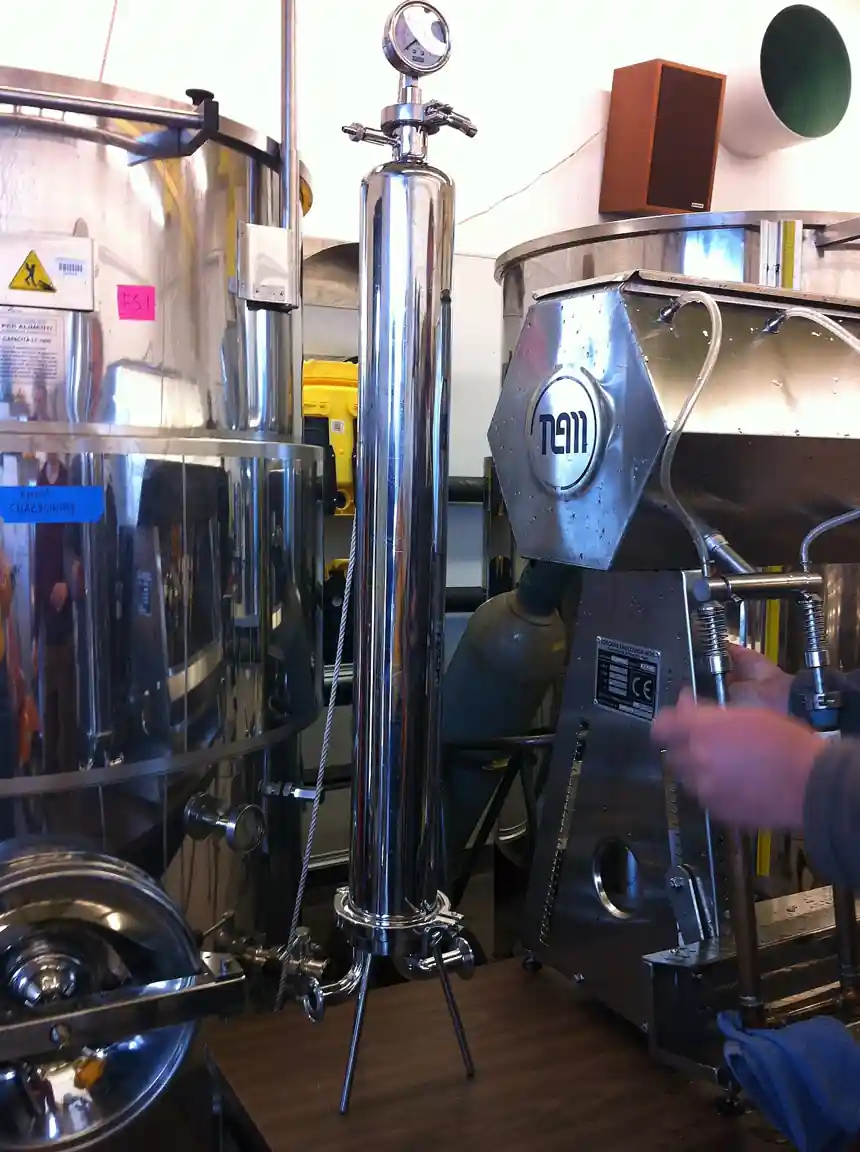
A filter press dewaters slurry by forcing liquid through filter cloths under pressure across a pack of vertical plates held closed between two heavy beams, capturing the solids as a cake inside the chambers between plates and discharging a clarified filtrate. The three plate architectures define the machine: recessed chamber plates form fixed volume cavities that fill with cake, plate and frame plates alternate with open frames for cake building and precoat duty, and membrane or diaphragm plates inflate at the end of the fill with water or air to squeeze the cake and cut its moisture further. Feeds arrive at 6 to 16 bar from a dedicated press pump or a transfer and boost arrangement, cycles run from ten minutes to several hours by slurry behavior, and machines scale from 470 millimeter laboratory presses to 2 by 2 meter plates with two hundred chambers and filter areas past one thousand square meters.
Procurement engineers meet these machines on mining concentrate and tailings, chemical and pigment precipitates, municipal and industrial wastewater sludge, food and beverage clarification, pharmaceutical cake washing, and fillers like calcium carbonate and clay. The decision this page settles is which plate architecture and frame match the slurry: fixed chamber simplicity for forgiving cakes, membrane squeeze where moisture targets justify its cost, plate and frame where precoat and washing lead, and sidebar or overhead beam where maintenance access and plate shifting automation decide. The answer lands as an RFQ line set, slurry and solids loading, plate size and chamber count, cloth and cycle basis, moisture and filtrate targets, and every chapter below feeds that line set so the press is bought against the material it must dewater rather than against a generic industrial filter page.
This page treats the filter press as a purchasing object: how chamber, frame, and membrane plates divide the dewatering duty, what plate size and chamber count actually buy, how cloth choice and cycle phases set throughput and cake dryness, which frame and automation decisions make the machine maintainable, and how the whole decision folds into a defensible RFQ. It is written for engineers who issue purchase specifications on solid liquid separation equipment, not for readers who want a brochure summary.
Chapter 1 / 06
What a Filter Press Is and What Is Being Decided
The defining act of the machine is batch pressure filtration across a plate pack. Feed slurry enters the chambers through a central or corner port, liquid crosses the cloth that lines each chamber face and leaves through drainage channels to the filtrate manifold, and solids stay behind, building a cake from the cloth outward until the chamber is full and the cycle ends. The closing system, hydraulic on essentially all modern industrial presses, holds thousands of kilonewtons clamping the pack against the internal pressure, the plate shifter opens the pack one plate at a time for cake discharge, and the drip tray and wash cloth systems catch what falls. Between cycles the machine is a pressure vessel that happens to be made of plates, and every specification decision follows from that sentence.
What is being decided in this purchase is four commitments at once. First a plate architecture, chamber, frame, or membrane, because that fixes cake moisture capability, washing behavior, and plate cost. Second a machine size, plate dimensions and chamber count, which fixes filter area, chamber volume, and therefore throughput per cycle and the whole capital and building envelope. Third a cloth and cycle basis, the cloth weave and permeability matched to the particle size distribution, and the fill, squeeze, air blow, and wash phase durations that set dryness and capacity together. Fourth a frame and automation scope, sidebar or overhead beam, plate shifter and automatic features, cloth washing, and the feed pump arrangement that supplies the pressure. A buyer who leaves any of the four to the vendor has bought a generic machine and inherited the calibration burden.
Against its neighbors the filter press occupies precise ground in the solid liquid separation house. A bag filter or cartridge industrial filter clarifies liquids, catching low solids from a flowing stream, and chokes quickly if fed slurry. A centrifuge, decanter or basket, separates by centrifugal force continuously and suits high throughput duties where cake dryness targets are moderate. A thickener or clarifier settles by gravity upstream of the press and the two are usually bought as a train. A belt filter press dewaters continuously on traveling cloth and owns the municipal sludge niche at lower dryness and lower cost per ton. The filter press takes the duty where cake dryness, filtrate clarity, or wash quality justify a batch machine with high pressure and cloth selectivity, and this page is the authority for it. Naming the neighbors in the RFQ keeps every vendor quoting the same machine against the same slurry.
Standards and references frame the datasheet. Pressure equipment context follows the local code for the closing hydraulics and any coded vessels, machine safety follows the general machinery directives with guarding and interlocks on the plate shifter and closing systems, and plate materials follow the manufacturer standards for polypropylene, which dominates, with membrane elastomers specified by chemistry. Cake and filtrate targets are process numbers, not standards, and the honest specification writes them as measured values from bench or pilot filtration, which every serious vendor will ask for and which the buyer should have. A datasheet that quotes a throughput with no pilot basis and no slurry characterization is a price tag, not a specification.
The station around the press deserves naming in the RFQ too. Feed pressure arrives from a feed pump, on difficult duties a progressive cavity pump or a diaphragm pump or a multistage transfer arrangement staged to hold pressure without shearing the cake, and a slurry pump or sludge pump moves material to the day tank that feeds the cycle. Filtrate leaves to a tank or the process, often polished by a downstream precision filter where clarity matters. Cake discharges to a conveyor or bin, on sticky materials helped by a sludge pump or repulping. Valves automate the phase changes, a knife gate valve or pinch valve suits the abrasive slurry lines, and instrumentation reads the cycle: pressure transmitter on the feed, flowmeter on filtrate where the process wants it, and the cycle timer that orchestrates fill, squeeze, blow, and wash. Buying the press without its station is how commissioning arguments start.
Chapter 2 / 06
How the Cake Forms and Why the Cycle Has Phases
Filtration physics writes the cycle. At fill, the pump pushes slurry into empty chambers and liquid crosses almost clean cloth at high rate, so the early filtrate can carry fines until the first cake layer forms as a precoat of its own making. As cake grows, the resistance the liquid must cross rises with cake thickness, flow falls at constant pressure, and the cycle ends either at a chamber volume limit, the cake fills the fixed chamber, or at a filtration time or filtrate volume target set by economics. Constant pressure and constant rate phases trade through this curve: a fast fill rate builds cake quickly but compacts the first layers against the cloth, and a staged feed, high rate then trimmed pressure, is how experienced operators balance cycle time against filtrate clarity and cloth blinding.
Membrane squeeze is the phase that earns its premium. When fill ends, diaphragm plates inflate, typically with water at 8 to 16 bar or air where the design allows, compressing the cake by the chamber volume share the membrane can sweep, expressing additional liquor and mechanically dewatering what pressure filtration alone left wet. Typical results add several points of dryness: a mineral concentrate leaving chamber filtration at 75 to 82 percent solids can leave membrane squeeze in the mid to high 80s, and sludge cakes pick up dryness of a few points that decide haulage or incineration economics. The squeeze also handles the classic filter press problem of uneven cake, where chamber filling varies plate to plate and a squeeze evens the pack before discharge. What membranes cost in capital, elastomer life, and plumbing, they return in dryness and sometimes in cycle time saved, and the selection chapter prices that trade explicitly.
Air blow and washing finish the cycle where the process needs them. An air blow through the feed line and cake at cycle end, a fraction of a bar to several bar by design, displaces liquor from the cake pores and adds dryness cheaply on coarse cakes, and it also clears the feed channel so the pack opens without dribbling slurry. Cake washing, displacing mother liquor with wash water for chemical or product recovery or chloride removal, works because the filter press cake sits as a compacted bed in a chamber: wash follows the same paths the filtrate left by, and displacement washing in a press is efficient compared to reslurrying, though channeling and cracks in fragile cakes defeat it, which is where membrane squeeze before or during wash tightens the bed. Plate design, wash port placement, and membrane support of the wash are specification content, not vendor discretion.
Cloth is the highest wear decision in the purchase. The cloth must retain the particle size distribution, the top size and the fines fraction, while offering the permeability that keeps cycle time economic, and it must survive the chemistry, pH and solvent, and the mechanical environment of discharge. Weaves run from open monofilament for coarse mineral duty to tight multifilament and needled felts for fine precipitates, with membrane laminates where blinding resistance and clarity are both demanded. Cloth conditioning, washing between cycles and periodic acid or chemical rejuvenation, is part of the cycle design, and cloth life, weeks to months by duty, is a consumable budget the RFQ should demand a basis for. A press quoted without a cloth recommendation matched to the slurry data is a press with a placeholder where its most important part goes.
Cycle time economics close the physics. Throughput is cake volume per cycle divided by cycle duration, and cycle duration divides into fill, which the pump and slurry solids set, squeeze and blow, minutes each, discharge, which plate count and shifter speed set, and cloth maintenance between. The optimization surprises buyers who have not run the numbers: a larger plate pack amortizes discharge and handling better but increases hydraulic closing force and building height, a smaller machine cycling faster may beat it on throughput per square meter, and the correct answer comes from the pilot cycle data applied to the candidate plate counts. The RFQ should demand the cycle calculation, fill time from the pump curve against cake resistance, squeeze and blow durations, discharge and shift time, so that machine sizes compare on throughput rather than on plate count alone.
Chapter 3 / 06
Plate Types, Frames, and Duty Boundaries
Recessed chamber plates are the standard industrial architecture: each plate carries a recessed cavity on both faces, two plates closed together form a chamber, and cake fills the fixed volume. Chamber plates are robust, one piece polypropylene in most duties, moderate in cost, and their fixed chamber depth, commonly 15 to 50 millimeters, sets the cake thickness the cycle must build. They suit mineral concentrates, chemical precipitates, and sludges where dryness targets are moderate and the slurry filters predictably. Their limit is the ceiling on dryness that pressure alone provides and their tolerance of chamber underfilling, where an incompletely filled chamber leaves a soft center that discharges badly and drips.
Membrane plates add the squeeze phase. The plate pairs a rigid chamber half with a diaphragm half, polypropylene body with an elastomer or thermoplastic membrane, and the membranes inflate with pressurized water or air at cycle end to compress the cake. Mixed packs, membrane and chamber plates alternating, are the common economic layout, squeezing every second chamber face. Membranes earn their cost on moisture critical duties, tailings and concentrate where transport water is money, sludge where landfill or thermal economics price each point of dryness, and fragile or compressible cakes that channel during wash unless compacted. Their costs are capital, the water or air systems with their valves and safety scope, membrane life as a consumable, and the discipline of protecting membranes from overfill and sharp solids, which the control system owns.
Plate and frame packs are the oldest and still the right answer for specific duties: flat plates alternate with open frames, the frame thickness sets cake thickness, and the open frame suits precoat filtration, body aid dosed slurries like fine polishing, and duties where the cake or cloth must be inspected or exchanged frequently. Modern plate and frame work is mostly in food, pharmaceutical, and fine chemical polishing, where clarity and wash quality lead and throughput follows. The frame architecture leaks its limits at high pressure, longer frames flex and weep, so it lives at lower closing force than deep chamber packs, and it has largely ceded general dewatering duty to the chamber plate.
The frame and machine architecture divide by beam position and automation. Sidebar designs hang the plate pack from side rails, they are compact and cheaper, and they suit smaller machines and clean industries where drip containment is managed. Overhead beam designs suspend the plates from a top beam, leaving the underside clear for drip trays, cake chutes, and cloth washing gantries, which is why mining and heavy duty presses and every large automated installation go overhead. Plate shifters automate discharge, moving plates one at a time, with vibration assistance and cloth wash added as the cake sticks, and fully automatic presses run cycles and discharge without an operator, at the price of instrumentation and interlocks the specification must scope. Cloth washing, automatic cloth movement or vibration systems, and squeeze water systems complete the automation list that separates a 1980s machine from a modern one at the same plate count.
Boundaries are worth stating bluntly. The filter press is a batch machine: duties needing continuous dewatering of tens of cubic meters per hour of easy slurry often belong to a decanter centrifuge or a belt press at lower dryness and lower operator attention, and this page sends them there in the selection chapter. It is not a liquid clarification device: low solids streams belong to the industrial filter, bag, and precision filter pages. It is not a thickener: gravity concentration upstream makes the press cycle economic and the two are a train, not competitors. The type map below compresses the boundaries into one table.
Plate architecture
Cake dryness capability
Best duty
Avoid when
Recessed chamber, polypropylene
Moderate, pressure limited
Mineral, chemical, and sludge duty with predictable cake
Several points drier, high 80s percent solids on concentrates
Moisture critical tailings and concentrate, sludge, wash tight cakes
Slurry is gentle, dryness target is modest, capital must be minimum
Membrane with air blow, deep pack
Highest dryness batch result
Transport and disposal water is money
Fines blind cloth or membranes face sharp solids without protection
Plate and frame with precoat
Set by body aid and duty
Polishing, food, pharma, wash critical fine chemical
High pressure general dewatering where chamber plates win
Overhead beam automated chamber
As plate type chosen
Large mining and municipal duty with cake handling systems
Small plots and budgets where sidebar fits
Chapter 4 / 06
Key Specification Parameters
The table below decodes the datasheet lines that decide whether a quoted press matches the slurry and the targets. Each row is a purchase defining parameter; the paragraphs after the table explain what to demand and what a weak answer looks like.
Attribute
Typical range or options
What it decides
Plate size
470 to 2000 mm square
Filter area per plate, cake handling, building height, closing force
Chamber count and depth
10 to 200 chambers; 15 to 50 mm cake
Batch cake volume, throughput per cycle, pack length
Membrane dryness gain and the plumbing and safety scope
Cloth specification
Weave, permeability, chemistry by slurry
Retention, cycle time, blinding behavior, and cloth life budget
Frame type
Sidebar or overhead beam
Access, drip and cake handling, automation ceiling
Automation
Shifter, cloth wash, vibration, full auto cycles
Labor per cycle, consistency, and interlock scope
Materials
PP plates, membranes by chemistry, frames in steel or SS
Chemical and temperature envelope of the whole machine
Cake and filtrate targets
Moisture percent, clarity, wash residue
Acceptance basis and the pilot data that underwrites it
The plate size and count rows deserve a paragraph of their own because they set everything else. Area per plate rises with the square of plate size while cycle time rises with cake volume and slurry behavior, so bigger plates cut the number of cycles per shift but raise closing force, plate cost, and building height, and the crossover is duty specific. Chamber depth trades the same way, deeper cake holds more solids per cycle but filters slower through thicker cake at end of cycle. The honest comparison is throughput per hour at the pilot cycle data, which the RFQ should demand for each candidate configuration, and the vendor who quotes only plate count is quoting geometry, not a machine.
The pressure, squeeze, and cloth rows carry the dryness warranty. State the filtration pressure class the targets assume, and if dryness matters, state whether the quoted result needs the squeeze phase to arrive, because a chamber plate number and a membrane number are different machines. The cloth row should name a specific cloth against the slurry data with a stated expected life in cycles, and the quotation should include cloth and membrane spares priced, since they are the consumable budget the comparison must carry. The second table compresses the feed and target decision the way a specification meeting argues it.
Slurry and target
Configuration to specify
Check before order
Mine concentrate, 70 percent solids feed, high 80s target
Membrane pack, 15 to 16 bar class, overhead beam
Squeeze water system scope and membrane life basis
Tailings or sludge, disposal water cost
Membrane with air blow, automated shifter
Cloth conditioning strategy and cycle calc at real solids
Chemical precipitate with wash requirement
Chamber or membrane with wash ports, displacement basis
Wash ratio data and crack control by squeeze
Food or pharma polishing with body aid
Plate and frame with precoat system
Frame thickness set by cake handling, not by tradition
Abrasive coarse mineral
Chamber plates, open cloth, protected ports
Port wear provisions and cloth life at top size
Fine blinding sludge
Membrane plus laminate cloth and conditioning
Fines fraction data and chemical pre treatment scope
Chapter 5 / 06
Selection Decision Factors and RFQ Language
The decision sequence is short enough to run as a specification meeting checklist, and each step eliminates a class of quotations before price comparisons begin.
Characterize the slurry with data: solids concentration, particle size distribution including fines, density, chemistry and pH, temperature, and the filtration test result, bench or pilot, that shows cake rate and dryness against pressure.
Fix the targets as numbers: cake moisture or solids percent, filtrate clarity or solids carryover, wash requirement where the process needs one, and the throughput per shift the plant actually runs.
Choose plate architecture from the chapter 3 map: chamber for predictable moderate duty, membrane where dryness or wash tightness pays, plate and frame for precoat polishing.
Size the machine on the cycle calculation, not on plate count: fill from the pump curve against measured cake resistance, squeeze and blow durations, discharge and shift time, compared across candidate plate sizes and counts.
Fix the frame and automation: sidebar or overhead beam by access and cake handling, shifter, cloth wash, vibration, and the interlock scope that makes the automation safe.
Specify the station: feed pump arrangement with its pressure staging, slurry and sludge transfer pumps, valves suited to abrasive lines, filtrate handling, and the cycle instrumentation including the pressure transmitter and filtrate flowmeter.
Price the consumables inside the comparison: cloths, membranes, precoat, and chemical conditioning, with stated lives in cycles.
Fix the verification evidence: acceptance test basis on the pilot data, throughput and dryness guarantee conditions, and the vendor cycle calculation delivered with the drawings.
Against neighboring equipment the comparison a specifier needs runs as follows, and it belongs here in the selection chapter rather than in the page title. A decanter centrifuge dewatering continuously beats the press on labor and footprint at moderate dryness and loses on ultimate dryness and wash quality. A belt filter press owns the continuous municipal sludge niche at lower dryness and capital. A gravity thickener or clarifier belongs upstream, making the press feed dense enough for an economic cycle. Bag and cartridge filters, the industrial filter family, clarify low solids liquids and are not dewatering machines. A dissolved air flotation unit floats solids at dilute concentration and also belongs upstream of the press train. Name the neighbors in the RFQ and every vendor quotes the same machine against the same slurry and targets.
The RFQ block should be written once and reused. A complete block reads: slurry data set with particle size distribution and filtration test results; design throughput per hour and per shift with duty pattern; targets for cake solids percent, filtrate clarity, and wash where applicable; plate architecture and pressure class named; plate size, chamber depth, and count offered with the cycle calculation per configuration; cloth specification against the slurry with expected life in cycles; frame type and automation scope with interlocks; squeeze medium and pressure with its system scope; feed pump arrangement and pressure staging; materials by chemistry; cake discharge and handling interface; drip and wash containment; instrumentation list including feed pressure transmitter, cycle timing, and filtrate measurement; consumables priced with lives; and the acceptance basis on pilot data with guarantee conditions. A quotation returned without the cycle calculation or the cloth life basis is incomplete at any price.
Chapter 6 / 06
Installation, Standards, Failure Modes, and Maintenance
Installation quality decides whether the pack seals and discharges as designed. Foundations carry the closing force and the pack weight, and overhead machines need the building height surveyed against plate lift and shifter gantry before the steel is ordered. Feed and filtrate piping goes in with the valves that automate phases, knife gate or pinch designs on abrasive slurry lines, and with cleanability in mind, because a press hall that cannot be hosed down becomes a housekeeping finding fast. Compressed air and squeeze water systems install with their safety provisions, relief and interlocked isolation, and the drip tray and cake chute or conveyor interface lands where the cake actually falls, which sounds obvious and is the most common retrofit in the industry.
Commissioning proves the cycle, not just the machine. Run the first fills at reduced pressure and watch filtrate clarity as the first cakes form, because the initial cloth conditioning cycle sets cloth life, and confirm pack sealing at working pressure before trusting an overnight run. Record the cycle phases against the vendor calculation, fill time, squeeze curve, blow effectiveness, discharge time per plate, and set the cycle controller from measured numbers. Prove the safety stack: closing system interlocks that prevent shifting under pressure, shifter guarding, squeeze water isolation, and the emergency stops, because a plate pack is a press in the mechanical sense and the machine safety directive scope is not decoration. Verify filtrate and cake against targets on the real feed, not on the pilot drum, and file the deviation for the guarantee discussion while the commissioning engineer is still on site.
Failure modes in service follow a short and predictable list. Cloth blinding raises cycle time cycle over cycle, seen as filtrate rate falling at constant pressure, and is managed by washing, chemical conditioning, and eventual cloth exchange on the life basis the RFQ demanded. Plate wear and failure concentrate at feed ports, abrasive slurry cuts the port bushes, and at chamber faces where flexing cracks polypropylene after years, with plate inspection at every cloth campaign the defense. Membrane failures, punctures and delamination, show as squeeze pressure that will not hold and plates that weep on discharge, and membrane replacement joins cloths in the consumable budget. Pack leakage at working pressure traces to worn plate faces, inadequate closing force, or trapped cake on sealing surfaces, and the hydraulic system has its own classic list, seal wear, pump faults, and pressure transmitter drift that quietly changes the cycle. Discharge problems, cakes sticking and dribbling, answer by cloth selection, vibration and cloth wash options, and squeeze before opening, which is exactly the automation scope specified upstream.
Maintenance intervals scale with duty severity and automation, and the press is unusually honest about them: cloth and membrane life in cycles is a measurable budget, plate condition is inspectable at every cloth change, and the hydraulic and shifter systems follow the mechanical calendar with lubrication and seal kits. Washdown and corrosion discipline protect the frame and the trays, and the instrumentation calibration, feed pressure, squeeze pressure, and cycle timing, is the difference between a repeatable process and folklore. Every cloth campaign and every membrane change produces numbers, actual cycles against quoted life, dryness against target, and the file of numbers is the calibration for the next RFQ, which is how a purchasing file gets smarter instead of just older.
FAQ
Do I need membrane plates or are chamber plates enough?
Choose chamber plates when the cake filters predictably and the dryness target sits within reach of pressure filtration alone, typically 75 to 82 percent solids on mineral duty. Choose membranes when each point of dryness carries transport or disposal money, when fragile cakes need compacting before wash, or when chamber underfilling makes discharge messy. The squeeze phase typically adds several points of solids content, and its capital returns only when that dryness is priced.
How many chambers should the press have?
Let the cycle calculation decide, not the plate count tradition. Throughput is cake volume per cycle over cycle time, and fill grows with area and cake rate while discharge grows with plate count, so the optimum balances machine size against cycles per shift. Demand the vendor cycle calculation per candidate configuration, fill from the pump curve against measured cake resistance, plus squeeze, blow, and shift times, and compare machines on tons per hour rather than on plates.
What feed pump arrangement suits a filter press?
A dedicated press feed that stages pressure without shearing the cake: progressive cavity pumps or diaphragm pumps on difficult mineral and sludge duty, multistage transfer and boost arrangements where flow is large, and simple centrifugal feeding only where the slurry is easy and pressures low. The pump must hold the design class, commonly 6 to 16 bar, at the falling rate of a filling cycle, and its curve belongs inside the cycle calculation.
How do I stop the press blinding?
Match the cloth to the particle size distribution first, weave and permeability against the fines fraction, then manage conditioning: wash between cycles, chemical rejuvenation on scale forming duties, and precoat or body aid where the slurry demands it. Watch filtrate rate per cycle as the trend that schedules cleaning, and hold the vendor to the cloth life in cycles the quotation stated, because blinding economics are cloth economics.
Sidebar or overhead beam?
Sidebar machines are compact and cheaper and suit smaller presses and clean industries with contained drips. Overhead beams leave the underside clear for drip trays, cake chutes, and cloth washing gantries, which is why mining, heavy duty, and every large automated installation go overhead. Decide by cake handling and maintenance access, not by price alone, because retrofitting handling under a sidebar is the classic expensive afterthought.
How dry can a filter press actually get my cake?
With chamber plates at 15 to 16 bar, mineral concentrates commonly reach high 70s to low 80s percent solids. Membrane squeeze adds several points into the high 80s, and air blow after squeeze adds a little more on coarse cakes. Sludge results are lower and are priced by disposal economics. The honest basis is your pilot filtration data against the vendor guarantee, because slurry behavior, not the brochure, sets the ceiling.
What acceptance basis should the purchase carry?
Throughput per hour and cake solids percent, measured on the real feed, at stated cycle parameters and cloth condition, with filtrate clarity and wash result where applicable. Anchor the guarantee to the pilot data used for selection, require the vendor cycle calculation as a deliverable, and agree the test protocol in the contract, because those numbers, tons per hour and percent solids, are the entire commercial case for the machine.