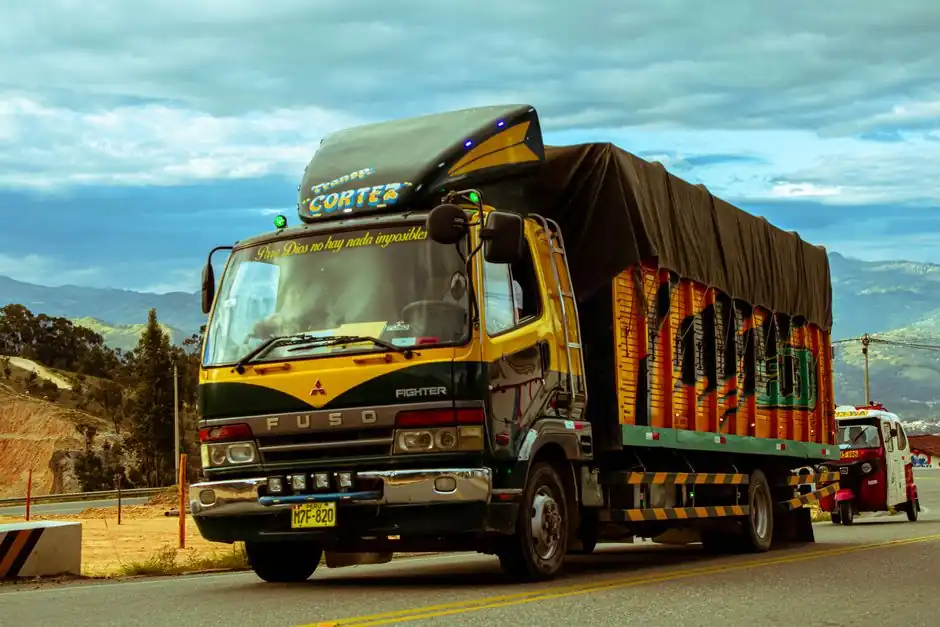
Above 90 t payload, AC wheel-motor drives are now the default for new rigid dump-truck (RDT) builds, with DC drives relegated to older fleets. AC traction motors paired with a diesel-generator set deliver higher motor and drivetrain efficiency, stronger wheelslip control on grade, and lower routine maintenance than DC wheel motors [S2][S3].
DC drives survive mainly because the trucks already exist, not because they are better. Caterpillar's first electric-drive truck was the 75 t 779 in the late 1960s, and DC technology has improved over the decades, but AC has overtaken it on every performance axis except fleet inertia [S1].
Efficiency Numbers: AC vs DC Wheel Motors
For older DC systems (legacy GE and Caterpillar designs with DC traction motors), motor efficiency sits in the 92 to 93 percent range, and the rectifier plus cabling losses pull total drivetrain efficiency noticeably below that of an equivalent AC system [S4]. AC induction wheel motors in modern AC-drive rigid haulers run at higher motor efficiency and avoid the brush and commutator losses that cap DC performance, which is the main reason new ultra-class builds specify AC [S4].
On a fully loaded 227 t class truck, the difference between 92 percent and 95 percent motor efficiency, multiplied across four wheel motors and a full shift cycle, translates into measurable fuel burn and generator set loading. That is why Liebherr positions diesel-electric AC drive as the productivity play when fuel efficiency, hauling productivity, and operating cost are the priority [S1].
Wheelslip Control and Grade Performance
AC drive delivers better wheelslip control than DC, which is the reason heavy-haul freight locomotives and ultra-class mining trucks both migrated to AC traction [S3]. AC inverter control can read motor slip in real time and modulate torque per wheel within milliseconds, while DC systems rely on armature current and voltage trim that respond more slowly to a sudden loss of traction on a wet or muddy haul road.
For mine operators running deep pits with sustained grades above 8 percent, the slip-management gap is not academic: it shows up as tyre wear, frame stress, and cycle-time variance. This is also why BELAZ, one of the OEMs which maintains that trucks from 130 tonnes payload class and above should be electrically-driven, builds its 130 t and up models on AC wheel-motor architectures rather than DC [S1].
Maintenance Burden and Component Count
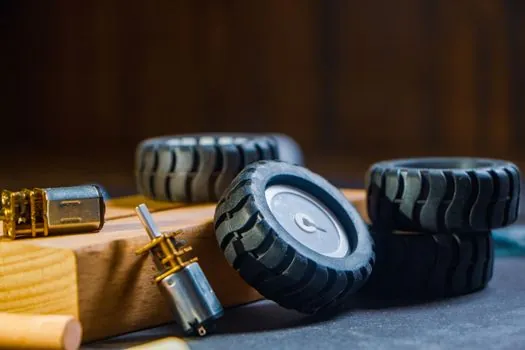
DC wheel motors carry brushes, commutators, and field windings that need periodic inspection and replacement; AC induction motors have no brushes and far fewer wearing parts [S3]. Across a fleet of 20 to 40 trucks, the difference in scheduled motor maintenance hours per 10,000 operating hours is one of the largest single line items separating the two technologies.
The wider diesel-electric package, alternator, electric motors, reduction gear units, and control cabinets, can save up to 50 percent of lubricating oil compared with a conventional mechanically-driven RDT, because a mechanical driveline has more gears, driveshafts, and universal joints that all need oil [S2]. That is a separate gain from the AC vs DC motor decision, but it stacks on top of it when an operator moves from mechanical to diesel-electric AC.
Payload Class and Drive Choice
Drive choice is a strong function of payload class. For 90 t and above, electric drive (and AC drive in particular) provides better performance, while a mechanical drive can do more with equal power, or deliver the same productivity with less installed power, in the smaller rigid and articulated classes [S2].
BELAZ holds that machines in the 30 to 60 t class should be mechanically driven, that trucks from 130 tonnes payload class and above should be electrically-driven, and that the 90 to 100 t class is the contested middle where both electric and mechanical options are viable depending on cost factors [S1]. Caterpillar is the only manufacturer that offers large (182 t and above) mechanical drives, and its current mechanical-drive line runs from the 136 t 785D up to the 365 t 797F, including the 789D at 186 t and the 793D/F at 227 t [S1].
Where DC Still Shows Up
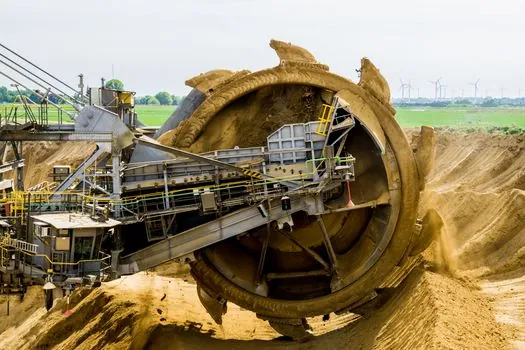
DC wheel motors still appear in two situations: legacy fleets from the 1970s through the 2000s that have not yet been retired, and a small number of operations where the mine's existing maintenance skill base and spares inventory are DC-specific. DC technology has improved favourably in recent years, so customers sometimes wish to stick to what they know in terms of maintenance [S2].
For a buyer evaluating a used ultra-class truck (above 200 t), a DC-drive unit is not automatically a bad buy, but the total cost of ownership model must price in brush replacement intervals, commutator turning, and the eventual motor rebuild that an AC machine largely avoids. For a new build at any payload above 130 t, there is no defensible engineering reason to specify DC in 2026 [S1][S3].
Selection Criteria at a Glance
For procurement teams, the shortlist looks like this. Below 90 t payload, mechanical drive remains competitive on capital cost and simplicity, and an articulated dump truck in this class may not need diesel-electric at all. From 90 to 130 t, the call is site-specific and depends on grade profile, fuel cost, and maintenance crew skill. Above 130 t, AC wheel-motor diesel-electric is the standard answer, with DC reserved for legacy fleet continuity. Above 200 t, the mining dump truck segment is effectively all AC today, and the supporting AC motor plus VFD architecture is what every major OEM except Caterpillar offers in this class. [S1]
The wheel loader fleet that feeds the dump trucks is a separate decision, but the same general principle applies: AC induction motors with inverter control have displaced DC machines wherever the duty cycle and uptime requirements justify the capital premium. The mining haul-truck segment finished that transition first because the operating hours and load factors are the highest in off-highway equipment.
For engineers cross-checking supplier claims, the verifiable signal to track over the next 12 to 24 months is whether any major OEM reintroduces a DC-drive option for a new payload class above 130 t; no such launch has been signalled in 2026 OEM releases. The second signal is AC-drive penetration in the 90 to 130 t class, where BELAZ and other electric-first builders continue to push the boundary downward from their traditional 130 t floor [S1].
See also our earlier report, Batch vs Continuous Shakeout for No-Bake and Green Sand Lines.