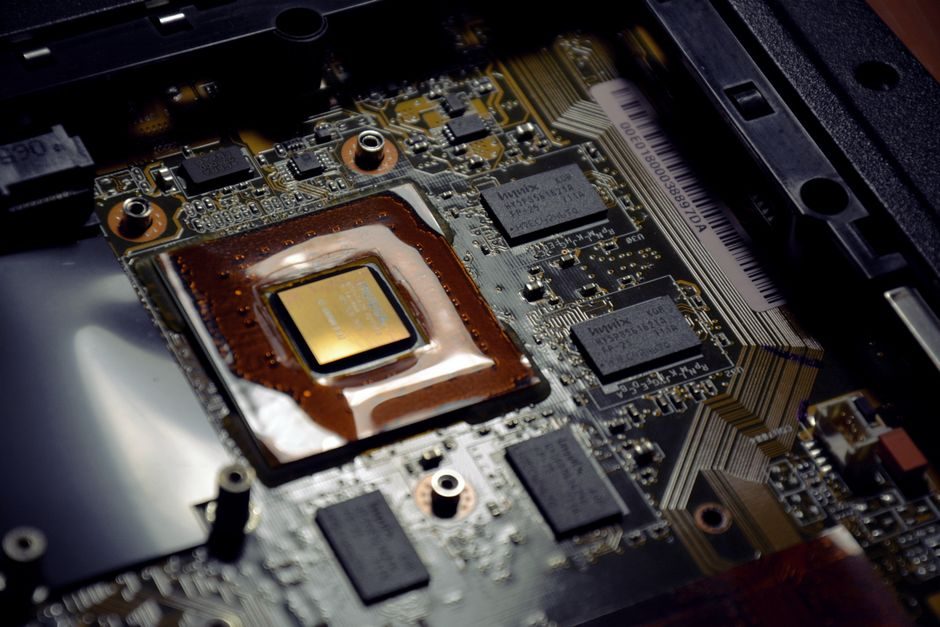
Hyperscaler AI capex in 2026 is being throttled less by wafer count than by HBM3E stacking throughput and CoWoS-L interposer line-time, with TSMC's advanced-packaging output reported as the binding constraint for NVIDIA Blackwell, AMD MI400-class accelerators and Google TPU v6p shipments [S2].
Concurrent with the silicon squeeze, supply-chain analyst headcount has become a procurement gating factor: the U.S. median annual pay for the role sits at $80,880 with a 17% ten-year job outlook, and supply-chain planning software listings for China now rank 18+ vendors covering demand forecasting, inventory optimisation and S&OP workflows as of July 2026 [S6][S3].
Where the bottleneck actually sits: 3 nm/2 nm wafers, HBM3E, and CoWoS-L
The AI-chip supply chain in 2026 decomposes into three sequential chokepoints that procurement must treat as a coupled system, not independent line items. First, leading-edge wafer allocation: TSMC's N3P and the ramp of N2 concentrate on a handful of hyperscaler and flagship-SoC customers, leaving most AI-ASIC designers competing for residual 3 nm slots. Second, HBM3E stack height and supply: SK hynix, Samsung and Micron are the only qualified sources for 8-Hi and 12-Hi stacks at >819 GB/s per-stack bandwidth, with NVIDIA, AMD and CSP-custom accelerators consuming the bulk of qualified output. Third, CoWoS-L interposer throughput: the move from CoWoS-S to CoWoS-L roughly doubles interposer area per wafer, but yield on >100 × 100 mm reconstituted panels remains the rate-limiting step for multi-die AI accelerators [S2].
Capacity tightness at each step cascades: a foundry can ship wafers, but if HBM is unallocated the accelerator cannot be built, and if CoWoS-L is queued the completed module cannot be packaged. Related reporting on adjacent categories confirms the same pattern in 2026 — see the 2026 semiconductor sourcing reality check on legacy node and power-discrete allocation for the parallel pressure on 28 nm/40 nm analog and SiC discretes, and the display-panel supply chain note for how glass-substrate concentration compounds panel-side risk.
AI-driven planning software: what the buyer actually selects against
Supply-chain planning software in 2026 is no longer a back-office S&OP tool; it is the primary mechanism by which an AI-chip OEM or hyperscaler maps wafer starts to HBM allocation to advanced-packaging slots, and the China-focused vendor landscape now exposes that functional split explicitly. As of the July 2026 comparison, the top-ranked categories include demand-forecasting engines, inventory-optimisation suites, and production-planning modules with scenario simulation, with 18+ platforms competing on ML-forecast accuracy, multi-echelon inventory modelling and ERP/MES connector depth [S3].
For chip buyers, the selection criteria compress to four measurable dimensions: forecast accuracy on ramp-curve SKUs (HBM-stacked accelerators ship in 6–8 week waves, not monthly cadence); multi-tier visibility past Tier 1 to OSAT and substrate houses; HBM-allocation scenario modelling (12-Hi vs 8-Hi substitution); and integration with the foundry's CAPS/CPM data exchange. Adjacent procurement teams running industrial-control hardware can mirror the same framework: see the LED driver supply tightness 2026 spec-lever note for a category where driver-IC allocation is now the binding variable, not the LED die itself.
Analyst and planner headcount: the labour constraint behind the software

Software does not run itself, and the 2026 labour market is the second gating input. The U.S. The median annual salary for a supply chain analyst is $80,880, with a 17 percent projected job growth over the decade, and supply chain planners forecast demand, manage inventory and improve logistics to keep operations efficient [S5][S6]. Required skills now include data analysis, data governance, data-lake architecture and scenario modelling, a stack that did not appear in supply-chain job postings at meaningful volume before 2022 [S4].
For AI-chip programmes, the practical implication is that a Tier-1 OEM or hyperscaler needs an in-house risk desk staffed by analysts who can read CAPS reports, model HBM-allocation scenarios and run what-if substitution across foundry nodes. The 2026 guide framing of the supply-chain analyst role — "facilitate and manage the complex world of supply chain" with median pay $80,880 and 17% job outlook — understates the specialisation required on the AI side, where analysts routinely work with bill-of-materials granularity at the wafer-mask and interposer-layer level [S6][S4]. Programmes that do not staff this function are functionally blind to where their allocation slips.
Decision framework: who AI-chip allocation is FOR, and who should walk away
AI-chip allocation in 2026 is FOR hyperscalers running multi-thousand-GPU training clusters (Microsoft, Google, Meta, AWS, Oracle, ByteDance, Alibaba, Tencent), sovereign-AI programmes, and Tier-1 OEM systems integrators with committed-volume contracts signed before Q4 2025. It is NOT for buyers seeking single-card evaluation units, low-volume inference appliance builders under 1,000 units per quarter, or downstream system integrators without allocation priority — those buyers face 40–60 week lead times on flagship parts and should target previous-generation SKUs (H100, MI300X, TPU v5e) or alternative architectures (custom ASIC, RISC-V vector, or edge-inference accelerators from Qualcomm, MediaTek and Apple silicon) instead. [S1]
Selection against the available options should be criteria-based, not brand-led. A defensible comparison axes set is: (1) memory bandwidth per accelerator (HBM3E 12-Hi at >819 GB/s vs HBM3 8-Hi at ~614 GB/s); (2) interconnect fabric (NVLink 5 at 1.8 TB/s vs Infinity Fabric over UCIe vs Ethernet-based UEC); (3) software-stack maturity (CUDA-equivalent depth, compiler maturity, MIG/MPS-equivalent partitioning); (4) supply security (Tier-1 fab+HBM+OSAT bundling vs multi-source). A buyer who cannot quantify their workload against these four axes will mis-allocate. The same discipline applies to adjacent power infrastructure: see the wind-turbine transformer supply 2026 risk map for how transformer allocation tracks 3 GW/yr of offshore-wind build-out, and the offshore wind supply-chain pinch-point note for foundation/cable parallel pressure.
Failure modes and constraints procurement must price in
Three failure modes dominate the 2026 AI-chip sourcing picture and each carries a concrete operational cost. First, HBM-allocation miss: an OEM with wafer starts but no HBM cannot ship, and HBM spot markets do not exist at the volumes required, so the cost of a miss is a full quarter of zero revenue. Third, thermal/power envelope miss: 700–1,200 W per accelerator demands rack-level liquid cooling and 48 V busbars that the data-centre supply chain was not built for, so a chip allocation that arrives without matching CDU, manifold and busbar capacity is functionally a paper shipment. [S2]
Standardisation is partial and still in flight. The relevant reference frameworks are JEDEC JESD238 (HBM3/HBM3E), OCP UALink / UEC for accelerator fabric, IEEE 3154 for 48 V rack power, and ASHRAE TC 9.9 for liquid-cooling envelope. Procurement should not assume a single governing standard for inter-fabric interoperability — the UALink and UEC ecosystems are not pin-compatible and a buyer commits to one fabric's roadmap on a multi-year horizon. The same pattern shows up in raw-materials supply: see the lithium supply-chain 2026 upstream project map for how upstream project FID cadence and analyst-pay inflation both feed into cell pricing, and the copper supply-chain mid-year snapshot for how planning-software and labour-cost inflation co-move with the underlying commodity.
Trackable signals for the next reporting window
Two signals are trackable into Q3 2026. First, TSMC's CoWoS-L monthly wafer-equivalent output: capacity additions at the Chiayi AP6/AP7 modules are scheduled to come online in stages through Q4 2026, and any guidance slip directly tightens accelerator availability for the 2026 holiday and 2027-Q1 hyperscaler ramp. Second, HBM3E 12-Hi qualification velocity at Samsung: if Samsung reaches volume qualification with NVIDIA's Blackwell-Ultra and AMD's MI400-class parts, the HBM market shifts from a near-monopoly (SK hynix) to a duopoly and the procurement-curve flattens; if qualification slips, the constraint persists into 2027. Procurement teams should also monitor the OCP UALink 1.0 specification ratification and the IEEE 3154 48 V rack-power conformance programmes, both of which reset the cooling/Power-conversion BOM that surrounds every shipped accelerator. [S3]
For component-level specifications, see dc power supply, switching power supply, and chain conveyor.