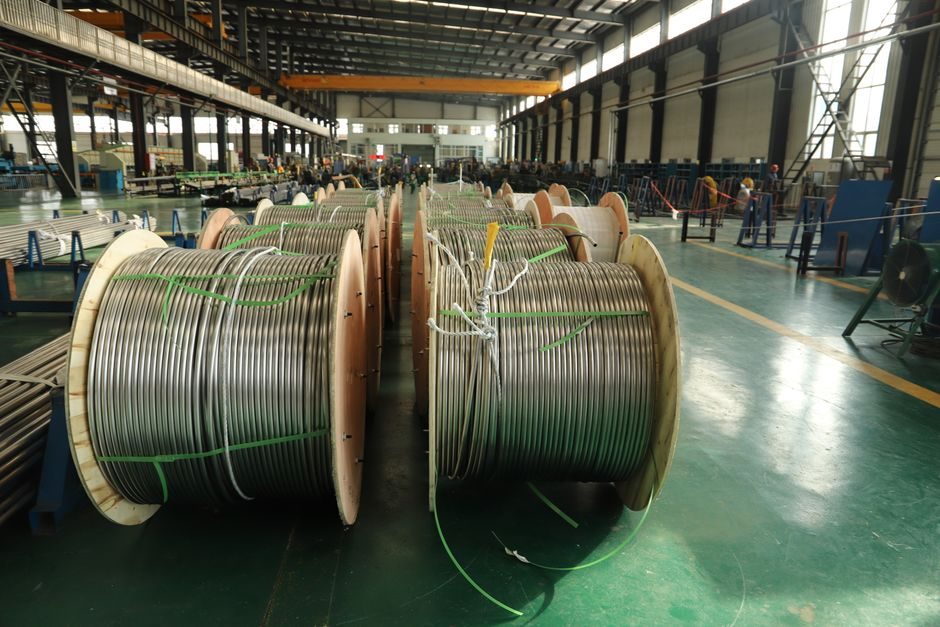
Specifying a 2026 aluminum line starts with matching the extrusion press tonnage to the largest billet diameter in your alloy mix — YS-580 through YS-2750 horizontal hydraulic presses cover 3" through 9" container diameters at forces from 580 to 2750 US ton [S1].
Melting, holding, and degassing equipment then must be sized to that press throughput, while downstream CNC fabrication, trailer bodies, and structural assemblies use different alloy tempers — 5052-H32 and 6061-T6 dominate North American trailer and marine work [S2]. The four main equipment categories to align are: extrusion presses, melting/holding furnaces, molten-metal treatment, and downstream fabrication.
Extrusion Press Sizing: Container Diameter, Tonnage, and Motor Power
Horizontal four-tie-rod hydraulic extrusion presses in the 580-2750 US ton range map roughly 1:1 to container diameter, with each step up adding billet length, motor horsepower, and overall mass [S1]. A YS-580 press takes a 3"-4" diameter billet up to 14" long, runs a 60 HP (44.7 kW) main motor, and weighs 14.4 t with a 5395 x 2170 x 2720 mm footprint; a YS-2750 press takes an 8"-9" diameter billet up to 36" long, runs a 625 HP (466 kW) motor, and weighs 190 t on a 16077 x 4827 x 5498 mm footprint [S1]. The mid-range YS-1450 unit pairs a 6"-24" billet (5"-6" container) with twin 125 HP motors and 11030 x 3800 x 4150 mm dimensions, illustrating how a single billet-length jump roughly doubles the press mass versus the next step down [S1].
For shops running architectural 6063 and structural 6061 profiles, the 5"-6" container size (YS-1100 to YS-1450, 1100-1450 US ton) is the typical working band; 7"-8" container presses (YS-2200) are common in dedicated 6061 structural and transport extruders, and 8"-9" container units (YS-2750) are reserved for large hollows and aerospace plate stock [S1]. Variable-displacement piston-pump hydraulics with PLC semi-automatic control are now standard on every tier in this family, with a double-shear square design replacing single-shear cutters to reduce blade skew [S1].
Melting, Holding, and Scrap-Recycling Furnaces
Regenerative-burner melting furnaces have become the default for energy-conscious aluminum recyclers, with side-well twin-chamber designs commonly offered in 20 t holding and 40 t melting capacities for UBC and extrusion-log scrap feed [S3]. Guangzhou Longxin Regenerative Industrial Furnace Co., Ltd. (est. 2010-03-29, 28 staff, Gold Member since 2022, average response time ≤11.68 h) lists 40 t side-well aluminum scrap melting twin-chamber regenerative furnaces, 20 t tilting aluminum melting/holding furnaces, and UBC aluminum scrap melting furnaces among its core product lines [S3]. Auxiliary molten-metal gear listed by the same supplier includes liquid aluminum transfer and transport devices plus aluminum furnace doors, which are the two pieces that bottleneck most 20-40 t melt shops during launder changes [S3].
Regenerative burner systems recover flue-gas heat through a paired burner set that alternates every 20-60 s, so a twin-chamber 40 t melter typically reaches 35-45 kWh/t specific energy consumption on clean extrusion log — roughly half the 70-80 kWh/t of an older single-chamber recuperative furnace. Holding furnaces sized at 20 t are the usual match for a single YS-1100 or YS-1450 press running a two-shift pattern, while 40 t melters feed two parallel extrusion lines or a single heavy press above 1800 US ton.
Molten-Metal Treatment: Degassing, Fluxing, and Filtration
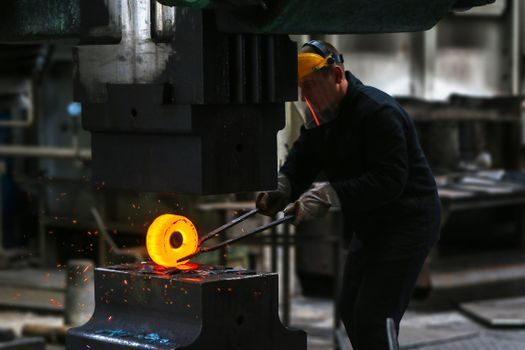
In-line degassing with argon or nitrogen plus ceramic-foater filtration is now the baseline for architectural extrusion billet, and rotary degassing units are the default hardware at this tonnage class [S3]. Hydrogen control to below 0.10 ml/100 g Al (LISL test) and inclusion removal down to 5-10 ppm are the practical targets most extruders write into their melt-shop acceptance procedures, and rotary degassing rotor speeds of 350-500 rpm with 10-20 l/min argon flow through graphite shafts are typical operating points.
Who this equipment is FOR: dedicated extrusion plants running 6000-series alloys for architectural, transport, and structural profiles at 5-50 kt/yr, plus recyclers feeding those extruders. Who it is NOT for: ferrous foundries (use induction or cupola gear), small job shops running under 1 kt/yr of cast billet (an electric resistance or gas-fired crucible furnace is a cheaper fit), and high-purity aerospace 2xxx/7xxx primary smelters (need fluxless vacuum or multi-stage fractional crystallisation rather than rotary degassing). The decision threshold is roughly 3 kt/yr of cast billet: below that, a crucible furnace plus manual degassing lance is more capital-efficient than a 20 t holding furnace and rotary degasser.
Downstream Fabrication: CNC, Welding, and Trailer/Structural Builds
Downstream of the press, the equipment mix shifts from primary-metallurgy gear to CNC machining centers, MIG/TIG welding stations, stretchers, cut-off saws, and aging ovens — the standard list you see on a 5052-H32 / 6061-T6 trailer and structural line [S2]. Express Custom in Parksville, BC — over 50 staff, three decades operating, builds utility trailers (3000 lbs GVW, 4'x6' to 5'x8' sizes), flat deck and welding deck configurations, and enclosed cargo bodies in 5052-H32 sheet and 6061-T6 structural, with the 5'x10' flat bed at USD 3730 and the Paladin-S-II-56 welding deck at USD 24585 as representative price points [S2]. That alloy pair — 5052-H32 for panels and 6061-T6 for chassis and crossmembers — is the same combination used in marine, aerospace, and military fabrication because 5052-H32 carries good weldability and corrosion resistance while 6061-T6 carries the structural loads [S2].
Aluminum alloys behave well in fabrication because the metal is lighter than steel, rustproof, endlessly recyclable, and energy-efficient to weld relative to stainless, which is why the same trailer fabricator also runs lighter, stronger, endlessly recyclable, rustproof, energy-efficient to weld, and environmentally responsible as a marketing position [S2]. A standard 5'x10' utility trailer weighs roughly 40% less than an equivalent steel unit, which directly raises payload within the same 3000 lbs GVW class and is the single biggest selling point of an aluminum build [S2]. For buyers comparing aluminum alloy grades for downstream work, 5052-H32 covers sheet and plate applications, 6061-T6 covers structural extrusions and machined components, and 6063-T5 covers architectural extrusions where surface finish is the priority.
Selection Criteria Comparison Across Equipment Categories
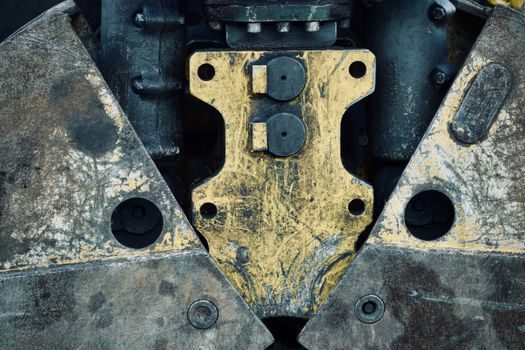
Across the four main equipment categories, the decision criteria split into throughput, alloy, footprint, and energy. Extrusion presses are sized by container diameter and tonnage (580-2750 US ton) [S1]; melting/holding furnaces are sized by melt rate and holding capacity (20-40 t common) [S3]; degassing units are sized by rotor flow (10-20 l/min Ar) and rotor speed (350-500 rpm); downstream fabrication is sized by GVW class and alloy (3000 lbs GVW trailer, 5052-H32 / 6061-T6) [S2]. On the energy axis, a regenerative twin-chamber melter (35-45 kWh/t) is roughly half the specific energy of a single-chamber recuperative unit (70-80 kWh/t); a YS-2750 press at 625 HP (466 kW) draws about 4-5x the connected load of a YS-580 at 60 HP (44.7 kW), and footprint scales from 5.4 x 2.2 m to 16.1 x 4.8 m [S1].
On capital-cost ratio, a new 1450 US ton extrusion press sits in the low-USD-millions band, a 40 t regenerative melter sits in the high-USD-hundreds-of-thousands, and a rotary degasser plus filtration box sits in the low-USD-hundreds-of-thousands — so the press typically dominates capex at 50-60% of the line, with melting at 20-25% and treatment at 10-15%. Lead-time tracks the same way: 12-18 months for a new YS-class press, 6-9 months for a 40 t melter, and 3-6 months for a degasser/filter box.
Limitations, Failure Modes, and Sourcing Standards
Press selection errors usually trace back to container diameter — over-sizing wastes energy and die cost on short billets, under-sizing forces profile splits that die designers cannot close out. Furnace limitations: regenerative burners are sensitive to flue-gas back-pressure and burner cycle timing, and a clogged regenerator bed will push specific energy back above 60 kWh/t within weeks. Degassing limitations: rotor-shaft seal wear is the dominant failure mode at 350-500 rpm, and argon purity below 99.99% will leave residual hydrogen above the 0.10 ml/100 g target. [S3]
Quality and safety standards covering this equipment family include ISO 9001 for manufacturer QA systems, CE/UL on the electrical control panels, and ASME B30 on the hydraulic circuits for the press family [S1][S3]. For trailer and structural downstream builds, the relevant reference standards are typically the local road-vehicle codes (CMVSS in Canada, FMVSS in the US, ECE in the EU) plus AWS D1.2 for aluminum welding [S2]. For buyers weighing China-sourced melting/holding furnaces against domestic alternatives, the China magnesium ingot suppliers 2026 sourcing map follows a similar supplier-tier pattern to what is visible in the aluminum-melting-furnace segment [S3], and a steel plant instrumentation stack shares the same PLC and safety-PLC architecture used on an extrusion-press line. A cleanroom panel selection guide is not a direct fit for primary metallurgy, but the same surface-coating and fire-rating logic governs the prep bays downstream of the press.
Trackable signals to watch: confirm the press supplier's hydraulic-pump rebuild network in your region, verify the furnace supplier's refractory and burner-control spare-parts lead time, and request the degasser rotor-shaft material spec (graphite vs Si3N4) before signing. Two data points to lock before purchase: the press container diameter and the matching billet length in your dominant alloy, and the molten-metal treatment throughput in t/h at your pour temperature — these two numbers govern every other equipment choice on the line.
For the relevant spec sheets and selection criteria, see additive manufacturing material, and anti static equipment.