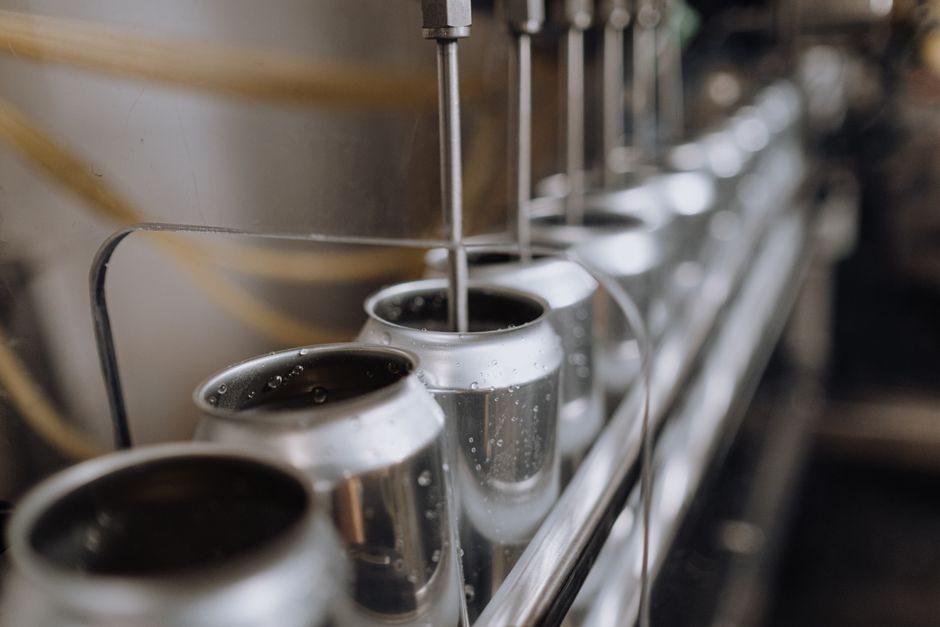
Bauxite-to-billet aluminum manufacturing is organised around five linked stages — alumina refining, smelting, alloying, forming (extrusion, rolling, forging, casting), and surface finishing — and in 2026 turnkey builders are marketing integrated lines that cover foundry, press, fabrication and automation under one contract [S1].
A typical 2026 turnkey extrusion project bundles billet casting homogenising furnaces, direct or indirect presses in the 800–5,000 t class, stretcher/aging, anodising or powder-coating cells, and downstream CNC fabrication, with delivery cycles quoted in months rather than the 18–24 months typical of greenfield mills [S1]. North American integrated extruders are repositioning the value chain by siting the press, anodising, and fabrication cells within minutes of the U.S.–Mexico border to compress inbound billet logistics [S4].
Alloy Series Selection: 1xxx Through 7xxx and the Conductivity Trade-off
Wrought aluminum is grouped into 1xxx (commercially pure, ≥99% Al), 3xxx (Mn, e.g. 3003 for sheet), 5xxx (Mg, e.g. 5052/5083 marine), 6xxx (Mg+Si, e.g. 6061/6063 architectural extrusion), and 7xxx (Zn, e.g. 7075 aerospace) series, with mechanical strength rising from the 1xxx baseline through 7xxx at the cost of conductivity and corrosion behaviour [S2].
High-strength electroconductive aluminum alloys (used for busbars, catenary wire and armature conductors) sit at the 6xxx/1xxx interface, and a 2026 process-development paper describes an immersion-treatment route that combines solutionising and ageing steps to push tensile strength above 300 MPa while retaining IACS-class conductivity [S3]. For structural extrusions where strength-to-weight drives the spec, aluminum alloy 6063-T5/T6 dominates architectural and 6061-T6 dominates load-bearing framing because of the Mg₂Si precipitation-hardening response and weldability profile [S2].
Billet, Casting and Homogenising: the Front End of Every Press Line
The cast house decides downstream extrudability: 6xxx billets are typically DC-cast in 6–10 inch diameters, homogenised at 560–580 °C for 4–8 h to dissolve Mg₂Si segregation, then cooled below 200 °C before sawing and stacking into the press log heater [S1].
For 7xxx aerospace stock, casting uses refined melt practices (degassing through ceramic-foam filters to ≤0.15 ml/100 g H, and grain-refined Al-5Ti-1B rod) and a higher homogenisation soak (~470 °C for 24–48 h) to dissolve soluble phases before hot rolling or forging [S2]. Turnkey suppliers now package the cast house, homogenising furnace, log heater and press as a single PLC-controlled cell, with the foundry and press sharing a SCADA backbone for traceability of cast bar to finished profile [S1].
Forming: Extrusion, Rolling, Forging and Die Casting Compared
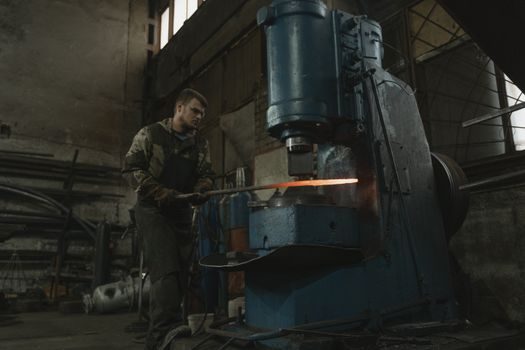
Four forming routes dominate the 2026 mix. Hot direct or indirect extrusion handles 60–80% of architectural and transport profiles on presses from 800 t (small sections, thin-wall heat sinks) to 5,000 t (rail, automotive, large solar racking). Hot/cold rolling covers sheet for packaging (can body 0.25 mm AA3004, can end 0.28 mm AA5182) and automotive panels (AA6016/AA6111). Closed-die forging is reserved for 2xxx/7xxx aerospace fittings. Die casting — high-pressure (HPDC) on 400–4,000 t cold-chamber machines — handles complex automotive structural nodes and electronics housings, with aluminum die casting machine tonnage class and tie-bar spacing now gating shot weight more than brand. [S1]
On the four-axis decision (part geometry, alloy required, lot size, surface finish), extrusion wins long uniform sections at medium–high volumes, rolling wins flat product, forging wins high-strength 3D geometry at low–medium volume, and die casting wins net-shape complex 3D geometry at very high volume but caps alloy choice to the Al-Si / Al-Si-Mg cast system. HPDC shot weights scale roughly with clamp tonnage, and a 1,600 t machine typically handles 5–12 kg shots in Al-Si10-Mg, while extrusion presses scale section size roughly with container diameter (e.g. 7-inch container ≈ 250 mm circumscribed circle on 6063). Rare Earth Smart Manufacturing and Automation: 2026 Stack covers how the same PLC/MES cells are reused across adjacent non-ferrous lines.
Surface Finishing: Anodising, Powder Coating and the 2026 Environmental Driver
Architectural extrusions still go through a 3-stage pretreatment (alkaline etch, de-smut, conversion coat) before either anodising in a sulfuric acid bath (Type II 10–25 µm for exterior architectural) or powder-coating over a chrome-free conversion layer [S4].
Anodised finishes are graded AA-M10C21A41 for Class I clear 0.7 mil (architectural exterior) down to AA-M10C12A21 for Class II 0.4 mil (interior); both must pass the ASTM B117 salt-spray 1,000 h requirement for the warranty window that most U.S. and EU facade systems demand [S4]. The 2026 environmental driver is closed-loop water and acid recovery on anodising lines, with the multifunction process calibrator class of instrument now commonly used to verify bath conductivity, pH and temperature to ISO 17025 traceability on the same shift. North American integrated extruders position anodising and fabrication as a single 'order to dock' deliverable rather than a handoff, cutting the typical 6–8 week multi-supplier schedule down to 2–3 weeks [S4].
Process-Lines and Additive Adjacencies in the 2026 Stack
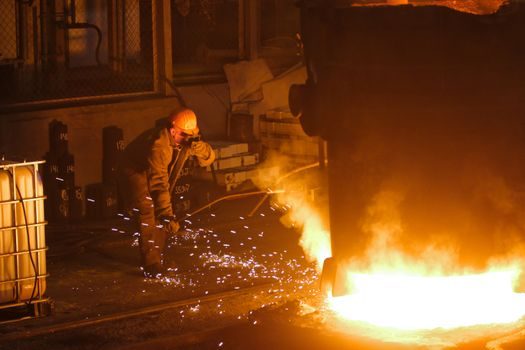
The smart-factory 2026 stack — IIoT on the press PLC, MES for batch genealogy, machine-vision profile inspection, and AGV billet handling — is largely the same recipe that aluminium and adjacent non-ferrous lines share, and the v-process line and additive-manufacturing cells slot in as the new finishing or prototyping nodes next to a press. New turnkey lines are increasingly quoted with a digital twin of the press and a additive manufacturing material capability for rapid die-tryout inserts, which compress die development from months to weeks [S1].
For owners evaluating capex, a 2026 aluminum extrusion line at 1,800 t press, anodising cell and CNC fab in one bay typically lands in the $20–40 m band depending on tonnage, automation depth and effluent treatment, while a 4,000 m² smart factory footprint is now considered the practical minimum for a vendor to bundle the full cast-press-finish-fab chain under one quality system [S1]. Additive Manufacturing Meets Smart Factory: 2026 Spec and Integration Snapshot covers the digital-twin and inspection side of the same equipment stack.
Standards, Traceability and the 2026 Compliance Stack
Architectural extrusions are released against EN 12020-2 (6060/6063 profile tolerances) and EN 755-9 (mechanical property limits for 6xxx); sheet for transport is released against EN 485-2 and ASTM B209; aerospace stock against AMS-QQ-A-250 series or AMS 4027/4045; anodised architectural finish against AAMA 611 (anodised) or AAMA 2603/2604/2605 (painted) with salt-spray thresholds from 1,000 h (AAMA 2603) to 4,000 h (AAMA 2605). [S2]
Process calibration in the cast house, anodising bath and lab now runs to ISO 17025 with the aluminum veneer panel and facade supply chain pulling the same EN/AAMA data into the BIM model for traceability. For 5xxx marine and 7xxx aerospace stock, the procurement specification typically adds NACE MR0175 (sulphide stress cracking) for offshore service and ASTM G67 (nitric acid mass-loss test, ≤15 mg/cm² for 5xxx H116/H321 sensitivity verification) for marine plate. Standards compliance is the gate the spec engineer controls; the line-builder's job is to wire the data capture that makes the gate auditable.
Trackable signals for the next quarter: the 2026 shipment cadence of integrated North American extruders, the number of new 6xxx/7xxx billet cast houses announced with smart-factory SCADA backbones, and the migration of AAMA 2605 powder-coat warranty language to 4,000 h salt-spray thresholds on U.S. facade specs [S1][S4].