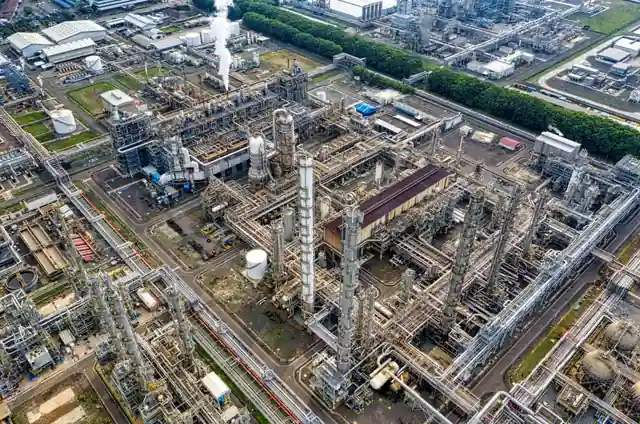
For amine regenerator off-gas, sulfuric acid scrubbing and thermal oxidation solve different problems, and the choice is set by H2S concentration, downstream sulfur capacity, and proximity to a sulfuric acid consumer, not by stack temperature alone [S4][S6].
Thermal oxidizers running between 1,400 degrees F and 1,800 degrees F (760-982 degrees C) convert hydrocarbons, H2S, and VOCs into CO2, water, SO2, and SO3, after which the SO3 combines with water vapor in the exhaust to form sulfuric acid mist that has to be dealt with downstream [S1]. Sulfuric acid scrubbing, by contrast, takes concentrated acid gas straight to a contact process and recovers saleable H2SO4, which only makes economic sense when the H2S feed is rich enough to feed a wet sulfuric acid (WSA) or contact plant without external fuel [S4].
What amine off-gas actually contains and why the two routes diverge
Amine gas treating, also called gas sweetening or acid gas removal, uses aqueous alkanolamines (MEA, DEA, MDEA, DGA, DIPA) to absorb H2S and CO2 in a contactor, then strips the acid gases in a regenerator operating at roughly 225 degrees F to produce a concentrated acid-gas overhead [S3][S5]. That overhead is the stream both abatement trains are trying to handle, and its composition is what makes one technology appropriate and the other a poor fit.
When H2S is the dominant acid gas and the stream stays concentrated, the logical destination is a Sulfur Recovery Unit (SRU) plus tail-gas cleanup, with a Sulfur Recovery Unit amine contactor returning residual H2S to the front of the train [S5]. When the stream is too lean for a Claus unit, or when the operator does not want a sulfur plant, the two common alternates are thermal oxidation to SO2/SO3 with downstream neutralization, or direct conversion to sulfuric acid via a regenerable amine absorbent loop feeding a WSA or contact condenser [S4].
Industries also use the term amine scrubbing to refer to CO2 capture on power-plant flue gas, where Rochelle (2024) showed stack emissions of amine, nitrosamine, and aldehyde stay below 100 ppb if a water wash, acid wash, and SCR are used, but that amine-scrubbing CO2 context is downstream of the absorber, not a tail-gas treatment for the regenerator overhead [S2]. Operators mixing the two should keep the process-side tail gas and the capture-side stack clearly separated in the P&ID review.
Thermal oxidation route: temperatures, conversion chemistry, and the SO3 problem
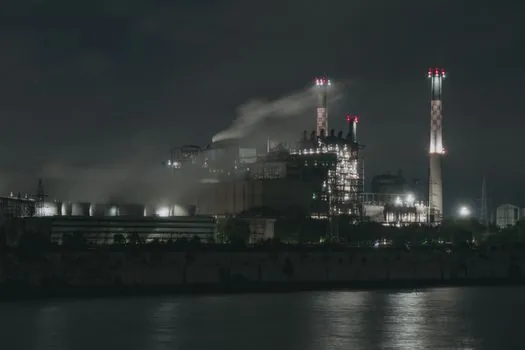
Direct-fired thermal oxidizers and recuperative thermal oxidizers (DFTOs) on amine tail gas are operated in the 1,400 degrees F to 1,800 degrees F (760-982 degrees C) window so that hydrocarbons crack fully to CO2 and water while H2S oxidizes to SO2 with a fraction going to SO3 [S1]. At those temperatures, residence time and turbulence (not just setpoint) determine destruction efficiency, and a poorly designed fire box can pass unburned hydrocarbon and slip H2S out the stack.
The second chemistry problem shows up after the combustion chamber: SO3 in the flue gas is hygroscopic, picks up water vapor, and forms a submicron sulfuric acid mist (less than 1 micrometer) that behaves like a fine particulate [S2]. Acid mist that small does not drop out in a conventional mist eliminator, and a wet scrubber downstream has to be designed for submicron capture if opacity and PM2.5 limits are to be met, which is why a plain quench often is not enough on amine tail gas [S1][S2].
Operating cost on the thermal oxidation route is dominated by fuel gas to keep the chamber at 760-982 degrees C, by the induced-draft fan, and by caustic or sodium hydroxide consumption in the downstream scrubber that has to neutralize the SO2 and the captured acid mist [S1]. On a large facility with multiple amine systems, the cumulative fuel bill plus the GHG reporting exposure on the CO2 produced by the burner is a real line item, which is one reason operators with rich, concentrated acid gas are pushed toward the sulfuric acid route instead [S1].
Sulfuric acid scrubbing route: amine absorption then WSA or contact conversion
The sulfuric acid route starts with a regenerable amine absorbent (CanSolv and similar sterically hindered amines are the named example in the literature) that selectively captures SO2 from a dilute stream, releasing a concentrated SO2 overhead that is fed to a contact or WSA plant to make H2SO4 [S4]. On a true amine regenerator acid-gas stream, the front end is a conventional amine unit (MEA, DEA, MDEA, or a formulated blend like UCARSOL or FLEXSORB) that strips H2S and CO2 together, followed by an H2S-selective absorber and a WSA or contact converter if the goal is merchant-grade acid [S4][S5].
The economic break-even is set by the H2S partial pressure and the plant's ability to consume or ship 93% or 98% sulfuric acid. A facility near an acid consumer (mining leach, phosphate fertilizer, alkylation) with a pipeline-quality H2S feed can make the WSA route pay back in a few years, while a small gas plant with a lean acid-gas stream will spend more on the contact plant utilities than it recovers in acid sales [S4].
Process integration matters as well. The patent literature on producing sulfuric acid from sour tail gas (WO2015006873A1) targets the specific case of an oil and gas facility located near, or co-located with, a sulfuric acid production unit, where the tail gas is essentially the feed for an existing WSA train [S4]. Standalone, that train is rarely justified; the deciding question is therefore whether the host site can absorb the acid volume and tolerate the SO2 recycle.
Decision matrix: how the two options stack up on real selection criteria
Selection criteria for amine off-gas abatement map cleanly across the two routes. On H2S feed concentration, thermal oxidation handles a wide range (lean to rich) with no lower limit, while sulfuric acid scrubbing wants rich, concentrated H2S (typically high partial pressure) to feed the contact plant [S1][S4]. On capital cost, a DFTO plus downstream caustic scrubber is significantly lower than a full WSA train with absorber, converter, and acid tower, but the WSA route wins on operating cost once acid is sold [S1][S4].
On byproduct handling, thermal oxidation produces SO2 plus sulfuric acid mist that must be neutralized to a salt and disposed of, and emits CO2 and NOx from the burner, while sulfuric acid scrubbing produces a saleable H2SO4 stream and a small residual SO2 vent from the converter that can be recycled [S1][S2][S4]. On operator attention, a thermal oxidizer needs burner management, refractory inspection, and continuous temperature control, while a contact/WSA plant needs converter temperature control, catalyst management, and acid strength monitoring. On footprint, the WSA train with its absorber, converter, and acid tower is several times the plot area of a skid-mounted DFTO plus scrubber.
For facility types: a large midstream gas plant with multiple amine units and an existing or planned Sulfur Recovery Unit should stay on SRU plus tail-gas treating and only consider thermal oxidation for the residual slip; a remote gas plant with rich H2S and no SRU but a nearby acid consumer is the textbook case for the sulfuric acid scrubbing route; a refinery amine system with mixed H2S/CO2 and an existing sulfur plant typically uses SRU plus amine contactor and treats the residual tail gas thermally [S5][S6].
Limits, failure modes, and the standards that quietly govern the choice
Title V of the U.S. Clean Air Act triggers when a single facility releases more than 10 tons per year of a single VOC or HAP, or 25 tons per year of combined compounds, and amine systems are explicitly listed as a regulated source in operator guidance, which sets the floor for any abatement decision [S1]. Many amine units slip a fraction of H2S past the absorber as aerosol or vapor, and J.M. Campbell's tip-of-the-month on acid gas removal notes that liquid carry-over from the contactor can foul downstream equipment, including thermal oxidizer burners and WSA heat exchangers, if the knockout drum and demister are not sized correctly [S8].
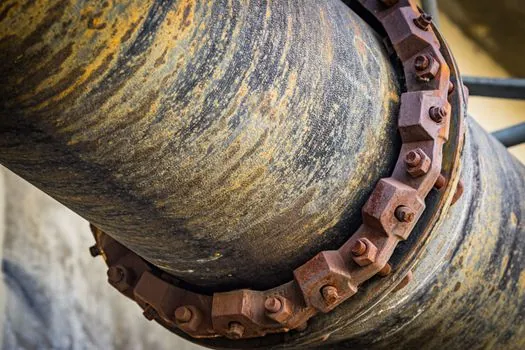
The thermal oxidation route has two chronic failure modes. First, SO3-driven acid-mist corrosion attacks ductwork, fans, and stack liners at temperatures below the acid dew point, and operators often under-insulate the breeching after the combustion chamber and pay for it in replacement duct. Second, the burner fuel adds CO2 and NOx that are reportable under greenhouse-gas programs, so a unit that looked cheap on installed cost can carry an unexpected carbon bill, and emission control devices themselves can become a regulated GHG source [S1][S2].
The sulfuric acid route has its own set. Converter temperature excursions in the contact plant can pass SO2 unconverted, amine degradation products (heat-stable salts, especially with MEA and O2 in the feed) can build up in the lean/rich cycle and force a solvent reclaim, and the wet sulfuric acid plant needs a stable feed composition, which means a properly operated upstream amine contactor, including the right packing and demister, to prevent liquid carry-over into the converter [S4][S8]. For a thermal oxidizer framing of stack temperatures, the same 760-982 degrees C window applies to other refinery and amine off-gas service, not just the amine train [S1][S6].
Spec-side takeaway for the engineer picking the train
Pick the technology from the front end, not the back end. The acid-gas composition, the H2S partial pressure, the availability of a nearby sulfuric acid consumer, and the site's greenhouse-gas reporting exposure set the choice long before burner temperature or acid strength is discussed. Thermal oxidation is the right answer when the stream is lean, no SRU or WSA plant exists, and acid mist plus caustic disposal are manageable; sulfuric acid scrubbing is the right answer when the stream is rich, an acid offtaker is on site or on a short pipeline, and the operator wants to convert a compliance cost into a product sale [S1][S4][S5][S6].
Track the next two signals if this decision is live on a project: published operating data from midstream operators that have swapped DFTOs for WSA contact trains since 2024, and any EPA action that revises Title V major-source thresholds or tightens SO3 / acid-mist limits, since either move would shift the break-even point on the same amine system. For broader process engineering context on comparison-style decisions, see digital twins as a substitute or supplement for physical trials, and for the gas-turbine side of the same midstream operator's choices, the data center backup power 2026 comparison covers the gas-engineering decisions that often sit alongside an amine train retrofit.
The underlying component specifications are covered under thermal imager, and thermal relay.