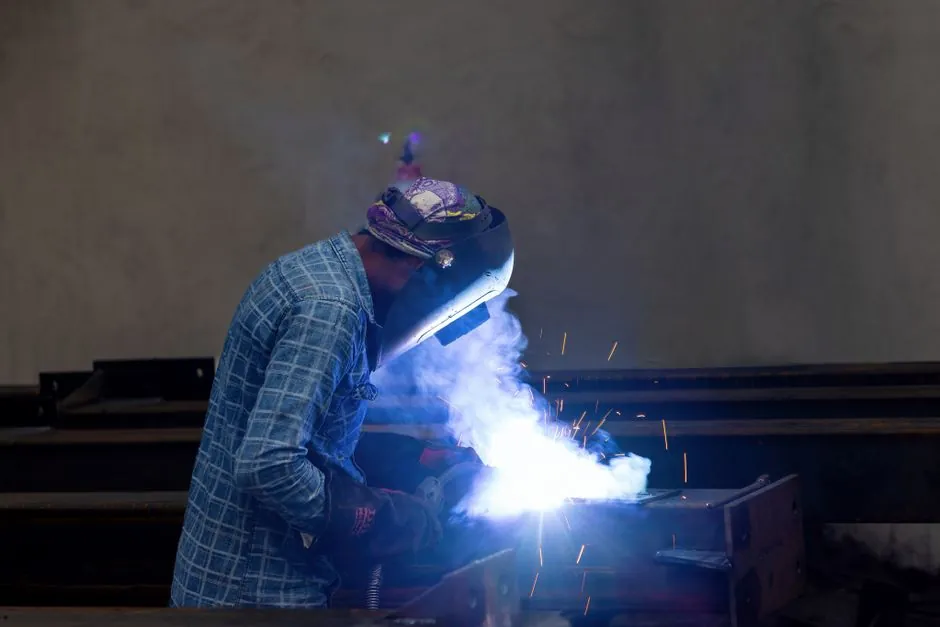
Demolition crews in 2026 most commonly specify 250-400 A DC inverter stick welders with 60% duty cycle at rated output, 3-phase 380-415 V input, and 4.0-5.0 mm electrode capacity, because this band covers 6-15 mm plate typical of structural teardown while staying under 25 kg for one-person carry to upper floors [S1][S2].
Process selection for demolition diverges sharply from fabrication: clean-bead TIG and aluminium-oriented MIG are largely irrelevant, and the workhorse is shielded metal arc (SMAW/stick) on a portable inverter, with occasional MIG/MAG for thin-gauge sheet metal salvage and oxy-fuel or plasma for thermal cutting before the weld [S2][S5]. Procurement budgets cluster around US$425-7,000 per piece for industrial 250-400 A inverter sets, and rental is common when a fast-track teardown outpaces fleet capacity [S1][S7].
Why Demolition Spec Forks from Fabrication
Demolition welders are picked for tolerance to dirty, painted, galvanised, or oily cut steel rather than for cosmetic bead quality, and Chinese OEM line cards on Made-in-China (2026 listings) list AC transformer sets at US$425-7,000 per piece and inverter sets from US$34 per piece entry-level up to US$14,800-296,300 per set for automated cells [S1]. Field conditions include rain, dust, generator-supplied power, and frequent repositioning, so the spec gates diverge from a shop-floor inverter: weight, generator compatibility, and 6010/7018 electrode versatility matter more than TIG cleanliness.
One benchmark from the demolition-adjacent rail-cutting world: the Welding Alloys FTR rail-welding machine automates frog and rail restoration on track gauges 1420-1472 mm to NF EN 13977, and its X-Y-Z travel of 400 x 200 mm shows the kind of fixture constraints a job-site welder must accommodate, not replicate [S5]. For typical building teardown, the same logic dictates stick over automation because no two joints are identical.
Current, Duty Cycle, and Electrode Diameter: The First Filter
Output current caps both plate thickness and rod diameter in one number, and 250-400 A inverters cover 2.5-5.0 mm electrodes on 6-15 mm plate at 60% duty cycle or better [S1]. The APS Welding Discover 300 ARC published in the reference window quotes 300 A at 60% duty cycle, 205 A at 100% duty, 21 kg weight, and a 330-500 V wide-voltage input that holds up on DG sets and Indian construction-site generators, a useful real-world data point for any crew considering 3-phase portable stick [S8].
A bare "300 A welder" without a stated duty cycle at a stated ambient is a procurement red flag, because thermal cutback is the real productivity limiter on long demolition seams, and 60% at rated amps (6 of every 10 minutes) is the 2026 industry baseline that Ralli Wolf and Sterco both publish on their 250-400 A product lines [S3][S4]. For demolition where continuous long seams are common, push toward 100% duty at 200-250 A class units rather than 60% at 400 A, because the lower-current continuous rating is what keeps the arc live across a full cut.
AC Transformer vs DC Inverter: A Side-by-Side for Field Use
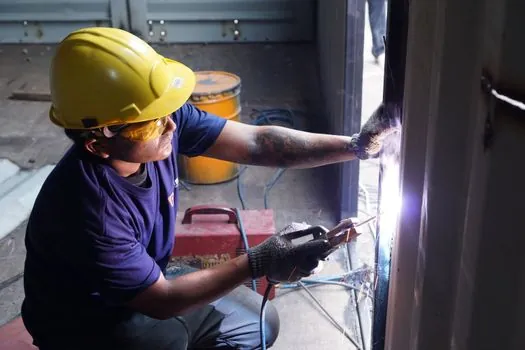
AC transformer sets in the 300-500 A class weigh 80-150 kg per unit, consume roughly 1.5x the input kVA per amp of weld output versus an inverter, but tolerate generator input and harsh site conditions that can upset a low-voltage inverter front end [S1]. The Ralli Wolf RT600 at 150 kg and 470 A at 100% duty is the transformer-class benchmark for high-output fixed-position deployment, while the Ralli Wolf RT400 and ECO 200N at 4 kg portable class cover the one-person-carry requirement for upper-floor teardown [S4].
DC inverter sets at 120-250 A portable class weigh 5-25 kg, hit 80-85% electrical efficiency versus 50-60% for transformer sets, and support a wider electrode mix including 6010 cellulose, 7018 low-hydrogen, and 308L stainless at cleaner arc stability [S1]. Decision rule: pick transformer for 3-phase site mains above 300 A where weight is not the limiter; pick inverter for portable demolition below 350 A, on generator supply, or where DC-only processes (6010 pipe, low-hydrogen structural) are required.
Process Choice: Why SMAW Dominates Demolition
SMAW/stick remains the lowest-capex route for field repair and outdoor demolition because the flux-coated electrode handles dirt, rust, paint, and wind that would destabilise a gas-shielded MIG or TIG arc, and 2026 B2B listings cluster portable stick inverters at US$25-45 per piece for consumer-tier up to US$425-7,000 for industrial [S1][S5]. MIG/MAG adds wire-feed and shielding gas throughput, which helps on thin-gauge sheet metal salvage but adds a gas-cylinder logistics burden that demolition crews often decline.
For heavy structural cutting and re-attachment during teardown (for example, sequencing a controlled collapse), SAW gantries and automated MIG cells are the wrong tool because they require a granular flux bed, dust extraction, and a fixed floor-level workflow, and portable SMAW remains the default. The single exception is stud welding for temporary bracing anchors, where a desktop stud welding cell at US$4,500-55,600 per set on a 1-set MOQ is a useful benchmark when sizing stud capacity for shear connectors [S2].
Portability, Power Input, and Site Constraints
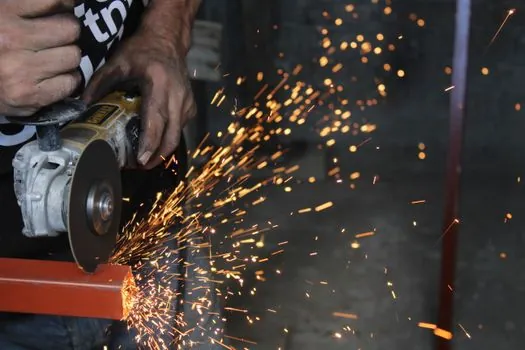
A 21 kg, 3-phase portable stick inverter with 330-500 V wide-voltage input is the realistic upper limit for one-operator carry into upper-floor demolition, and the APS 300DX at 21 kg shipping weight is one of the few published 3-phase 300 A units in that mass class [S8]. Below 200 A, single-phase 220-230 V input is acceptable and matches most small generator outputs; above 200 A, 3-phase 380-415 V becomes mandatory and undersized single-phase cable runs become a voltage-drop problem on long leads from site distribution boards [S3][S4].
Generator compatibility is a separate filter: inverter front ends with active PFC tolerate wider input voltage (often 330-500 V) and survive the voltage spikes of small diesel generators, while older transformer-rectifier sets need a hard minimum kVA to avoid saturation [S4][S8]. For demolition, the practical spec line is a 250-300 A inverter at 21 kg or less, 60% duty at rated amps, 3-phase 380-415 V or wide-voltage single/3-phase input, and IP23S or better enclosure rating for outdoor rain and dust exposure.
Safety Standards and Crew-Side Considerations
Arc welding sets should comply with applicable electrical safety and occupational welding standards, and buyer specs in 2026 typically call out IEC 60974-1 for arc welding equipment safety, IEC 60974-10 for electromagnetic compatibility, and ISO 3834 for quality requirements for fusion welding, though specific clause numbers should be verified against the latest revision on the issuing body's site [S3]. PPE for the welding side of demolition is covered in welding first aid kit guidance, and the broader crew-side first aid kit spec for working at height during structural teardown is mapped in BS8599-1 vs ANSI Z308.1 vs CSA Z1220 for compliance with the regional kit standard a given site falls under.
For demolition that involves thermal cutting (oxy-fuel or plasma) adjacent to the welding cell, the work cell should be treated as a combined hot-work station with fire watch, and the arc welding machine spec is only one of several procurement decisions. Surface prep for cut steel is another adjacent spec gate, and sand blasting machine selection for rail components maps the abrasive-cleaning band when demolition salvages rail or plate for reuse. For projects where the demolition feeds a downstream construction or maintenance phase, construction lubricant selection covers the engine, hydraulic, gear, and grease spec gates on the equipment performing the cut.
Renting vs Buying: The 2026 Demolition Calculus
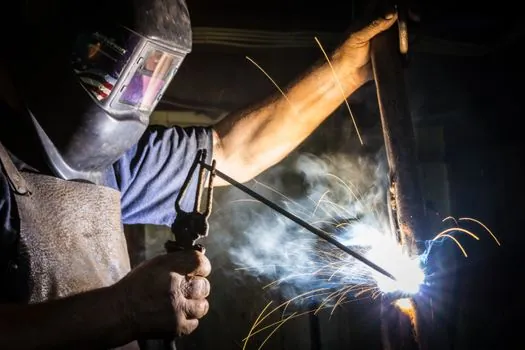
Renting welding equipment is a common path for demolition contractors when a fast-track job suddenly demands more arcs than the fleet owns, existing units are down, or the crew wants to evaluate a new inverter model before capital purchase, and the rental channel covers manual MMA, MIG, TIG, and engine-driven welders across most regional equipment houses [S7]. The 2026 cost crossover between renting and buying for a 300 A class stick inverter typically lands around 6-10 working weeks of continuous use, below which rental is cheaper once mobilisation, consumables, and trailer transport are counted.
For short-duration demolition (one to four weeks), renting a 300 A 3-phase inverter stick at typical daily or weekly rates avoids the capex hit and the maintenance liability of owning a 21-25 kg portable unit that sits idle between projects [S7]. For multi-month or recurring demolition contracts, purchase at the US$425-7,000 per piece band for industrial 250-400 A inverters is the lower total cost of ownership, and the same unit can shift between fabrication and demolition work between contracts.
Track the WSE-series 50 kg DC TIG inverter pricing around CNY 3,000 per piece at one-piece MOQ as a reference floor for sub-50 kg industrial inverter units, and the Ralli Wolf RT600 transformer-class 470 A at 100% duty as a reference ceiling for fixed-position 3-phase demolition welding [S4][S5]. Cross-check these against the 2026-08 APS Welding Discover 300DX data point (300 A at 60%, 205 A at 100%, 21 kg, 330-500 V input) for a calibrated mid-band benchmark in the 3-phase portable stick class [S8].
The underlying component specifications are covered under arc welder, demolition hammer, and welding cutting tool.