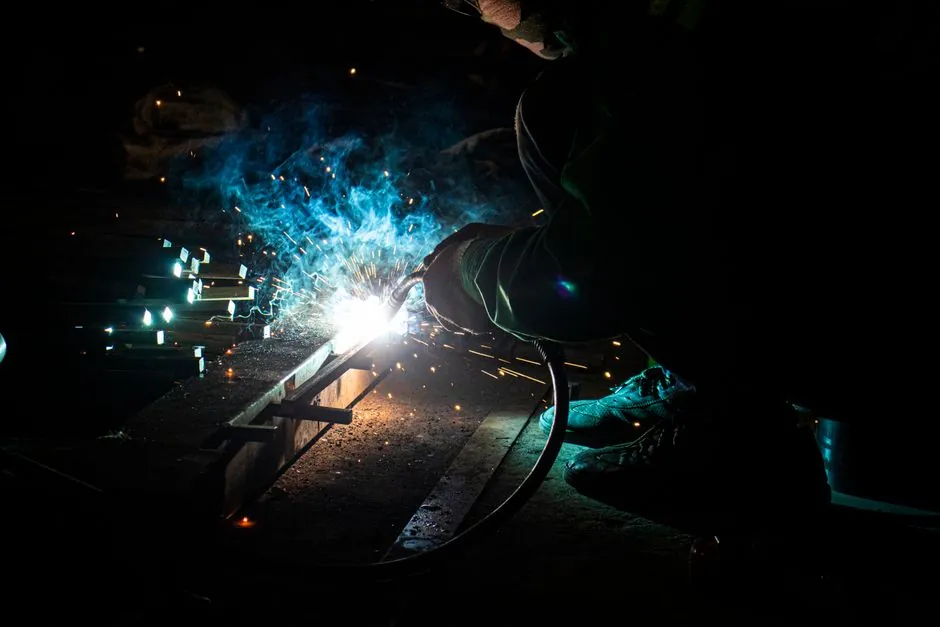
An arc welding machine install is decided by four numbers on the nameplate: input voltage and phase, rated input current, open-circuit voltage (OCV), and duty cycle percentage at a stated welding current, and those same four numbers drive cable sizing, breaker selection, and electrode choice for any electrical-installation work [S9].
Most inverter DC manual arc welders in the 140-250 A class ship as dual-power units accepting 220 V single-phase or 380-440 V three-phase, with 25% duty cycle at 400 A and 60% at 300 A as a typical headline spec for a 230 V input stick/GMAW chassis [S5][S9]. For electrical-installation work, which is mostly short root runs, conduit saddle welds, and bus-bar landing tabs rather than thick-plate gantry seams, the bottleneck is almost never weld current; it is whether the supply can deliver the inrush without nuisance-tripping the site breaker [S7][S9].
Spec Bands: Where an Electrical-Install Welder Actually Lives
The 2026 market splits arc welding machines into four working bands, and the relevant one for electrical installation is the bottom two [S7]. Handheld manual stick/MMA units run near 200 A at the entry tier; mid-range inverter units cover 250-400 A at 60% duty for site work; semi-automatic MIG/MAG chassis sit at 350-500 A for panel and enclosure fabrication; and automated gantry cells start at 500 A and above for structural shops, with CNC stud welding cells priced US$4,500-55,600 per set on a 1-set MOQ [S7]. For an electrician's van, the 140-250 A class inverter is the working envelope, because it accepts either single-phase 220 V from a small site transformer or three-phase 380-440 V from the permanent supply, and it still covers the 2.5-4.0 mm E6013 / E7018 stick electrodes that handle conduit clips, cable tray saddles, and grounding lugs [S5][S9].
For a permanent electrical-room build, the same logic shifts up one band. Ralli Wolf's RT600 is rated 600 A at 60% duty and 470 A at 100% duty for automated welding, and weighs 145 kg, so it is bench-mounted, not carried to a rooftop [S3]. The portable RT/RA family, including the 4 kg-class RW20A, the ECO 200N, and the dual-supply RA25D, runs 200-250 A from single-phase 230 V supplies, which is what an installation contractor will actually plug into a distribution board feed [S3].
Process Family vs Electrical-Install Task
Shielded metal arc welding (SMAW/stick) is the default on most electrical sites because the equipment is cheap, the consumables are stable, and the wind tolerance is far better than gas-shielded processes on an outdoor riser [S4]. Gas metal arc welding (GMAW/MIG) and flux-cored arc welding (FCAW) win on long production runs in an enclosure shop, where a 350-500 A semi-automatic chassis with 80% Ar / 20% CO2 shielding can deposit 3-6 kg/h and keep bead cosmetics consistent for stainless panel work [S1][S4]. Gas tungsten arc welding (GTAW/TIG) is reserved for copper bus-bar landing tabs and stainless trim, where oxidation control matters more than deposition rate, and where a 200 A AC/DC inverter such as the JASIC WSME-200 pulse class is the right tool [S2][S4].
The 2026 spec map puts process compatibility ahead of headline amperage: an installer chasing a high-amperage bargain for panel work will discover, on first use, that the chassis only supports MMA and not the MIG torch interface their enclosure shop needs [S3][S8]. For thicker copper or aluminium bus-bar work, an orbital GTAW head (Shanghai Qianshan's pipe-welding orbital, listed at roughly US$3,000 per set on 1-set MOQ) gives repeatable root runs on a circular joint, but it is overkill for a 200 A panel landing tab [S2].
Duty Cycle, OCV, and What Actually Trips a Site Breaker
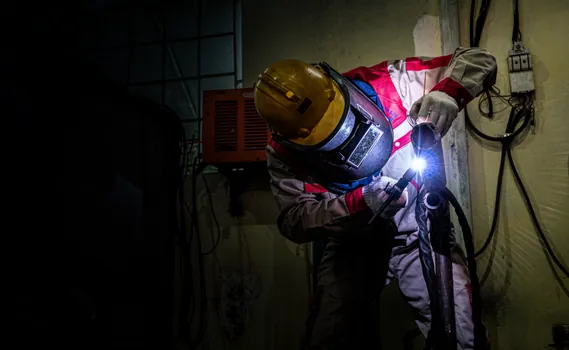
Duty cycle is the most misread number on a welder nameplate, and it has more to do with an electrical install going smoothly than peak current does. A typical 230 V input stick/GMAW chassis is rated 25% duty at 400 A and 60% duty at 300 A, meaning that at 300 A the machine can weld for 6 of every 10 minutes before its thermal cutout fires [S5]. On a long bus-bar landing-tab run that holds 280-300 A continuously, the chassis is right at the edge of its 60% rating, and the operator will be waiting on the cool-down clock more than they are welding [S3][S5].
Open-circuit voltage is the other nameplate value that bites the installer. Most MMA inverters hold OCV in the 60-80 V range with VRD (voltage-reduce-device) protection dropping it below 30 V on standby, which matters because IEC 60974-1 governs safe OCV limits in environments where the operator is working in damp switchgear rooms [S4][S9]. Rated input current drives breaker sizing: a 250 A class inverter on single-phase 220 V can draw 40-50 A at full output, which means a 63 A site breaker and a 6 mm² supply cable at minimum, and a 32 A three-phase 380 V feed will not run the same chassis at full output [S3][S9]. The enclosure IP code, typically IP23S on portable inverters, signals that the chassis is rated against solid objects above 12.5 mm and falling rain when the machine is off, so it can live on a covered site rack but not in a yard exposed to weather [S4].
Selection Criteria for Site vs Shop
For an electrical-installation contractor, four spec gates separate a buy that works from a buy that sits in the van: (1) supply compatibility, 220 V single-phase or 380-440 V three-phase, with the chassis accepting the same input range as the site distribution, not just one of them; (2) MMA plus DC TIG process coverage, so the same inverter covers stick work for conduit and TIG for bus-bar without a second unit; (3) VRD/OE safety features that drop OCV under 30 V in switchgear rooms, and an IP23S enclosure that survives outdoor riser work; (4) weight under 25 kg for a unit that has to be carried to a roof or a basement, which rules out the 145 kg RT600-class and keeps the RT400-class and below in the running [S3][S4][S9].
For a panel-fabrication shop, the gate list inverts: process count (MIG/MAG plus FCAW plus stick) matters more than weight, duty cycle at the operating amperage (target 60% at 350-450 A) matters more than peak output, and three-phase 380-440 V is assumed. A 415 V three-phase chassis such as Ralli Wolf's RA63 or RT series fits that bill, with the RT600 delivering 600 A at 60% duty for manual work and 470 A at 100% duty for automated cells [S3]. Price is the tiebreaker: 200-250 A entry-level inverters cluster at US$15-130 per unit at 1-500 piece MOQ on Asian supplier listings, mid-range 350-500 A MIG/MAG chassis run US$120-400, and robotic six-axis cells with integrated torch start at roughly US$8,350-8,650 per set [S2].
Comparison: Process Choice on the Same 300 A Class Chassis
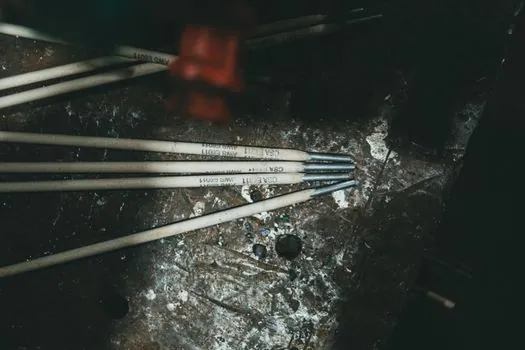
On a 300 A inverter used for an electrical-room build, the process choice changes deposition efficiency and consumable cost, but not the supply-side spec. SMAW with a 3.2 mm E7018 stick runs at 110-140 A per bead and tolerates the dirty, painted conduit stock that an installer meets on retrofit work, at a deposition rate of roughly 1-2 kg/h [S1][S4]. GMAW with 0.8 mm ER70S-6 wire on 80% Ar / 20% CO2 shielding runs 180-220 A and pushes deposition to 3-6 kg/h, but needs a wind break below 5 m/s and a shielding-gas cylinder the installer must trolley to the job [S1][S4]. GTAW with a 2.4 mm tungsten on DC for copper or stainless runs 100-180 A and gives the cleanest bead on bus-bar landing tabs, but it is the slowest of the three and the most dependent on operator skill [S1][S2][S4]. For most electrical-installation work, the cost-and-portability math still points to SMAW as the primary process with a GTAW option built into the same chassis, exactly the dual-process spec carried by the JASIC WSME-200 class and the Ralli Wolf RT/RA family [S2][S3].
Standards and Sourcing Map for 2026
Three standards frame every arc welder installed on a job: IEC 60974-1 for the welder itself, including OCV limits and insulation class, the AWS A5 electrode series for consumable specification, and NEMA EW-1 for the duty-cycle convention that puts the percentage on a 10-minute window rather than an hour [S4]. For Chinese-market buyers, NB/T 47014-2023 governs pressure-bearing weld procedure qualification, and JT/T 722-2023 governs bridge-welding low-temperature impact at -40 degrees C, both referenced in steel-structure selection guides [S1]. For an electrical-installation buyer, the practical gate is not the standards page but the supply-side spec: a 220 V single-phase / 380-440 V three-phase dual-voltage inverter with VRD, IP23S, and class H insulation will sit cleanly inside IEC 60974-1 and clear the typical site electrical safety review on the first pass [S3][S4][S9].
The sourcing map for 2026 is concentrated in China, with about 46,000+ products across 12,000+ suppliers on the major B2B platform listings, and a price ladder that runs US$15-130 for entry MMA inverters, US$118-400 for mid-range MIG/MAG chassis, US$3,000+ for orbital GTAW pipe welders, and US$8,350-55,600 for robotic cells and CNC stud welders [S2]. For an electrical-installation buyer who already has the supply spec locked down, the next move is to compare the shortlisted chassis against the four spec gates above and to order the chassis with the correct input cable, breaker, and OCV-controlled VRD interface [S3][S9]. For related reading on field-portable welder selection on the same spec axes, see the plumbing-pipe install welding picks and the concrete-work selection map, which both apply the same four-number spec gate to different site classes. Back to the arc welding machine encyclopedia for the cross-process spec reference and the welding and cutting tool index for adjacent cutting-process selection.
Component reference pages worth checking: electrical automation.