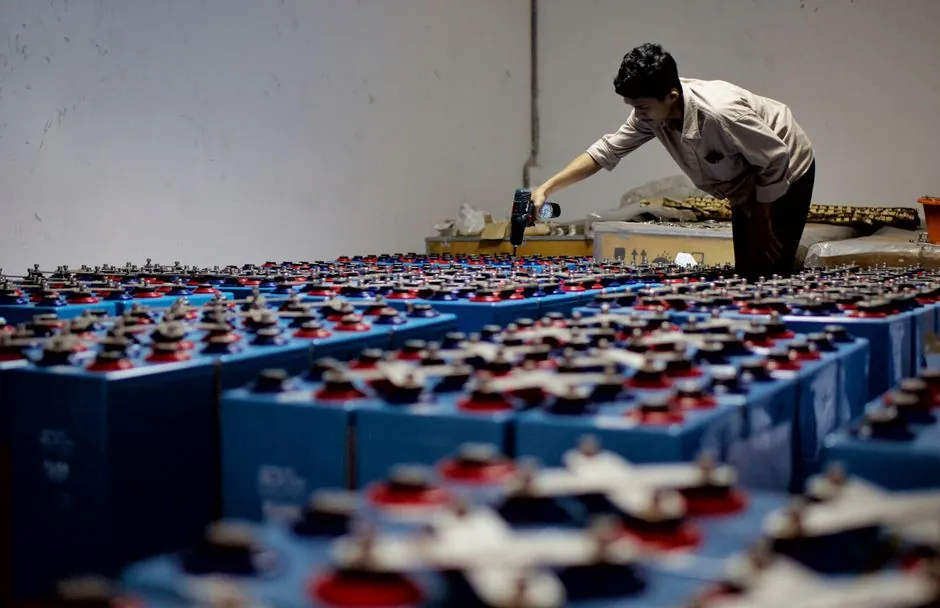
The 2026 average EV battery pack size depends heavily on the market segment: US-spec battery-electric cars average 90 kWh, European BEVs around 70 kWh, and Chinese BEVs below 60 kWh, while plug-in hybrids in all three regions stay in the 20-30 kWh band [S1].
Global EV battery deployment reached 1.2 TWh in 2025, up almost 30% year-on-year and more than 7x the 2020 level, with light-duty vehicles holding over 85% of that demand [S1]. Average lithium-ion pack prices fell 8% in 2025 to $108/kWh, and stationary storage packs hit a record $70/kWh, a 45% drop [S2].
Regional pack-size bands in 2026: US, EU, China, EMDEs
IEA's Global EV Outlook 2026 data put the US BEV average at 90 kWh, the EU average close to 70 kWh, and the China BEV average below 60 kWh, with US and EU averages growing around 5% in 2025 [S1]. PHEV pack sizes show the opposite pattern: China PHEVs exceeded 25 kWh (almost 10% growth) and EU PHEVs just over 20 kWh (almost 15% growth), while US PHEVs stayed under 20 kWh [S1].
For product planning, the practical takeaway is that a single "average kWh" number misleads: the same model year will carry 60 kWh in a Chinese-market A-segment BEV and 108-118 kWh in a US or EU luxury BEV. The persistence market research report lists capacity bands of below 30, 30-60, 61-100, 101-150, and above 150 kWh, which match the 2026 deployment mix reasonably well [S3].
What "average" really means: fleet vs new-model
EV-Database's 2026 cheatsheet of useable battery capacity across all currently listed BEVs shows a fleet average around 73.4 kWh, with the top of the table dominated by large luxury and SUV models: BMW iX5 60 xDrive at 141 kWh, Lucid Gravity Grand Touring 123 kWh, Mercedes EQS variants 118-122 kWh, and Land Rover Range Rover EV 118.5 kWh [S4]. The median sits much lower, in the 70-85 kWh band, because the high-end models are a long tail, not the volume center.
The fleet-average-vs-new-model distinction is critical when sourcing battery packs for fleet electrification or stationary storage, since pack-level controls (BMS architecture, thermal management, CAN integration) differ more between capacity classes than between vendors at the same class.
What is pulling the average up vs down in 2026

Three forces are pushing the average EV battery pack size upward: US preference for large SUVs and pickups, the EU's 2035 zero-emission vehicle target, and the rapid scale-up of electric trucks, whose battery demand more than doubled in 2025 to capture about 8% of global EV battery deployment, up from under 5% in 2024 [S1]. Heavy-truck packs run 400-600+ kWh per vehicle, and 10 of those shift a regional average faster than 1,000 small BEVs.
Two forces are pulling it down: China's continued preference for LFP cells, which are cheaper per kWh but slightly larger and heavier for the same capacity, and the 13% drop in Chinese pack prices to $84/kWh, which makes smaller packs economical again for urban vehicles [S2]. The persistence market research report confirms LFP and NMC remain the two leading chemistry segments in 2026, with sodium-ion and solid-state as the fastest-growing newcomers [S3].
Cost curve and chemistry mix in 2026
BNEF's 2025 price survey closed at $108/kWh average, $84/kWh in China, and a record $50/kWh for LFP stationary-storage packs, with the lowest observed LFP cell at $36/kWh [S2]. Pack-level prices have fallen from above $1,000/kWh a decade ago to under $150/kWh today, and the 2025 decline was 8% even though cobalt prices doubled after the DRC export quota shift on 16 October 2025 [S2].
That 8% drop in the face of a doubling cobalt price shows the industry's LFP substitution, hedging, and long-term contract cushion, and the same mechanism is now feeding into sodium-ion pilot lines as lithium carbonate prices at the start of 2026 were more than double their 2025 level [S1]. For OEM procurement, the relevant comparison is not LFP vs NMC on cell cost alone, but LFP vs NMC vs sodium-ion on a per-vehicle or per-installed-kWh basis, including thermal load, charge rate, and cycle life under the specific duty profile.
Efficiency and density: kWh per 100 miles as a complement
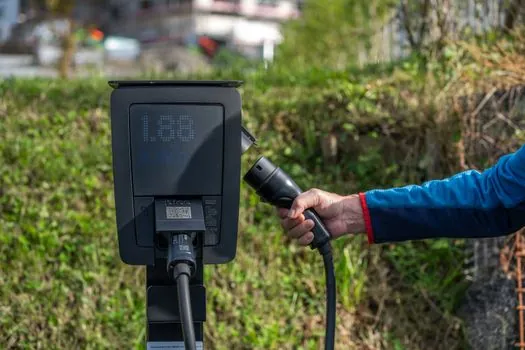
Recurrent Auto's 2026 model-year data put the average EV energy use at 37.5 kWh per 100 miles, with top performers beating that by a wide margin [S7]. Combined with the IEA regional pack-size bands, that yields a rough range envelope: a 60 kWh Chinese-market BEV at 37.5 kWh/100 mi gives about 160 mi (257 km) of nominal range, while a 90 kWh US BEV at the same efficiency gives about 240 mi (386 km).
For users, the decision is not "what is the average kWh" but "what kWh do I need for my duty cycle", and for procurement teams, the per-kWh cost differential between $84/kWh (China LFP) and the $50-60/kWh premium for EU or US packs is now a bigger lever than pack-size selection itself [S2]. Goldman Sachs's 2024 forecast that pack prices would fall toward $80/kWh by 2026 has effectively been hit a year early at the LFP stationary-storage level [S6].
Comparison: pack-size band vs duty profile vs market
A direct comparison helps frame the 2026 sourcing choice. For a 30-60 kWh pack in a Chinese-market A/B-segment BEV, the chemistry is almost always LFP, the price floor is near $84/kWh pack-level, and typical range is 200-350 km. For a 61-100 kWh pack in a European D-segment BEV, LFP and NMC split roughly evenly, pack prices sit in the $108-130/kWh band, and range reaches 400-550 km. For 101-150 kWh packs in US/EU luxury SUVs and pickups, NMC dominates, pack prices exceed $130/kWh, and range crosses 600 km [S1][S3][S4].
Above 150 kWh, the segment is still defined by long-range luxury flagships and electric Class 8 trucks, with BMW iX5 60 xDrive (141 kWh) and Lucid Gravity (123 kWh) bracketing the upper end of the current production set [S4]. For OEMs, specifying industrial valves and pressure sensors for pack coolant loops is a different problem at 150 kWh than at 60 kWh, because the C-rate window and thermal-loop pressure drop both change with the pack's series-parallel topology.
Limitations and what the 2026 data still hides
The IEA regional averages are BEV-only, not fleet-wide, and they mask the long upper tail of 100-140 kWh luxury models listed on EV-Database [S1][S4]. The persistence market research report segments capacity in 30 kWh bins but does not publish volume-weighted shares for each bin, so any 2026 "average kWh" outside the IEA's regional split is a fleet-or-new-model choice, not a market consensus [S3].
BNEF's $108/kWh 2025 average excludes 2026 contract renegotiations, and the start-of-2026 lithium price spike above 2x 2025 levels is widely expected to feed into contract prices through 2026 Q2-Q3 if the CATL Jianxiawo suspension persists [S1][S2]. For a comprehensive view, an OEM should also look at flow meters on thermal loops, pressure transmitters on pack enclosures, and servo-motor sizing on pack-assembly lines, since those BOM items scale with kWh throughput, not with kWh capacity alone.
Trackable signals for the next data point: BNEF's 2026 annual lithium-ion price survey, the Q4 2026 IEA Global EV Outlook update for 2026 regional pack-size averages, and any 2027 MY efficiency release from Recurrent Auto, which together will lock down whether the 90 kWh US BEV average and the 70 kWh EU average continue their 5% climb or plateau as LFP substitution and sodium-ion capacity come fully online.
See also our earlier report, Lithium hydroxide crystallization control and impurity monitoring: 2026 process reference.