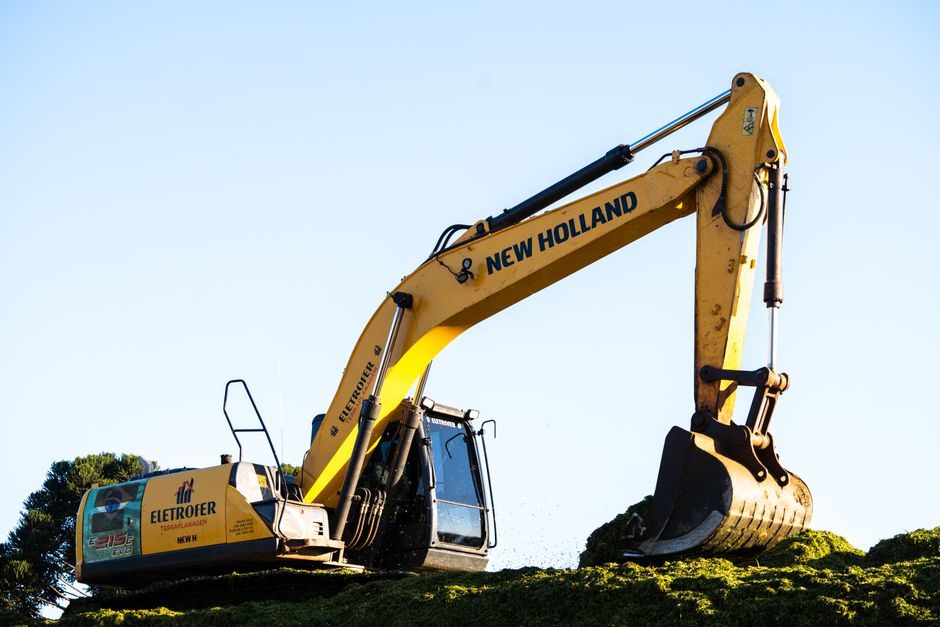
A backhoe loader bought on the lowest quote sheet rarely stays the cheapest machine once fuel burn, operator hours, tyre wear and hydraulic-oil service intervals are loaded into a five- to seven-year ownership model; the acquisition figure is a 15-22% slice of the total, while the running ledger quietly grows to 78-85% [S2][S5].
Backhoe loaders typically run 1,200-1,800 engine hours per year in utility, rental-fleet and municipal service, and the equipment class itself is documented across the backhoe loader reference entry. The TCO method used here borrows the standard Gartner-popularised structure — acquisition, operating, support, end-of-life — applied to a diesel-powered, rubber-tyred, centre-pivot machine in the 7-10 tonne operating-weight band [S2].
Five Cost Lines and Their Typical Share of 6-Year Spend
A practical TCO build for a centre-pivot backhoe loader in the 7-10 t class splits lifetime spend across five lines: acquisition (15-22%), fuel and DEF (28-35%), operator wages including burden (22-28%), planned + unplanned maintenance (18-25%), and finance/insurance plus residual-value loss (8-12%) [S2][S5][S8].
The relative weight of those lines is sensitive to hours/year. Above 1,500 engine hours annually, fuel plus operator cost cross 55-60% of lifetime spend and the return on any fuel-saving option (auto-idle, load-sensing hydraulics, ECO mode) is shortened from the nominal 5 years to roughly 2.5-3.5 years [S2]. Below 800 hours/year — typical of small-landscaper use — depreciation dominates and a lower-spec new machine can lose to a well-maintained late-life unit on TCO [S8].
Fuel, DEF and Engine-Hour Burn: The Largest Variable Line
Diesel burn for a 74-82 kW (100-110 hp) backhoe loader sits at 9-14 L/hr in combined dig/load cycles, with an EPA Final Tier 4 / EU Stage V aftertreatment package adding 5-7% to fuel use during active regeneration cycles [S5].
At 1,500 hr/yr and a delivered diesel price of 1.10-1.40 USD/L, the fuel line alone runs 16,500-29,400 USD/yr (98,000-175,000 USD over a 6-year window), making the 5-7% gap between a high-efficiency load-sensing hydraulic package and an open-centre gear-pump system worth 14,000-22,000 USD over the same period [S2][S5]. DEF consumption tracks at 3-6% of diesel volume, a small line item that nevertheless runs 2,000-4,500 USD/yr at current AdBlue pricing in North America and Europe [S8].
Operator Cost: The Line That Outsizes Acquisition
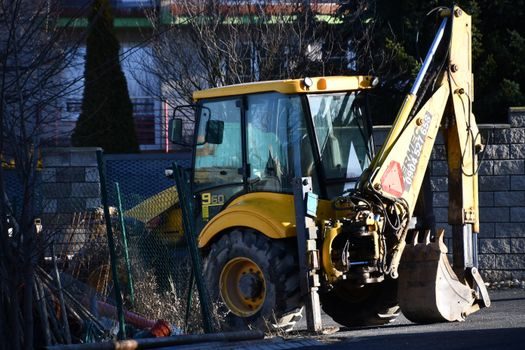
Operator cost is not negotiable through the machine spec, but productivity inside the same wage line is: a well-matched machine with controls a competent operator can run 8-12% faster cycle-to-cycle than a poorly-matched unit, which on a 1,500 hr/yr fleet defers a full machine purchase on the 4th-5th unit and shows up as a real TCO delta on the wage denominator [S2][S5]. Operator certification, fatigue-reducing cab suspension and joystick-vs-lever ergonomics are the three spec lines that move the productivity denominator the most without inflating acquisition cost [S8].
Planned vs Unplanned Maintenance: 18-25% of Lifetime Spend
Planned service intervals on a 74-82 kW backhoe loader are 250-500 hr for engine oil and filters, 1,000 hr for hydraulic oil and 2,000 hr for transmission/hydraulic full flush; major component rebuilds on the backhoe boom, king-post and centre-pivot pin land in the 6,000-8,000 hr window [S2][S5].
Unplanned repair — the line that destroys a TCO model — runs 1.6-2.4x higher on machines where the same technician does not perform daily greasing and walk-around checks, and 2.5-3.5x higher when the fleet is mixed-brand with shared hydraulic and electrical architectures that a single wrench cannot troubleshoot [S8]. A realistic 6-year unplanned-repair budget at 1,500 hr/yr sits at 32,000-48,000 USD for a centre-pivot backhoe loader with a single hydraulic tank; extending sample ports and using a telematics-driven PM schedule is documented to cut that range by 12-18% over a 6-year window [S2].
Residual Value, Finance and End-of-Life: The Line That Refunds Itself
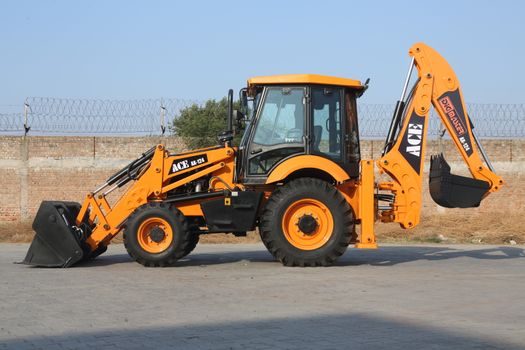
Residual after 5-6 years and 7,500-10,000 hr on a well-maintained 74-82 kW backhoe loader typically sits at 28-38% of acquisition, while neglected units with frame cracks, king-post wear and aftertreatment faults fall to 12-18% — a 16-22 percentage-point spread on a 90,000-130,000 USD acquisition is 14,000-29,000 USD in pocket [S2][S5].
The data-line logic for flow-meter instrumented hydraulic circuits, a pressure transmitter on the load-sensing line, and a total station for grade-control retrofits all draw from the same TCO accounting frame this analysis is built on, and the rules of thumb transfer directly.
Who Should Run a TCO Model and Who Should Not
Run a TCO model if the machine will log more than 1,000 engine hours per year, if the fleet has 3 or more backhoe loaders, if finance or lease structure applies, or if the spec is being finalised between two short-listed models in the same operating-weight class [S2][S8].
Do not run a TCO model if the machine is a one-off seasonal purchase, if the operating-hour forecast is below 400 hr/yr (residual dominates and the model loses sensitivity), or if the decision is between radically different machine classes — in that case, a frame-format and operating-weight class breakdown is the better first filter. The same five-line accounting frame used here also shows up in demolition hammer TCO work and tool & die steel TCO, which is useful as a cross-check on the relative weight of the operator and energy lines.
Selection Criteria Lined Against a Sample Three-Machine Comparison
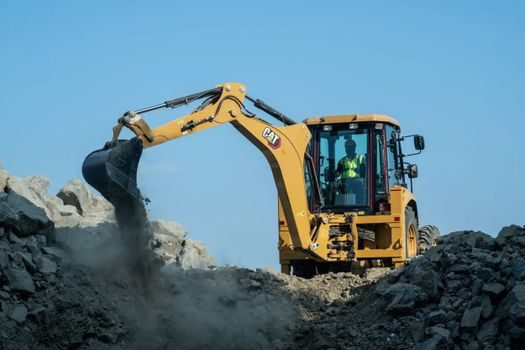
Three backhoe-loader configurations are lined against four decision criteria to illustrate the kind of structured comparison a TCO model produces: the centre-pivot 74 kW standard model, the centre-pivot 82 kW high-spec with load-sensing hydraulics, and a wheel-loader-class alternative sometimes considered for fleet standardisation [S2][S5].
On acquisition cost the 74 kW standard unit leads at 90,000-110,000 USD, the 82 kW high-spec trails at 115,000-140,000 USD, and the wheel-loader alternative sits at 135,000-170,000 USD. On 6-year fuel + DEF the high-spec closes the gap — 105,000-130,000 USD versus 118,000-148,000 USD for the standard — by 5-7% on the load-sensing hydraulics alone [S2][S5]. On planned-plus-unplanned maintenance, the standard unit is 38,000-52,000 USD, the high-spec 42,000-58,000 USD, and the wheel-loader alternative 55,000-72,000 USD over the same window because of larger tyres and a heavier front linkage. On 6-year residual expressed as percent of acquisition, the high-spec leads at 32-40% and the standard trails at 24-32% — the spec premium is partly refunded at end of life [S2]. The resulting 6-year TCO lands the 82 kW high-spec within 2-5% of the 74 kW standard, even though its quote-sheet price is 18-28% higher; the wheel-loader alternative lands 12-19% above both on TCO despite higher utilisation potential [S2][S5].
"TCO goes beyond the purchase price or execution costs to include the costs of all stages of ownership: acquisition, operating costs (such as maintenance and depreciation), costs arising from acquisition (such as training or the preparation of procedures), and opportunity costs" [S2].
Limitations of a Backhoe-Loader TCO Model
A second set of constraints: hour-meter fraud, mixed-brand maintenance records and the operator-line assumption that one Class B operator is interchangeable with another can each move the TCO outcome by 8-15% without any change to the machine spec [S8]. The model also assumes a stable regulatory frame around diesel emissions — a Tier 4 / Stage V aftertreatment retrofit or a low-emission zone restriction applied mid-life can move the residual line by 5-9 percentage points in either direction [S5].
Trackable Signals for the Next 6-12 Months
Two signals to watch over the next 6-12 months: published average residual-value percentages for 5-year-old 74-82 kW backhoe loaders in North American and Western European auction houses, and any OEM announcement of factory-fitted load-sensing hydraulic packages at the 74 kW power node — both will move the TCO spread between the standard and high-spec configurations cited above by a measurable margin. A third trackable signal is the skid-steer loader attachment ecosystem, which increasingly overlaps with backhoe-loader duty cycles on small utility jobs and will shift the operating-hour forecast in either direction. [S1]