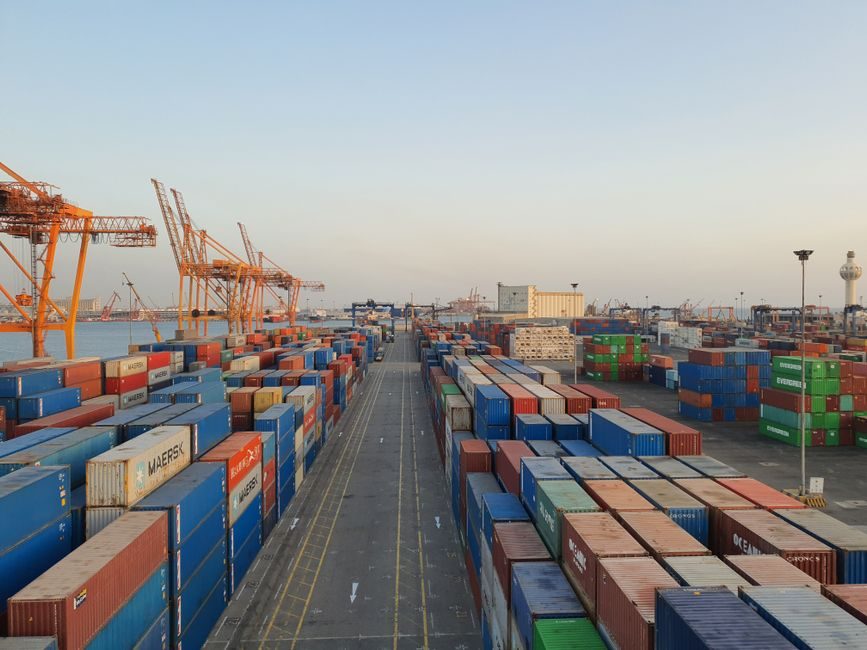
The 2026 battery energy storage system (BESS) supply chain is a tiered structure where cell cost still drives 50-60% of the bill of materials, while balance-of-plant (BOP) and power-conversion system (PCS) gates decide who wins the bid.
Three chemistries — LFP, sodium-ion and solid-state — are now quoted side by side on multi-MWh tenders, and the choice cascades back through cathode active material, electrolyte and separator sourcing [S1][S2][S5]. For process engineers and EPC buyers, the spec is no longer "how many kWh" but "which cell format, which BMS protocol, which PCS topology".
Cell chemistry tiers and what each one locks in
LFP (lithium iron phosphate) remains the volume default for stationary storage, with prismatic 280-314 Ah cells now the de-facto SKU on utility-scale BESS quotes [S1]. Sodium-ion is positioned as the cost-down option where energy density is not the gate (typically 100-160 Wh/kg at cell level, vs 180-205 Wh/kg for LFP prismatic), and it removes lithium carbonate exposure from the cathode bill of materials [S2]. Solid-state, including sulfide and oxide electrolytes, is being sampled by Ganfeng LiEnergy in mAh to "hundreds of Ah" formats, with semi-solid and full-solid SKUs co-existing in their 2026 product matrix [S5].
For non-experts: the cell chemistry choice locks in the upstream raw-material bill (lithium carbonate / LiPF6 electrolyte for LFP and NMC; sodium carbonate + hard carbon for sodium-ion; sulfide/oxide precursors for solid-state), the thermal-runaway threshold (LFP thermal onset typically around 250-270 °C; solid-state variants are marketed as non-flammable but production volumes are still measured in MWh, not GWh, as of mid-2026) [S2][S5].
Where the margin sits: module, BMS, rack and PCS
Cell price is half the story. A 2026 EPC bid typically breaks as: cells 50-60%, module/rack assembly and BMS 15-20%, PCS (bidirectional inverter, typically IGBT-based 1500 V DC architecture) 15-25%, EPC and grid interconnection 10-15% [S1][S6]. The BMS layer — battery management system — is where vendors like ABB, Sungrow and Tesla differentiate on cell-to-pack sensing density, thermal-loop control and DC-coupled vs AC-coupled plant topology [S1].
Inside the BOP, the DC power supply chain feeding auxiliary controls and the switching power supply rails for the BMS are the components a specifier is most often asked to qualify or substitute. A wrong SMPS rating at the 24 V / 48 V auxiliary bus has burned more BESS commissioning windows than any cell defect in 2025-2026.
Comparison of the three 2026 BESS chemistries on four bid gates
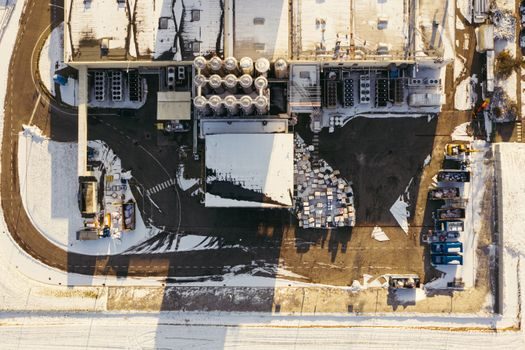
Across the chemistries a procurement team is actually comparing four gates, not just kWh: cost ($/kWh delivered at DC bus, 2026 spot), safety (thermal runaway onset, electrolyte flammability), cycle life at 80% DoD (depth of discharge), and supply-chain risk (concentration of precursor refining). LFP scores best on cycle life (commonly quoted 6,000-10,000 cycles to 80% capacity) and lowest supply-chain concentration given diversified Chinese LFP capacity; sodium-ion scores on cost and raw-material abundance but lags on energy density; solid-state scores on safety and energy-density headroom but loses on cost and qualified production scale [S2][S3][S5]. The bidding decision is therefore a weighted sum, not a single number.
For project finance and bankability, LFP is still the only chemistry where 20-year warranty language is offered as standard by tier-1 integrators; sodium-ion and solid-state are typically written at 10-15 years with energy-throughput caps [S3].
Upstream bottlenecks: cathode active material, electrolyte, separator
Cathode active material (CAM) is the single largest tier-2 gate. LFP CAM production is concentrated in Chinese provinces (Yunnan, Sichuan, Hubei) and 2025-2026 capacity additions have eased the 2022-2023 supply panic, but binder (PVDF, polyvinylidene fluoride) and conductive carbon (Super-P, CNT, carbon nanotube, dispersions) lead times are still the swing factors in module quotes. Electrolyte (LiPF6 in EC/EMC/DMC carbonate solvents) has come off its 2022 high but remains sensitive to fluorspar upstream pricing.
A cross-sector specifier will recognise the same pattern in adjacent chains — the power grid supply chain 2026 tier-2 bottlenecks piece on this site lays out the same tier-1/tier-2 logic for transformers and HV cables, and the lever set is nearly identical: qualify second-source CAM, hold 6-9 months of critical spares, freeze the electrolyte spec only after a vendor audit.
Who BESS is for — and who it is not for
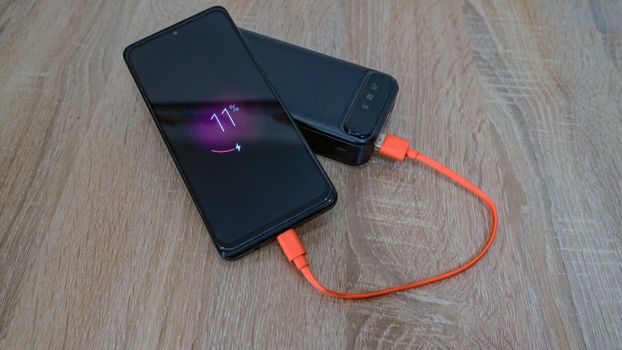
BESS 2026 is for: utility-scale renewables-firming projects (50 MWh and up), C&I (commercial & industrial) peak-shaving behind-the-meter sites with tariffs above $0.12/kWh, microgrid developers serving remote or islanded load, and EV charging depots that need demand-charge mitigation [S1][S3]. It is NOT for: short-duration ride-through (a flywheel or supercapacitor is the correct answer for sub-15 s events), process heat (use thermal storage), or any load profile where the round-trip efficiency penalty is unacceptable — current LFP systems deliver 86-92% AC-AC round-trip, and the lost 8-14% kWh is a real line item on the LCOE (levelized cost of energy) [S3].
For buyers weighing BESS against alternative storage, the gate is round-trip efficiency weighted against cycles/year. Below ~250 cycles per year, the payback math usually fails; above ~350 cycles per year, LFP BESS hits cost parity with peaker gas in most US ISO markets and with diesel offset in most EU C&I tariffs [S3].
Application matrix: BESS in industrial sites
On a process site, the BESS is sized against three workloads: spinning reserve (typically 5-15 min, sized at the largest single contingency), energy shifting (4-8 h, sized at the daily peak/valley spread), and frequency regulation (sub-second to minutes, sized at the contracted MW with a 1:1 to 1:4 power-to-energy ratio) [S1]. ABB and other tier-1 integrators publish BESS application guides that map these workloads to cell format, PCS rating and BMS topology; the takeaway is that a "storage cabinet" sold for residential use will not pass a UL 9540A or IEC 62933 site test, and the procurement spec must call out the standard, not the brand [S1].
For physical-handling sites the cell-level safety also drives the storage rack and storage cage layout — a 20-ft BESS container has a footprint of roughly 6 m × 2.4 m and needs 1.0-1.5 m clearance on every face for thermal-runaway venting, with gas detection on the BMS loop. A specifier who treats BESS as just "another pallet on the rack" is the specifier who commissions a thermal event in year two.
Failure modes and inspection gates buyers should write into 2026 POs
The 2024-2026 failure record in shipped BESS is dominated by four modes: DC arc-flash in the PCS, BMS communication dropout across the CAN (controller area network) / RS-485 daisy chain, electrolyte leakage at the cell-to-busbar interface, and HVAC (heating, ventilation and air conditioning) undersizing in liquid-cooled racks [S1][S2]. Each maps to an inspection gate the buyer can write into the PO: PCS — dielectric withstand test report at 3 kV AC for 60 s; BMS — cell-to-master latency below 200 ms across the full daisy chain; busbar — torque witness mark and IR (insulation resistance) test at 1 kV; HVAC — N+1 redundancy with a documented cool-down curve to 25 °C cell skin from a 45 °C ambient step-load [S1].
The standards body of reference for stationary BESS safety is the IEC 62933 series, with UL 9540 and UL 9540A covering the US site-integration angle, and IEC 62619 covering the cell-level safety tests. A buyer who does not name these in the PO is leaving the failure-mode liability with the EPC, not the OEM, which is the worst possible contract allocation in 2026.
2026 sourcing signals worth tracking
On the integration side, watch the chain conveyor throughput at the cell-to-module line — Chinese tier-1 lines are now running 100+ ppm (packs per minute) and a vendor who cannot name a throughput number is not a tier-1 vendor.
Final sourcing gate: every BESS bid in 2026 should arrive with a bill of materials, a cell-format declaration (LFP prismatic / sodium-ion prismatic / solid-state pouch), a BMS protocol (CAN-bus / Modbus TCP / IEC 61850), and a PCS topology (1500 V DC, IGBT vs SiC, silicon carbide, switching). Bids missing any of those four lines are bids the EPC will re-quote — the supply chain has matured past the "black box container" stage and the engineers writing the PO have caught up.