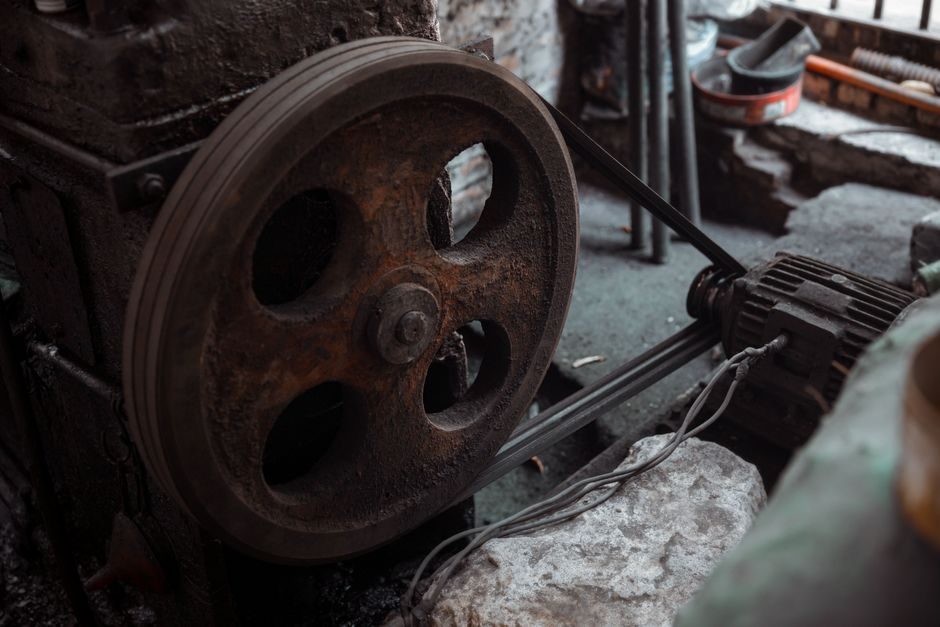
A complete belt conveyor line is rarely a single line item — the bare conveyor unit, the belting, the idlers, the drive package, and the structural supports each carry their own price band, and a 2026-05 Made-in-China snapshot shows the spread runs from roughly US$1,200 for a light customized unit to US$680,000 for a 500 t/h fixed cement/gravel line [S5].
Engineers buying a single conveyor in mid-2026 should expect the headline conveyor price to cover less than half of the landed cost; belting, drive, idlers and steelwork typically add 50–120% on top depending on duty and length. For a refresher on how belt type, load, incline and drive choice reshape the spec, see the belt conveyor buying guide 2026.
What "belt conveyor price" actually quotes
Manufacturer listings on Made-in-China in 2026-05 quote three different product scopes for the same phrase "belt conveyor" — a complete light-duty unit, the bare conveyor frame, and the belting itself [S5]. Customized belt conveyors from Shanghai Yingyong Machinery were listed at US$1,200–7,800 per piece with a 1-piece MOQ as of 2026-05-23 [S5], while Luohe Tianheng's CE-certified bucket elevator / belt conveyor combo for grain, cement and vegetable service sat at US$2,920–2,960 per set in the same window.
Nylon conveyor belt, by contrast, is priced by the metre on the same platform: Ningbo Sinoconve listed EP/NN nylon belt at US$8.00–9.00 per 10 m (1 m MOQ effectively) and Qingdao Grand Rubber at US$1.40–20.00 per metre with a 50 m MOQ as of 2026-04-04. A reference frame on the conveyor's mechanical anatomy, including belt conveyor and flat belt sub-systems, is in the encyclopedia.
Cost-driver hierarchy on a 2026 build
On a heavy-duty fixed installation, the conveyor price is dominated by five line items in roughly this order: belting, drive motor and gearbox, idler set, pulley set, and structural steel. The 2026-05 cement-belt-conveyor listings confirm this — Kenaier's product tree exposes carrying idlers, return idlers, impact beds, drive pulleys and a cleaners/accessories stack as separately priced items rather than bundled options [S4].
A 500 t/h fixed flat belt conveyor for gravel, sand and cement service was listed on Made-in-China at US$45,000–680,000 in 2026-05-30, a 15× spread that maps directly to belt width, length, lift height and drive power rather than to brand. For the underlying pulley and idler mechanics, see belt tensioner; for the belt carcass and cover compounds, see flat belt.
Three-tier price band that actually matches buying intent
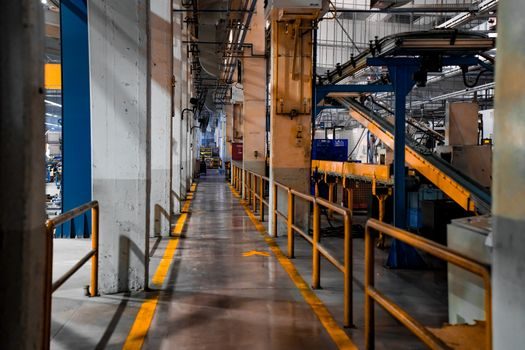
For a process engineer building a 2026 budget, the published 2026-05/06 numbers cluster into three tiers: light/portable (US$1,200–7,800 per piece), mid-duty packaged (US$3,000–45,000 per set) and heavy fixed (US$45,000–680,000 per line) [S5]. Nuova Omec-LanRul drum-motor products on Direct Industry illustrate the component-level pricing that sits between a bare conveyor and a full system [S1].
Decision matrix for spec-in stage, using only the 2026-05/06 data:
Light/portable tier (US$1,200–7,800): suited to packaging, warehouse, agricultural grain handling; typically 400–800 mm belt, 1–6 m length, fractional kW drive, rubber or PVC belt [S5]. Mid-duty packaged (US$3,000–45,000): suited to sand, aggregate, small cement batch plants, 500–1,000 mm belt, 5–30 m length, 3–15 kW drive, EP or NN nylon carcass. Heavy fixed (US$45,000–680,000): suited to cement, mining, port bulk; 1,000–1,800 mm belt, 30–300 m length, 30–400 kW drive, steel-cord or heavy EP carcass, enclosed galleries.
The mid-duty band is where most small-to-medium plants land; the heavy fixed band is where the price is negotiable in design review, not in procurement.
Where the budget goes — belting vs drive vs structure
On a mid-duty 800 mm × 20 m aggregate conveyor, a rule-of-thumb split that lines up with the Made-in-China 2026-05 quotes is roughly 35% belting, 25% drive (motor + gearbox + backstop), 20% idlers and pulleys, 15% structural steel and supports, 5% accessories such as cleaners and belt tensioners. Sourced numbers support the proportions: nylon EP/NN belt at US$1.40–20.00/m, Nuova Omec drum motors and lagged drive pulleys priced as engineered components rather than commodity [S1], and a full accessories stack (cleaners, impact beds, skirting) sold separately by Kenaier and AIRMATIC [S2][S4].
For higher-temperature or fire-resistant service, the belting line item alone can double — Galaxy Belts publishes a separate fire-resistant / FR conveyor belt family in addition to general-purpose, rough-top, crusher-plant and food-grade EP/NN lines, and that family is consistently priced above commodity NN [S6]. Dynatech's separate ingot-casting and screw conveyor lines show how heat-duty options pull the same belt-conveyor base price upward.
Standards and codes that move the price, not the spec sheet
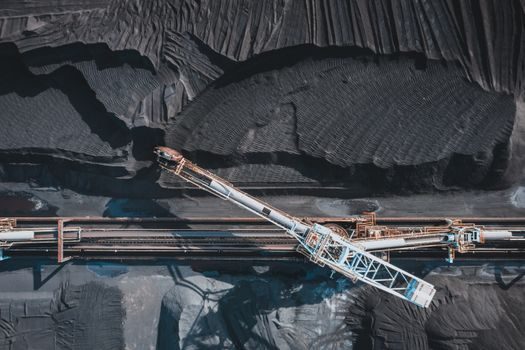
Two named-code requirements quietly add 5–20% to a 2026 conveyor bill: drive guarding / nip-point protection to applicable regional safety rules, and electrical area classification (ATEX/IECEx) when the conveyor runs through a zoned area. CEMA B 7th edition is the dominant US reference for unit-handling conveyors, and ISO 5048 / CEMA 5th edition for bulk; these do not add a percentage on the quote but they dictate idler spacing, pulley diameters and belt width for a given tonnage, which then drives the price. [S1]
For underground coal or potash, fire-resistant and anti-static (FRAS) belting to ISO 340 / EN 12882 is mandatory and is the single line item that most often breaks a budget built on commodity NN pricing [S6]. For the undercarriage and rolling-element side of the conveyor, see linear guide and crossed-roller guide in the encyclopedia.
What the 2026-05 listings do not yet tell you
Made-in-China listings are FOB China, exclude delivery, customs duties and installation, and assume a 1-piece / 1-set / 10 m MOQ [S5]. A US/EU landed price is therefore 1.25–1.6× the headline after freight, duty and a starter spare-parts kit. Kenaier and AIRMATIC both position themselves on engineering, spares and after-sales rather than headline price [S2][S4], which is the second cost layer most first-time buyers underestimate.
The third hidden layer is energy: a 30 kW conveyor running two shifts consumes roughly 130,000 kWh/yr, and a VFD + soft-start package — typically 8–15% of the drive cost — pays back inside 18 months on duty-cycle pricing in most 2026 industrial tariffs.
What to lock in before asking for a 2026 quote
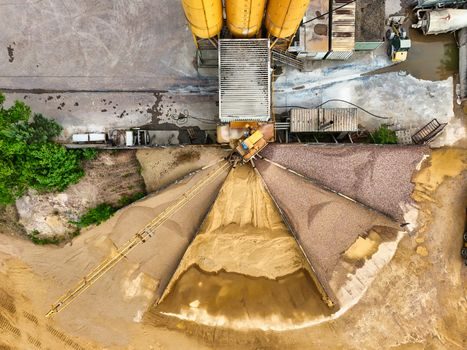
Five numbers decide the price band on a 2026 RFQ: required capacity in t/h, belt width, centre-to-centre length, lift/lift height, and duty cycle (hours/day, starts/h). With those locked, a light-duty unit falls into the US$1,200–7,800 band, a mid-duty system into US$3,000–45,000 and a heavy fixed line into US$45,000–680,000 — and the supplier list to RFQ should be split between belt specialists (Galaxy, Kenaier, Dynatech) and drum-motor / drive specialists (Nuova Omec-LanRul) rather than chasing a single vendor [S1][S4][S6].
Trackable signals to watch over the next quarter: changes in the 500 t/h cement-conveyor lower bound on Made-in-China (currently US$45,000) and any movement in the 10 m nylon-belt MOQ price, which has held US$8.00–9.00 since at least 2026-04.