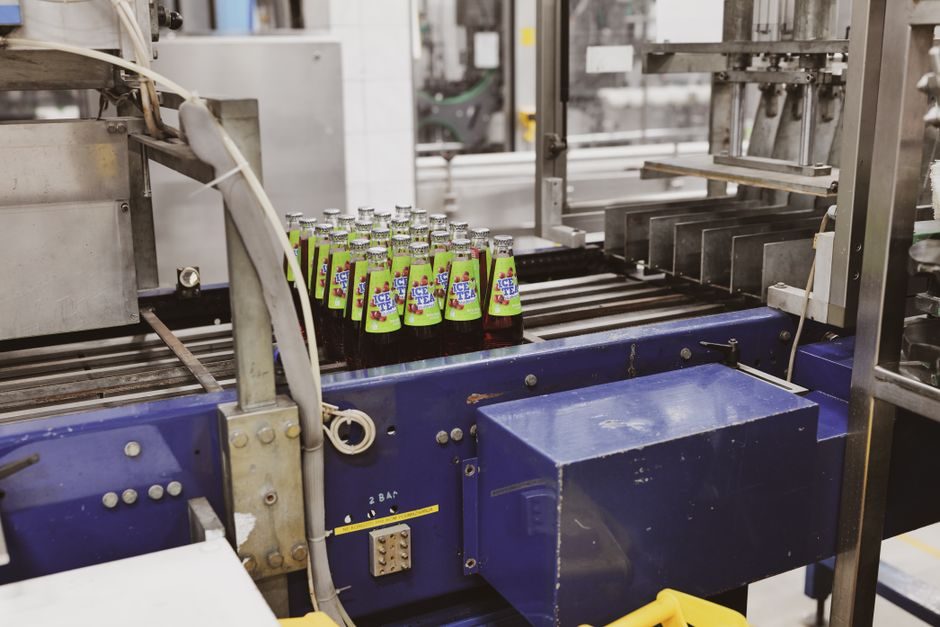
Selection of a belt conveyor for industrial use is driven by five engineering gates — bulk density, particle size, incline, environment, and duty cycle — and a wrong call on the belt type alone (flat, ribbed, or timing) can double maintenance cost within twelve months [S1][S2].
As of 2026-06-22, belt conveyors remain the default bulk-material handling equipment for coal, aggregates, grain, and packaged goods, supplied globally by manufacturers including Wuxi Alpine, Jignesh Engineering, Chongqing Langle, and Ritika Engineering [S2][S3][S7][S9]. The Britannica entry classifies the unit as a mechanical device for continuous transport of unit loads or bulk material along a defined path [S8].
Belt Type and Construction Gate
Belt construction must be specified before any other gate, because the belt dictates pulley diameter, drive sizing, and tensioner geometry [S1][S2]. A flat belt suits horizontal or low-incline runs carrying packaged or small-part loads, while a ribbed belt is used on inclined conveyors where positive tracking under load is required, and a timing belt is reserved for indexed or synchronised transfers where slip cannot be tolerated [S1].
For chemical, food, or washdown environments, stainless steel frames paired with modular plastic or PU belts are common — Tecnicoll Srl markets belt and chain variants specifically for hygienic and corrosive service, while Chongqing Langle supplies aluminium-profile conveyors for ESD-protected assembly and light-duty turn-over [S1][S7]. When the duty involves abrasive bulk such as coal, the selection shifts to multi-ply fabric or steel-cord belts with heavy-duty carrying idlers, the configuration Wuxi Alpine publishes for mining and port stacker/reclaimer feeds [S2].
Load, Speed, and Belt Width Calculation Gate
Conveyor capacity in tonnes-per-hour is a direct function of belt width, belt speed, bulk density, and cross-section profile — a 650 mm wide belt running at 1.5 m/s with a 30° trough angle typically moves 250–350 t/h of crushed stone at 1.6 t/m³ bulk density, which is the working envelope most aggregate plant buyers target [S2][S9].
For unit-load or packaged goods the calculation collapses to a simpler rule: required throughput in pieces per minute equals belt speed divided by product length, and belt width must exceed the longest product footprint by at least 50 mm of clearance on each side to prevent edge contact with the belt tensioner housing [S5][S6]. The flat-belt variants in aluminium frames from Chongqing Langle target this unit-load segment, with widths typically in the 50–600 mm band and speeds up to 30 m/min for light assembly [S7].
Idler, Pulley, and Drive Component Gate
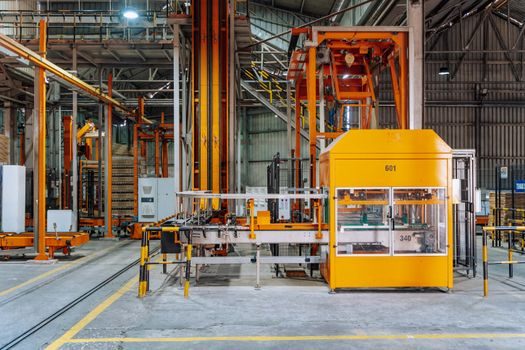
Carrying idlers, return idlers, drum pulleys, and tail pulleys are the wear parts that decide maintenance interval — Ritika Engineering publishes impact idlers, drum pulleys, and foundation bolts as the three SKUs that drive after-sales revenue in Indian coal and cement plants [S9]. For abrasive or lumpy feed, an impact idler set with rubber rings is mandatory at every transfer point; for fine, dry material, sealed-for-life greased idlers reduce bearing failures to negligible levels [S2][S9].
Drive selection is governed by starting torque, belt length, and lift — a mesh belt conveyor running through a wash tunnel or oven typically uses a centre-drive drum with a 1.5–2.0× belt-length wrap to prevent slip, and a screw-type take-up rather than gravity to hold tension stable under thermal expansion [S1][S5]. For heavy mining service, dual-drive head pulleys with electrical soft-start are the Wuxi Alpine standard, and the same dual-drive arrangement is used on long overland conveyors exceeding 1 km in length [S2].
Environment, Safety, and Guarding Gate
Conveyor guarding is no longer optional in any jurisdiction that follows EN ISO 12100 and equivalent machinery-safety practice — Belt Conveyor Guarding publishes customizable physical barriers, pull-cord emergency stops, and nip-point shields as the baseline safety kit for new US installations [S10]. The same logic applies to drive-end covers, head-pulley access doors, and tail-pulley shaft guards [S10].
For explosive-dust or combustible atmospheres — grain elevators, coal handling, sugar, and some chemical powders — the selection branch moves to ATEX/IECEx-rated motors, conductive belt construction, and grounding brushes on head and tail pulleys; the conveyor itself stays the same mechanical form, but the electrical package and guarding layout change materially [S2][S10]. In outdoor aggregate or port service, weather covers and belt-edge sealing become the design priorities to keep moisture out of carryback and prevent rolling-back on inclined flat belt sections [S1][S2].
Comparison of Belt Types by Selection Criterion

Three belt families dominate the 2026 industrial conveyor market, and the correct pick is set by four decision criteria. Flat belts win on cost, ease of splicing, and food-grade compliance, but lose on incline limit (typically 15–18°) and on positive tracking under uneven load [S1][S7]. Ribbed belts solve the incline problem (usable up to 30°) and provide lateral stiffness for troughing, but they cost more per metre and require matched-groove pulleys [S1]. Timing belts give precise indexing and zero-slip synchronisation, used in assembly automation and dosing lines, at the price of low load capacity and intolerance to contamination by oil or dust [S1][S5].
For abrasive bulk over long distances, the steel-cord belt inside a belt conveyor system is the only sensible answer — Wuxi Alpine publishes widths up to 2000 mm and capacities above 5000 t/h for the mining and port segment, and Jignesh Engineering covers the mid-range coal-handling plant at 100–500 t/h [S2][S3]. For light assembly, packaging, and ESD work, the timing belt variants in aluminium frames from Chongqing Langle sit in the 30–500 kg load class and 5–30 m/min speed band, which is the operating envelope most end-of-line packaging buyers will see in quotes [S7].
Limits, Failure Modes, and Cost-of-Ownership
The dominant failure modes in field service are belt mistracking, splice failure, idler seizure, and pulley lagging wear — not motor or gearbox failure — which means the belt tensioner and tracking adjustment design deserve as much specification effort as the drive itself [S5][S9]. Take-up travel must be at least 1.5% of belt length to absorb stretch over the first 200 hours of run-in, and pulley lagging thickness in heavy mining service should be specified at 12–20 mm of hot-vulcanised rubber, not the 6–8 mm cold-bonded lagging common on mid-range units [S2][S9].
Cost-of-ownership in the first five years typically breaks down to 35–45% belt replacement, 20–25% idler and pulley wear parts, 15–20% energy, and 15–20% labour and guarding inspections — the Wuxi Alpine and Jignesh Engineering catalogues reflect this split in the way they price spare-part kits as standalone lines rather than bundling them with the conveyor [S2][S3][S9]. Conveyors Direct publishes a UK second-hand and modular aluminium quote sheet that lets end users compare new-build capital cost against refurbished or modular systems, a route worth running before committing to a full new line [S5].
Vendor Map and Sourcing Signal

Active manufacturers in scope for 2026 sourcing include Wuxi Alpine (heavy mining and port), Jignesh Engineering (coal handling and bucket elevators since 1993), Chongqing Langle (aluminium-frame light-duty and ESD), Ritika Engineering (idlers, pulleys, foundation bolts), Belt Conveyor Guarding (safety accessories, US market), and Conveyors Direct (UK modular and second-hand) [S2][S3][S7][S9][S10][S5]. Of these, Wuxi Alpine and Belt Conveyor Guarding both show 2026-Q2 activity on their published sites, which is the freshest sourcing signal in the dataset [S2][S10].
Selection method worth running on the next quote: lock the belt type and width first, then size the drive from trough angle and lift, then specify the idler set and guarding to match the environment, and only then go to a vendor shortlist — the order is what separates a 15-year conveyor from a 5-year one [S1][S2][S9]. A peer process engineer walking the same gate on a coordinate measuring machine or a pH meter will recognise the logic, and the same gate approach applied to a vision measuring machine saves the same kind of money. Track as the next signal: any 2026-Q3 release of revised EN ISO 5048 / ISO 5049 calculation methods from ISO TC 110, and the next round of Wuxi Alpine project-shipment data on their site.