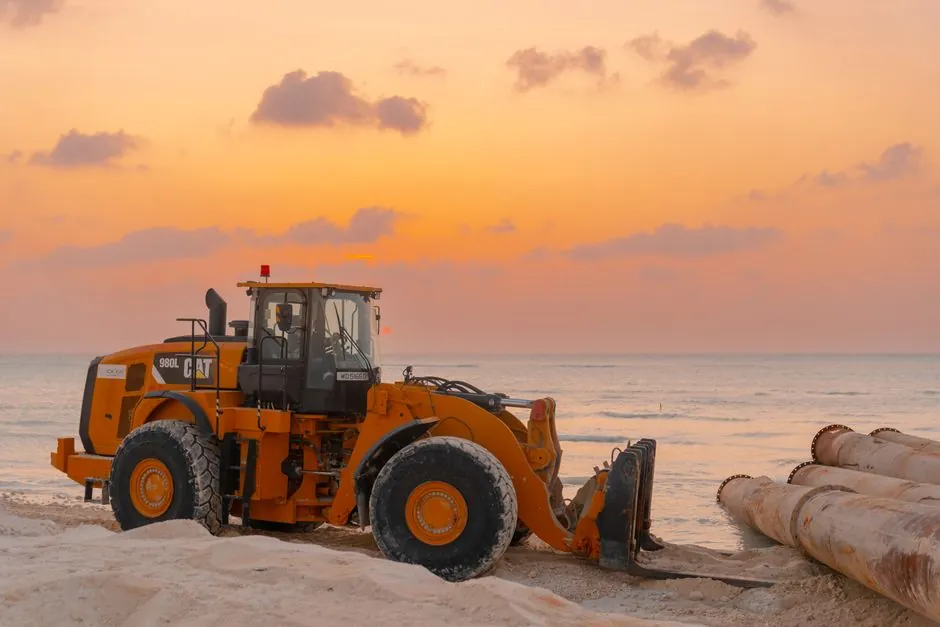
Track and undercarriage wear parts absorb roughly 40% of total bulldozer maintenance spend, with full assembly replacements landing at INR 8-12 lakhs per machine, while hydraulic system failures account for 45% of all breakdowns [S2]. Getting the consumables and wear parts mapped by system, not by SKU, is what separates a 95% uptime fleet from one bleeding INR 45,000 a month in unplanned downtime [S2].
The dozer's working anatomy splits cleanly into five failure-dominated systems: undercarriage, hydraulic, powertrain, cutting tools, and electrical/cab [S1][S4]. Each system has its own wear curve, its own consumable class, and its own inspection interval, and the economic data from heavy-fleet operators shows that reactive replacement runs 300-400% higher than scheduled parts work [S2].
Undercarriage Wear Parts: Highest-Cost, Highest-Wear System
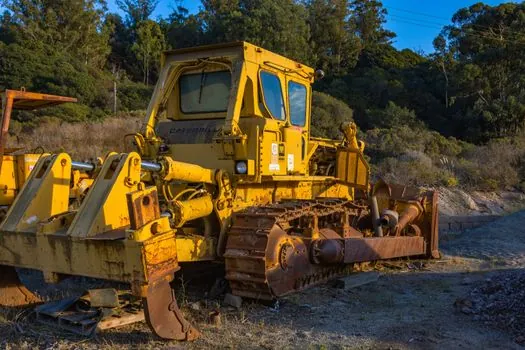
Steel tracks, track chains, idlers, rollers, and sprockets make up the undercarriage, and they collectively form the single largest maintenance line item on any dozer [S1][S4]. Carrier rollers ride the top run while track rollers carry the bottom run, with idlers at the front and back managing tension and preventing derailment, and sprockets at the rear transferring final-drive torque into the track chain [S1][S5]. Strategic tensioning, scheduled lubrication, and wear measurement extend undercarriage life by roughly 35% and save around INR 3.5 lakhs per machine per year, per fleet-level data [S2].
Common consumables in this system include track shoes, pin and bushing sets, bolt-on sprocket segments, and seal kits for idlers and rollers [S3][S5]. Single-flange, double-flange, and centre-flange rollers are stocked for different track profiles, and full-cut sprockets can be replaced as a unit or rebuilt with bolt-on segment sets machined to OEM tooth profiles [S5]. For more on how crawlers hold up over real service years, see the crawler crane lifespan benchmark.
Hydraulic System Parts: 45% of All Failures
Hydraulic pumps, lift and tilt cylinders, control valves, hoses, and return filters handle blade and ripper actuation, and the failure attribution data puts them at 45% of all bulldozer breakdowns [S2]. The dominant failure drivers are contamination, seal wear, hose fatigue, and pressure-side leaks, and proactive parts work (seal replacement schedules, fluid sampling, pressure monitoring) extends component life by 50-70% while cutting roughly INR 2.8 lakhs from annual repair bills [S2].
Consumable SKUs here are filter elements, O-ring and seal kits, hydraulic hoses, and cylinder rod seals; rebuild kits for hydraulic pumps and final drives are stocked as long-block-level assemblies by major parts suppliers [S3][S5]. Daily checks should include fluid level, hose condition, and visible leaks, with periodic fluid sampling to catch contamination before it scores pumps or valves [S4].
Engine, Powertrain, and Cooling Consumables
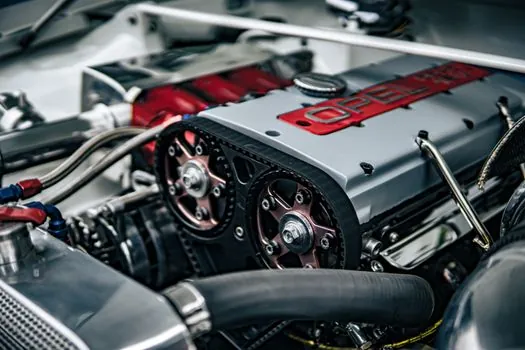
Engine components (turbochargers, fuel injectors, pistons, and valve assemblies) drive about 35% of operating maintenance budgets, and a major overhaul runs INR 6-8 lakhs if allowed to run to failure [S2]. Condition-based replacement tied to operating hours prevents roughly 78% of engine failures and keeps fuel and emissions performance in spec [S2]. Cooling system parts (radiators, fans, thermostats, coolant pumps) face extreme stress above 45°C ambient, and cooling failures cascade into secondary engine damage costing INR 4-6 lakhs when ignored [S2].
Standard consumables are oil and fuel filters, air filters, V-belts, coolant, and alternator or starter components, with diesel engine rebuild kits and long-block assemblies available for full overhauls [S3]. Electrical consumables include batteries, wiring harnesses, fuses, and the alternator and starter motors themselves; undercarriage and blade service routines should be paired with battery and lighting checks since electrical failures are a common cause of no-start downtime [S3][S4].
Blade, Cutting Edges, and Ripper Consumables
The blade assembly (blade body, cutting edges, end bits, and push arms) is a wear system of its own, with consumable wear parts replaced on a fixed schedule rather than run to failure [S4]. Four blade types are in common use: the straight S-blade for fine grading and backfill, the angle A-blade for side-casting and snow removal, the U-blade for high-volume long-distance pushing, and the semi-U blade combining lift capacity with placement control [S1]. Cutting edges and end bits are the high-wear consumables, and matching blade type to material sharply reduces premature wear [S1][S4].
Rippers break hard ground ahead of the blade via single-shank (heavy rock, compacted soil) or multi-shank (lighter coverage) configurations, and the ripper shank tip is itself a consumable [S1]. Trunnions, C-frames, and pins and bushings connect the blade and ripper to the chassis, and they are recurring wear parts on machines running abrasive materials [S3][S5].
OEM vs Aftermarket: Selection Criteria
Parts selection breaks down along three axes: specification match, lead time, and unit cost, with aftermarket coverage now spanning idlers, rollers, sprockets, final drives, and full undercarriage assemblies for all major makes and models [S5]. For non-safety wear parts in mature product lines (D6, D85, PC200-class), reputable aftermarket parts built to OEM tooth profiles and dimensions typically deliver acceptable life at lower cost, while critical rotating assemblies (final drives, hydraulic pumps) and any safety-related part (ROPS, braking components) are still commonly specified OEM [S3][S5].
Comparing the main options against decision criteria: OEM parts score high on guaranteed fit and warranty but carry premium pricing and longer lead times; aftermarket parts score high on availability (often 12+ US warehouse locations with fast shipping) and cost, but require vetting the supplier's heat-treat, machining tolerance, and profile conformance; used or rebuilt parts score high on price and acceptable for non-critical wear components, but carry unknown remaining life [S3][S5]. For a fleet running multiple brands, parts inventory consolidation by component type rather than by machine model usually cuts SKU count without hurting availability.
Maintenance Intervals and Sourcing Standards
For machines in constant use, the undercarriage should be inspected daily for loose tracks, worn rollers, and leaks, with engine oil, hydraulic fluid, and filter condition checked on the same walk-around [S4]. Operator cab and ROPS inspections, seat condition, and control function checks are part of the same daily routine, and they sit alongside electrical system checks (battery, alternator output, wiring integrity) [S4]. For a structured view of the operator-side routine, see Bulldozer Safety: Operator Certification, Spacing, and Pre-Shift Checks.
Standard heavy-equipment inspection practice and parts documentation follow OEM service manuals, with parts diagrams (covering blade, trunnion, final drive, track, and undercarriage) used as the reference for both routine service and fault diagnosis [S3]. Industry analysis reveals that systematic parts maintenance can prevent 85% of catastrophic failures while extending component life by 60%, generating savings of ₹4.2 lakhs per bulldozer through strategic preventive care and condition-based replacement protocols [S2].
Track these signals over the next quarter: undercarriage wear-measurement trends by machine, hydraulic fluid particle counts, and engine oil analysis for fuel dilution and wear metals, since each one predicts a major cost line 200-400 operating hours before failure. If fleet-mix is shifting toward smaller-frame dozers in urban grading, expect cutting-edge and ripper-tip consumption per machine-hour to rise disproportionately to engine-hour costs.
Detailed specification references: bulldozer, linear guide, and crossed roller guide.