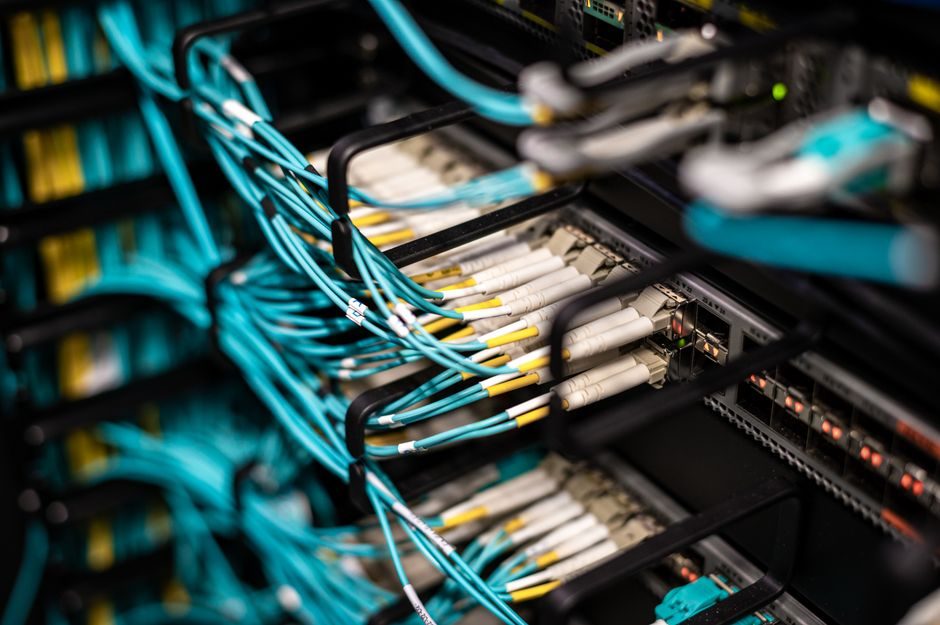
A standard cable or wire product moves through 5–6 process nodes: copper or aluminium wire rod drawing, annealing, conductor stranding, insulation extrusion, cabling (lay-up of cores), shielding, and final jacketing, with inline spark testing and final hipot verification before reels ship [S1][S4].
Process variation is driven by end use — high-temperature FEP/PTFE Teflon leads, medical-grade low-noise coax, and UL/CSA AAMI patient lead wires each pull different lines of equipment and certification discipline [S1][S2]. The chain is essentially the same; what changes is the gauge, polymer system, and the QC documentation kit the customer demands.
Stage 1: Wire Rod Input and Drawing
Most electrical cable starts as 8 mm copper or aluminium wire rod supplied to ISO 16112 or equivalent, drawn through a multi-hole draw wire sensor-equipped machine down to the target gauge (0.05–4.0 mm² cross-section is the common industrial window) [S4]. In-line annealers then restore conductivity lost during cold work, with copper typically brought to a soft temper at 350–450 °C.
Tin or silver plating is added at this stage when the spec calls for solderable or high-temperature conductors; FEP-insulated aerospace and medical lines use silver-plated copper to survive 200 °C+ continuous service [S1][S2]. Capacitive or laser diameter gauges hold tolerance inside ±0.01 mm on fine gauges, and a broken-wire sensor stops the line within 200 ms to prevent scrap accumulation downstream.
Stage 2: Stranding, Bunching and Cabling
Multi-wire conductors are built up on stranding machines (rigid-frame or tubular) where 7, 19, or 37 bare or tinned copper wires are helically laid to form a Class 2 or Class 5/6 flexible conductor per IEC 60228 [S4]. Lay length, direction (SZ or unilay), and pitch directly control cable flexibility and the finished OD.
For multi-core cables, a separate cabling machine pairs the insulated cores with fillers, a centre binder tape, and (where required) a cable gland-ready overall lay; shield layers — braid, foil, or combination — are applied next, with braid coverage typically 60–95% depending on the EMC spec [S2][S5]. High-end signal and medical cables add a drain wire under the foil so technicians can terminate the shield cleanly at the connector end.
Stage 3: Insulation and Jacketing Extrusion
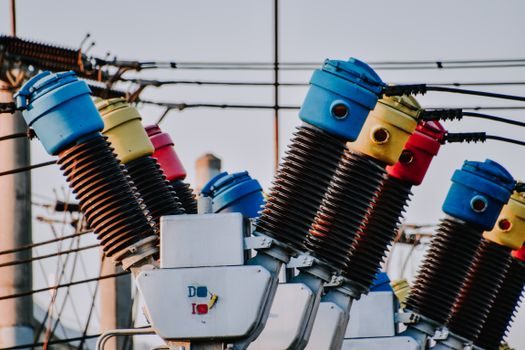
Extrusion is the quality-defining step. PVC, PE, XLPE, TPE, FEP, PFA, and ETFE each demand a different melt temperature profile — PVC runs at 150–180 °C, XLPE at 110–140 °C in CV tubes, FEP at 340–380 °C with melt-extrusion rather than screw-only plasticising [S1]. A spark tester at 2.5–6 kV AC runs after every insulation extruder; pinhole defects above the set threshold auto-mark and cut the line.
Final jacket OD is held to ±0.10 mm on small-gauge multi-conductor cable and ±0.20 mm on power cable, and the surface must be free of die-lip drag, scorch, or contaminant inclusions [S1][S3]. For RoHS/REACH-bound products, every polymer lot carries a mill certificate and the extrusion line is purged between colour runs to prevent cross-contamination — a discipline the better UL/CSA shops document in the shipping packet [S2][S5].
Stage 4: In-Line QC and Final Testing
Every production metre passes through at least four QC gates: DC resistance (cap to a maximum per IEC 60228, e.g. 7.41 Ω/km for 0.75 mm² copper at 20 °C), insulation resistance (typically ≥ 100 MΩ·km at 500 V DC), spark/hi-pot, and a finished-cable hipot at 2.0–3.5 kV AC depending on the voltage rating [S2][S5].
Lot-acceptance tests add dimensional checks against the customer's print, plus ageing, oil, and flame tests where UL 1581, IEC 60332, or CSA FT1 is invoked [S1][S2]. For electromechanical and medical cable, AAMI-style leakage-current and flex-life tests are run on a sample basis — patient lead wires from a 30-year UL/CSA house will typically carry 50,000-cycle flex endurance data on the certificate of conformance [S2].
Stage 5: Who This Process Fits — and Who It Doesn't
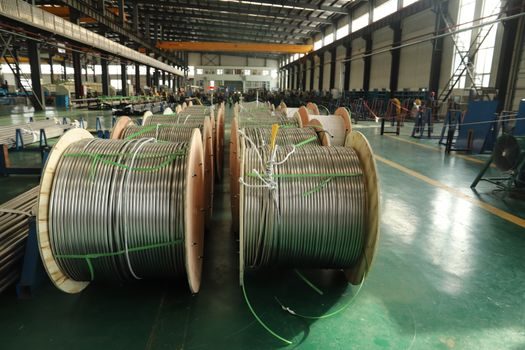
Multi-stage extrusion plus stranding is the right answer for OEM-volume orders above ~5 km per SKU, where setup amortises across a long run. Custom electromechanical and medical cable work uses the same equipment but at lower line speeds and with much tighter sample-based QC, which is why those suppliers quote on tooling recovery and lab time rather than on $/metre [S2][S3][S5].
It is the wrong answer for short-run prototyping under 500 m of a non-standard construction — minimum-order economics at most factories push lead time to 3–5 weeks and unit cost up 30–60% versus catalogue equivalents. A working engineer evaluating a new harness build should look at the harness and wire assembly chain, where processes parallel the industrial pump manufacturing process: 2026 shop-floor walkthrough on the routing and QC side and differ only in the conductor substrate.
Equipment Suppliers and the Buy-Side Sourcing Map
On the equipment side, Chinese stranding/cabling machinery makers in Dongguan, Humen, and the Yangtze delta dominate the mid-tier global supply — frame sizes 200–630 mm pay-off bobbin, line speeds 60–120 m/min for 0.5–2.5 mm² conductors, with optional back-twist and auto-loading [S4]. OEM output on this class of equipment feeds the bulk of the global low-voltage cable and harness industry.
On the buy side, the verifiable signal is the certification matrix. Factories carrying UL, CSA, AAMI, RoHS, and REACH compliance are short-listed first; one Chinese FEP specialist openly states 20+ years of wire-making and runs high-temperature cable as a stock line [S1]. A US medical cable maker states 30 years of experience with UL/CSA lab testing in-house, a meaningful differentiator for low-noise patient lead wire where lot traceability is contractual [S2]. A custom harness shop on the same listing claims a leading cable-harness manufacturer position with high-performance custom wire harness as a stock capability [S3] — verification of UL file numbers and on-site audit reports remains the only sound filter.
Selection Criteria Comparison: Process Choices by Cable Family
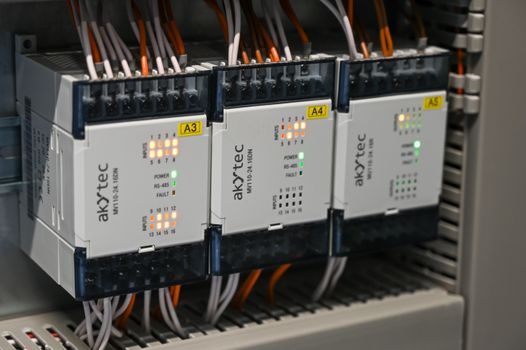
Picking the right process configuration is easier when lined up against a fixed set of decision criteria. Below is the working comparison used by most spec-driven cable buyers, condensed from public product disclosures of the suppliers in the [S1]–[S5] set:
High-temperature FEP/PTFE lead wire — conductor: silver-plated copper; insulation: FEP extrusion at 340–380 °C; key spec lever: continuous 200 °C service voltage rating; typical lead time: 3–4 weeks [S1].
Custom medical / patient lead wire — conductor: stranded tinned copper; insulation: PVC or TPE; key spec lever: AAMI leakage-current + 50,000-cycle flex endurance; in-house UL/CSA lab is the decisive sourcing signal [S2].
Electromechanical / appliance harness — conductor: bare or tinned Cu, Class 5/6; insulation: PVC or XLPE; key spec lever: UL 1581 / CSA flame rating and RoHS/REACH compliance; bundling and labelling driven by the harness print [S3][S5].
Production cable (stranded power/signal) — conductor: 7- or 19-wire Class 2; insulation: XLPE or PVC; shield: braid or Al/PET foil; jacket: PVC or LSZH; key spec lever: IEC 60228 DC resistance cap and IEC 60332 flame performance [S4].
Process Limitations and Common Failure Modes
The dominant failure modes in a wire and cable line are insulation burn-through during extrusion (extruder temperature profile drift), shield braid coverage shortfall (braid angle and pay-off tension), and spark-test rejects on long runs after a polymer change-over [S1][S4]. Each has a known counter-measure: melt pressure trending for the extruder, pitch and tension logging for the braider, and a documented purge sequence plus verification spark on the first 10 m of every new colour.
Process validation discipline separates a shop that ships repeatable cable from one that ships the occasional reject. Buyers looking for the same QC rigour on a different process line will find the air-compressor equivalent, including the QC anchor logic, in the air compressor manufacturing process: 2026 build steps, materials, and QC anchors walkthrough; the same set of acceptance gates and document discipline applies on both shop floors.
Trackable Sourcing Signals and Standards Anchors
The two clearest trackable signals for 2026 are certification scope and line-equipment provenance. A supplier's UL/CSA file number, AAMI conformance, and RoHS/REACH mill certificates are the first filter; the second is whether the stranding and extrusion lines are bought from a named equipment maker (Dongguan Humen cluster, Yangtze delta) and what the published line speed and gauge window are [S2][S4][S5].
Standards anchors that govern this process chain and that are visible in supplier disclosures: IEC 60228 for conductor resistance classes, UL 1581 and CSA FT1 for cable flame performance, AAMI for medical lead-wire safety, plus the RoHS 2 and REACH SVHC lists for material compliance [S1][S2][S5]. A working spec on a new wire SKU should be runnable against these references before the cable is ordered.