
A rotary capping machine integrated with a filling machine typically runs 6,000 to 30,000 bottles per hour depending on head count, with servo-driven torque heads holding closure torque within ±0.2 N·m on PET and HDPE containers [S1].
On the high-speed commercial end, a 12-head automatic capping station lists at roughly US$35,000 FOB Shanghai for a single set MOQ, with 18-month warranty and wooden-crate export packing — a useful baseline for budgeting a mid-scale beverage or personal-care line [S1].
Where a Capping and Sealing Machine Earns Its Capex
Throughput is the headline win: a 12-head rotary capper running at 200 bottles per minute per head produces 144,000 closures per hour, which is roughly 5x the output of a single-head bench capper and the reason most lines above 6,000 BPH specify multi-head rotaries [S1].
Torque control on servo-driven heads is repeatable to within ±0.2 N·m, eliminating the under-torque (leak) and over-torque (stripped threads, cap-crack on PP) failure modes that plague pneumatic friction clutches. For carbonated soft drinks and hot-fill beverages, that repeatability directly maps to in-line leak-tester pass rates above 99% on properly set lines. Integrated sealing washer handling on the same indexing star also removes a manual induction step on lined closures, cutting one operator per shift on a typical 8-station monoblock [S1].
The Honest Cost Stack: Capex, Changeover, and Spare Parts
Headline machine price of US$35,000 only covers the capper, chuck, and cap-sorter; a real install adds induction sealer, conveyor interlock, reject station, and validation — commonly 1.8-2.5x the headline figure before utility tie-in [S1].
Format changeover on a non-modular capper averages 25-45 minutes for cap and bottle-diameter swap, dominated by star-wheel adjustment, bowl-feeder rail reset, and torque-program recall. Spare-parts stocking for a high-speed capper runs 6-8% of capex per year as a rule of thumb: chucks, gripper belts, servo motors, and PLC cards are the four line items that bite when omitted [S1].
Capping Versus Sealing: Two Different Problems on the Same Line

Mechanical capping applies torque to a threaded or press-on closure; induction or heat sealing fuses a sealing washer liner to the container finish. Specifying one without the other is the most common line-design mistake, because induction sealing needs 0.5-1.2 kW of RF power per head and a cool-down dwell that a high-speed capper conveyor rarely provides by default [S3].
For tube-filling lines, the capping sealing machine workcell uses a hot-air or ultrasonic tail-seal rather than torque, folding and pressure-fusing the laminate tail at 40-80 tubes/minute. Tube-seal machines use PLC + touchscreen control, 316L stainless product-contact surfaces for pharma GMP compliance, and photoelectric registration for printed code alignment — a different design envelope from rotary bottle cappers and not interchangeable [S3].
Selection Criteria: When the Capper Pays, When It Doesn't
Spec a rotary capper when line speed exceeds 3,000 BPH, container finish is stable across SKUs, and the closure is threaded or pump-style. Avoid it when output stays below 1,500 BPH, SKUs change per shift, or product runs include bag-in-box, pouches, or tube formats — a bench capping machine or hand-held torque-controlled closer is the economic answer below that threshold [S1].
Material-contact hygiene rules out most carbon-steel chucks for pharma and dairy: 316L stainless or food-grade polymer chucks are mandatory, and the supplier's 18-month warranty typically excludes wear parts, which on a 24/7 line means budgeting for chuck replacement every 8-14 months [S1][S3].
Failure Modes and Constraints Buyers Rarely Price In
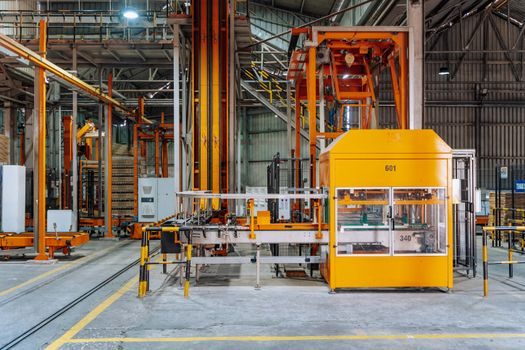
Cap dimensional variability above 0.3 mm on diameter or 0.2 mm on height pushes reject rates past 1.5% on a properly tuned capper — and most field reject issues blamed on the capper trace to incoming cap quality, not machine calibration. Photoelectric registration drift on tube-seal machines causes mis-folded tails and stoppage until the sensor is re-taught [S3].
Compressed-air consumption on pneumatic cap-sort bowls runs 0.3-0.6 m³/min per bowl at 6 bar, a hidden utility load that plant engineers often miss in line-balancing. PLC-controlled units with closed-loop servo torque recover the air cost in 12-18 months on two-shift operation, but only if the line actually runs two shifts [S1][S3].
Integration with the Wider Line: Filling, Coding, and Labeling
A filling machine feeding a capping sealing machine needs synchronized conveyor indexing, with star-wheel pitch matching between filler and capper within ±0.5 mm; mismatch shows up as bottle tilt at the capper and torque-head jamming. Adding a coding machine downstream for batch codes or a labeler upstream for body-label application turns the capper into one node in a 5-7 station monoblock that must share a single PLC platform for changeover efficiency [S1].
Plants standardizing on Siemens S7-1500 or Allen-Bradley CompactLogix for the filler should verify the capper OEM supports the same fieldbus; PROFIBUS and PROFINET are not interchangeable, and EtherNet/IP rollouts in older plants often force a gateway that adds 40-60 ms latency on reject signals [S1].
Verdict Signals Worth Tracking
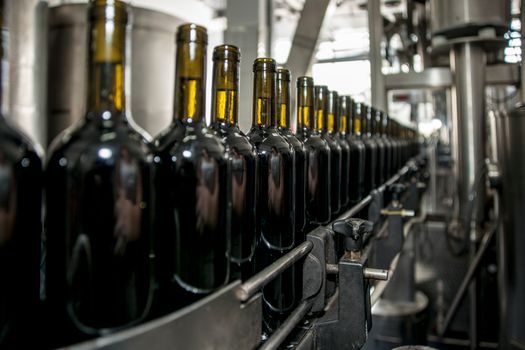
Two trackable signals for specifiers evaluating a 2026 capper purchase: the 18-month warranty terms from the OEM (a strong proxy for build quality on Chinese-supplied rotary cappers, with US$35,000-class units the current price floor for a 12-head line) [S1], and the documented changeover time on servo quick-change chucks (below 8 minutes is the benchmark a high-SKU line should demand before signing the PO) [S1].
Related analysis: Carbon Fiber TCO: 5-Year Cost Stack, Driver Map, and Sourcing Specs.