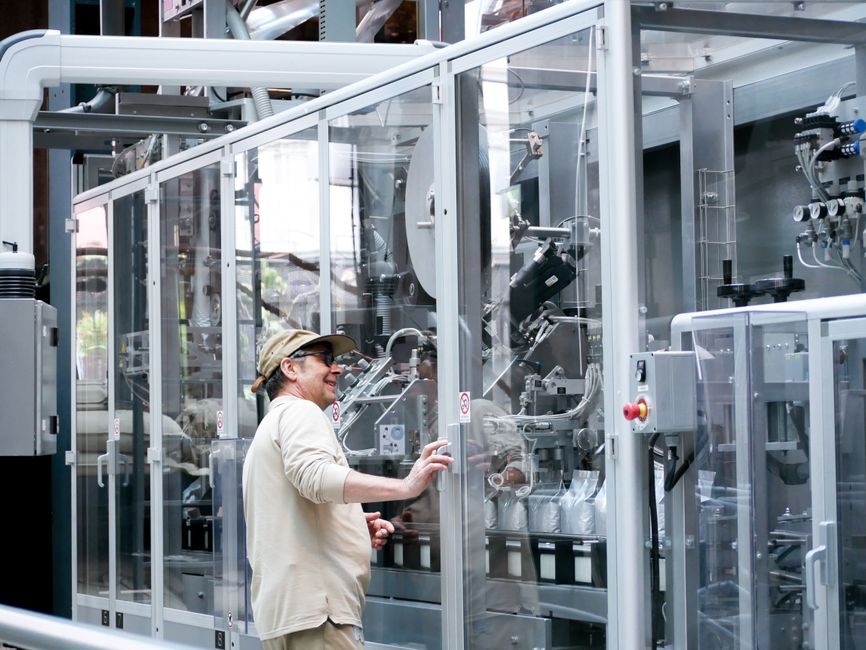
Cap and seal integrity is governed by a small set of physical variables — sealing-head air gap, foil-to-cap dwell, closure torque, and downstream cap inspection — and 2025-2026 OEM guidance converges on the same five acceptance gates for both induction and pressure-cap installations [S1][S4].
Throughput spans roughly 7,200 capsules/hr (NJP-Series automatic capsule filling) to 176,400 capsules/hr (SFK high-level sealed filling), with rotary pressure-cap sealers like the 300 ml silica-gel class operating at sub-second cycle times on viscous adhesives [S3][S4]. Reference install scope covers induction (Enercon Super Seal™ 300/400/600), pressure-cap (Innovate 300 ml silica-gel), and turnkey GMP/FDA filling-capping lines [S1][S3][S4].
Gate 1 — Mechanical Mounting and Conveyor Geometry
Sealing-head height must be set so the foil-to-cap air gap measures 1.5–2.0 mm at line stop; the Enercon "Adaptive Sealing™ Gap" accessory is engineered to maintain that band as bottle diameter changes, and the "Foil Bottle Back Up" accessory supports lightweight containers during the heat cycle [S1]. For pressure-cap lines, the 300 ml silica-gel unit's air-driven plunger must be plumbed to instrument air at the manufacturer-rated pressure before any sealing-tightness test is attempted [S4].
Conveyor rails should be level within ±0.5 mm/m so bottle tops present a flat sealing plane; mis-level is the dominant cause of "skipped" or "burned" foil on induction lines and of crooked pressure caps on rotary units. Stainless contact parts are mandatory for pharmaceutical, nutraceutical, and dairy service per the Super Seal™ application matrix, where Enercon explicitly positions the platform for "Beverage, Food & Dairy" and "Pharmaceutical — tamper evidence and FDA compliance" use [S1].
Gate 2 — Power, Cooling, and EMC Pre-Commissions
Super Seal™ induction units integrate the power supply and sealing head in a single enclosure, but the supply still requires a dedicated circuit with a harmonic filter when connected to a plant bus with VFD-driven conveyors — Enercon lists "Harmonic Filters" as a separate technology family, signalling the field-install expectation [S1]. The hand-held Super Seal™ Jr. is for lab and manual production only and is not a substitute for the inline Max 3rd Generation unit on a production conveyor [S1].
Cooling airflow at the sealing-head coil must remain unrestricted; a stalled bottle detector and flashing light accessory should be wired into the conveyor E-stop loop so the head de-energises within one cycle of a jam. For pressure-cap lines, the inert-gas purge line on the 300 ml silica-gel machine must leak-checked to the OEM bubble-test spec before any product is introduced, because the inert blanket is what prevents the silica gel from solidifying mid-fill and mid-deposit [S4].
Gate 3 — Foil Selection, Closure Torque, and Sealing Parameters
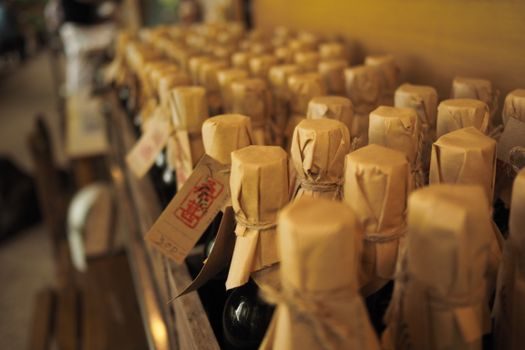
Closure torque on a cap-and-foil induction line is set on the capper, not on the sealer: the sealer only fuses the foil to the bottle lip. Enercon's "Closure and Cap Types" guidance treats cap style as a first-class input, and operators are expected to validate torque with a calibrated cap-tester before sealing trials [S1]. Typical cap material pairs are PP cap + aluminium-foil pulp-backed liner, or HDPE cap + foam-backed foil; mismatched liners peel rather than bond.
Pressure-cap sealing replaces heat with mechanical force plus an inert-gas blanket, and the 300 ml silica-gel machine explicitly tackles three failure modes common to viscous adhesives — measure inaccuracy, tow tail, and wire drawing — by adding a metered fill plus a post-fill inert flush, then air-driven plunger compression [S4]. The fill-volume acceptance criterion is whatever the calibrated metering pump reads against a gravimetric check; the seal-tightness criterion is a 30 kPa internal-pressure hold with no visible leak at the cap-land for 30 s.
Gate 4 — Controls Integration and Line-Speed Validation
For networked plants, Enercon offers "Integrated Network Control & Monitoring" so the sealer's status, fault codes, and throughput counters populate the same SCADA view as the cappers and labelers [S1]. The 3rd-generation Super Seal™ Max exposes more advanced controls than the legacy Super Seal™, which on a greenfield line is the correct pick; the Super Seal™ Pro is positioned as an "intelligent" unit that guides operators through parameter changes [S1].
Line-speed validation runs at 80%, 100%, and 110% of nameplate: at 110% the Adaptive Sealing™ Gap must still hold the 1.5–2.0 mm window, and the cap-inspection camera (Enercon "Cap Inspection" or "Deluxe Cap Inspection" accessory) must reject 100% of foils that show burn-through, wrinkling, or partial bond [S1]. Reject rate at nameplate speed above 0.5% is the engineering floor for sign-off on a cGMP line. The capping and sealing machine entry summarises the same five-gate logic and is the right cross-reference for a new install spec.
Gate 5 — Documentation, Validation, and Ongoing Verification
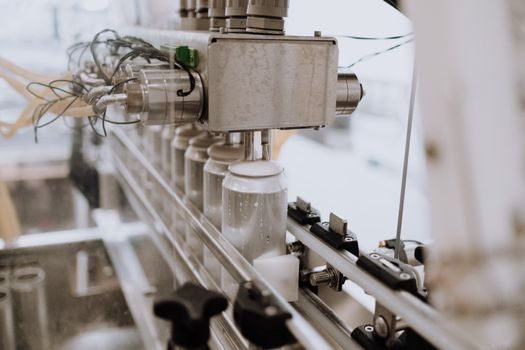
For FDA and pharmaceutical service, the Enercon "Validation Program" and "Startup Assistance" accessories are the documented path through IQ/OQ/PQ; without them the line cannot pass a 21 CFR Part 11 audit, and Enercon explicitly markets the Super Seal™ as a Pharmaceutical platform that provides "tamper evidence and meet FDA compliance" [S1]. Capper-induced seal defects are common enough that Enercon publishes an on-demand webinar titled "How Your Capper Impacts Induction Sealing Success" — this is the field signal that closure quality upstream is the single biggest variable [S1].
For high-speed GMP turnkey lines, the Unitrust/UR range covers solid-to-liquid dosing with "Capsule filling, loading, sealing, cartoning, blister packing, bagging and tablet pressing" in GMP & FDA compliant builds, with the NJP-Series at 7,200–450,000 capsules/hr and the SFK high-level sealed filling machine at 25,000–176,400 capsules/hr [S3]. Baoneng's Guangzhou filling-capping-sealing turnkey lines are typical of the SME-tier install base and run FOB / CFR / EXW with peak-season lead time around one month and off-season within 15 workdays [S2]. For maintenance crews pairing a new sealer with an existing conveyor, the linear bearing installation spec map covers the same five-gate logic for the moving-axis side, and the filling machine installation article covers the upstream fill-accuracy gate that pressure-cap sealing depends on.
Failure Modes, Comparison, and When Not to Repair
The three dominant field failures map cleanly to install gates: (1) wrinkled or burned foil → air gap out of band or harmonic noise on the supply (Gate 1 or 2); (2) peel-off liners → capper torque off-spec or wrong foil-cap material pair (Gate 3); (3) wire-drawing or tow-tail on viscous adhesive fills → inert-gas flush degraded or plunger pressure low (Gate 3, pressure-cap lines) [S1][S4].
Comparison of the three platform types against decision criteria: induction (Enercon Super Seal™ 300/400/600) wins on speed and hermetic seal for liquid/oral-dose products, but requires foil-backed closures and dedicated power; pressure-cap (300 ml silica-gel class) is the only practical option for viscous adhesives and inert-atmosphere fills, but is throughput-limited and seal-quality depends on inert-gas purity; turnkey GMP capsule-filling-and-sealing (UR/NJP/SFK) is the only choice when the spec requires 21 CFR Part 11 documentation, integrated rejection, and a 25,000–450,000 capsules/hr envelope [S1][S3][S4]. Do not attempt to repair a Super Seal™ Jr. hand-held unit into inline service — it is specified for lab and manual production only, and the field fix is replacement with a Super Seal™ Pro or Max [S1]. If the downstream line is a coding machine or core machine cell, integrate the sealer's reject output into the line PLC before any IQ/OQ sign-off.
Trackable next node: Enercon's "Lab Trials" service runs sample caps and foils on a production-spec Super Seal™ before a buyer commits, and the "Line Speed Calculator" tool in the Library converts container diameter and line speed into sealing-head spacing — both are the lowest-cost way to retire Gate 1 and Gate 4 risk before shipment [S1].