Industrial PC selection in 2026 is a duty-match exercise, not a brand exercise: IP65 fanless boxes with supercapacitor UPS, -20 to 70 °C operating ranges, and Intel/ARM SoCs now anchor most edge-AI and HMI specs [S4][S5]. Buyers who anchor on clock speed first and ignore ingress, MTBF, and certification scope end up replacing units inside 18 months in washdown or line-side duty.
An industrial PC is a sealed, fanless or filtered-air computing platform built around industrial-temperature silicon, locking I/O, and a chassis rated to IEC 60529 IP and NEMA enclosure standards, distinct from commercial desktops in MTBF, vibration tolerance, and long-life component programmes [S4][S5]. Procurement should treat the term as a family covering panel PCs, DIN-rail box PCs, fanless mini PCs, and rugged edge-AI workstations, each with different power, I/O, and certification envelopes [S4].
Match IP and NEMA Rating to the Installation Environment
IP65 sealed aluminium or stainless chassis are now the default for food-and-bevervey, pharmaceutical, and outdoor-cabinet duty, where direct hose-down and dust exposure are routine, while IP20 panel-mount chassis remain adequate inside sealed control cabinets [S4][S5]. For hazardous-area zones, ATEX and IECEx certification (e.g. ATEX 2014/34/EU, IECEx scheme) is mandatory rather than optional, and the chassis must carry the relevant zone marking [S5].
Buyers should match the first two IP digits to the actual hazard: a washdown line typically needs IP65 minimum, while a dusty factory floor with no water exposure can stop at IP54 [S4]. NEMA 4 or 4X enclosures overlap with IP65 but add corrosion-resistance requirements, important on chemical or marine lines [S5]. Specifying IP67 where IP65 will do inflates cost and thermal load without operational gain.
Operating Temperature Range and Thermal Architecture
Industrial-temperature silicon rated -40 to 85 °C junction, combined with wide-range DC inputs (commonly 9 to 36 V or 12 to 24 V), lets fanless chassis hold -20 to 70 °C ambient operation, which is now standard rather than premium on lines such as Premio's RCO and BCO series [S4]. Passive cooling eliminates the dominant failure mode of commercial PCs in dusty environments, the rotating fan, but it caps sustained CPU TDP at roughly 10 to 35 W depending on chassis volume [S4].
Specifying -40 to 85 °C board-level support where the cabinet sits in an unheated warehouse is cheap insurance, while a heated control room rarely needs more than 0 to 50 °C [S4]. The thermal envelope must be matched to the SoC choice: a 28 W Core i7 in a sealed 1 L chassis will throttle in 50 °C ambient, whereas a 6 W N100 in the same box will not [S8].
Processor, Memory, and I/O Selection by Workload
Edge-AI inference, machine-vision, and on-prem LLM workloads now drive demand for Jetson Orin and high-TDP x86 SKUs (Core i7/i9, Ryzen 7), while SCADA HMI and protocol gateway duty remain well served by N100, J6412, and similar 6 to 10 W quad-core parts on the Intel Alder Lake-N / Twin Lake platform [S4][S8]. Premio's JCO-6000, RCO-6000, and BCO-1000-ADLN lines illustrate the spread: high-performance AI, mid-range rugged, and compact entry-level respectively [S4].
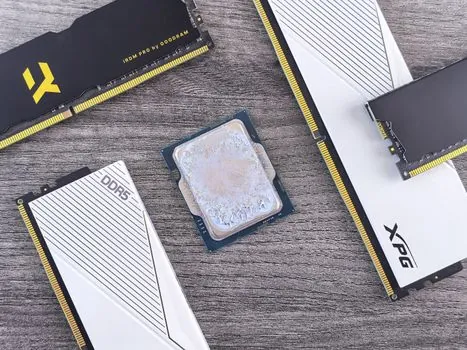
Memory is usually soldered LPDDR5 or single SO-DIMM DDR5; 8 GB fits most HMI duty, 16 GB is the edge-AI floor, 32 GB+ applies to LLM and 3D-vision rigs [S4]. I/O should be specified by protocol, not by port count: dual GbE with PoE+ for vision, isolated RS-232/422/485 and CAN for line-side integration, DIO for interlocks, and at least one M.2 B-key for 4G/5G modules where remote sites are in scope [S4].
Power Input, UPS, and Ride-Through Behaviour
Wide-range 9 to 36 V DC inputs with reverse-polarity and surge protection are standard on line-side and railway DIN-rail PCs, while panel and workstation units still default to 19 V DC adapter or AC input [S4]. Supercapacitor UPS modules (e.g. Premio's ECO-1000 supercap pack) give 10 to 60 s ride-through, enough for graceful PLC hand-off on brownouts, which is a hard requirement on pharmaceutical batch lines and process-control skids [S4].
Lithium-ion UPS modules give longer runtime but introduce shipping and end-of-life handling that complicates plant safety files [S4]. For most edge-AI nodes, specifying a supercap pack plus a 30 s software shutdown routine is the lowest-risk default; a 10 minute lithium UPS only makes sense where the PC must complete a multi-minute transaction before power loss.
Mounting Form Factor and Mechanical Fit
Form factor must follow installation: VESA or panel-mount for HMI screens, DIN-rail for cabinet-side box PCs, 1U/2U rackmount for control-room clusters, and vehicle-mount for forklift and AGV duty [S4][S5]. Daisy Data's 6860-series backlit elastomer keyboard with integrated touchpad and 1U fold-down LCD drawer shows how rack-side human-machine interface is built around the same IP and NEMA discipline as the line-side PC [S5].
A common over-spec is buying a 4U workstation where a 1L fanless box will do, driven by the mistaken belief that more chassis volume means longer life; in practice, sealed volume traps heat and reduces component life unless the thermal path is engineered [S4]. Mechanical drawings should be checked for bezel depth, cut-out, and cooling clearance before the panel PC is ordered, not after the cabinet is built.
Certifications, Standards, and Sourcing Discipline
Relevant standards for an industrial PC spec include IEC 60529 (IP), NEMA 250 (enclosure type), ATEX 2014/34/EU and the IECEx scheme for hazardous areas, UL 60950-1 / UL 62368-1 for electrical safety, and CE/FCC for EMC, while railway and automotive lines add EN 50155 and E-Mark respectively [S4][S5]. Daisy Data's 40-year product line is explicitly built to meet IECEx, ATEX, NFPA, IP, and NEMA standards plus military specifications, which is the kind of multi-standard coverage that should appear on any shortlist [S5].
Buyers should ask vendors for the certificate number, the exact standard revision cited on the certificate, and the scope of the certificate (full unit vs. sub-assembly), because a "CE-marked" claim without a notified-body number is not a hazardous-area certificate [S5]. For a broader context on how industrial PC selection fits plant-wide controls, see this programmable logic controller sourcing guide, which covers the same supplier-evaluation discipline.
Comparison of Common Industrial PC Form Factors
Four form factors cover roughly 90% of 2026 industrial PC demand: fanless mini PC (1L, N100/J4125 class, 6 to 10 W, IP40 typical, ~$60 to $250), compact panel PC (10 to 24 inch, IP65 front, x86 or ARM, 25 to 60 W, ~$500 to $2,000), DIN-rail box PC (sealed, wide-temp, isolated I/O, 15 to 35 W, ~$400 to $1,500), and edge-AI workstation (Jetson Orin or Core i7/i9, 60 to 150 W, often IP65, ~$1,500 to $5,000+) [S4][S8].
Decision rule: pick the smallest sealed box that meets the TDP and I/O budget, then upgrade only when AI inference, multi-screen HMI, or hazardous-area certification forces it. Buyers who over-spec the CPU end up throttling inside a sealed chassis; buyers who under-spec storage or I/O regret it inside 12 months. Watch for vendors quoting TDP without naming the SoC, that gap is where throttling shows up in the field.
Who Should NOT Pick the Mainstream Fanless Mini PC
The N100/J4125 fanless stick or mini PC, widely listed at $60 to $245 on general marketplaces, is a poor fit where sustained multi-core load, certified hazardous-area operation, or wide-temperature 24/7 duty is required [S8]. These parts are correctly specified for digital signage, light kiosks, and protocol gateways with low CPU utilisation, not for line-side vision or process control on a hot factory floor [S4][S8].
For hazardous-area zones, the IECEx/ATEX certificate, not the IP rating, is the gating spec; a sealed N100 box with no zone marking is not legal on a refinery skid regardless of how well it handles dust [S5]. Similarly, edge-AI rigs running multi-camera inference should not be specified as general-purpose mini PCs, because the thermal envelope and PCIe lane count will not support a discrete GPU or multi-port PoE vision card [S4].
Signals to Track Before You Sign the PO
Three signals to monitor before locking the spec: first, confirm the SoC long-life status (Intel typically guarantees 7 to 10 years, but embedded SKUs on the RCO/BCO lines extend this to 15 years in many cases) [S4]. Second, verify the supercap or UPS module is sized for your actual PLC hand-off latency, not just the marketing "seconds" figure [S4]. Third, request the unit-level IECEx/ATEX certificate PDF, not a marketing line, before any hazardous-area order [S5]. For a broader view of how industrial PC decisions sit alongside adjacent plant spec work, this industrial accelerometer market note covers similar procurement-signal patterns on instrumentation spend.
Component reference pages worth checking: industrial adhesive, and industrial borescope.