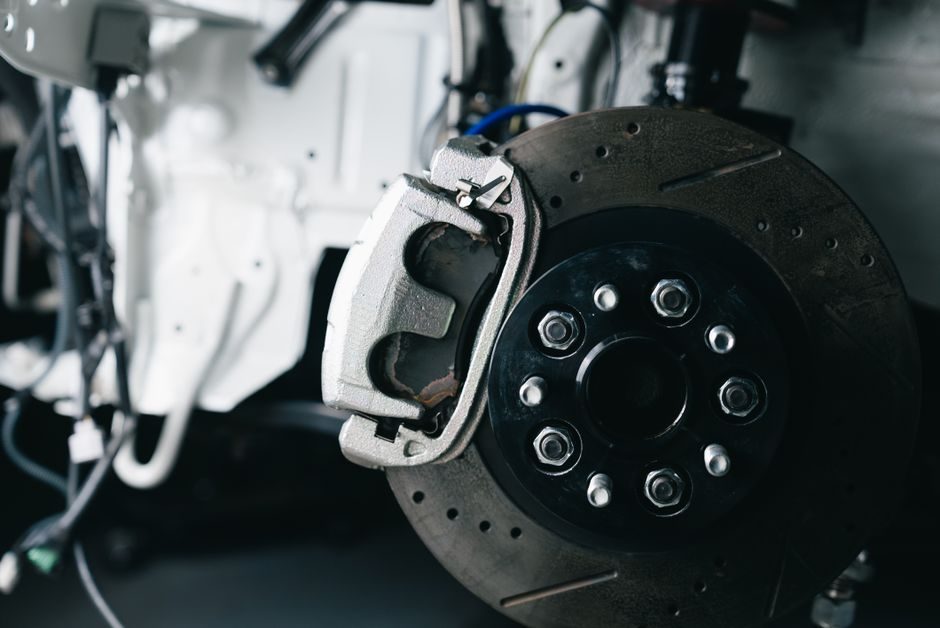
Industrial clutches and brakes form a single functional family — one transmits torque on command, the other absorbs it — and in 2025-2026 the catalog splits cleanly along the actuation medium: electromagnetic (24 VDC coil-driven, 0-270 mA current-loop controlled), pneumatic (compressed-air piston), hydraulic (oil-actuated), and mechanical spring-set with release. Warner Electric's TCS-200 tension controller, indexed 2025-11-27, drives 0-270 mA continuous per magnet across up to 12 electro disc magnets at 3.24 A torque adjust, with a 24-30 VAC, 50/60 Hz input rail and a selectable 115/230 VAC variant producing 0-24 VDC at 4.25 A or 5.8 A continuous [S1].
Hawers Co., Ltd. (Busan, South Korea), catalogued 2026-01-25 and 2026-03-14, ships the opposing mechanical-spring / air / oil philosophy under model codes DBS, SH, AH, STD, WDB, PDW, and HACB, with HS code 8483.60, MOQ 1 pair, and German-sourced friction linings as the wear element [S2][S3]. Both lines target machine builders but solve opposite sides of the same power-transmission problem: one modulates torque without contact wear in the actuator, the other fails-safe by spring force when pressure is removed.
Functional split: torque-transmitting vs torque-absorbing elements
Clutches engage to transmit torque from a driving shaft to a driven shaft; brakes disengage or absorb torque to stop or hold a load. In a combined clutch-brake module the same friction-lining technology is reused on both sides — Hawers' HACB line lists "hydraulically actuated clutch and spring-set released brake combined type" as a single factory unit, with the clutch driven by hydraulic pressure and the brake held open by it, so loss of pressure simultaneously releases the clutch and applies the brake [S2].
The lining material is the common wear part across both functions: organic, semi-metallic, sintered bronze, or ceramic friction materials are bonded to either a clutch disc or a brake shoe. Hawers advertises "high quality with German linings" across the DBS, SH, AH, STD, WDB, PDW, and HACB model families, packaged in fumigated wooden export crates with a 1-pair MOQ [S2][S3]. HS code 8483.60 covers clutches and shaft couplings including universal joints — a customs classification buyers should expect on every commercial invoice for these units [S2].
Electromagnetic clutches and brakes: 24 VDC coil, current-loop control
Electromagnetic units use a DC-energized coil to pull a friction face into contact, with no pneumatic or hydraulic supply needed — a clean fit for OEM machinery cabinets. The Warner Electric TCS-200 tension controller catalogued 2025-11-27 outputs 0-270 mA continuous per magnet at 3.24 A torque adjust, with the TCS-200-1/-1H variants accepting either 115/230 VAC, 50/60 Hz input and producing 0-24 VDC adjustable at 4.25 A or 5.8 A continuous to feed any 24 VDC tension brake [S1].
Two analog input modes are supported on the same controller: a 0-10 VDC voltage command or a 4-20 mA current command from a remote potentiometer or PLC, with a front-panel torque-adjust, brake-on, run, and brake-off switch plus remote torque-adjust and roll-follower inputs [S1]. This makes the TCS-200 a direct drop-in for tension-control loops on wire, film, foil, and paper winders where a clutch-brake assembly must modulate torque in real time as roll diameter changes.
Pneumatic, hydraulic, and spring-set actuation classes
Pneumatic clutches and brakes use shop-air pressure (typically 4-7 bar) to actuate a piston that engages friction faces; Misumi Thailand's "Clutches, Brakes : Type Pneumatic" configure-and-order catalogue page, indexed 2026-05-31, lists the family as a standard configurable category for machine builders specifying air-actuated torque control [S5]. The Misumi pneumatic family sits between the Warner Electric electromagnetic line and the Hawers hydraulic/spring line, with the actuation trade-off being: air is cheap and fast but compressible (poor for high-cycle precision), oil is incompressible and stiff (high torque density), springs are fail-safe but require continuous power to release.
Hydraulic and spring-set combined units, typified by Hawers' HACB piston-type clutch-brake, deliver power "with air or oil or springs" as the supplier states, with the brake side spring-set so that loss of hydraulic pressure defaults the machine to a braked, safe state [S2][S3]. The same catalogue page lists "Hydraulically actuated clutch and spring-set released brake combined type" as a distinct sub-model, confirming that combination clutch-brake modules are a stocked product line rather than a custom build [S2]. For continuous-duty industrial electromagnetic brake applications with strict tension accuracy, the 24 VDC Warner-style coil drive still dominates; for fail-safe press and shear duties, the spring-applied hydraulic-release architecture is the default.
Selection criteria: cycle rate, torque density, fail-safe duty
Four selection axes dominate clutch and brake spec sheets in 2025-2026 catalogues: actuation medium (electric / pneumatic / hydraulic / spring), torque capacity per unit envelope, cycle rate (engagements per minute), and fail-safe behaviour (spring-applied vs spring-released). Warner Electric's electromagnetic line targets high-cycle web-tension work where the controller modulates current 0-270 mA continuous per magnet to hold tension constant as the roll builds [S1]. Hawers' HACB line targets press, shear, and heavy-machinery duties where the fail-safe default is "brake on, clutch off" the moment hydraulic pressure drops [S2][S3].
A second axis is control interface: the TCS-200-1/-1H accepts a remote 0-10 VDC or 4-20 mA analog command for PLC integration, while air-actuated and hydraulic units typically take a 3-way or 4-way solenoid valve signal and a pressure-regulator setpoint [S1]. A third axis is the wear-element spec: Hawers advertises German friction linings and "higher torque" as competitive advantages over generic Asian OEM product, with interchangeable mounting dimensions across the DBS, SH, AH, STD, WDB, PDW, and HACB model families [S2][S3]. When sizing against an industrial valve or flow meter on the same machine, the clutch-brake envelope is usually the smaller constraint.
Comparison matrix: electromagnetic vs pneumatic vs hydraulic-spring
Three actuation classes line up against four decision criteria as follows. On actuation medium: electromagnetic uses 24 VDC coil current; pneumatic uses 4-7 bar shop air; hydraulic-spring uses 80-200 bar oil plus a mechanical spring. On cycle rate: electromagnetic handles 100+ cycles/min in tension-control service; pneumatic handles 30-60 cycles/min; hydraulic-spring handles 5-20 cycles/min in press duty. On fail-safe mode: electromagnetic is power-on to engage (no inherent fail-safe); pneumatic is typically spring-applied, air-released; hydraulic-spring is spring-applied brake, oil-released clutch. On control interface: electromagnetic takes 0-10 VDC or 4-20 mA analog; pneumatic takes a 3/2 or 5/2 solenoid valve; hydraulic-spring takes a directional valve plus pressure regulator. Warner Electric's TCS-200 and Hawers' HACB sit at opposite corners of this matrix — same HS code 8483.60, opposite design philosophy [S1][S2][S3].
Use cases, limitations, and sourcing signals
Electromagnetic clutch-brakes dominate web-handling (printing, film, foil, wire, paper) and packaging machinery where the TCS-200-class controller modulates 0-270 mA continuous per magnet to hold tension within a few percent across a 10:1 roll-build ratio [S1]. Pneumatic units show up in indexing tables, clutch-brake press feeds, and conveyor stops where 4-7 bar air is already on the machine [S5]. Hydraulic-spring units — typified by Hawers' HACB piston-type combined clutch-brake — go into metal-forming presses, shears, and rolling mills where a brake failure cannot be tolerated and a spring-applied default is mandated by machine-safety standards [S2][S3].
Limitations to spec against: electromagnetic units dissipate I²R heat in the coil and need a 24 VDC or 115/230 VAC supply plus a tension controller; pneumatic units need clean dry air and a regulator; hydraulic-spring units need a hydraulic power unit and produce heat in the oil that must be cooled. Sourcing signals worth tracking: Hawers' "shorter lead time" and "interchangeable" claims on the DBS/SH/AH/STD/WDB/PDW/HACB line (with 1-pair MOQ and German linings) versus Warner Electric's controller-driven tension-control niche [S1][S2][S3]. Related drive-train reference pages worth cross-checking when sizing a shaft coupling types or shaft coupling installation for the same machine: the clutch-brake envelope must match the coupling bore and the motor frame.