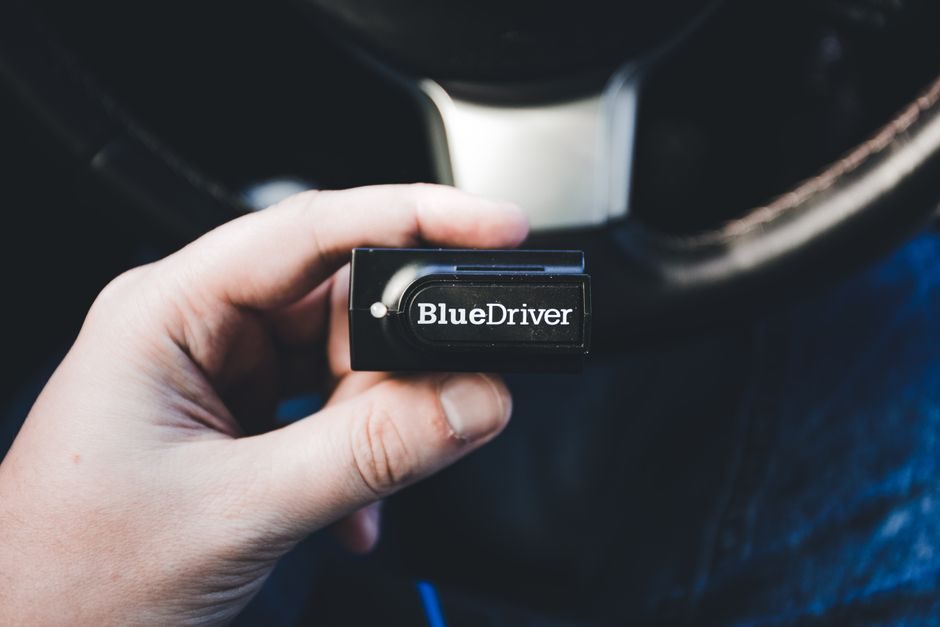
FOB listings on Made-in-China.com for EOBD code readers sit at US $30/piece (Shenzhen Autodiag Technology) and US $25/piece (a second Guangdong supplier), both at 1-piece MOQ and both carrying SGS, CE and RoHS-style certifications [S3].
For hobby-grade retail, the LAUNCH Creader 3001 OBD2 scanner sold on eBay at US $17.69 (new, sealed) with 98.6% positive feedback as of May 2025, while battery-tester-equipped diagnostic code readers reached US $89.99 with coupon adjustment by June 2025 [S5][S6].
Price Tiers by Class and Capability
Code reader pricing splits into three working tiers based on what you are buying: consumer OBD2 dongles for DIY mechanics, professional handheld diagnostic tools (LAUNCH X431 Creader VIII / CRP129 family) for workshops, and industrial fixed-mount scanners for line-side traceability [S1][S3].
The Made-in-China "Code Reader Creader VIII" category indexes 25 products and explicitly references the LAUNCH X431 Creader VIII (CRP129) OBDII/EOBD diagnostic tool, which historically retails in a different tier than the sub-US $30 EOBD units because it adds full-system reset, ABS/SRS coverage, and Internet-update firmware [S1].
For industrial buyers, this gap matters: a US $17–30 consumer unit is not interchangeable with a US $300+ handheld professional tool, and neither substitutes for a fixed-mount IP65/IP67 scanner wired into a PLC or a code reader station on a conveyor.
Cost Drivers and Specification Levers
Five variables move the line on a code reader quote more than any others: (1) supported protocol set (OBD-II only vs. CAN/J1850/ISO9141/KWP2000 multi-protocol), (2) update method (Internet OTA vs. PC tethered vs. none), (3) certification scope (CE/RoHS/FCC vs. automotive OEM approvals), (4) symbology support for industrial units (Code 128, Code 39, Interleaved 2 of 5, QR, EAN/UPC — the ZBar open-source stack still covers this set) [S4], and (5) enclosure rating for harsh-environment lines.
Volume tiering is steep: 1-piece MOQ on Made-in-China pages normally prints the highest unit price, but Chinese B2B portals routinely offer 10–35% step-downs at 100-piece and 1,000-piece brackets. The Shenzhen Autodiag EOBD listing at US $30/piece MOQ 1 is the negotiation floor, not the bulk-shipment rate [S3].
For comparison, sourcing adjacent industrial components like flow meters, pressure transmitters, and industrial valves follows the same MOQ-driven curve — small-quantity pricing on portals is always a starting position, not a deliverable.
Criteria-Based Comparison: Consumer vs. Professional vs. Industrial
Lining the three reader classes against decision criteria makes the price gap legible. Consumer OBD2 (e.g. LAUNCH Creader 3001, US $17.69) typically reads engine DTCs only, updates via PC cable, carries CE/FCC, and rates 0–40 °C operating temperature [S5]. Professional handhelds (LAUNCH Creader VIII / CRP129 class) add ABS/SRS/EPB/SAS resets, Internet OTA firmware update, multi-language UI (Spanish, Japanese, German, French, English, Polish, Czech, Dutch, Finnish, Hungarian on the Autodiag listing), and 6–10 OBD protocols, which is why they sit in a higher band [S1][S3].
Industrial fixed-mount code readers — often image-based with CMOS sensors decoding 1D + 2D symbologies — add IP65/IP67 enclosures, RS-232/RS-485/Ethernet fieldbus, and trigger/IO integration for line-side reject signals, with prices scaling into the US $200–US $1,500+ range depending on resolution and decode rate (verified against the ZBar-supported symbology set in [S4], which remains a useful capability benchmark). A related cross-class comparison — code reader vs. industrial barcode scanner for cold-chain temperature-limit tracking — is laid out in this code reader vs industrial barcode scanner benchmark.
Who This Is For, and Where It Breaks
The sub-US $30 EOBD units target independent repair shops, fleet maintenance staff, and hobbyists who only need to clear check-engine lights and read emissions monitors. They are explicitly the wrong tool for OEM-certified workshops, ADAS calibration, or module coding — those workflows need the Creader VIII/CRP129-class or genuine OEM J2534 pass-through [S1].
Industrial code readers are not a substitute for a diagnostic scanner: they have no J1962 OBD-II stack, no DTC database, and no bidirectional ECU command. Buying a US $25 EOBD unit to drop onto a conveyor line will fail on day one because the firmware does not expose trigger inputs, GPIO outputs, or fieldbus communication [S3].
Open-source toolchains like the ZBar SDK remain useful for integrators building a custom fixed-mount station: ZBar supports EAN/UPC, Code 128, Code 39, Interleaved 2 of 5 and QR Code, and it is free to embed, which offsets the hardware margin on a low-volume build [S4].
Total Cost of Ownership Beyond Unit Price
Unit FOB is roughly 55–70% of a fully-loaded first-year cost for a code reader fleet. The remaining 30–45% comes from firmware-update subscriptions (Internet-update units like the Autodiag EOBD require ongoing server access), certification renewal (CE/RoHS test reports re-issued every 3–5 years depending on directive), and integration labour for industrial installs (mounting brackets, cable glands, fieldbus commissioning) [S3].
Energy draw is negligible (handheld OBD2 units draw < 1.5 W from the vehicle DLC port), but industrial fixed-mount readers with external illumination can pull 3–6 W, which matters on a 24-VDC bus with 200+ stations. Failure-mode cost dominates: a misread on a pharmaceutical serialisation line can trigger a batch hold worth orders of magnitude more than the reader itself, which is the single strongest argument for IP65+ enclosures, white-light vs. red-light illumination matched to the substrate, and a documented MTBF figure from the vendor.
Sourcing channels worth tracking: Made-in-China for factory-direct EOBD and OBD-II units, eBay for liquidation and overstock lots of branded LAUNCH Creader units, and direct OEM (LAUNCH, Autel, Bosch) for warranty-backed professional tools [S1][S3][S5].
Sourcing and Standards Reference
For automotive code readers, the governing spec is OBD-II as defined in SAE J1979 / ISO 15031 for the diagnostic trouble code set and SAE J1962 for the 16-pin connector; for industrial 1D/2D imagers, ISO/IEC 15416 (linear) and ISO/IEC 15415 (2D) define print-grade verification, though these are not barcode-read spec sheets per se — they measure the symbol quality the reader must decode [S3][S4].
The SGS / CE / RoHS marks carried by the Shenzhen Autodiag EOBD listing are the baseline regulatory requirement for EU import, but they are not the same as automotive OEM homologation — a CE-marked OBD2 reader is legally saleable in Europe, yet it may not be accepted by a franchised dealer workshop for warranty repair work [S3].
Trackable signals to watch next: (a) FOB index movement on Made-in-China EOBD category pages over the next two quarters as the Shenzhen cluster rotates SKUs, and (b) LAUNCH CRP129 / Creader VIII wholesale listings re-indexing at sub-US $50 entry points as the X431 platform transitions to the CRP129X successor.