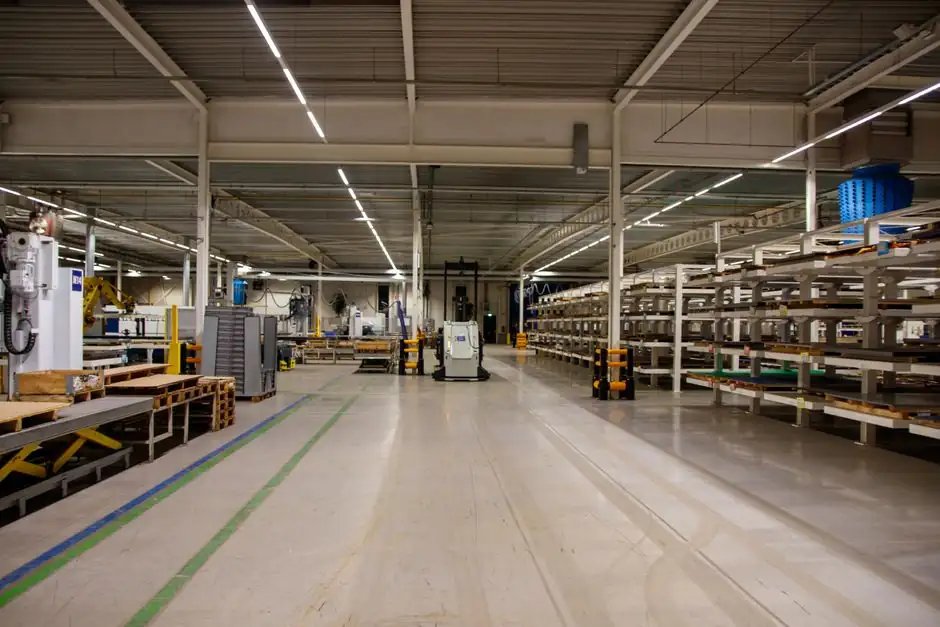
Cold chain sourcing in 2026 runs through two distinct spec lanes: WHO PQS-coded vaccine carriers from Indian and Chinese OEMs, and PU-foam insulated cold rooms and freezer rooms from Zhejiang and Shandong factories listed on Made-in-China.com at US$ 1,745–5,000 per piece/set [S1][S7].
Zhejiang alone accounts for a heavy share of cold-room and condenser manufacturers on the platform, with Ningbo Combine Refrigeration Equipment, Ningbo Green Frost Technology, and Shandong Create Refrigeration appearing as audited Diamond Members with ISO 9001 and CE documentation [S4][S7]. Buyers filtering on platform directories should treat Zhejiang, Shandong, and Guangdong as the three default Chinese cold-chain OEM provinces, with Uttar Pradesh (Noida, Ghaziabad) as the secondary Indian hub for WHO PQS vaccine carriers [S2][S4].
WHO PQS vaccine carriers: spec gate, materials, cold life
WHO Performance, Quality and Safety (PQS) certification is the de-facto spec gate for vaccine carriers and cold boxes supplied into UNICEF, GAVI, and national immunization programs. Reference carriers from Uttar Pradesh manufacturers carry WHO PQS code E-005-004 with 0.3 L normal capacity, 76 g empty weight, HDPE external shell, and 0.305 L ice-pack volume, conforming to specification E05IP01.1 [S2].
Larger long-range cold boxes from the same cluster, e.g. the ACB-444L, use LLDPE outer skin over CFC-free polyurethane foam insulation, with HIPS internal lining, insulation thickness of 35–38 mm, and a tested cold life of 51–51.8 hours at +43 °C ambient with 4 ice packs and 1.7 L vaccine storage capacity [S2]. Buyers should require three spec fields on every quote: WHO PQS code, insulation thickness in mm, and cold life in hours at +43 °C; missing any one of these is a rejection flag [S2].
Cold room and freezer room OEMs: panel, density, refrigerant
Walk-in cold rooms and freezer rooms from Zhejiang and Shandong manufacturers typically ship as PU-foam sandwich panels with 100–200 mm thickness, electric or semi-hermetic condensing units, and ceiling-suspended evaporators. Listed FOB prices on Made-in-China.com cluster in the US$ 2,000–5,000 per piece band for small cold rooms and US$ 1,745–1,939 per set for multi-deck refrigerated display cabinets from Shandong Create Refrigeration [S1][S7].
Condenser and evaporator sourcing sits in Ningbo, with Ningbo Combine Refrigeration Equipment and Ningbo Green Frost Technology holding Diamond Member status and ISO 9001 certification, covering freezer, showcase, refrigerator spare parts, and copper-tube condensers rated for both R404A and R448A low-GWP retrofits [S4]. For projects requiring higher plant-area capacity, snow-chain and tyre-chain manufacturer pages (1,631 suppliers, 4,893 products, 1.54 Mil annual revenue, 2,000+ plant area) on the same platform show the broader Zhejiang OEM density that also feeds cold-chain logistics hardware [S6].
Condensers, compressors, and refrigeration ancillaries
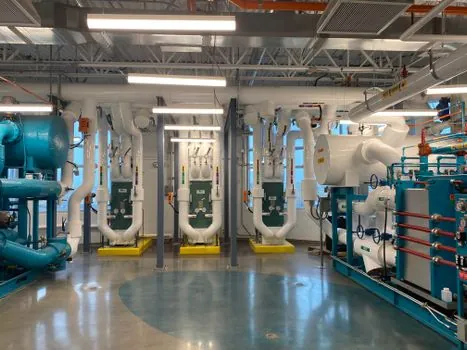
Cooler-condenser sourcing on Made-in-China.com turns up Ningbo-based trading-company and factory suppliers bundling condensers with capacitor banks and commercial refrigeration copper tube, indicating that integrated condensing-unit SKUs (condenser + receiver + fan motor) are the default ship form, not loose condensers [S4]. Cold-room and freezer-room projects should treat the condensing unit as a single line item with declared refrigerant, ambient rating, and capacity in kW at a stated evaporation temperature (typically -10 °C for medium-temp and -25 °C for low-temp rooms) [S1].
Mechanical power-transmission suppliers such as Zhejiang Ocean Industry Co. supply the chain, sprocket, gearbox, and worm-gear speed-reducer components used in conveyor and spiral-freezer lines, with OEM/ODM service available for OEM skid integration [S5]. For buyers assembling a complete cold-chain line, sourcing the mechanical-handling drive train from a single Zhejiang supplier reduces the bill-of-materials count, an approach also visible in industrial refrigeration upstream and downstream spec mapping.
Blood bank and biomedical cold chain: narrower supplier pool
Blood bank equipment is a separate sub-market with a narrower OEM base. Indian suppliers such as Bioline Technologies focus exclusively on pharmaceutical, laboratory, and biomedical equipment, offering platelet agitators, plasma expressors, plasma thawing cryo baths, ice-lined refrigerators, and biomedical waste incinerators rather than commercial cold rooms [S8]. WHO PQS E003-series ice-lined refrigerators and blood-bank refrigerators (4 °C ± 1 °C) are typically tendered separately from EPI vaccine carriers.
Buyers specifying blood-bank cold chain should expect a different vendor pool, longer lead times, and a separate validation pack (temperature mapping, 7-day hold-time test, and power-failure alarm test), which is consistent with the broader industrial refrigeration supply chain 2026 refrigerant shift and service network trends affecting compressor and refrigerant selection in this segment [S8].
Software, traceability, and the open-source stack
Cold-chain equipment inventory is increasingly tracked in open-source logistics platforms. mSupply/open-mSupply issue #4235 documented a bug where the cold-chain equipment list was returning equipment for all active stores on a remote site rather than the filtered store, a useful reminder that open-mSupply's equipment module uses store-scoped queries and that cold-chain asset registers should be audited per site, not aggregated [S3].
For procurement teams, the practical implication is that any cold-chain equipment master-data migration between ERP and an open-mSupply (or similar) inventory should be validated against per-site counts, not totals, otherwise the discrepancy in #4235 (and the related #4316 fix) will re-appear in dashboards and PQS audits [S3]. This connects to broader industrial-spec data hygiene covered in wire rope sling types and industrial applications for buyers who run a shared asset register across lifting and refrigeration gear.
Selection criteria: who is it for and who it is not for
Cold-chain OEM sourcing from Made-in-China.com and ExportersIndia suits buyers who can self-validate WHO PQS codes, panel density (typically 40–42 kg/m³ PU foam), and refrigerant class, and who already operate their own QA, pre-shipment inspection, and container-loading supervision. It is not for buyers who need turnkey, on-site commissioning, cold-room refrigeration load calculation, or local service-network coverage, those should go through refrigeration contractors, not direct factory sourcing [S1][S2][S4].
On the spec side, three filters consistently separate a workable quote from a wasted one: (1) insulation thickness in mm stated, not just "PU foam"; (2) cold life in hours at +43 °C stated for vaccine carriers, not "long range"; (3) condensing unit model, refrigerant, and capacity in kW at a stated evaporation temperature stated, not "matched compressor". Quotes missing any of these three should be rejected, since Chinese and Indian OEM catalogues both include generic listings that omit these fields [S2][S4].
Comparison of the main cold-chain product types

The dominant cold-chain product lines compare on four decision criteria, capacity/temperature, insulation, typical price band, and primary spec gate. Vaccine carriers (WHO PQS E004/E005) cover 0.3–10 L at +2 °C to +8 °C with 35–38 mm PU foam, price band US$ 10–30 per piece, and the WHO PQS code as the spec gate [S2]. Long-range cold boxes (ACB-444L class) cover 2.9–20 L at the same +2 °C to +8 °C with similar PU foam, price band US$ 150–500 per piece, with cold life at +43 °C as the spec gate [S2]. Cold rooms and freezer rooms (Zhejiang, Shandong) cover 10–10,000 m³ at 0 °C to -25 °C with 100–200 mm PU panels, price band US$ 1,745–5,000 per piece/set, with panel density and refrigerant as the spec gate [S1][S7]. Blood-bank refrigerators and ILRs sit at +4 °C ± 1 °C with WHO PQS E003 spec gate, supplied by a narrower pool of biomedical OEMs [S8].
Buyers working on related spec-heavy projects can cross-reference differential pressure transmitter selection spec map and zinc die casting machine selection for hardware for the type of supplier-by-supplier audit discipline that also applies to cold-chain sourcing.
Failure modes and sourcing pitfalls
Three failure modes recur in cold-chain OEM sourcing. First, generic platform listings without WHO PQS codes, insulation thickness, or cold-life data; these are usually trading-company resales that fail PQS audit on traceability [S2][S9]. Second, condensing units shipped with the wrong refrigerant class, e.g. R22-only units specified for projects that now require R404A, R448A, or R290, which is consistent with the 2026 refrigerant shift covered elsewhere [S4]. Third, panel-density misdeclaration: a 100 mm PU panel at 30 kg/m³ performs very differently from the same panel at 42 kg/m³, and most Chinese factory listings quote the higher number without third-party test certificates [S1][S7].
For vaccine and blood-bank cold chains specifically, two additional pitfalls dominate: (1) WHO PQS code mismatch between the listed product and the version actually shipped, a known PQS-audit failure mode, and (2) ice-pack volume mismatch where the 0.305 L ice-pack spec is supplied alongside a 1.67 L carrier without confirming the four-pack configuration that the cold-life test was performed on [S2]. Mitigation is a single-line WHO PQS code and a per-shipment pre-shipment inspection (PSI) covering both the carrier and the ice packs.
For 2026 sourcing, two trackable signals to watch are: (a) WHO PQS re-certification status of E-005-004 and E-005-005 vaccine-carrier lines, which governs continued UNICEF supply, and (b) the F-gas regulation phase-down in the EU and UK, which is pushing Chinese OEMs from R404A toward R448A and R290 across both cold-room and condensing-unit SKUs [S4][S7].
Component reference pages worth checking: ndt equipment, anti static equipment, and cold chamber machine.