
Industrial refrigeration buyers in 2026 are no longer sourcing a compressor, condenser, and evaporator on three separate quotes; they are sourcing an integrated service contract that includes design, install, monitoring, parts, and refrigerant compliance under one accountable provider [S2].
Stevenson Industrial Refrigeration, a Saskatchewan-based firm operating for over 30 years across Western Canada, lists eight service lines on its public site, including custom refrigeration system design and build, industrial refrigeration parts supply, energy-efficient refrigeration solutions, and remote refrigeration system monitoring and control, illustrating how tightly the supply chain has bundled around operations rather than discrete equipment SKUs [S2]. The 24/7 emergency line (1-866-664-4400) and dual locations in Saskatoon and Regina are pointed examples of how service geography now defines vendor selection as much as unit price [S2].
Refrigerant Transition Is the Single Largest Supply-Chain Disruptor
Industrial operators across North America and the EU are accelerating the phase-down of high-GWP HFC refrigerants (R-404A, R-507, R-22) in favor of lower-GWP options such as ammonia (R-717), CO2 (R-744), and HFOs (R-449A, R-513A), with the Kigali Amendment to the Montreal Protocol and regional F-gas rules driving the regulatory floor [S2].
Each refrigerant swap cascades into a parts and training reshuffle: ammonia systems require pressure-relief valves, specialized piping to ASME B31.3, and dedicated two-step leak detection, while CO2 transcritical systems run discharge pressures above 90 bar and require dedicated high-pressure components and relief sizing [S2]. Stevenson Industrial Refrigeration explicitly lists Safety and Environmental Compliance as a standalone service line, signaling that refrigerant compliance is now a billable scope of supply, not a footnote in the O&M manual [S2].
Service-Line Stack: What a Modern Refrigeration Vendor Actually Sells
An industrial refrigeration supply contract in 2026 typically bundles eight functions: system installation, preventive and on-demand maintenance, custom design-and-build, operating support, parts supply, energy-efficiency retrofits, remote monitoring, and safety/environmental compliance [S2].
Stevenson's published service breakdown, drawn directly from its service page, shows the canonical stack: Refrigeration System Installation, Refrigeration System Maintenance, Custom Refrigeration System Design and Build, Refrigeration System Operating Support, Industrial Refrigeration Parts Supply, Energy-Efficient Refrigeration Solutions, Remote Refrigeration System Monitoring and Control, and Safety and Environmental Compliance [S2]. This contrasts with the older model where the contractor sold a skid and walked away, leaving the plant to source parts, controls, and compliance paperwork from a different vendor for each item.
Geographic Service Radius and Parts Inventory: The Real Selection Filter

For a 24/7 process plant, the binding constraint on supplier choice is rarely the compressor price; it is response time and parts shelf depth within a 4-hour drive. [S1]
Stevenson's public posture, two physical locations (Saskatoon and Regina), 30+ years in Western Canada, and a 1-866-664-4400 emergency line, is a deliberate signal that geographic coverage and stocked parts inventory are now front-end selection criteria, not back-end logistics [S2]. Buyers should weigh four criteria when shortlisting: (1) number of staffed service depots within target region, (2) average published response time for emergency calls, (3) refrigerant-specific parts carried in local inventory (valves, controls, relief devices), and (4) in-house welding and fabrication capacity for custom headers and skids, which Stevenson lists as a separate capability under Welding & Fabrication [S2].
Energy-Efficient Retrofits: Where ROI and Compliance Converge
Variable-frequency drives on screw and reciprocating compressors, floating-head pressure control on ammonia plants, and EC fan motors on evaporative condensers are now standard line items in retrofit scopes because they reduce both kWh and indirect refrigerant emissions per kg of product cooled [S2].
Stevenson lists Energy-Efficient Refrigeration Solutions as a dedicated service, paired with Remote Refrigeration System Monitoring and Control, which provides the operating data needed to verify savings and document compliance for utility incentive programs [S2]. Plants evaluating a retrofit should request a baseline kWh/tonne-cooled number, a post-retrofit guaranteed kWh/tonne, and a measurement-and-verification protocol (typically 12 months of logged data) before signing.
What Industrial Refrigeration Supply Is NOT For
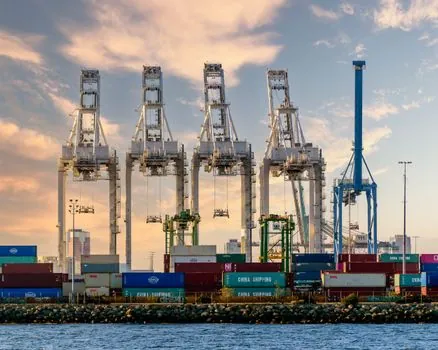
This supply chain map does not cover comfort HVAC, supermarket refrigerated display cases, or residential split systems; these have separate distribution channels, separate contractor networks, and different refrigerant phase-down schedules than industrial process cooling. [S2]
It also does not cover cryogenic applications below roughly -40°C, where single-stage vapor compression gives way to cascade or mixed-refrigerant (MR) systems requiring a different vendor profile altogether. Buyers in food processing, cold storage, dairy, brewing, ice rinks, and chemical/pharma process cooling are the primary fit; recreational facilities (arenas, rinks, community centres) sit in Stevenson's published scope as a secondary vertical served by the same crews and parts inventory [S2].
Selection Comparison: Service-Bundled vs Equipment-Only Vendors
Buyers should score vendors on at least four criteria: bundled service scope (1-8 lines), geographic depot count, published 24/7 emergency coverage, and in-house welding/fabrication. [S2]
A service-bundled industrial refrigeration contractor, exemplified by Stevenson's eight-line service stack and dual Saskatchewan depots, scores high on parts inventory depth, on-call coverage, and compliance paperwork, and is appropriate for plants that cannot tolerate downtime or that operate ammonia/CO2 systems requiring specialized leak-survey and relief-certification work [S2]. An equipment-only vendor, by contrast, may undercut on unit price but leaves the plant to coordinate install, controls, refrigerant tracking, and emergency calls across multiple firms, a structure that works for capital projects with in-house plant engineering but fails in 24/7 process operations.
Signals to Track in the Next 12 Months
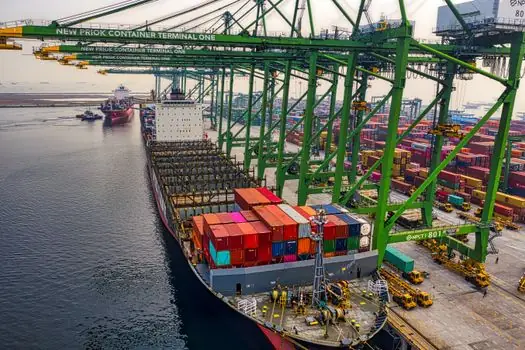
Watch for two trackable signals: (1) regional F-gas and Kigali phase-down step dates that change which refrigerants are legal to service in existing equipment, and (2) vendors adding remote-monitoring-as-a-service SKUs alongside traditional parts contracts, because the remote-monitoring data feed is becoming the prerequisite for energy-efficiency incentive claims [S2].
For readers cross-mapping the broader industrial supply chain, the compressed air system suppliers and manufacturers map 2026 covers a parallel utility-side procurement logic, and the industrial filter suppliers map 2026 touches the same parts-inventory discipline that an industrial refrigeration service depot must run. For a different mechanical-equipment angle, the hydraulic pump suppliers 2026 profile shows how Chinese OEM capacity is reshaping price bands in adjacent fluid-power categories.
For the relevant spec sheets and selection criteria, see power supply, dc power supply, and industrial ups.