Specifying a cold chamber die casting machine starts with the alloy — not the tonnage. Aluminium and magnesium are the dominant melts handled by cold chamber cells, and the alloy choice sets the injection pressure band, the plunger sleeve material, the gooseneck reach, and the minimum shot weight the machine must be able to deliver at the chosen intensification ratio.
Buying decisions in this category continue to be framed by four mechanical gates: shot weight envelope, clamp tonnage, platen size, and the integrated control platform. Skip any one of them and the cell will either short-shot, flash, or fight the die — the three classic failure modes that show up inside the first 200 cycles of a new tool.
Gate 1 — Alloy Family and Melting Point Set the Baseline
Cold chamber die casting is used for alloys whose liquid temperature sits above the safe working range of an immersed plunger — typically the light metals (Al, Mg) and high-melting copper and brass, where the die casting machine must pour metal into the shot chamber from an external dosing furnace rather than drawing it from a submerged well [S5]. This single fact eliminates the hot-chamber alternative and pushes the spec toward higher clamp tonnage and intensified injection. Directindustry listings for 1000–5000 t class platforms from Yizumi are explicitly positioned as a "high-performance product line, customized for global" structural casting [S1], and that tonnage band is where most automotive structural-aluminium and magnesium programs land.
If the part is zinc or a low-temperature leaded alloy, the cold chamber route is the wrong pick — those melts belong on a hot chamber die casting machine cell. For aluminium structural nodes, magnesium instrument panels, and brass valve bodies, cold chamber is the only realistic path, and the selection process begins with the alloy's pouring temperature, the projected shot weight, and the projected projected area that drives clamp tonnage.
Gate 2 — Shot Weight Envelope and Intensification Pressure
Shot weight and intensification pressure are the next two numbers the cell cannot lie about. The shot sleeve diameter, the stroke, and the intensification ratio together define the maximum mass of molten metal the machine can push into the die per stroke, and that mass must sit comfortably above the cold weight of the part plus runner plus biscuit. Directindustry spec sheets for the 1000–5000 t HII-S range list the high-tonnage end as the structural-casting market [S1], and the same machine class is also sold by Chinese suppliers in the 800–9000 kN band on the B2B platforms [S4].
The second decision inside this gate is intensification: cold chamber cells are routinely specified with intensification stages in the high-hundreds to ~1000 bar of intensifier pressure on top of the line pressure, so the actual injection force at the plunger tip is not the same as the line-pressure reading on the gauge. Under-spec the intensification and the part will be cold-shut, porosity-bound, or stuck in the die. Over-spec the intensification and you buy a larger intensifier and a stiffer platen than the part actually needs, and the cell price jumps 20–30% for nothing the metallurgical requirement was asking for.
Gate 3 — Clamp Tonnage, Platen Size, and Die Opening Stroke

Clamp tonnage is the third gate, and it is mechanical arithmetic: projected area of the casting plus runner system, multiplied by the alloy-specific injection pressure, plus a safety margin, equals the minimum clamp force. Platen size and tie-bar clearance come next — these determine the maximum die footprint the cell will accept, and any structural part that needs a single-cavity die with a parting line larger than the tie-bar spacing will force a move to a wider platen or a longer-stroke machine. Cold chamber cells above 1000 t typically carry platen sizes in the 1.0–1.6 m class on the horizontal axis, and the die-opening stroke has to be checked against die height plus part-extraction clearance plus ejector stroke. [S1]
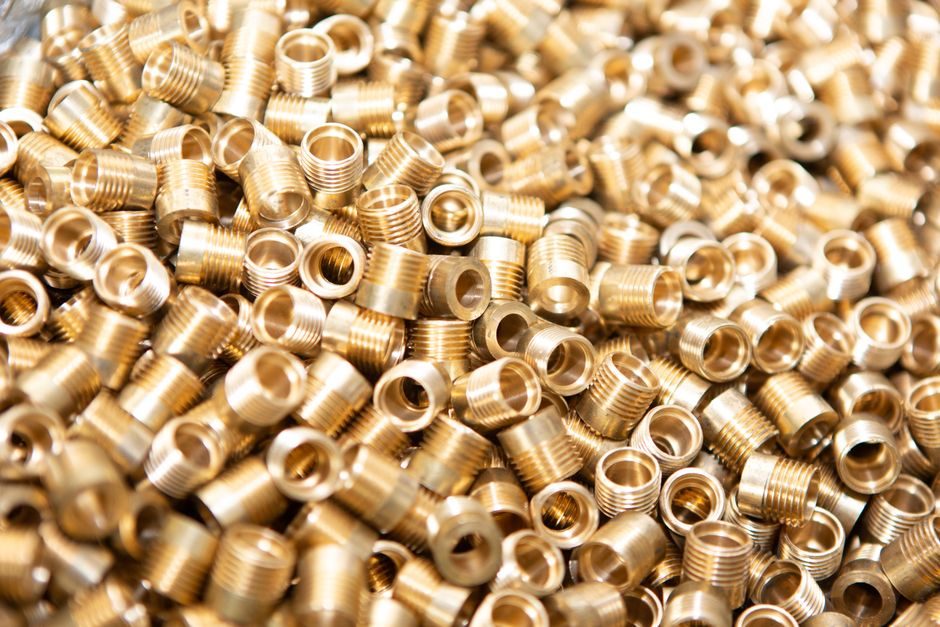
For reference, the aluminum die casting machine class dominates this gate because aluminium structural castings carry the highest projected-area-per-tonne ratio of any common die-cast alloy. Magnesium runs a tighter projected area per tonne, so the same tonnage machine covers a larger magnesium die footprint. Brass and copper castings push tonnage the other way — high injection pressure against a high-density melt — and they tend to live in mid-tonnage horizontal cold chamber cells rather than the 4000–5000 t end [S3].
Gate 4 — Vacuum, Process Gas, and Control Class
The fourth gate is the process-control envelope: vacuum, controlled-atmosphere, and the HMI/controller class. Vacuum-ready cold chamber cells pull chamber pressure below ~100 mbar before injection, and that single retrofit is what separates a structural aluminium node that can be welded or heat-treated from one that has porosity that disqualifies it from those downstream operations. Magnesium cells add an SF6/CO2 cover-gas loop on top of the vacuum, and that gas loop has to interlock with the controller. [S2]
For high-integrity structural parts, a vacuum die casting machine build — versus a standard atmospheric cold chamber cell — typically adds a sealed shot sleeve, vacuum valves on the die, and a chamber-pressure transducer. The control class is the second half of this gate: an entry-level PLC is fine for cosmetic castings, but any cell that runs production-grade structural aluminium needs a controller with closed-loop injection profile, real-time intensification, and shot-by-shot logging. That controller choice is the one line item in the BOM that the foundry can least afford to under-spec, because it is what the metallurgical certificate gets stamped against.
Comparison: Cold Chamber vs Hot Chamber vs Vacuum and Gravity Builds
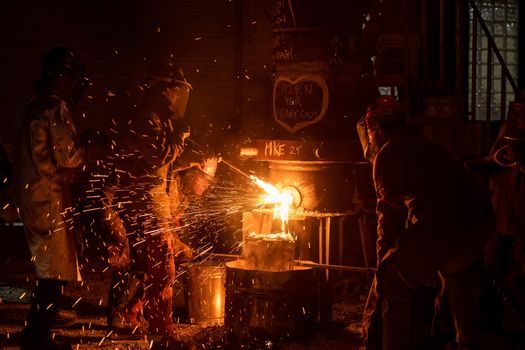
For an engineer walking the spec sheet, four machine classes are usually on the table at the same time. The trade-off lines up along alloy range, tonnage, and process capability: [S3]
- **Cold chamber (standard)** — Al, Mg, Cu, brass; 800–9000 kN; atmospheric shot; lowest cell price in the class. Used for the bulk of structural aluminium programs [S4].
- **Cold chamber vacuum** — same alloy range, same tonnage, sealed shot sleeve and chamber evacuation; ~10–20% cell price premium; required where downstream welding or heat treatment is specified.
- **Hot chamber** — Zn, low-temp Pb alloys only; typically 100–4000 kN; cannot run aluminium; faster cycle but narrower alloy window [S2].
- **Gravity die casting machine** — no high-pressure injection; used where the part geometry rejects pressure die casting; longer cycle, lower die cost, lower capital.
For magnesium, the same logic shifts the comparison: cold chamber magnesium is the production cell, hot chamber is excluded by alloy, and a magnesium die casting machine build adds the cover-gas and ignition-protection envelope that aluminium cells do not need.
Selection Criteria: Decision Matrix for a 2026 Buy
For a 2026 buy, four decision criteria tend to drive the final cell choice: (1) alloy family, (2) part weight and projected area, (3) downstream-process qualification (weld, heat-treat, leak-tight), and (4) cycle-time target. The four gates above resolve into these four criteria, and the machine is selected when all four resolve onto a single tonnage band. [S4]
Buying a used cold chamber cell from a 1990s-era Buhler, Idra, or Frech platform remains a viable second-hand route for non-structural parts [S3], and the 2026 die casting machine buying guide walks the same four gates from the machine-class side. For foundries also running shell-core cells, the shell core machine 2026 buying guide covers the upstream sand-core side of the same production chain.
Limits, Failure Modes, and What the Spec Cannot Hide

Three failure modes repeat across poorly specified cells: (a) short-shot on parts that sit at the upper edge of the shot-weight envelope, (b) flash on parts whose projected area is at the upper edge of the clamp-force envelope, and (c) die-sticking on parts whose alloy composition runs too high on iron or too low on the die-release coating. All three show up inside the first 200 cycles. The selection gates above are designed to push those failure modes out of the operating window before the cell is plumbed in, not after. [S5]
The selection process also has to acknowledge what the spec cannot fix: die-cooling layout, ejector geometry, and shot-profile tuning are all die-side decisions. The machine can deliver the tonnage, the intensification, the vacuum, and the closed-loop control, but it cannot compensate for a die that was not designed for the alloy. For foundries that also need to validate the die material against the part, the copper vs tool & die steel selection guide covers the die-side material choice that runs in parallel with the machine selection above.
Trackable signals to watch: (1) Chinese supplier listings on B2B platforms continue to expand the 800–9000 kN cold chamber range, narrowing the lead-time gap between domestic and European cell builds [S4]; (2) the used-cell market remains liquid, with Buhler, Idra, and Frech platforms dominating the second-hand listings [S3]; (3) vacuum and closed-loop injection profile are now standard in new builds above 1000 t and are the single highest-ROI retrofit on older atmospheric cells [S1].