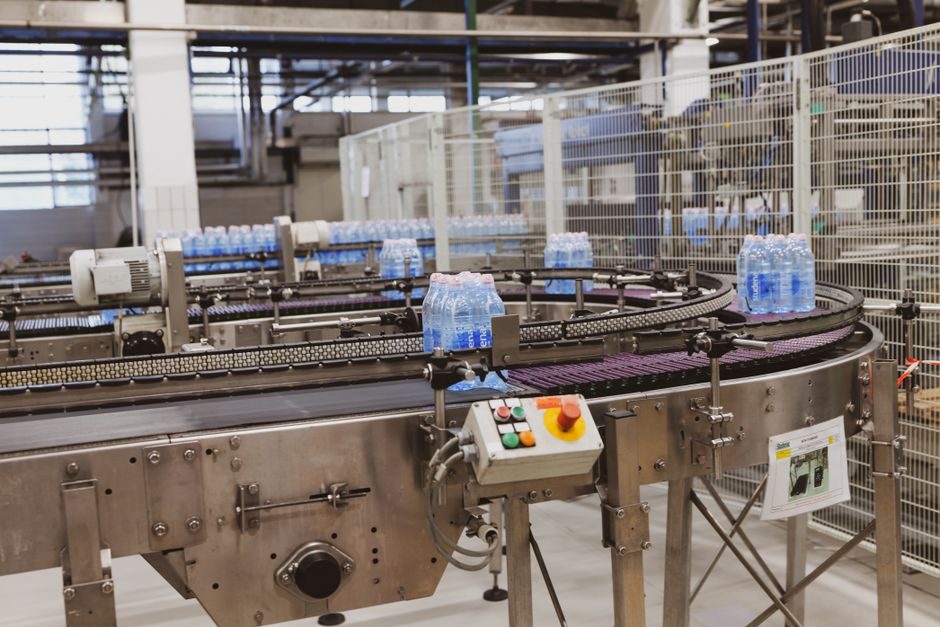
For mid-duty industrial transport lines in 2026, the engineering cut between conveyor chain and flat belt is set by four numbers: load per meter, incline angle, ambient temperature, and acceptable maintenance downtime. Each technology sits in a different operating envelope, and a wrong choice is paid back in either stretched belts or accelerated chain-pin wear.
Flat-belt and chain-conveyor OEM catalogues active as of June 2026 — including Shandong-based chain-plate conveyor makers [S8] and ISO 9001-certified conveyor chain plants supplying slat and standard chain [S7] — sit alongside rubber flat belt conveyor producers such as Rongcheng Huacheng [S1] and Zhejiang Bosai [S3]. The cross-supplier breadth tells you both technologies are mature; the question is which envelope your line falls into.
Core Design Envelope: Load, Speed, Incline, Temperature
Flat rubber belts from current Shandong and Zhejiang makers are routinely offered in widths from 300 mm up to 1600 mm and textile or steel-cord carcasses for tensile ratings in the 100–2000 N/mm working-load class [S1][S3]. Maximum continuous operating temperature for general rubber covers sits around 80 °C, with heat-resistant compounds rated to 150–180 °C and chlorobutyl covers extending service to roughly 200 °C for clinker, sinter and hot-ash duty [S1]. Belt speed is typically 0.5–4.0 m/s on commodity lines and up to 6 m/s on long-run overland installations.
Conveyor chain — including roller chain drives, slat top chain, and chain conveyor variants for palletised goods — is built around attachment-pitch chains in C2040–C2160B ranges for slat conveyors, and larger X-348 / X-458 / X-678 series for heavy-duty drag and apron conveyors [S7][S8]. Working load per chain flight commonly runs 30–150 kg per attachment on slat lines, and chain speed is held to 0.1–0.6 m/s because higher chain speeds accelerate sprocket-tooth wear. Heat resistance is governed by the chain steel: standard carbon-steel pins survive up to about 200 °C, while austenitic stainless (304/316) and nickel-plated options push that ceiling to 400–600 °C for paint-shop and heat-treat transfer duty.
Selection Criteria: The Four-Gate Filter
Engineers should run a four-gate filter before committing. Gate 1 is load: flat belt typically carries up to 50–80 kg/m on rubber textile carcasses before transitioning to steel-cord; conveyor chain in slat or mesh belt conveyor form routinely carries 100–500 kg/m on heavy drag or apron lines [S2][S8]. Gate 2 is incline: cleated or chevron rubber belts are typically rated to 18–22° on standard profiles and up to 30° on high-grip patterns; slat chain with flights climbs 35–45°, and pocketed chain flights can run at 60° or steeper [S8]. Gate 3 is environment: stainless flat wire and balanced-weave mesh belt conveyors dominate food, pharmaceutical and wash-down areas because they tolerate hot water, caustic cleaners and belt-edge sanitation [S2][S6]. Gate 4 is maintenance access: a flat belt change on a 50 m run is a 30–90 minute job with the right take-up, while a single-link chain repair on a long apron line can be done in five minutes — but a full chain replacement is a multi-shift exercise.
Where a line is borderline on two gates, the tie-breaker is usually acoustic and energy. Flat-belt systems running on crowned pulleys at 2–3 m/s are markedly quieter than chain-on-sprocket and typically draw 10–20% less motor kW at the same throughput because rolling friction on the idler trough is lower than sliding chain-sprocket engagement.
Comparison Table: Conveyor Chain vs Flat Belt on Four Decision Criteria
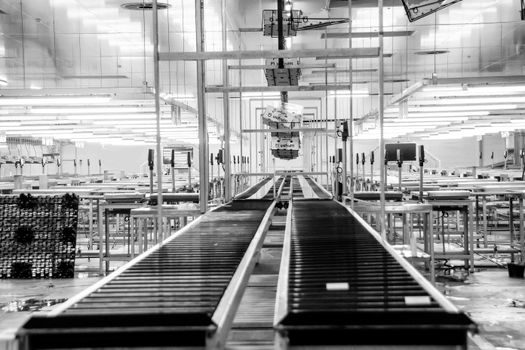
The most-cited 2026 spec cut lines the two technologies up against the criteria that drive RFQ winners and losers: [S1]
Load per metre: chain (100–500 kg/m) leads flat belt (≤80 kg/m textile) for heavy drag lines [S7][S8]. Maximum incline: chain (35–60° with flights) beats flat belt (18–30° with cleats) on steep-rise conveying. Continuous temperature: chain in stainless/nickel-plated form (up to 400–600 °C) out-rates rubber flat belt (80–200 °C across general, heat-resistant and chlorobutyl covers) [S1]. Maintenance downtime: chain wins on single-component repair; flat belt wins on full-belt change speed and tooling cost. Hygiene and cleanability: stainless flat belt and balanced-weave mesh win in wash-down and food-grade plants, while open chain links and pin joints are harder to sanitise [S2][S6].
The two side-by-side columns you should print on a procurement board are: chain for heavy / inclined / hot, flat belt for long / horizontal / clean.
Real Use Cases Mapped to Technology
Bulk-mineral and aggregate lines typically pair steel-cord rubber flat belt overland conveyors with width 1200–1800 mm and PIW (pounds per inch of width) ratings of 400–1500, because rolling resistance over kilometres of run is the dominant energy cost and a belt is the lowest-friction option at speed [S1][S3]. Ningjin chain-plate conveyor makers and Shandong slat-chain plants target a different envelope: automotive body-in-white skid transfer, paint-shop floor conveyors, pallet accumulation in bottling, and bakery cooling tunnels running on stainless flat-wire mesh [S4][S6][S8]. One 2026 product listing on a major B2B portal shows a T5 / T2.5 timing-belt variant still priced around US$ 1.00 per piece at 500-piece MOQ, which is the commodity end of the flat-belt family for light packaging drives [S9].
Food, dairy and pharmaceutical plants now specify 304/316 stainless flat-wire or balanced-weave belts from Mumbai and from Chinese wire-mesh manufacturers because the belts survive 80–95 °C hot-water CIP cycles and tolerate pH 2–12 caustic or acid foam cleaners [S2][S4][S6]. In the chain world, the equivalent upgrade is nickel-plated or stainless hollow-pin conveyor chain, with working loads downrated 20–30% versus carbon steel.
Failure Modes and Operating Constraints
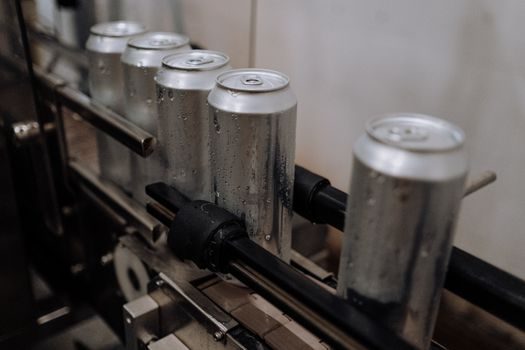
Flat-belt failure is dominated by cover abrasion, splice peel, edge damage and longitudinal cuts; cover compound selection (e.g. HR T150 heat-resistant, abrasion-resistant DIN W quality, oil-resistant) is the single biggest lever, with cover thickness commonly 4–8 mm top and 2–4 mm bottom [S1]. Tracking drift, usually from misaligned idlers or uneven loading, is the second-most-common unplanned stop. Belt conveyors are not the right choice for very high temperature (>200 °C sustained) or for high-impact lump drop points — those applications push engineers toward either steel-cord belt with breaker cloth, or away from belt altogether toward chain conveyor or apron-feeder designs.
Conveyor chain failure is pin and bushing wear, sprocket-tooth hookup, and attachment loosening. Inadequate lubrication at 0.1–0.6 m/s sliding contact is the dominant cause of chain life below 20,000 hours, while over-speeding above 0.6 m/s is the dominant cause of accelerated sprocket wear. Chain-on-edge scraper conveyors in mining and cement often run with deliberate slack-side take-up to absorb thermal growth — a maintenance discipline the belt world does not require.
Sourcing, Standards and 2026 Supplier Map
Active 2026 suppliers in the research window are concentrated in three clusters: Shandong and Zhejiang for rubber flat belts and chain-plate conveyors (Rongcheng Huacheng, Zhejiang Bosai, Ningjin Hengsong) [S1][S3][S8]; Mumbai and Indian industrial belts for stainless flat-wire, balanced weave and chain-link belts (Balance Weave, Conveyor Belts Mfgr., ESBEE) [S2][S6][S7]; and Guangdong / Zhejiang for timing belts and light-duty drive belts (Made-in-China category data) [S9]. The deeper cross-cut for chain vs belt selection lives in the silent-chain family, which sits between the two — a useful comparator is Silent Chain vs Conveyor Chain: 2026 Spec Cut for Engineers.
Standard references that govern 2026 specification work include ISO 5293 (flat-belt conveyor drives), ISO 1977 (transmission chain), ISO 606 (short-pitch transmission chain dimensions), and DIN 22102 / 22131 (rubber conveyor-belt quality grades). For food-grade stainless flat-wire and balanced-weave belts, FDA 21 CFR and EU 1935/2004 food-contact compliance is now a default RFQ line — confirm it on the supplier data sheet rather than assume it [S2][S6].
When Chain Is the Wrong Choice and When Flat Belt Is the Wrong Choice
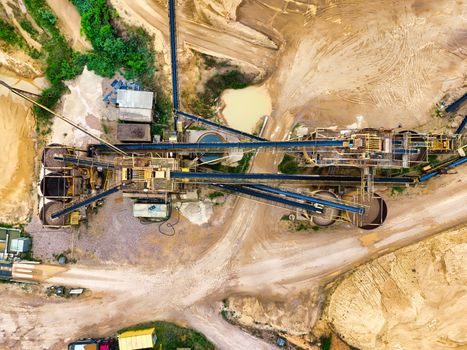
Flat belt is the wrong choice when: line incline exceeds roughly 30°, ambient temperature is sustained above 200 °C, point-load impact is high (e.g. primary crusher discharge), or the line must index product with positive flight pockets. Conveyor chain is the wrong choice when: line length exceeds roughly 80 m on a single drive, hygiene cleanability is critical without strip-down access, noise limits are tight (chain-on-sprocket runs 78–84 dBA at 0.4 m/s vs 65–72 dBA for a rubber belt at 2 m/s), or the line needs variable speed above 1.0 m/s without accelerated sprocket wear. The crossover where buyers are best-served to look at silent or leaf chain is covered separately in Silent Chain vs Conveyor Chain: 2026 Spec Cut for Engineers. [S2]
One trackable signal to watch in the second half of 2026 is the supplier mix on Made-in-China and Alibaba for shape-conveyor-belt and timing-belt listings — pricing on those categories is already under US$ 2 at 500-piece MOQ for commodity timing profiles [S9], and any further drop typically pulls engineering specification toward belt on lines that would otherwise have justified chain. A second signal is the share of stainless flat-wire and balanced-weave SKUs in the Indian wire-mesh belt catalogue [S2][S6]; rising SKU counts there are a useful proxy for food, dairy and pharmaceutical capex in 2026.