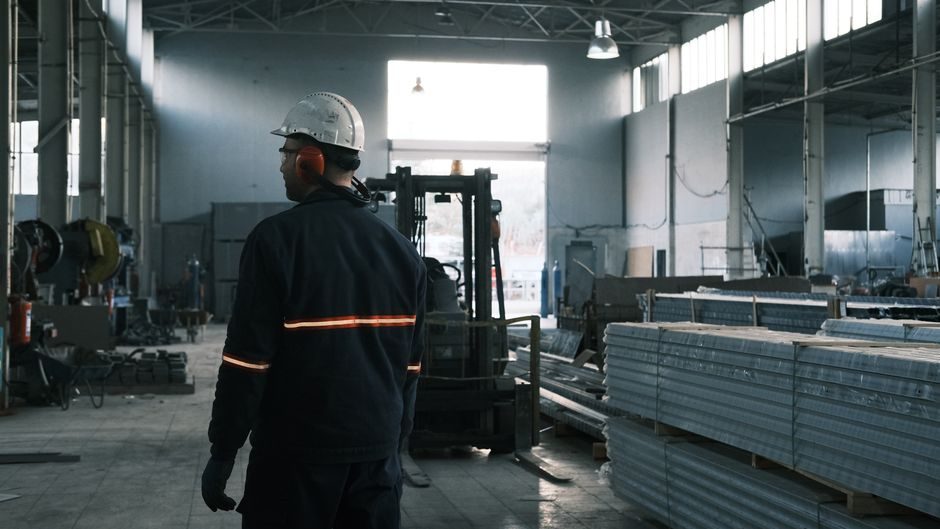
Electrolytic copper refining delivers more than 70% of the world's high-purity cathode at 99.97% Cu, starting from blister or fire-refined anodes running 97–99% Cu [S3]. The chain upstream — concentrate smelting, converting, slag cleaning, anode casting — fixes the impurity load the tankhouse must strip, and the chain downstream — wirebar casting, continuous rod, drawing, and active-cable assembly — sets the conductivity and signal-integrity gates the finished product must clear.
For a process engineer, "copper production technology" is three different problems stitched into one supply chain: extractive pyrometallurgy (Cu 60–70% matte grade, 0.5–2% S, controlled Fe/SiO₂ slag), electro-refining (cell voltage 0.2–0.3 V, current density 200–300 A/m², 99.97% cathode, anode slime as a Te/Se/PGM credit stream), and finished-form fabrication (drawn copper wire, copper material rod, EN 13602 Cu-ETP / Cu-OFC grades for signal cabling).
Smelting and Converting: Matte Grade, Slag Chemistry, Recovery
Flash smelting at concentrate feed rates above 100 t/h produces a 60–70% Cu matte with 0.5–2% residual sulfur, while the iron-rich fayalite slag (FeO–SiO₂–CaO) is tapped separately and treated in an electric or vortex-stirred settling furnace to recover entrained copper droplets [S4]. Vortex stirring dilution, modelled with silicone oil and water Reynolds-matched, raises vulcanizing-agent utilization and improves matte–slag phase separation, which directly lifts Cu recovery from slag by several percentage points versus gravity settling alone [S4].
The Peirce-Smith converter blow cycle takes matte to 97–99% "blister" copper, off-gassing SO₂ at 12–18% vol that is captured for sulfuric acid, while arsenic, antimony and bismuth partition partly to flue dust and partly to the blister — that impurity split is what the downstream electro-refining step is sized to remove [S3]. Copper oxide-mediated pyrolysis has been shown to catalyse PCDD/F formation from chlorinated precursors, so off-gas cooling profiles and activated-carbon injection are sized to keep stack PCDD/F below 0.1 ng TEQ/Nm³ in jurisdictions enforcing the Stockholm Convention [S2].
Electro-Refining: Cell Voltage, Current Density, Cathode Purity
Tankhouse electro-refining runs at a cell voltage of 0.2–0.3 V per cell, current density of 200–300 A/m², electrolyte temperature 60–65 °C, and Cu²⁺ concentration 40–50 g/L with 150–200 g/L free H₂SO₄ — these four numbers define the energy budget at roughly 250–300 kWh per tonne of cathode [S3]. Insoluble impurities (Ag, Au, Pt-group, Se, Te, Pb, Sn-oxide) drop to the bottom as anode slime, which is the economic credit that pays for the tankhouse; soluble impurities (Ni, Fe, As, Sb, Bi) stay in the electrolyte and are bled through purification crystallizers.
Bismuth control is the single most-cited refining headache: Bi³⁺ in the electrolyte contaminates the cathode at levels above 0.02% and pushes resistivity up, so electrolytic bleed + jarosite precipitation are standard [S3]. Copper electro-refining is the principal method for producing high-purity 99.97% copper cathodes from 97–99% pure blister or fire-refined scrap copper anodes.
Anode Slime as a By-Product Credit Stream
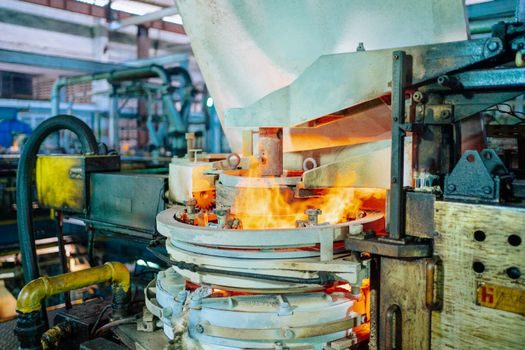
Anode slime typically assays 30–50% Ag, 0.5–5% Au, 5–20% Se, 2–8% Te plus PbSO₄ and Sb-As oxides, and is processed through oxidative pressure leaching (200–220 °C, 800–1000 kPa O₂) to dissolve Se/Te before precious-metal residues go to chlorination and electrowinning [S3]. Recovery yields above 95% for Ag and 90–95% for Au are achievable when the upstream smelter is operated at low matte-grade and the converter is run under moderate agitation — high-intensity blowing volatilizes more Se to the dust and lowers slime yield.
From a process-engineering standpoint, the slime circuit is what makes a greenfield copper refinery bankable: a 100 kt/yr cathode line generates roughly 100–200 t/yr of slime, and a $200/t cathode P&L can flip on whether the slime leach recovers Se at 90% or 70%. The same chain is also where emerging techniques — membrane-assisted electrolyte purification, pulsed-current refining to lower As/Bi — are being piloted in 2024–2026 to push cathode purity toward 99.99% for semiconductor-grade applications.
Finished-Form Fabrication: Rod, Wire, and Active Copper Signal Cables
Continuous cast rod (CCR) at 8–10 mm diameter feeds drawing down to 0.05–0.5 mm wire, with intermediate anneals at 400–500 °C to restore ductility; EN 13602 Cu-ETP (CW004A) is the default, while Cu-OFC (CW008A) is reserved for high-frequency and vacuum applications where Cu₂O micro-inclusions would impair performance. Surface cleanliness is the spec gate most fabricators under-control: residual lubricant carbon above 50 mg/m² on the wire drives insertion-loss rise at 25–50 GHz, so in-line electrolytic cleaning and DI-water rinsing are now standard on lines feeding data-centre cable production. [S1]
For 200G/400G per-channel data-centre links, passive copper cables top out below 1 m, so active copper cable (ACC) technology such as Semtech CopperEdge is used to extend reach to 3–5 m at fraction of the power budget of optical transceivers [S1]. A typical ACC channel runs at 56–112 Gbaud PAM4 per lane with linear equalization on the copper side, drawing 3–5 W end-to-end versus 8–12 W for an equivalent short-reach optical module — that power delta is the reason hyperscalers are qualifying active copper for top-of-rack to server-rack runs through 2026.
Process Comparison: Pyrometallurgical vs Electrolytic vs Hydrometallurgical Routes
On three decision criteria, the three copper-production routes line up as follows. (1) Feed flexibility: pyrometallurgical handles sulfide concentrates with Cu 25–35%; electro-refining requires a 97–99% Cu anode and so sits downstream of pyrometallurgy; hydrometallurgical (SX-EW) handles oxide and low-grade sulfide ores at 0.3–1% Cu but tops out at 99.9% cathode. (2) Purity ceiling: SX-EW delivers 99.9% Cu (LME Grade 1), electro-refining delivers 99.97% (Grade A). (3) Energy intensity: smelting + refining combined runs 8–12 GJ/t Cu for sulfide ore; SX-EW runs 15–25 GJ/t Cu for oxide ore but skips the smelter capex [S3].
The practical reading: for a new greenfield on a copper-belt sulfide deposit, pyrometallurgy + electro-refining is the default and is the route producing >70% of world cathode [S3]. For oxide or mixed ores, SX-EW is added as a parallel leach–extract–electrowin circuit, and the LME Grade A cathode is the product to specify. For related process-engineering context on a different non-ferrous chain, see the aluminum production technology: smelting, casting and extrusion process map.
Process Control, Sensors and Standards Anchoring the Chain
Modern smelters and refineries anchor quality on ISA-style control loops with pressure transmitter and flow meter signals on the acid plant, electrolyte circulation, and steam headers, while off-gas opacity and SO₂ are tracked against ISO 14001 emission limits. Cell voltage, electrolyte temperature and Cu²⁺ concentration in the tankhouse are governed by LME registered-grade rules and ASTM B115 for electrolytic cathode, with ISO 431 (refined copper) supplying the chemical-composition envelope and IEC 60228 the conductor-class table for downstream wire and cable [S3].
The single highest-value spec gate is the cathode sheet flatness and oxygen window for Cu-ETP: cathode must be flat within 5 mm over 1 m to feed continuous cast rod without arcing at the entry, and O₂ must be controlled between 200–400 ppm to ensure adequate conductivity without Cu₂O stringers. For process engineers evaluating instrumentation on a refining line, the working spec set is: cell voltage accuracy ±5 mV, electrolyte flow repeatability ±2%, and acid plant industrial valve leak class ANSI FCi 70-2 Class VI on the SO₂ scrubber bypass.
Limitations, Failure Modes and 2026 Trackable Signals
Three failure modes dominate copper production incidents: (1) shorts in the tankhouse when anode-cathode spacing drops below 90 mm and current density spikes above 350 A/m², which burns contact bars and drops cathode purity; (2) matte-slag emulsification in the settler when Fe/SiO₂ ratio drifts outside 1.5–2.0, dragging recovery down 2–4 percentage points; (3) off-gas dioxin spikes when ESPs operate below 90% collection efficiency and the gas-quench temperature stays above 300 °C [S2][S3][S4].
Trackable 2026 signals to watch: tankhouse current density pilots trending past 320 A/m² on pulsed-current rectifiers (cathode quality gate); active-copper-cable deployments by hyperscalers crossing 10 million cumulative ports (downstream demand gate); and concentrate As content above 0.4% tightening Bi control in the bleed circuit (impurity-load gate). For a broader cross-metal process-engineering view, the rare earth production technology: process chain, reduction routes and spec gates write-up covers a parallel non-ferrous reduction chain that shares several of the same pyrometallurgical constraints.