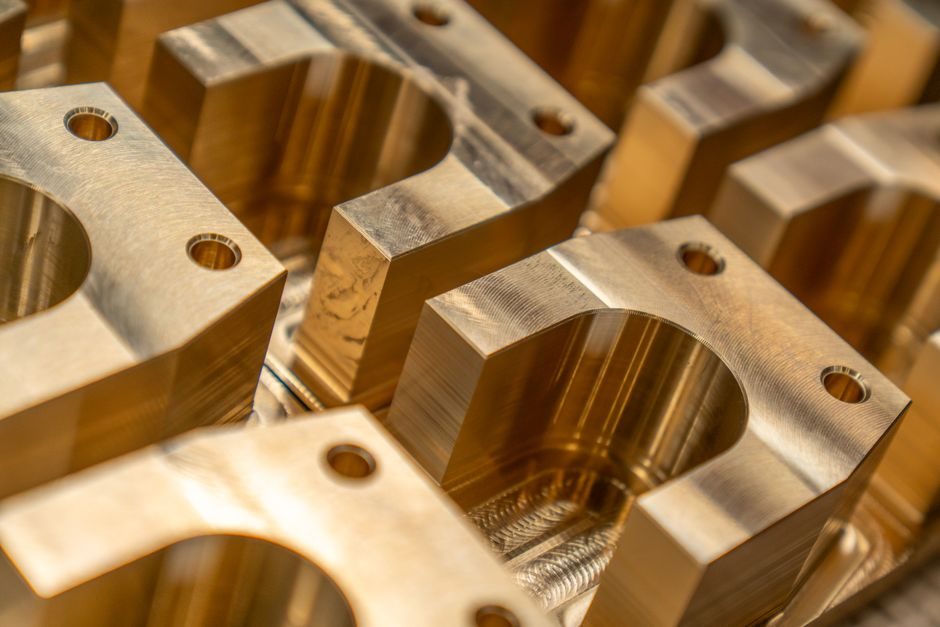
Foundry core making is not one machine class — it is four distinct process families (shell, hot-box, cold-box, and coding/shoot-and-squeeze) bound to a specific resin-and-catalyst chemistry and a defined cure cycle, and the wrong pairing wastes capital on tooling that cannot hold the part [S1].
CoreTech International of North America has kept the CT8 manual core cutter in production since 1982, with over 1,000 units still in field service, demonstrating the long service life expected of any core-making cell specified for industrial duty [S1].
Shell Core Process: Resin-Coated Sand on a Heated Pattern
Shell core machines (often called shell core shooters) blow resin-coated sand onto a metallic pattern held at 200–280 °C; the heat gels the phenolic or furan resin and forms a hollow shell typically 5–15 mm thick that is then ejected and cured off the tool [S1]. Cycle time is governed by pattern temperature, shell dwell (commonly 15–45 s), and part wall thickness — not by chemistry of the binder at room temperature, which is why shell remains the dominant process for small-to-medium iron and steel cores that need high dimensional repeatability.
The process suits cores under roughly 50 kg where two halves are later glued or clamped; sand that does not contact the hot pattern stays unbonded and falls away for re-use, giving a closed-loop sand economy inside the cell.
Common constraints: pattern-platen energy draw (electrically heated patterns typically 30–80 kW per station), tooling cost for matched metal patterns, and the need for an extraction hood over the hot-tool area to capture phenolic smoke during the dump cycle.
Hot-Box and Warm-Box: Heat-Cured, Bench-Sized Cores
Hot-box machines use a furan or phenolic resin plus a latent acid catalyst; sand-binder mix is blown or shot into a heated core box (around 200–250 °C) and cures in 10–60 s inside the box [S1]. Warm-box runs cooler (150–200 °C) with a faster-cure resin system and is the variant of choice when pattern heating capacity is the line bottleneck.
Compared to shell, hot-box produces a solid core (not a hollow shell) in a single step — no glue line, no dump station — which simplifies downstream core handling for short-run iron and non-ferrous castings.
Tool wear and core-box thermal mass are the main constraints; hot-box tooling life is shorter than shell because the entire box heats and cools each cycle, and the binder system requires amine-catalyst fume management at the box vents.
Cold-Box and Gas-Cured: PU/Epoxy + Amine or CO2/Silicate
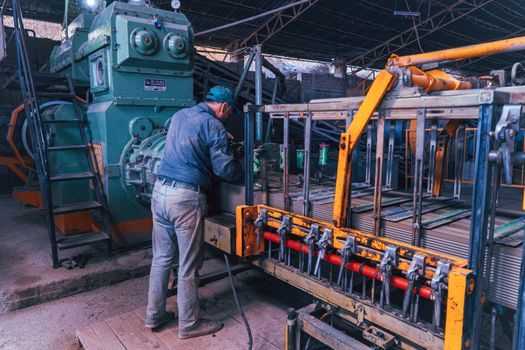
Cold-box core making is the largest-volume class in iron foundries because the core box stays at room temperature; a polyurethane resin system (part 1 is phenolic resin, part 2 is polyisocyanate) is gassed with a tertiary amine (TEA/DMEA) vapor that hardens the binder in seconds. A second cold-box branch uses sodium silicate bonded sand hardened with CO2 — lower binder cost, slower cure, easier disposal, weaker core strength. [S1]
Cycle times of 5–20 s are routine on PU cold-box, and the process handles cores from a few hundred grams to over 100 kg, including water jacket and oil-cooling passages that cannot be made in a shell or hot-box tool.
Constraints include amine gas handling (TEA vapor is toxic and flammable — requires a sealed gassing box, scrubber, and LEL monitoring), gassing-plug maintenance, and binder storage at controlled temperature (typically 20–30 °C) to keep the two-part PU system in spec.
Coding (Shoot & Squeeze): Vertical-Parting Mass Production
Coding — more commonly written as core shooting or shoot-and-squeeze — is the high-volume variant where sand is blown into a vertical-parting core box and then compacted by a squeeze plate or a vertical sand shot. It is the dominant process for engine block, transmission housing, and manifold cores where cycle time must drop under 15 s per core. [S1]
Sand-binder selection overlaps with cold-box (PU amine-cured) or hot-box (furan acid-cured); what changes is the machine: a coding unit replaces the bench core box with a four-post clamping frame, sand magazine, and a high-velocity shooter head, producing uniform density cores that need no further hand-ramming.
Selection signal: if your annual core count exceeds roughly 200,000 pieces and the core shape is repeatable, a coding cell with a heated or unheated box will out-produce a manual hot-box bench by a factor of 3–5× per operator.
Selection Criteria: Sand, Binder, Volume, Tolerance
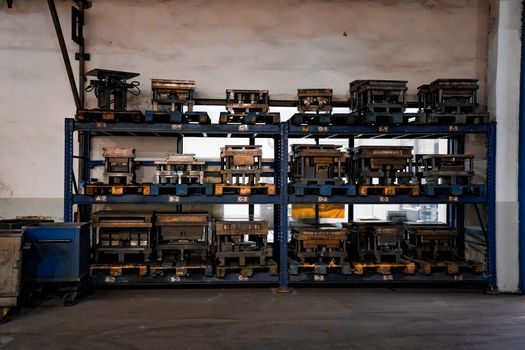
[S1]
A side-by-side read: shell process for tight tolerance and small cores; hot-box for short-run flexibility; cold-box PU for the widest part-size range and the highest single-cell output; coding (shoot-and-squeeze) when volume and cycle time rule out manual loading of the box.
If your plant is in the Molding Line selection window already, the same phenolic-urethane binder supply line can feed both the core cell and the mold line — see this Molding Line spec map for the upstream-downstream overlap.
Standards, Safety, and Failure Modes
Cold-box amine gas handling falls under hazardous-location rules — the gassing chamber, scrubber, and amine storage must be classified for flammable vapor, with electrical equipment rated for the zone. Phenolic smoke from shell and hot-box tools is captured by an extraction hood with afterburner; the burner is sized for roughly 1,200–1,800 m³/h per heated station, depending on platen area. [S2]
Common failure modes in the field: blow-tube clogging in PU cold-box (binders and amine residues build up at the gassing plug — a routine weekly cleaning on a 24/7 cell), pattern-plate distortion on shell tools after 50,000–80,000 cycles (visible warpage above 0.5 mm triggers re-machining), and sand-binder ratio drift on hot-box (target 1.0–1.5 % resin on silica sand; above 2.0 % resin drives excess smoke and slower cure).
For a read on the adjacent equipment classes — sand-mold lines, shotcrete pumps, and strapping cells that feed the same foundry floor — the Molding Line advantages and drawbacks brief and the Shotcrete Machine type comparison give a useful floor-layout context.
To dig into the tooling side of a core cell, the shell process encyclopedia entry and the cold-box encyclopedia entry lay out the bench-vs-shooter distinction; the coding (shoot-and-squeeze) reference covers the four-post high-volume class.
Next spec checkpoints for a 2026 build-out: confirm the binder-system storage footprint (PU two-part tanks typically 1.0–1.5 m² floor per 1,000 L), the amine scrubber exhaust location relative to building HVAC intakes, and the sand-reclaim loop sizing — a single cold-box cell running 24/7 will move 8–12 t/h of return sand, and the reclaim classifier must be specified to that mass flow before the core machine is ordered.