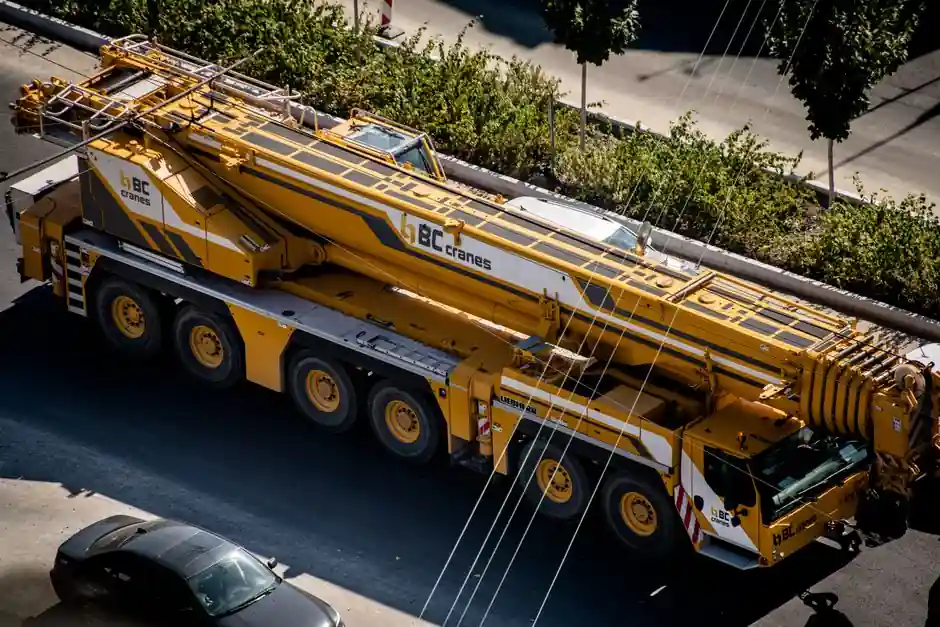
Specifying a crawler crane starts with three hard numbers, maximum lift, ground bearing pressure, and transport envelope, and the rest of the build (boom length, counterweight, engine power) cascades from those gates. As of 2026, the working fleet spans from sub-12 t spider/compact crawlers for glazing and indoor steel work up to 2,500–3,000 t lattice-boom giants built for offshore wind and petrochemical modules [S1][S5].
Buyers in 2026 are not short of options: made-in-China factory listings show 12 t spider-style remote-control crawlers with CE marking at roughly US$ 8,000–8,500 per set FOB [S1], while Shenzhen-based Juyi International lists used Sany lattice crawlers in 100 t, 200 t, and 320 t classes with 64–86 m main booms and lifting moments from 396 to 1,820 t·m [S2]. The choice between a telescopic compact crawler and a large lattice machine is therefore a duty question before it is a brand question.
Duty classes: from spider/compact to 2,500 t lattice
Crawler cranes split into three practical duty bands. The compact/spider band covers roughly 1–12 t, uses remote-control or radio-pendant operation, fits through single-door openings, and is commonly deployed for glass curtain-wall installation, mechanical-room steel, and HVAC lift points; one 12 t spider-crawler OEM on made-in-China quotes CE conformity with a self-propelled cantilever track design [S1]. The mid-duty lattice band, 80–400 t, is the workhorse for bridge erection, port handling, and petrochemical plant builds; Juyi's used Sany SCC1000A-6 (100 t, 64 m boom), SCC2000A-2 (200 t, 85 m boom), and SCC3200A-2 (320 t, 86 m boom) illustrate the spread of boom length and lifting moment (396 / 1,152 / 1,820 t·m) inside this band [S2].
The heavy-duty lattice band, 800 t and up, is dominated by a handful of OEMs building modular boom systems that ship in 20 ft container footprints. Liebherr's LR 12500-1.0 sits at 2,500 t maximum capacity below the 3,000 t LR 13000, with a 110 m HighPerformanceBoom that extends to 155 m using luffing-jib sections and a 200 m maximum hook height from a 100 m main boom plus 108 m luffing jib [S5]. For buyers comparing machines, the crawler crane selection fundamentals reference page lays out the same class structure and is the right starting point before any quote request.
Ground pressure and outrigger-less stability
The defining engineering advantage of a tracked undercarriage is the ability to work on low-bearing soils without mats, but that advantage has a numeric limit. Tracked crawlers spread their load over the full track contact length, so a 100 t class machine can typically operate on 50–80 kPa prepared substrates where a 100 t mobile crane would need outrigger pads and cribbing. The other side of that coin is swing stability: slewing a lifted load on flexible ground raises slewing-platform stress and tip-over risk, and published dynamics work on crawler cranes mounted on Winkler-type flexible ground identifies a swinging-load speed threshold above which slewing stress and tip-over probability rise sharply [S7].
That is why specification sheets quote both maximum lift on outriggers (for telescopic crawlers that have them) and 360° pick-and-carry ratings on tracks, and why site planners still ask for a plate-bearing test before mobilising machines above 200 t. Track-shoe width and track-frame length set the contact patch; a 320 t class lattice crawler on standard 1.0–1.2 m shoes will exert a different ground pressure than the same machine on 1.5 m wide shoes. For buyers working near the edge of soft-ground tolerance, the mobile crane comparison reference is useful because it spells out the outrigger-pad discipline that crawlers are designed to avoid.
Engine, hydraulic, and reliability architecture
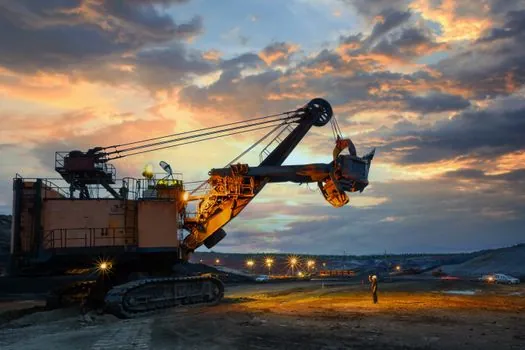
Modern heavy crawlers are dual-engine, redundant-hydraulic machines precisely because downtime on a 2,500 t wind-farm erection is measured in days, not hours. Liebherr's LR 12500-1.0 uses two 6-cylinder in-line engines delivering a combined 800 kW (1,088 bhp) in a redundant layout, with both main hoist winches mounted on the 3.5 m wide rear section and no separate power pack [S5]. Mid-duty Sany units in the Juyi fleet (SCC1000A-6 / SCC2000A-2 / SCC3200A-2) use a single diesel driving hydraulic pumps for tracks, boom hoist, and main/auxiliary winches, which is the standard architecture below ~400 t.
For buyers cross-shopping with gantry and mobile alternatives, the gantry crane selection logic is a useful contrast: gantries win on repeat-cycle indoor work, while crawlers win anywhere a single machine must pick-and-carry 100–3,000 t without rigging a rail or outrigger cribbing. Undercarriage wear parts, track shoes, track rollers, carrier rollers, and idlers, are a separate spend line; suppliers such as Value Crane market one-stop replacement parts for the full undercarriage, with track-shoe metallurgy and through-hardened rollers specified per OEM drawing [S8].
Who should pick telescopic crawler vs lattice crawler vs mobile
A side-by-side spec check on four criteria, lift class, boom reach, site mobility, transport width, keeps the decision honest. A 3–12 t compact/spider crawler gives you low ground pressure and 10–25 m reach but cannot pick above 12 t and is shipped in a single 20 ft container [S1]. A 100 t lattice crawler (e.g. SCC1000A-6) lifts 100 t at short radius, 20–30 t at 64 m, ships in 4–6 truck loads, and needs a 2-week assembly window [S2]. A 200–320 t lattice crawler (SCC2000A-2 / SCC3200A-2) lifts 200–320 t short-radius, 50–80 t at 85–86 m, and needs 8–14 truck loads plus a heavy-lift assist crane for assembly [S2].
A 2,500 t class lattice crawler (Liebherr LR 12500-1.0) lifts 2,500 t at short radius, extends to 155 m boom and 200 m hook height, ships with intermediate boom sections that retract to an "economical transport size" plus 25 t ballast slabs dimensioned to fit a 20 ft container footprint, with only two of the major components exceeding 3.5 m transport width (the superstructure front section at 4 m) [S5]. Buyers who do not need the absolute top of the lift table should be careful: the 2,500 t class is a petrochemical/offshore-wind tool, and selecting it for general construction work is the most common budget mistake in crawler procurement. Buyers who need repetitive short-radius lifts in covered spaces should look at overhead bridge crane selection instead, where duty class and span gate logic differ from mobile lift planning.
Used vs new: where the second-hand market sits in 2026
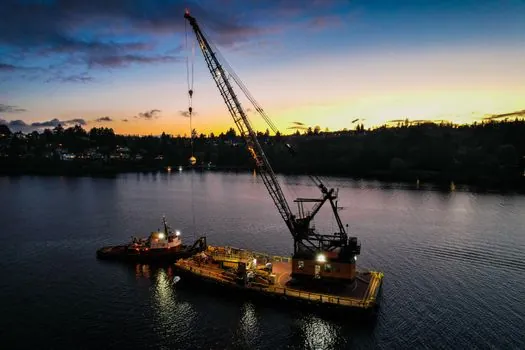
The used-crawler market is now a primary supply channel, not a fallback. Juyi International, founded in 2016 in Shenzhen, runs a fleet of more than 300 crawler cranes with a 1,000+ cooperative channel reserve, and sells over 100 second-hand crawler cranes per year, with individual listings dated 2020–2021 production [S2]. For a buyer with a 12–18 month project, a 3–6-year-old 100–320 t lattice crawler is often the right economic choice, provided the undercarriage wear has been measured, the slewing bearing has been inspected, and the engine hours are documented. For higher-tier fleet planning across cranes, trucks, and auxiliary equipment, see the parallel logic in truck-mounted crane selection for urban infrastructure, where 2026 OEM spec cuts follow a similar 3–6 year refresh cadence.
UK and European buyers also have a dedicated hire channel; Delden Cranes has run a crawler-only hire, sales, and service business since 1975, with a workforce carrying more than 300 years of combined experience on Manitowoc, Liebherr, and other lattice-boom lines, and stocks 330-ton-class MLC300 VPC units through the ALL Family dealer network for lattice-boom crawler deployments [S3][S9]. Hire-first is the right answer when a project is a single lift or under 6 months long, because mobilisation, assembly, and dismantling labour dominate the cost of a 200+ t machine.
Failure modes and field signals to track
The four failure modes that drive crawler-crane downtime are undercarriage wear (track shoes, rollers, idlers, slewing bearing), boom-fatigue cracking at the heel section, hydraulic-hoist seal failure, and slewing-ring backlash on machines over 10 years old. Flexible-ground slewing dynamics are the second-order risk on unprepared sites, and the published threshold approach in the literature is to bound swing speed and acceleration during the lift plan rather than at the controls, because the stress path is set by the lift geometry, not by operator inputs [S7].
For new units, the 3D-CAD/visualisation ecosystem (Liebherr LR 1160, LR 11000, and HS-series models) is mature enough that buyers can pre-plan lifts in 3D before mobilisation [S10], and OEM rigging manuals ship with the crane. For used units, the actionable signal is the undercarriage wear measurement (shoe height, link pitch, roller flange diameter) and the slewing-bearing drag torque; the engine and hydraulics are replaceable, the undercarriage and slewing bearing are not. Buyers who need to plan pipeline-side or right-of-way crawler deployments should also look at the related 50 t class truck-mounted crane selection for pipeline work, which addresses a different ground-mobility trade-off.
Final decision logic: pick a 3–12 t compact/spider crawler for glazing, indoor steel, and 10–25 m reach work [S1]; pick a 100–320 t used lattice crawler for one-to-two-year infrastructure projects where the 64–86 m boom envelope and 100–320 t class fit the lift table [S2]; pick a 1,000–3,000 t new lattice crawler only for offshore-wind, petrochemical-module, or port-handling work where 110–200 m hook height and 4 m transport-width exceptions are workable [S5].