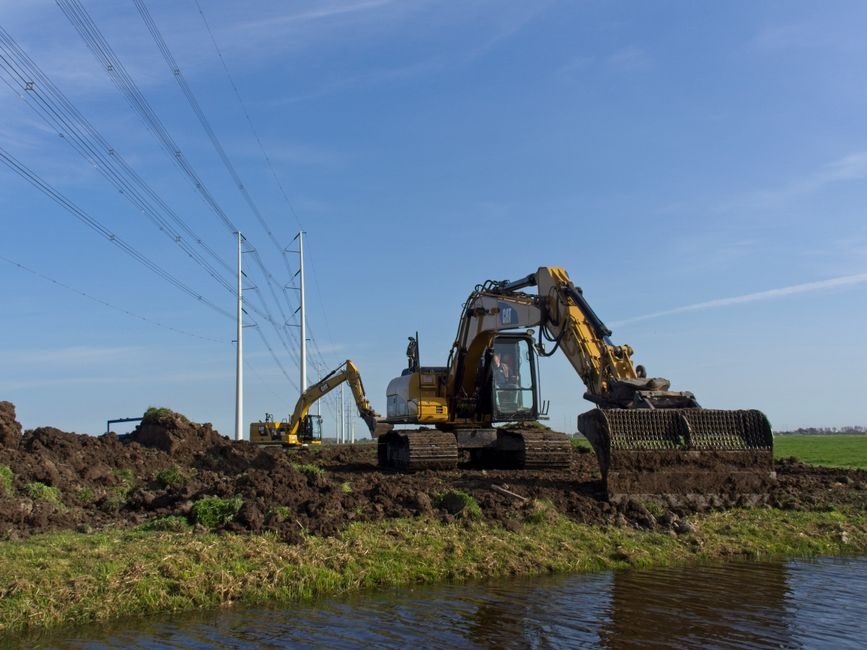
A 1,000-tonne lattice-boom crawler and a 100-tonne telescopic-boom crawler live in different procurement universes; the engineering gates that separate them are the same gates that decide whether a unit earns a line on the BOQ [S1].
Crawler cranes are the heavy-load workhorses of construction sites, distinct from mobile hydraulic cranes in two structural ways: they run on continuous tracks rather than rubber tires, and the track frames carry the load directly without outriggers [S1]. That single design choice — no outrigger pads, no jacking, no levelling cycle — is why crawlers dominate where lift capacity, ground contact area, and pick-and-carry duty intersect, and why buyers who treat them as "just a bigger mobile crane" repeatedly mis-spec.
Gate 1: Lift Class, Radius, and Configuration Matrix
Lift class is set by the worst-case combination of main-boom length, jib length, radius, and hook-block weight — not by the chart-topping number on the nameplate. Lattice-boom crawlers are typically specified in the 250–3,500 t range for heavy industrial, wind, and petrochemical work; telescopic-boom crawlers cover roughly 40–200 t for fast-mobilisation utility picks and pick-and-carry duty. The chart capacity is derated by main-boom length, fixed-jib offset, luffing-jib fitment, and reeving — a 250 t class machine with 90 m main boom and 36 m jib can fall below 40 t at 60 m radius, which is the radius that actually wins or loses the bid on tower pre-erection or wind-hub picks. [S1]
Specifying a fixed-jib machine when the lifts are radius-variable is one of the most common over-spend patterns on refinery and wind-farm packages; switching to a luffing-jib configuration trades transport length for radius flexibility and is the standard fix when the lift chart shows a sharp fall-off past 70% of the boom length.
Gate 2: Ground-Bearing Pressure, Matting, and Site Preparation
Ground-bearing pressure is the silent killer of crawler-crane schedules. A fully rigged 600 t lattice-boom crawler can impose 100–150 kPa through each track shoe; on unimproved subgrade, that pushes well past the 50 kPa working limit of most construction soils. The mitigations are graded and compacted hardstand, bog mats, or crane mats — and the cost of those mats is a separate BOQ line that buyers routinely underweight. [S2]
The track-frame contact area is the one advantage crawlers hold over every outrigger-jack machine, but it is an advantage you spend on if the soil is wrong. A useful pre-bid discipline is to ask the geotech consultant for a working-pressure envelope in kPa at the proposed set-up positions, then back-calculate whether standard timber mats or engineered composite mats will bring the rig inside that envelope. If the answer is "no without piling," the crane class has to drop or the crane position has to move.
Gate 3: Boom System, Reeving, and Hook-Block Discipline
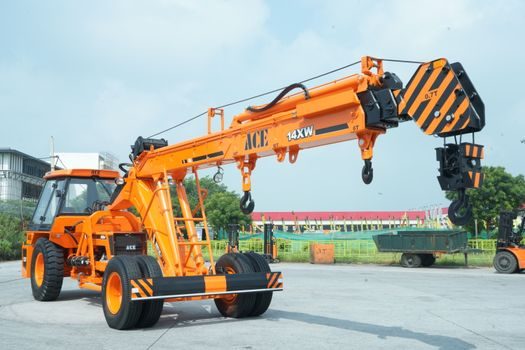
Boom configuration has three branches, and each carries its own rigging, transport, and crew implications. Lattice main + lattice fixed jib is the cheapest per-tonne configuration and standard for heavy industrial work. Lattice main + luffing jib is the radius-flexible branch for congested sites and wind-hub picks above 100 m. Telescopic boom is the fast-mobilisation branch for projects that cannot afford a 2-day boom-assembly cycle. [S3]
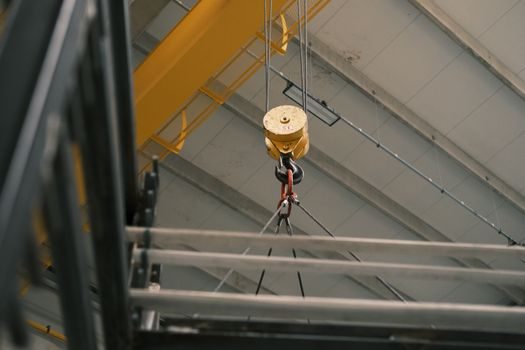
Reeving discipline is the second part of the same gate: the chart capacity assumes a specific number of parts of line on the load hoist, and adding a heavier hook block to "get more headroom" silently derates the chart by the block's dead weight. The corollary is that operators should be told in writing the maximum authorised hook-block weight and the minimum parts-of-line for each radius band, or the chart stops being a contractual document.
Gate 4: Transport Envelope, Assembly Time, and Mobilisation Cost
The widest single variable in total cost of ownership for crawlers is mobilisation, and it scales with the wrong curve. A 250 t class lattice crawler typically moves in 6–8 truck loads, with main-boom sections under 12 m for normal European road limits; a 1,500 t class machine can require 25+ loads, abnormal-load permits, and a 3–5 day on-site assembly. That assembly time is a real schedule cost and a real weather-exposure cost, and it is also the cost line that bidders most aggressively under-quote. [S1]
The decision rule: if the project schedule values the machine at less than the mobilisation cost divided by the working hours on site, the class is wrong. Telescopic crawlers exist precisely to collapse this ratio on shorter projects, which is why they are the default on commercial high-rise and infrastructure bridge work where lifts are frequent but not extreme.
Gate 5: Duty Cycle, Operator Interface, and Compliance Stack
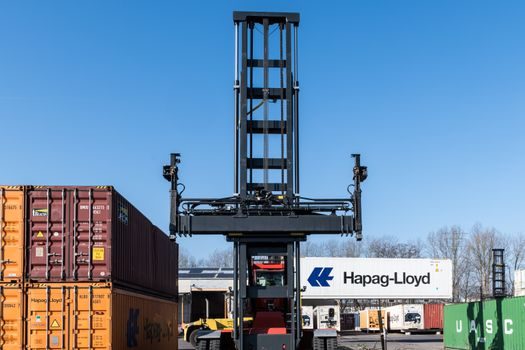
Duty cycle splits the catalogue into pick-and-work machines and pick-and-carry machines. A pick-and-work crawler is built for high-percentage lifts with short radius travel between picks; a pick-and-carry crawler is built for the much rarer case of hauling a load on the hook across the site under controlled load-moment indication. Specifying the wrong one is expensive — pick-and-carry machines carry a derate of 25–40% on the pick-and-work chart to retain stability while travelling. [S2]
Compliance stack for 2026 deliveries should include an up-to-date load-moment indicator (LMI) with the operator-readable display, anti-two-block devices on every hoist, and a documented maintenance log for the engine and hydraulic system. The engine tier matters for European sites under Stage V emissions rules and for North American projects under EPA Tier 4 Final. Hoist, swing, and travel alarms should be tested at hand-over, not deferred to the first lift.
How Crawler Specs Stack Against Adjacent Lift Classes
Set against a tower crane, a crawler wins on mobility and ground access but loses on continuous-repetition cycle time; set against a mobile crane, a crawler wins on per-lift capacity and pick-and-work stability but loses on road-speed mobilisation. Where a gantry crane is feasible, it usually beats any crawler on cost-per-lift for repetitive yard work, but a gantry cannot self-erect at the worksite, which is the structural reason crawlers keep their monopoly on wind, refinery, and bridge-pier work. [S3]
For projects that pair crawler picks with elevated-work access, the 2026 truck-crane vs aerial work platform spec cut for lift buyers is a useful counterpoint on reach, deck, and power-source trade-offs. For projects that stage crawler lifts off a yard crane, the outdoor yard tower-crane selection guide covers the static-mast side of the same workflow. If the lift package is part of a larger rebar-and-formwork cycle, the rebar-cutter selection guide is the matching downstream gate.
Common Failure Modes in Crawler RFQs
Three failure modes repeat across heavy-lift RFQs. First, buyers write "minimum 250 t capacity" without specifying the boom length and radius at which that 250 t must be available; the result is a chart that meets the number on paper but fails the actual pick. Second, ground-bearing pressure is left to the contractor to interpret; mats appear in week three, the schedule slips by the same week, and the variation order is signed under pressure. Third, transport envelopes are assumed to match the bidder's home yard; a machine that was mobilised from a coastal port at 80 t per load cannot necessarily be mobilised from an inland depot at the same weight without route surveys. [S1]
Each of these failure modes is engineering-fixable at the specification stage, not the contract stage. A crawler RFQ that locks the chart conditions, the matting envelope, and the transport loads in writing before bid is a crawler RFQ that closes without a variation order.
The trackable signals to watch on the next procurement cycle: updated Stage V / EPA Tier 4 Final engine options across the 200–600 t class, wider adoption of variable-position counterweight for radius flexibility, and continued drift of telescopic-boom crawlers into the 150–200 t band that was lattice-only five years ago. The boom-system that dominates that band will decide the next five years of mid-heavy lift procurement.