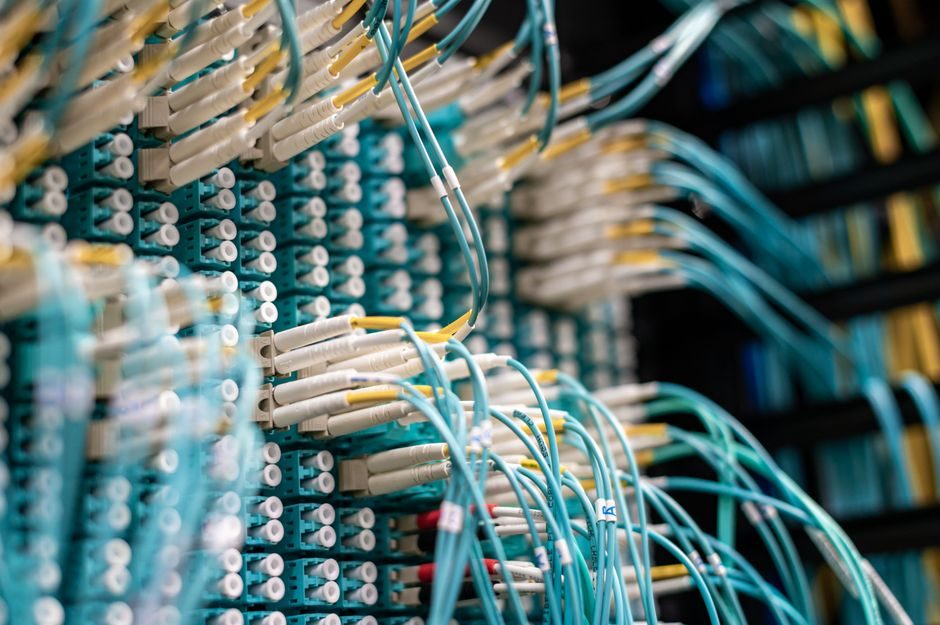
KKR launched Helix Digital Infrastructure on 11 June 2026 to finance and deliver hyperscale data centers backed by secured power contracts, and Amazon closed a $17.5bn loan the same week to fund AI data-center capacity — two moves that crystallise where capital is flowing in the 2026 data-center market [S1].
On the demand side, the global data-center market is sized to reach $605bn by the end of the forecast horizon covered in IndustryArc's 2025 base report, with AI training clusters, edge build-outs, and liquid-cooled retrofits cited as the primary volume drivers [S2]. Together, these vectors — power-secured hyperscale campuses, AI-driven capex, and densified edge nodes — define the engineering decisions process and plant engineers will be specifying through the rest of 2026.
Hyperscale Campus Build-Out and Secured Power
KKR's Helix Digital Infrastructure platform is structured to pair hyperscale developer capacity with multi-year power purchase agreements, an arrangement that ties new build pipelines to grid interconnect rather than to speculative land banking [S1]. Amazon's $17.5bn AI data-center loan runs in parallel: project-finance debt at that scale is only bankable when the campus has secured substation capacity, water rights for cooling, and a long-term offtake from a cloud tenant [S1].
For specifiers this means a hyperscale RFP in 2026 is evaluated first on power-availability evidence, not on rack count — a 100 MW campus without an interconnect timeline will lose to a 60 MW campus that has a binding energisation date. The same logic is reshaping what gets installed on the plant side: a pressure transmitter spec'd for a cooling-water skid now has to satisfy both ATEX/IECEx zone classification and a plant-level power-management SCADA poll, because hyperscale operators run their mechanical systems through the same DCIM stack as their IT load.
AI Workload Power Density and the Cooling Bottleneck
AI training racks are pushing past 40 kW per rack in 2026 deployments, and that density is the single biggest variable reshaping mechanical specs — flow rates on facility chilled-water loops, delta-T across the rack, and the conductivity limits on the dielectric fluid in direct-liquid-cooled (DLC) cold plates [S2]. IndustryArc's 2025 forecast pegs liquid cooling as the fastest-growing sub-segment because the air-handling economics stop working once rack density exceeds the envelope that CRAH units can handle at acceptable fan power [S2].
Specifying for an AI hall therefore becomes a flow meter selection problem: electromagnetic meters for the bulk chilled-water loop (high accuracy, no moving parts, bi-directional), vortex meters for branch lines where turndown matters, and Coriolis on the dielectric side where density variation indicates coolant degradation. Each instrument is looped into a building automation system that shares data with the IT-side orchestrator, and a process engineer auditing that integration should expect to see OPC UA pub/sub, MQTT, or BACnet/WS bridging into the IT telemetry plane, not the older 4-20 mA-only architecture that sufficed for 10 kW legacy halls.
Generator Sizing, UPS Topology and Backup Architecture
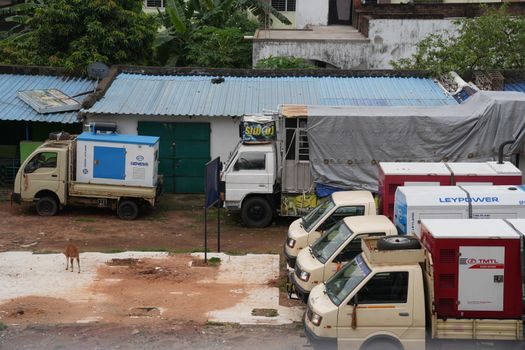
Data-center backup design in 2026 is dictated by three numbers: IT load in MW, ride-through time in seconds, and fuel autonomy in hours. Tier III-equivalent facilities typically specify N+1 generator redundancy with 24-48 hours of on-site fuel, while Tier IV designs move to 2N with paralleled switchgear and physically separated fuel farms [S2]. The same 2025 forecast flags lithium-iron-phosphate (LFP) battery UPS as displacing valve-regulated lead-acid (VRLA) in new builds, driven by cycle life and footprint at the 5-15 minute ride-through window [S2].
Inside that backup chain, PLC selection follows the same separation-of-concerns pattern used in process plants: one controller for generator paralleling and load shedding, a second for battery management and DC bus switching, and a third — often a safety PLC certified to IEC 61508 SIL 2 or SIL 3 — for emergency off, fire suppression interlock, and fuel-valve shutoff. Mixing those functions on a single controller is the most common audit finding, and the more relevant comparison for a 2026 specifier is not "which PLC brand" but "which three controllers, with which SIL partition, talking over which deterministic bus."
Edge Build-Out, Modular Skids and the Mid-Tier Site
The edge layer of the 2026 build cycle is dominated by 1-5 MW modular sites — prefabricated skid assemblies that arrive with switchgear, UPS, cooling plant, and generator already integrated and that have to be commissioned inside a 12-16 week window [S2]. These sites are too small to justify a full Tier-certified engineering team on site, so factory acceptance testing carries most of the quality risk.
Edge sites also tighten the loop on telemetry: a data logger at the edge node is expected to buffer at least 72 hours of trend data on local storage, time-stamp to a GPS-disciplined clock, and replicate to a central historian over a cellular or satellite link when the primary fibre is cut. Designers comparing edge telemetry options should run the four-option matrix on cost / latency / autonomy / cybersecurity: cellular LTE-M with on-device buffering scores well on cost, satellite fallback scores on autonomy, fibre-primary with cellular-secondary scores on latency, and a hardware-root-of-trust module scores on cybersecurity — almost no edge site in 2026 can afford to skip at least three of those four.
Control Valve and Switchgear Sizing for High-Density Halls
Cooling-system control in 2026 is no longer a "modulate a three-way valve" problem. High-density halls run variable-primary-flow (VPF) chilled-water plants, which means two-way control valves with wide rangeability (200:1 or better), low-leakage shut-off, and characterisation software that compensates for the nonlinear pressure drop across a chiller evaporator as flow ramps [S2].
Specifying an industrial valve for that duty requires the engineer to separate three failure modes: (1) seat leakage class (Class IV minimum, Class V preferred for chilled-water isolation), (2) cavitation risk on the high-pressure side of the control loop, and (3) actuator failure mode — spring-return fail-closed on isolation valves, but modulating valves on the bypass loop are increasingly specced fail-in-last-position so a controller fault does not slam the loop shut. The same logic applies to pressure sensor selection: a 0.1% BFSL accuracy spec is meaningless if the sensor cannot survive a water-hammer transient on the chilled-water riser, so a 1.5x or 2x overpressure rating and a stainless isolated diaphragm are the practical minimums in 2026 datasheet reviews.
Data Center Market 2026: Sizing for Industrial Spec
Cross-referencing the 2026 generator, edge, and switch-sizing data with the broader market shape, the practical engineering takeaway is that an industrial spec for a 1-20 MW facility in 2026 converges on a short list: 2N generator topology with 48-hour fuel autonomy, LFP UPS at the 10-minute ride-through window, DLC-ready chilled-water skids, OPC UA-based telemetry, and a control architecture that partitions safety, power, and IT functions onto separate controllers [S2]. The 2025 industry-arc base report quantifies that convergence as a $605bn market endpoint, with hyperscale and AI-driven capex as the dominant volume drivers [S2].
For a fuller breakdown of how generator sizing, edge topology, and switchgear selection actually land on a real 2026 spec sheet — including a worked example for a 5 MW edge site and a 100 MW hyperscale hall — the related reference on data-center sizing for industrial spec walks through the same numbers in a single-page format. Engineers cross-validating cooling-side flow-meter specs against chiller turndown curves will find the same market-driven logic in the EV and power-electronics shortage tracker, since 2026 SiC supply tightness is one of the indirect pressure points on UPS and converter deliveries to data-center builds.
Trackable signals to watch through the rest of 2026: KKR Helix's first campus energisation date (a leading indicator on whether secured-power project finance is actually bankable at scale), Amazon's $17.5bn loan drawdown schedule against AI hall commissioning milestones [S1], and the next round of liquid-cooling retrofit RFPs from Tier II/III colocation operators — those three nodes will determine whether the $605bn 2025 base forecast tracks, slips, or accelerates in the second half of 2026 [S2].