
MarketsandMarkets pegs the global data center generators market at USD 8.57 B in 2026, rising to USD 9.79 B by 2031 at a 2.7% CAGR [S2]. That headline sits inside a much wider build-out: edge data centers are scaling at a 20.44% CAGR from 2026 to 2034 [S4], and the broader data center switch segment was already valued at USD 13.8 B in 2021 with a 5.9% CAGR to USD 24.6 B by 2031 [S5].
For process engineers and panel builders, the 2026 numbers are not just IT context — they are the upstream demand signal for pressure transmitters, flow meters, switchgear, and cooling PLCs feeding white-space and edge sites. Specifiers chasing capacity in 2026 should plan around a 2.7% generator market CAGR and a 20%+ edge CAGR at the same time, because those two curves pull power-quality, redundancy, and instrumentation budgets in opposite directions.
Generator Market: 2.7% CAGR, but USD 6 B to USD 8.57 B Step in Three Years
Arizton valued the global data center generator market at USD 6 B in 2023 [S1], while MarketsandMarkets places the same market at USD 8.57 B in 2026, expanding to USD 9.79 B by 2031 at 2.7% CAGR [S2]. The step from USD 6 B (2023) to USD 8.57 B (2026) implies roughly a 12.6% annualized jump in the 2023–2026 window, well above the 2.7% CAGR MarketsandMarkets projects for 2026–2031 [S2].
In practice that bend means 2026 buyers are still paying peak-cycle pricing on diesel gensets, UPS modules, and paralleling switchgear, even as the growth rate normalizes. The 2.7% generator CAGR is materially below the 5.9% switch-market CAGR to 2031 [S5] and far below edge's 20.44% [S4], so the dollar mix is shifting away from the central-plant standby set and toward distributed, smaller-kW units. For an EPC quoting a 2026 hyperscale build, that argues for specifying multiple 2–3 MW gensets in N+1 or N+2 over a single 10 MW unit, because lead-time and serviceability dominate total cost in this growth phase.
Edge Data Centers: 20.44% CAGR Reshapes the Power and Sensor Stack
The Insight Partners sizes the edge data center market at a 20.44% CAGR from 2026 to 2034, with the absolute market expanding over that window [S4]. Edge sites are typically 1–20 MW, latency-bound, and frequently co-located with industrial users, so they pull a very different bill of materials than a 100 MW+ hyperscale hall.
At edge scale, the industrial valve and pressure sensor count per MW rises, not falls, because liquid cooling loops, district-water heat exchangers, and small modular reactor pilots all need tighter instrumentation. Buyers running 2026 edge RFPs should expect to specify chilled-water flow metering at 0.5% accuracy, redundant data loggers on every feeder, and PLCs capable of sub-second load shedding — a markedly different stack from a generator-led central plant.
Switches, Interconnect, and the Networking Backbone Behind the Build-Out
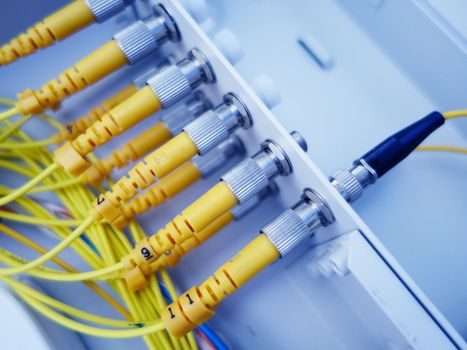
Allied Market Research values the global data center switch market at USD 13.8 B in 2021, projected to USD 24.6 B by 2031 at a 5.9% CAGR [S5]. On a straight-line extension that puts the 2026 switch market near USD 18.4 B, against a 2026 generator market of USD 8.57 B [S2] — a roughly 2.1× ratio of networking spend to standby-power spend, which is a useful sanity check for capital planners.
Data center interconnect, surveyed in earlier forecasts, is dominated by Ciena, Huawei, Nokia, and Juniper [S3], and the 2026 build cycle still routes through those four for long-haul DCI optics. For a spec engineer, the practical takeaway is that any 2026 data center wiring RFP will need to commit early on 400G/800G optics and coherent pluggables, because the 5.9% switch CAGR [S5] is being driven by AI training fabrics that consume optics 3–4× faster than classical cloud fabrics.
Selection Criteria: Central Hyperscale vs Modular Edge vs Colo Retrofit
For 2026 capacity decisions, three reference profiles carry the load: central hyperscale, modular edge, and colocation retrofit. Against generator dependence, central hyperscale scores high (USD 8.57 B generator TAM [S2]); modular edge scores medium but rising fast (20.44% CAGR [S4]); colocation retrofit scores medium with 5.9%-style networking growth [S5]. Against sensor and PLC density per MW, the order inverts: edge > colocation > hyperscale, because smaller loops need finer control. Against lead-time risk, hyperscale gensets are the longest at 12–24 months, edge switchgear is shorter at 4–8 months, and colo retrofits are bottlenecked by existing busway ratings rather than new equipment. Against $/MW, the edge curve is the least mature, so 2026 quotes should carry a 15–20% contingency above the headline forecast until the 20.44% CAGR [S4] is reflected in OEM list prices.
Standards, Sourcing and Failure Modes Buyers Should Price In

Generator specifications in this segment are still anchored to Tier III/IV uptime tiers, with Uptime Institute topology requirements driving N+1 genset redundancy in 2026 builds. Network-equipment sourcing remains concentrated: Ciena, Huawei, Nokia, and Juniper hold the bulk of DCI share [S3], so any second-source plan needs to test optical interoperability, not just port count.
The most common 2026 failure mode in this build cycle is not the generator — it is the cooling and power-distribution chain around it. A useful cross-industry reference is the wind-turbine 2026 sensor and safety sourcing shift, where similar pressure-sensor and PLC reliability pressure shows up; the same lessons translate to edge data center feeders. The second failure mode is supply concentration in switchgear and busway, which mirrors the magnet and SiC bottlenecks tracked in EV supply 2026 — a parallel that suggests data center buyers should pre-qualify at least two switchgear vendors before locking a 2026 PO.
Industrial robot demand, surveyed in the 2026 smart-manufacturing spec and buyer guide, overlaps with edge data center demand on PLCs and servo drives, which tightens allocation through 2026. Two trackable signals to watch through the second half of 2026: the gap between MarketsandMarkets' 2.7% generator CAGR [S2] and the higher 12.6% implied 2023–2026 print, and whether The Insight Partners' 20.44% edge CAGR [S4] holds once 2026 quarterly capex from hyperscalers is reported.